Lake Success is a village in the Town of North Hempstead in Nassau County, on the North Shore of Long Island, in New York, United States. The Village was incorporated in December 1927. Lake Success contains 1,195 acres of land, of which 43 acres are lakes. It is located in the northwestern quarter of Nassau County.
In the early 20th century, William K. Vanderbilt bought land on the shores of Lake Success.
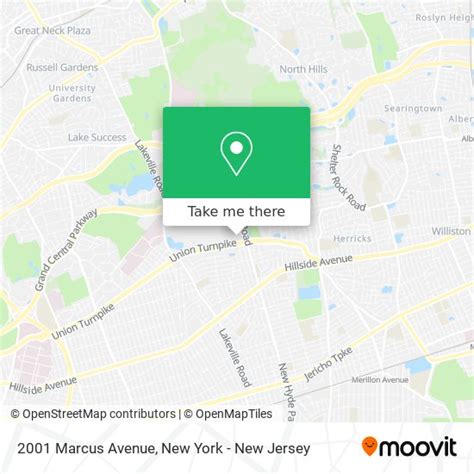
Marcus Avenue is a major roadway in Nassau County, on Long Island, New York, United States. Marcus Avenue begins adjacent to the North Shore Towers and Grand Central/Northern State Parkways at the Queens-Nassau border, in Lake Success, as the eastern continuation of the Grand Central Parkway Service Road. It parallels the south side of the Northern State Parkway to an intersection with Lakeville Road (CR 11) and eastbound Exit 25 on the parkway, before curving southeast, eventually reaching the Lake Success-North New Hyde Park border, where the road's mileage scheme resets.
Marcus Avenue was originally constructed around 1910. The road is named for the Hon. Henry Phipps Jr.
Today, 1111 Marcus Avenue, which sits about a 20 minute walk from the waters of Lake Success proper, is topped by a 1.5 million square foot multi-tenant office park, some soccer fields and Long Island’s first medical marijuana dispensary.
Read also: A Look at Collins Avenue
Let's delve into the past of this notable address.
Marcus Avenue, highlighted in red on a map of Nassau County.
Sperry Gyroscope Company and World War II
In 1939, the United States government bought a large tract between Marcus Avenue, Lakeville Road, and Union Turnpike, to be the home to the Sperry Gyroscope Company, which built a variety of maritime, military, aerospace, and navigation products. During World War II, the plant had 22,000 employees.
The United Nations Temporary Headquarters
President Trump addresses United Nations General Assembly: ABC NEWS SPECIAL REPORT
After the war, part of the plant became the temporary headquarters of the United Nations from 1947 to 1952, while its headquarters building in New York City was being built. The Security Council conducted day-to-day activities there before joining other bodies of the United Nations, such as the General Assembly, in Flushing Meadows. The Economic and Social Council had occasionally convened in Lake Success as well. United Nations employees conducted conferences and discussed major world issues there until the headquarters opened at the current location in Midtown, Manhattan.
Read also: Firelands Medical Center Details
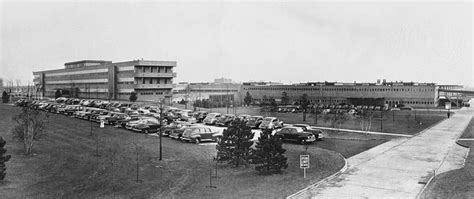
The UN Headquarters at Lake Success. Photo from United Nations archive.
The United Nations spent $325,000 a year on the property since moving into the space on August 28, 1946. Following that moment, 8,265 more meetings would occur in Lake Success.
In order for the United Nations to move into the corporation headquarters, the citizens of Lake Success had to show their approval through a vote. 188 citizens showed up, with 118 voting yes and 70 voting no.
Tourists would often visit the headquarters in Lake Success. After taking the E or F train the the 169th Street station in Jamaica, tourists could catch an hourly bus to the Long Island headquarters. Days when Eleanor Roosevelt or the Russians were on the premises were the most popular.
Nevertheless, on the days when the coveted figures were not present, delegates proceeded with their day-to-day discussions. As important topics, such as the state of independent nations, were discussed, secretaries, machinists, and darkroom technicians respectively conducted communications and performed maintenance on the headquarters. The Security Council was the most prominent United Nations body on the property.
Read also: Guide to Local Austin Services
Nevertheless, as the United Nations moved out of the Sperry Gyroscope Corporation Headquarters, Sperry employees eagerly jumped into their old spaces. Sperry had allowed the international organization to occupy some of its space because the war had rendered their plant nearly vacant. After 2,500 trucks carried out the contents of the United Nations, Sperry workers settled in at the abandoned cubicles.
The UN was based in Flushing Meadows until 1952, and would remain in the city that never sleeps. Cities like San Francisco and Boston wanted to house the global organization, but the United Nations ultimately decided on Manhattan. After the Rockefellers donated land that had previously been overrun by slaughterhouses, a team of architects imagined and built the headquarters on the plot.
Post-UN Era and Environmental Concerns
The 1,500,000-square-foot (140,000 m2) facility continued to be used by various companies (including Unisys and Loral Corporation) to build defense products over ensuing decades. It was purchased by Lockheed Martin in 1996. The company closed the plant in 1998 and began an environmental clean-up of the site overseen by the New York State Department of Environmental Conservation.
According to historical records of the site, until environmental precautions were mandated at the property in 1978, most of the factory’s leftover chemicals and wastes, including halogenated solvents, cutting oils, paints and fuel oils, were dumped into five drywells located on the southeast corner of the site. Slowly, but surely the chemicals seeped into the groundwater, soil, sediments and soil vapor below.
By 2011, a Village of Lake Success Planning Board study found that Cowen’s predictions had already happened.
Less than 200 feet away is the superfund site’s main groundwater extraction pump. We approach a chain link fence surrounding it and hear the roar of 850 gallons of contaminated water per minute being pulled from the ground beneath us.
The site’s pollution was first discovered in the 1970s. Findings included volatile organic compounds, or VOCs, chemicals beneath the ground which transform from liquids to gases at room temperature. Chemicals that, in high enough concentrations, have been linked to liver and kidney cancer in animals, as well as skin irritation, heart damage, drowsiness, nausea, fatigue and depression in humans.
Beneath our feet, the soil is full of heavy metals like copper, barium and cadmium, further remnants of its industrial past.
In 1996, Lockheed Martin purchased the superfund site on 1111 Marcus Avenue, taking full responsibility for its cleanup. Lockheed Martin put out a comprehensive “fact sheet two years ago about what they’ve done since then to remediate the toxic site. The corporation also installed a soil vapor extraction system beneath the site’s main buildings to remove harmful VOCs from the air. From 2001 to 2002, the corporation installed a permanent groundwater treatment system to “prevent further movement of the plume away from the site” as well as an interim pump on a nearby golf course in 2004. In 2008, two more sub-slab soil vapor extractors were installed on the superfund property.
The new pumps are part of a $32 million plan put out in 2014 by the New York State Department of Conservation, mandating that Lockheed Martin pick up the pace on its Unisys superfund cleanup.
The Lockheed Martin corporation will be required to pump out almost 70 million gallons of contaminated water every year from the ground beneath its corporate i.park for the next three decades to help contain the pollution of the past. After that, the corporation is only bound by a “good faith agreement” that all parties involved with the cleanup today will sit down and discuss “where they are then” to address the Unisys site pollution.
Demographics of Lake Success
As of the 2000 census, there were 2,797 people, 798 households, and 683 families residing in the village. The population density was 1,487.3 inhabitants per square mile (574.2/km2). There were 824 housing units at an average density of 438.2 per square mile (169.2/km2).
The racial makeup of the village was 78.94% White, 4.76% African American, 15.16% Asian, 0.04% Pacific Islander, 0.25% from other races, and 0.86% from two or more races.
There were 798 households, out of which 35.3% had children under the age of 18 living with them, 77.9% were married couples living together, 5.4% had a female householder with no husband present, and 14.4% were non-families. 12.4% of all households were made up of individuals, and 9.9% had someone living alone who was 65 years of age or older.
In the village, the population was spread out, with 20.1% under the age of 18, 4.1% from 18 to 24, 15.8% from 25 to 44, 24.3% from 45 to 64, and 35.8% who were 65 years of age or older. The median age was 52 years. For every 100 females, there were 80.1 males.
The median income for a household in the village was $134,383, and the median income for a family was $145,562. Males had a median income of $100,000 versus $46,923 for females. The per capita income for the village was $58,002.
As of the 2010 United States census, there were 2,897 people, 789 households, and 734 families in the village. The racial makeup was 75.3% White, 5.4% African American, 0.0% Native American, 19.3% Asian, 0.0% Native Hawaiian and Other Pacific Islander, 0.2% from other races, and 0.8% from two or more races.