Imagine the world as it would appear from the perspective of an ant wandering onstage during a performance of Shakespeare's Midsummer's Night's Dream. All around you there unfolds a great drama, replete with exotic colors, sounds, and complex happenings; yet because of your limited perspective, the meaning of it all escapes you. You can't comprehend the multilayered significance of this drama or grasp how these diverse elements fit into a greater unfolding story being played out in several acts.
In a way, our own predicament is rather like this. We, too, find ourselves meandering across a great "stage" that of history itself. To the casual eye, the events transpiring around us may seem like a chaotic jumble of random occurrences: a rocket carrying seven crew members explodes in midair; a world leader finds himself embroiled in a foreign war; a new computer technology suddenly takes the world by storm. At first glance there is little to suggest that such things possess any meaning or relation to one another. Yet our problem may simply be one of proximity: perhaps we're just too close to grasp what is going on.
For the esotericist, an important key toward helping unlock that broader perspective is the concept of the Great Ages. We presently find ourselves straddling the threshold between the "acts," as it were, of the Piscean and the Aquarian Ages. Like vast tectonic plates shifting deep within the collective unconscious, this epochal transition has already begun manifesting as a series of seismic changes throughout our world, as the forms of an older age make way for those of a radically new one.
Will the coming era be a time of peace, love, and brotherhood, as some suggest? Or will it bring about an Orwellian police state where men and women become little more than cogs in a bureaucratic machine? If history is any guide, the truth will probably be more complex than we expect or can even imagine. It's useful to remember that the same Piscean Age that brought us Jesus Christ also brought us Torquemada and the Inquisition, not to mention televangelist Jimmy Swaggert.
The Piscean Age: An Era of Water and Emotion
For two millennia now, we have been under the influence primarily of the watery sign of Pisces. The exact beginning of the Piscean Age is hotly debated, though most would agree that it can be loosely associated with the start of the Christian era. The manifestations of the Piscean Age include the rise of a global religion centering primarily on symbols of water: baptism, walking on water, changing water into wine, and so forth. Indeed, for the student of astrological symbolism Christianity offers a virtual mother lode of correspondences in connection with Pisces.
Read also: Aquarius Monthly Forecast
For example, Christian scripture speaks extensively of fishermen, sympathy for society's outcasts, martyrdom, and the washing of feet-all traditional symbols of Pisces. One of the defining miracles of Christ's ministry was the feeding of the multitude with two fishes and five loaves of bread. More subtly, the Catholic practice of eating fish on Friday is sometimes linked to the fact that Friday is governed by Venus, the planet that is "exalted" (attains its optimal expression) in Pisces.
Viewed as a whole, they suggest that humanity was learning to relate to reality and the divine through a more emotional filter. In its constructive aspect, this brought about a newfound element of compassion and faith in key segments of society, especially in the Christian world. A spiritual sensibility emerged which spoke of "turning the other cheek" rather than smiting one's enemies- shift from Roma to Amor, in a sense. More negatively, this same emphasis on emotionality ushered in a spirit of dogmatism and persecution within the emerging religions.
Pisces is intensely concerned with matters of faith, but taken to extremes, this can lead to zealotry, self-righteousness, and the urge to establish absolute guidelines for all to follow. At its worst, the Piscean Age was an era of religious intolerance, when large populations were expected to show unquestioning allegiance to a monolithic belief system, as was the case for much of Christianity and Islam during this period.
One of the more striking Piscean symbols found in Christianity is its central image-the crucifixion. It is sobering to consider that for nearly two millennia Western culture has defined itself largely in terms of an image of someone being tortured in a particularly gruesome manner. Viewed archetypally, this singular seed image contains both the best and worst of the Piscean legacy.
At its worst, the crucifixion expresses dark Piscean qualities like self-pity, masochism, guilt, and martyrdom. These traits reflect the self-dissolving principle of water, but directed in a more destructive way. In some respects the Piscean Age could be called the ultimate age of neurosis, an era when many believed suffering and guilt were somehow synonymous with spirituality. But the crucifixion has a more positive interpretation too.
Read also: Understanding Aquarius
As astrologers know, Pisces symbolically relates to the transcendence of the ego and the surrender of personal interests in service of higher ideals. As the last sign in the zodiac, Pisces is that final stage in the soul's evolution where the boundaries of personality have begun dissolving and the soul now merges with the great cosmic ocean. In its highest sense, this is what the crucifixion means: the willing capacity for sacrifice, worship, and profound devotion. This is the water element at its most refined.
The Flagellants by Carl Marr
Whereas the Age of Aries (c. 2100 bc-ad 1) brought an awakening of the outwardly directed ego, the more feminine Piscean Age brought about a newfound sense of interiority or inwardness. In religious terms, this was evident in the emerging Christian emphasis on moral reflectivity, or conscience. The underside of this development was the emergence of a new mood of guilt throughout Western society. Prior to Christianity, one rarely finds a sense of conscience or "sin" as we now think of it.
On another level, this new sense of interiority was mirrored in the rise of architectural features like the dome and the arch, so critical to Islamic mosques or Roman structures like the Pantheon. Artistic shifts like these symbolized a new world of emotions opening up during the early Christian era.
The Dawn of Aquarius: Air, Intellect, and Innovation
The most frequently asked question concerning the Aquarian Age is, when does it begin? That's a bit like determining when the dawn starts. Is it when the morning sky first starts glowing long before the actual sunrise? Or is it when the sun actually appears over the horizon?
Read also: Backcountry Biking in Utah
The same problem applies to understanding the timing of any Great Age. An age doesn't begin on a single day or year but unfolds gradually over many years or even centuries, exerting its influence in pronounced waves like the incoming tide. Consequently, while the Aquarian Age may not manifest fully for several hundred years yet-most estimates suggest somewhere between ad 2100 and 2800-;there are any number of clues to suggest that its forces have already begun appearing in our world. The rise of the Internet is a current example, but we can see evidence of it even as far back as the American Revolution.
Whereas Pisces is traditionally associated with the element of water, Aquarius is associated with the element of air. Outwardly, this is reflected in the startling rise of aviation technologies and space travel over the last century. In a quite literal sense, humans are learning to master the air realm, not only with aviation but through the construction of ever taller buildings that allow us to live higher up off the ground than ever before. The media also employ metaphors that reflect this elemental shift when they say that a show is going "on the air" or a broadcaster is "taking to the airwaves."
But these outer developments are really reflections of an inner shift taking place, one that relates to an awakening of mind throughout the culture. Symbolically understood, air is the medium through which we communicate ideas, and is the element most associated with rationality and thinking. This means that the Aquarian Age will likely usher in major advances in humanity's intellectual growth, though probably at widely varying levels of sophistication.
Terms like "information superhighway" or the "information revolution" are further examples of how the impending Aquarian influence has already begun to propel our world toward more mental values and modes of experience. The modern separation of church and state is another important example of the disengaging of our rational minds from the dogmatic and emotional concerns of the Piscean Age.
A vital key toward understanding the meaning of Aquarius resides in the way each of the different elements repeats itself three times over the course of the zodiac. In other words, there are three earth signs, three water signs, three fire signs, and three air signs. Each version of that element expresses it in subtly different ways. Given the progressive nature of the zodiac, it's hardly surprising that each of these three signs would reflect the workings of the mind in broader and increasingly impersonal ways.
In Aquarius, we find the element of air-rationality expressing itself through the most impersonal contexts of all, in terms of large masses of people-or even the cosmos itself. Aquarius could be described as the principle of cosmic rationality or cosmic mind, the ability to perceive and make connections of the most abstract and universal sort. Aquarius isn't simply concerned with ideas and theoretical relations; it is concerned with ideas and relationships that are global or cosmic in scope.
Age of Aquarius
For this reason, the Aquarian Age will likely be an era when science rather than religion will be the dominant paradigm, with scientists becoming the new high priests. Whereas religion purported to reveal the moral and theological principles underlying the world, science attempts to uncover, in a wholly secular way, the universal physical laws and principles underlying nature. It aspires to a completely impersonal-and very Aquarian-understanding of the universe, divested of subjective feelings and opinions.
This impersonality is also evident in the way many of us now are developing social connections and networks extending over vast distances, using technologies like the Internet or TV. These allow people across the world to communicate with one another, but in more cerebral ways than ever before. It's one of the paradoxes of our time that just as we're becoming more interconnected with people across the entire world, we find ourselves knowing less about the people living next door to us.
This shifting orientation toward Aquarian air is also responsible for our growing fascination with outer space and its exploration, as reflected in films such as Star Wars or 2001: A Space Odyssey, or TV shows like Star Trek. Works like these capture the emerging spirit of a "longing for the stars" that is so intrinsic to Aquarius.
The Great Shift: Moving from The Age of Pisces to Age of Aquarius
Transitional Forms: Hybrids of Piscean and Aquarian Energies
With one foot in the Piscean Age behind us and the other in the Aquarian Age ahead of us, we find ourselves caught between radically contrasting value systems. If the Great Ages represent a Shakespearean drama of cosmic proportions, we've stepped onto the stage precisely at the point "between acts," when the old props and backdrops are being replaced by new ones. One result of living in this liminal state is the rise of various transitional forms-symbolic hybrids of Piscean and Aquarian energies. Here are a few examples of these from recent times.
- Televangelism What happens when old-style Piscean Christianity meets up with Aquarian-style telecommunications? One result is that distinctly modern phenomenon called televangelism, in which preachers engage the fruits of cutting-edge media technology for spreading the gospel of salvation to ever-larger audiences.
- The abortion debate As one Great Age comes up against another, there can be a violent clashing of values and ideologies from both sides of the divide. A vivid example of this is the modern controversy over abortion. On the one hand there are the largely Christian "prolife" advocates representing the values of the Piscean Age, with their expression of sympathy for the helpless unborn. On the other hand there are the "prochoice" advocates representing the forces of Aquarius, championing the rights of individuals to decide their own fates. Over the years there has been little compromise between the views of these two camps, and there is little hope for change in sight, but with good reason. They arise out of two fundamentally different paradigms, two radically different ways of seeing and evaluating the world-one from the last Great Age and the other from the next.
The Aquarian Age: A Time of Transition and Transformation
Since 2020, Aquarius has gained momentum as an astrological talking point, with the year’s great conjunction in the air sign initiating a heady Saturn in Aquarius saga, and the impending arrival of Pluto in Aquarius in 2023. Cliched wails from Hair ring through the land, harking the dawn of the Age of Aquarius.
These 2,160 year intervals, in each sign, are known as Great Months, or Ages, each with their own epochal stories of human change and development. But here’s the gag: The equinox points precede backwards, meaning that we’re currently ending the Age of Pisces and fast moving into the Age of Aquarius.
The Age of Pisces is speculated to have begun around the time of Christ, culminating around 2100-2160 CE. Yet some believe that the Age of Aquarius is already here. In his Complete Astrology, Alan Oken writes that the current transition between ages is “much like the period between childhood and puberty: the process is gradual.
Many cite the discovery of Aquarius’ ruling planet, Uranus, in 1781, as the launch point into this integration of technological splendor with communal possibility. Astrologer Ruby McCollister writes that the years since Uranus’ arrival has brought forth a “flourishing of science, technology, philosophy, literature, music, social opportunities in virtually every aspect of human life, which exploded Western civilization toward liberation, freedom, and choice.”
Aquarius governs mass communication; Oken writes that “the only methods available for the dissemination of information prior to the discovery of Uranus were by foot (human or animal), ship, mouth, or pen.” The past few centuries have delivered a quantum leap towards cyber-utopianism, with the past few decades, specifically, blasting us towards the event horizon.
Aquarius envisions the future, and helps build for it. Though both signs deal with the interconnected global population, Pisces emphasizes our spiritual oneness, while Aquarius focuses on the humanitarian fulfillment of human needs and potential. Essentially, it’s Christianity and Communism, two modes of thought which have led to both liberation and enslavement.
The Age of Aquarius will shift the human picture on ideological grounds, rethinking our concepts of blood relationality, statehood, finance, and value. Roll your eyes at the exhausting cancel culture discourse of the Saturn in Aquarius era, but it’s just the beginning, as we head into heady debates over what living beings are entitled to.
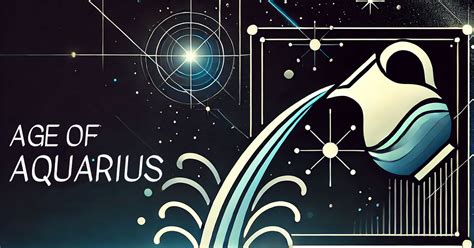
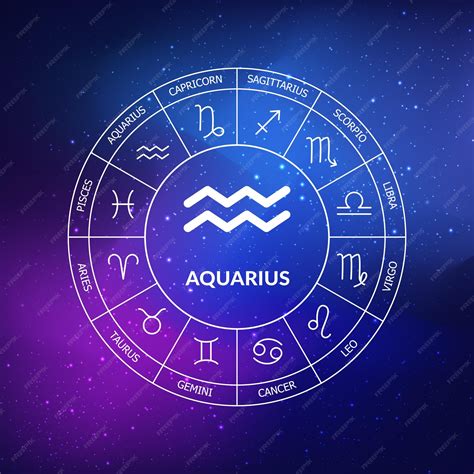
The Zodiac sign of Aquarius is a paradox on so many levels. It often tricks you into thinking it is a water sign, after all “aqua” forms the root of the word, when in fact it’s an air sign. Traditionally, Aquarius is described as a man pouring water from one or sometimes two vessels, as it’s name stems from the Latin translation for “cup bearer” or “water bearer” and is denoted by the double zig zag ♒︎ glyph, which ironically also happens to be the Egyptian hieroglyph for water.
With all that aquatic symbolism, it is no wonder that Aquarius was associated with the annual flooding of the Nile in Egypt. In the Babylonian Star Catalogues, it was also linked to destructive floods and was cited as Gula (the Great One), identified as Ea (Akkadian) or Enki (Sumerian) who is a bearded god often depicted surrounded by flowing water or holding an overflowing vase.
Throughout history and all cultures, we will find women primarily as the water carriers, literally fetching water from wells and rivers, or performing water offerings and purification rituals. We find this heavily depicted throughout art with the well maidens and the illustrative imagery on the terracotta hydrias (water jars) of ancient Greece.
Aquarius Symbol