The search for extraterrestrial life has captivated scientists and enthusiasts alike for decades. While much focus has been on distant planets and galaxies, recent discoveries suggest that our own oceans could hold clues to the existence of life beyond Earth. This article delves into the evidence of potential alien life in the ocean, exploring extreme environments, unidentified submerged objects (USOs), and the latest astrobiological research.
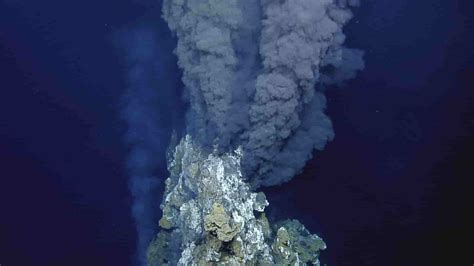
Hydrothermal vent, a possible origin point for life on Earth and potentially on other planets.
Strange Organisms in Extreme Environments
Strange organisms that get their energy from chemical reactions instead of the sun have been discovered at the bottom of ocean trenches up to 31,000 feet deep in the northwest Pacific between Russia and Alaska, a new study reports. Scientists say the findings help explain how life can exist in extreme environments using the chemical compound methane instead of sunlight. The ecosystems were discovered at depths greater than the height of Mount Everest, Earth's tallest peak.
The deepest one was 31,276 feet below the ocean surface in the Kuril-Kamchatka Trench, almost 25% deeper than any such life had been documented anywhere on Earth. This environment harbors "the deepest and the most extensive chemosynthetic communities known to exist on our planet," said marine geologist and study co-author Xiaotong Peng. The study reported that organisms in such extreme environments need to adapt to produce energy in different ways.
"What makes our discovery groundbreaking is not just its greater depth - it's the astonishing abundance and diversity of chemosynthetic life we observed," said marine geochemist Mengran Du of the Institute of Deep-sea Science and Engineering, part of the Chinese Academy of Sciences, one of the authors of the research published July 30 in the peer-reviewed British journal Nature. The authors suggest that similar communities may be more widespread than had been thought, and their findings challenge views about how the ecosystems might be supported. "Even though living in the harshest environment, these life forms found their way in surviving and thriving," Du said.
Read also: Contact with Extraterrestrials
These findings shed new light on the potential for life to exist in extreme environments using chemical compounds like methane instead of sunlight. These organisms were discovered by researchers using a human-crewed submersible vehicle. Researchers found animal communities - dominated by tube worms and clams - during a series of dives to the bottom of the Kuril-Kamchatka and Aleutian trenches.
Could this kind of life be found on other planets? Du told USA TODAY similar chemosynthetic life forms could exist on Jupiter's moon Europa, or even Saturn's moon Enceladus. Europa might be the most likely: "Europa’s ocean is considered one of the most promising places in the solar system to look for life beyond Earth," according to NASA.
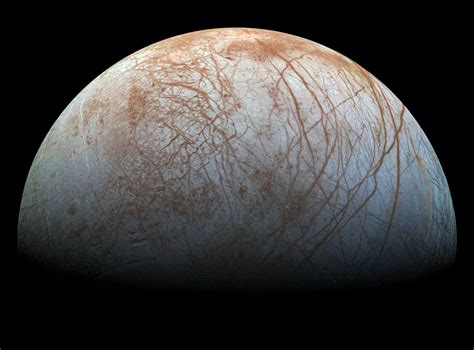
Jupiter's moon Europa, a prime candidate for extraterrestrial life.
Europa: A Promising Candidate
"There is very strong evidence that the ingredients for life exist on Europa," said planetary scientist Bonnie Buratti of NASA's Jet Propulsion Laboratory, who was not part of this study. At the bottom of Europa's ocean, where the water meets the rocky mantle, there may be thermal vents where heat releases chemical energy. "They may be similar to thermal vents in the deep oceans of the Earth where primitive life exists and where life may have originated on the Earth," Buratti said.
NASA hopes the spacecraft Europa Clipper, launched in October 2024 and expected to reach Jupiter in April 2030, then begin close flybys of Europa, will help "determine whether (Europa's) subsurface ocean harbors a habitable environment," Buratti said. She added that the current thinking is life arose in the depths of the Earth's oceans, so seeking a similar environment on Europa is the first step to answering questions about undersea life on other planets or moons. "Europa is the first ocean world to be studied in detail. Other bodies in the solar system, such as Titan, Enceladus, possibly Ganymede and even Pluto, as well as many exoplanets or exomoons could also harbor habitable environments similar to those on Earth," she told USA TODAY. "We'll know much more after we get some results from Europa Clipper starting in 2030."
Read also: UFO Sightings
Travel the universe with Dr. Ethan Siegel as he answers the biggest questions of all. Although the distances between the stars and planets are vast, our Universe, and even our own Solar System, remains a violent place. Fragments of matter, mostly arising from the asteroid and Kuiper belts of our own Solar System, occasionally impact all of the known worlds, including planet Earth. Even though the typical mass and size of the objects that impact us are relatively small, there are many such impacts every year. With modern technology, we’re even beginning to characterize and track them.
Searching For Aliens and Our Place in the Universe | How the Universe Works | Science Channel
Unidentified Submerged Objects (USOs)
Since at least the 1950s, military sources have reported strange objects plunging into the ocean-what they call USOs (unidentified submerged objects). These phenomena exhibit characteristics that conflict with our understanding of physics and maritime navigation. As radar and similar technologies have advanced, so have the number of sightings.
Navy Lieutenant Ryan Graves began to notice something strange. The radar returns looked off-phantom blips moving with unfathomable speed and precision. At first he dismissed it as a glitch. But then the anomalies returned, recorded by the fighter jets’ sophisticated sensors. They would hover in place-and then dart away at supersonic speeds. They were recorded from the ocean’s surface to 40,000 feet. “Sometimes stationary-0.0 Mach. Other times 250 to 350 knots . . .. Sometimes even supersonic-1.1 to 1.2 Mach. All altitudes. And always over the ocean,” Graves says. After appearing only as glitches on the jets’ radar, the objects on one occasion finally came into view. Graves reported seeing a dark gray or black cube inside a clear sphere, between five and 15 feet in diameter, coming within 50 feet of their jets. “That was the turning point,” Graves says. “We started treating it as a safety issue.”
Over the next year, Graves’s squadron recorded sightings of unidentified objects almost daily. Sometimes the objects flew in loose formations. Other times they traveled alone. They had no exhaust, no visible propulsion, no wings. Sometimes the object would rotate in place; others vanished when approached. As it turned out, pilots stationed off the West Coast-on missions aboard the USS Nimitz, the USS Princeton, and other carriers-had been experiencing similar things for years.
Some of these craft-now classified as UAPs (unidentified anomalous phenomena)-appeared to be capable of transmedium travel, meaning they are able to move from air to sea without slowing, splashing, or emitting heat. They challenged every assumption held by aerospace engineers and radar operators. Graves doesn’t claim to know what the objects were. But one thing was clear. “This wasn’t business as usual,” he says. “There was a serious issue at play. It wasn’t just one rogue object. It wasn’t just us on the East Coast. It wasn’t just my squadron. It was a pattern. This was global.”
Read also: The Ethics of Contacting Aliens
Footage of a UAP taken by the US Navy.
Rear Admiral Tim Gallaudet, PhD, an oceanographer, was one of the first to view footage from the UAP incidents in 2015 involving fighter jets attached to the USS Theodore Roosevelt, which at the time was conducting training exercises off the coast of Florida. Two videos captured by Navy fighter jets that were made public in 2020 show strange craft flying at incredible speeds with no visible means of propulsion, sometimes rotating in midair. “I knew then that what I saw was not our technology. We don’t test experimental aircraft in training ranges-it’s too dangerous-and I had access to everything classified. government to treat these phenomena as a “national research priority.” Despite some public disclosures, many records remain classified, buried within defense contractor vaults or shielded by national security exemptions.
This spring, Graves and Gallaudet briefed officials in Washington, D.C., on unidentified submerged objects. “We’re at a unique moment in history,” Graves says. “People have access to tools that can reveal things. The momentum is building.” That momentum has already begun reshaping policy. In 2023, Congress passed the UAP Disclosure Act, legislation requiring federal agencies to collect, catalog, and disclose records related to recovered nonhuman craft and biologics. law openly acknowledged the potential existence of off-world or nonhuman intelligence, and even hinted at craft retrieval and reverse engineering programs.
Those newly released records contain a trove of details on previously classified encounters with multiple transmedium UAPs. None definitively prove that otherworldly beings are hiding in or above our oceans, but they do raise questions that neither our military nor scientific experts can explain. “The possibility that they exist underwater is very real,” Gallaudet says. “They could come from another galaxy, if they’ve conquered the engineering challenge of that,” he says. “Or why not-maybe they lived here for a long time, before we even evolved, and sought safety from the Earth’s atmospheric and geologic cataclysms by creating a habitat or place to live beneath the seafloor. . .. That’s one hypothesis.”
Notable USO Encounters
The following four incidents have provided investigators with the most compelling-and perplexing-evidence so far of transmedium encounters with what experts like Gallaudet believe could be nonhuman in origin.
- USS Nimitz Incident: Navy pilots assigned to the USS Nimitz encountered a Tic Tac-shaped UAP darting and dashing over the Pacific. According to reports that followed, the object lacked visible control surfaces and heat signatures that would be typical of jet aircraft or rockets. It never made a sonic boom, although it appeared to be traveling faster than the speed of sound.
- Aguadilla Airport UAP: Customs and Border Protection captured something extraordinary over Aguadilla, Puerto Rico. A small spherical object flew inland from the ocean, crossed the airport, and then returned to sea-where it maneuvered in ways that appeared to defy physics. The three-minute video, published by the Scientific Coalition for UAP Studies, has become a key piece of evidence suggesting the possibility of transmedium travel.
- Navy CH-53 Sea Stallion: In the 1990s, a Navy CH-53 Sea Stallion pilot was flying off the coast of Puerto Rico when he saw something he couldn’t explain. His crew, on a routine mission to retrieve a BQM target drone that had previously been dropped into the ocean, had sent a diver into the water to connect the drone to the helicopter’s hoist system. But just before the helo was about to lift the 20-foot-long drone out of the sea, something pulled it violently downward.
- USS Omaha Incident: In July 2019, an infrared camera aboard the USS Omaha captured something that defied explanation: a spherical object moving swiftly over the Pacific before dropping into the ocean-again, no splash, no wake, no debris. The footage, later verified by Pentagon officials, stunned observers. The object didn’t resemble any known drone, missile, or aircraft.
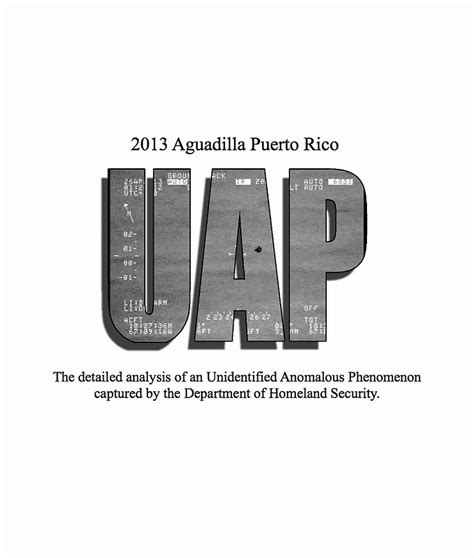
Customs and Border Protection aircraft captured footage of a UAP over Rafael Hernández Airport near Aguadilla, Puerto Rico.
Astrobiological Research and Exo-Oceans
Life on our planet likely evolved in the ocean, and thus exo-oceans are key habitats to search for extraterrestrial life. We conducted a data-driven bibliographic survey on the astrobiology literature to identify emerging research trends with marine science for future synergies in the exploration for extraterrestrial life in exo-oceans.
Several planets and moons in our Solar System host large bodies of water, termed exo-oceans, that are often analogous to those of Earth, albeit below thick ice shells. Marine environments may exist on Saturn or Jupiter’s moons, such as Enceladus, Europa, Callisto and Ganymede. Mars once had large lakes and possibly seas and still has subsurface liquid water at its South Pole, where a briny solution is keeping water liquid beneath the ice shell. More extraterrestrial water-ocean environments are likely to be discovered on exo-planets over the next decade.
The Earth’s deep sea is a vast biome devoid of sunlight, where high-pressure and different cyclic hydrodynamic phenomena occur at tidal, inertial, and seasonal scales within the water column and the seabed. In the benthic realm, communities of chemosynthetic bacteria and multicellular organisms thrive in areas of high geothermal activity. It has been hypothesized that life on Earth may have originated around marine hydrothermal vents with considerable geothermal activity, as these areas represent a habitat that fulfils the requirements of constant energy and essential chemical element supply, alongside other favorable conditions.
Similar ecosystems can also be found in exo-oceans on moons and planets with geothermally active mantles and/or cores. These systems may present environmental conditions analogous to those of Earth’s oceans, where water-rock interactions might provide nutrients and trace elements together with thermodynamic disequilibria. Life could also have arisen and evolved there, as speculated, for example, for Enceladus and Europa, which have the same age as the Earth.
Since the resounding successes of the Voyager 1 and 2 probes, Galileo and Cassini-Huygens, between 1979 and 2017, future missions to Enceladus, Europa, Ganymede, Titan, and Ceres are now being conceived, based on robotic platforms for orbital surveying, ice-shell drilling, pelagic navigation and rocky-core seabed sampling, all endowed with different spectrophotometric and imaging sensors for molecular and microbial detection.
Specifically, investigation of the Earth’s deep sea is developing technology for the operation of novel autonomous vehicles and their payloads devoted to environmental exploration and ecological monitoring. This technological innovation is providing new methods for the detection and monitoring of life with potential applications to astrobiological research. For instance, the development of vessel-teleoperated remotely operated vehicles (ROVs) completely revolutionized research in the deep-sea water column.
In the case of exo-oceans, such developments could be used for the detection of DNA-based life-forms. In deep-sea research, the mounting of these image- and molecular-based sensors not only on ROVs, but also on other autonomous or remotely operated robots (e.g., Autonomous Underwater Vehicles-AUVs, rovers and crawlers), enables the assessment of the presence of species and their relationship with the environment, by coupling biological data acquisition with synchronous oceanographic and geochemical surveying.
Analysis of Astrobiology Literature
We conducted a data-driven and quantitative bibliographic survey on astrobiology literature from its beginning (by combining VOSviewer and CiteSpace bibliometric analyses) to identify developing paradigms and research trends generally and, more specifically, potential connections with marine science, for future synergies in the exploration for extraterrestrial life in exo-oceans.
We conducted a preliminary screening of available scientific peer-reviewed literature in the SCOPUS database (Elsevier, Netherlands), following similar methodological approaches previously tuned in Costa et al. Although new statistical approaches exist to monitor the overall status of various research topics, one emerging method is scientific mapping. This approach allows for a review of research and is designed to synthesize patterns of knowledge production within a discipline, as opposed to synthesizing substantive findings.
For the definitive query, we entered several different combinations of astrobiology- and marine science-related keywords aiming at including in our search a large and consistent corpus of articles to allow for a solid statistical analysis. The search was tailored to retrieve articles that contain a variant of astrobiology, exo-life, or extraterrestrial life and that also contain one or more keywords related to the marine environment. To include all variants of the desired keywords, the wildcard symbol * was used. Specifically, publications were selected using words and word strings in the title (TITLE), abstract (ABS) and keywords (KEY) from articles in journals, congress proceedings, and book chapters.
We used the Visualisation of Similarities (VOS) viewer software (Centre for Science and Technology Studies, Leiden University, Netherlands) to create a bibliometric map of the terms, where they appear ranked according to their importance (number of times they were found) and interconnected according to coappearance in the publications. The software used the VOS mapping technique to display terms. This technique is closely related to the multidimensional scaling method and involves the use of an intelligent local shift algorithm to identify relations within a network of items. The map is based on the co-occurrence of two terms within an article (in the title, abstract, or keywords), i.e., each of those co-occurring terms are shown on the map and linked by a line. Terms that co-occur frequently are found close to each other in this map, while those which are more weakly related are found farther apart from each other.
Two concepts were integrated in this analysis, co-citation analysis and clustering. The principle of literature co-citation analysis is based on measuring the similarity between two articles according to the number of times they are cited together in a particular article, in a journal, or by authors. Clustering is the process of dividing a set of physical or abstract objects into several groups. Each generated group is called a cluster. Within clusters, the degree of similarity between elements is higher than the degree of dissimilarity between them.
CiteSpace (version 5.7.R3-Drexel University, Philadelphia, PA, USA) is a citation analysis software used to identify areas of knowledge (in the most general sense) contained in the scientific literature. CiteSpace performs clustering of articles and keywords using a similarity degree based on article, author, and journal co-citations. We used the same pool of articles from SCOPUS (1963 to 2023) selected previously to carry out the analysis of term co-occurrence with VOSviewer. From the similarity relation between the articles, CiteSpace generated clusters of articles that visualized their interconnection.
Current Research Trends
Based on search queries, we identified 2592 published items since 1963. The current literature falls into three major groups of terms focusing on:
- The search for life on Mars
- Astrobiology within our Solar System with reference to icy moons and their exo-oceans
- Astronomical and biological parameters for planetary habitability
The identification of emerging astrobiological research areas and their relationship with marine science could provide a dialogue framework to promote strategies for the discovery and monitoring of uni- and multicellular extraterrestrial life under ‘marine-like’ conditions. We approached our bibliographic investigation of exo-life from the perspective of connections with biological marine science.
Chemical traces, microbes, and organic material - telltale signatures of life that scientists look for - could break down or transform as they travel through the ocean's distinct layers. Flynn Ames, lead author at the University of Reading, said: "Imagine trying to detect life at the depths of Earth's oceans by only sampling water from the surface. “We’ve found that Enceladus’ ocean should behave like oil and water in a jar, with layers that resist vertical mixing. These natural barriers could trap particles and chemical traces of life in the depths below for hundreds to hundreds of thousands of years. Using computer models similar to those used to study Earth's oceans, the study has important implications for the search for life in the solar system and beyond. As scientists discover more ice-covered ocean worlds orbiting the outer planets and distant stars, similar ocean dynamics could confine evidence of life and its building blocks to deeper waters, undetectable from the surface.
You might recognise the name of Harvard physicist Avi Loeb from such previous hits as “AI-powered alien probes might have already landed on Earth” or “our universe was made by aliens in a lab”. Last June, Loeb recovered small magnetic “spherules” - deposits from meteorite impacts - from the Pacific Ocean, where a meteor dubbed IM1 made impact in 2014. He had long suspected that this alien object was sent by intelligent beings beyond our solar system, and now he has the findings to back it up. How did he come to these otherworldly conclusions? In this case, his findings “raise the possibility that [IM1] may have been a Voyager-like meteor, artificially made by another civilisation,” he says, drawing a comparison to the two interstellar probes launched into deep space by NASA in 1977.
Loeb’s findings are hotly disputed, however. Since releasing a preprint version of his study last summer, several scientists have pushed back against Loeb’s claims that the spherules came from a “watermelon-sized” alien spacecraft. Some have posited, for example, that they’re actually produced by humans, as the result of fallout from nuclear testing. New research from the Harvard scientist and his collaborators - outlined in a paper published by the American Astronomical Society - pushes back against this attempt to debunk his evidence of extraterrestrial intelligence. “What we did [was] compare 55 elements from the periodic table in coal ash to those special spherules that we found,” he explains. In fact, Loeb has previously stated, in a blog post from the retrieval expeditio,n that the chemical composition of his spherules differs from any known solar system material.
Loeb initially made international headlines in 2017, when he claimed - among many other scientists - that an unusual interstellar body named ’Oumuamua could actually be a form of alien technology, observing Earth as it passed our planet by. “The best approach to figure it out is actually to do the scientific work of building observatories that look out and check what these objects are,” Loeb tells Boston Public Radio. “And if they happen to be birds, or airplanes, or Chinese balloons, so be it. We can move on after that.
Today Graves is one of the most vocal advocates for UAP transparency. Now retired from the military, he’s the founder of Americans for Safe Aerospace, the largest UAP-focused pilot safety initiative in the world, and works with former Pentagon and naval officials to push for greater transparency. He doesn’t claim that these craft are alien, but he’s certain that they aren’t using known human tech. “Where that leaves us opens up options-extraterrestrial visitors, time travelers, breakaway civilizations . . . things that challenge the status quo and aren’t easily accepted at face value,” he says.