The conjoined representation of a star and a crescent has a rich and varied history, appearing in diverse cultures and contexts. From its ancient roots to its modern-day usage, this symbol carries profound meanings and continues to resonate across the globe.
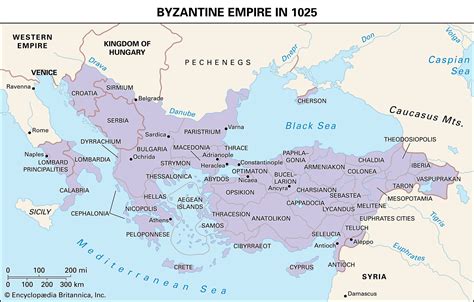
Location of Byzantium
Ancient Origins
Both elements of the symbol have a long history in the iconography of the Ancient Near East as representing either the Sun and Moon or the Moon and Venus (Morning Star) (or their divine personifications). Coins with star and crescent symbols represented separately have a longer history, with possible ties to older Mesopotamian iconography.
Crescents appearing together with a star or stars are a common feature of Sumerian iconography, the crescent usually being associated with the moon god Sin (Nanna) and the star with Ishtar (Inanna, i.e. Venus).
A very early depiction of the symbol (crescent moon, stars and sun disc) is found on the Nebra sky disc, dating from c. 1800 - c. 1600 BC (Nebra, Germany). A gold signet ring from Mycenae dating from the 15th century BC also shows the symbol. The star and crescent (or 'crescent and pellet') symbol appears 19 times on the Berlin Gold Hat, dating from c. 1000 BC.
Read also: Leo Moon: Traits & Compatibility
Mithradates VI Eupator of Pontus (r. 120-63 BC) used an eight rayed star with a crescent moon as his emblem. Several possible interpretations of the emblem have been proposed. In most of these, the "star" is taken to represent the Sun.
Use of the star-and-crescent combination apparently goes back to the earlier appearance of a star and a crescent on Parthian coins, first under King Orodes II (1st century BC).
A similar stele found in Babylon is kept in the British Museum.
| Ruler | Reign | Symbol |
|---|---|---|
| Mithradates VI Eupator of Pontus | 120-63 BC | Eight-rayed star with a crescent moon |
| Orodes II of Parthia | 1st century BC | Star and crescent on coins |
| Kavadh I of Sasanian Empire | 488-531 AD | Star-and-crescent motifs on coins |
Byzantium and Hecate
By the late Hellenistic or early Roman period, the star and crescent motif had been associated to some degree with Byzantium. Hecate had a cult in Byzantium from the time of its founding. Like Byzas in one legend, she had her origins in Thrace. Hecate was considered the patron goddess of Byzantium because she was said to have saved the city from an attack by Philip of Macedon in 340 BC by the appearance of a bright light in the sky.
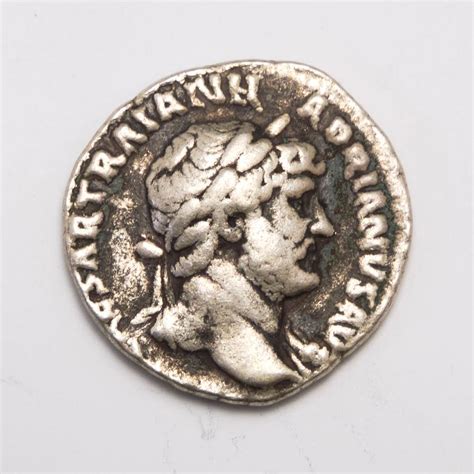
Coin of Roman Emperor Hadrian (r. 117-138)
Read also: Libra Full Moon: Spiritual Awakening
Heraldry and the Ottoman Empire
The combination is found comparatively rarely in late medieval and early modern heraldry. Crescents (without the star) increase in popularity in early modern heraldry in Europe.
It rose to prominence with its adoption as the flag and national symbol of the Ottoman Empire and some of its administrative divisions (eyalets and vilayets) and later in the 19th-century Westernizing tanzimat (reforms). The Ottoman flag of 1844, with a white ay-yıldız (Turkish for "crescent-star") on a red background, continues in use as the flag of the Republic of Turkey, with minor modifications.
With the Tanzimat reforms in the 19th century, flags were redesigned in the style of the European armies of the day. As the reforms abolished all the various flags (standards) of the Ottoman pashaliks, beyliks and emirates, a single new Ottoman national flag was designed to replace them. The flag of the Ottoman Navy was made red, as red was to be the flag of secular institutions and green of religious ones. The result was the red flag with the white crescent moon and star, which is the precursor to the modern flag of Turkey.
After the foundation of the Republic of Turkey in 1923, the new Turkish state maintained the last flag of the Ottoman Empire.
Первая Мировая с точки зрения Османской Империи. Почему вступили и почему проиграли?
National Flags
Other states formerly part of the Ottoman Empire also used the symbol, including Libya (1951-1969 and after 2011), Tunisia (1831) and Algeria (1958). The flag of Tunisia (1831) was the first to use the star and crescent design in 1831. This continues to be the Tunisian national flag post-independence.
Read also: Unveiling the Enigmatic Worm Moon
The same symbol was used in other national flags introduced during the 20th century, including the flags of Kazakhstan (1917), Azerbaijan (1918), Pakistan (1947), Malaysia (1948), Singapore (1959), Mauritania (1959), Azad Kashmir (1974), Uzbekistan (1991), Turkmenistan (1991) and Comoros (2001). Kashmir (1974) and the partially recognized states of the Sahrawi Arab Democratic Republic (1976) and Northern Cyprus (1983).

Flag of Pakistan
Symbol of Islam
In the latter 20th century, the star and crescent have acquired a popular interpretation as a "symbol of Islam," occasionally embraced by Arab nationalism or Islamism in the 1970s to 1980s but often rejected as erroneous or unfounded by Muslim commentators in more recent times.
In rugby union, Saracens F.C. incorporates the star and crescent in its crest. Drogheda United F.C., Portsmouth F.C., and S.U. Sintrense all borrow the star and crescent from their respective towns' coats of arms.
Unlike the cross, which is a symbol of Jesus' crucifixion in Christianity, there is no solid link that connects the star and crescent symbol with the concept of Islam.
Moon and Star Jewelry
Moon and star jewelry has captivated people for centuries due to its deep symbolism and rich history. In ancient times, the crescent moon was often seen as a symbol of femininity, fertility, and divine energy, while stars represented guidance, hope, and protection.
Modern jewelry incorporates moons and stars into pieces made from materials like gold, silver, and natural stones, blending traditional motifs with contemporary aesthetics.
When moon and star motifs are paired together, they create a powerful symbol of harmony and balance. The moon's emotional depth complements the star's steady guidance.
As celestial jewelry continues to grow in popularity, many designers are embracing sustainable practices. Recycled metals and responsibly sourced gemstones are becoming more common, reflecting a commitment to both artistry and environmental care.
For everyday wear, go for simple pieces like crescent moon studs or a delicate necklace paired with jeans. When it’s time to dress up, opt for statement pieces like chandelier earrings or a bold crescent moon pendant necklace.
Celestial Meaning
The moon is a feminine symbol that universally represents the rhythm of time as it embodies the cycle. In Greek mythology, Selene was the goddess of the moon. She would drive her chariot powered by beautiful white horses across the sky while pulling the moon, lighting the night.
The overall celestial meaning behind the moon is having a sense of direction and consistency that we think inspires all of us and allows us to be empowered. As it ultimately represents female empowerment, it is a great way to celebrate the inspirational women in your life.
Stars are more than shiny entities that we see throughout the night. By combining these powerful symbols together, you are representing the best attributes of the star and the moon and what they subsequently stand for.
One type of pendant with a crescent moon and a star is called Hilal as-Shawwal. It visualizes the crescent moon that officially ends the month of Ramadan and ushers in the following month of Shawwal. The crescent moon itself is often featured in jewelry. It refers to the moon as symbol of fertility, but also to the importance of the lunar calendar.
Transparent referencing and citing sources helps us all grow.
The symbol has a codepoint in Unicode, which is U+262A ☪ STAR AND CRESCENT.