Dive into the depths of the intriguing Elizabethan era, a period marked by significant developments in religion, theatre, and literary arts. This analysis will provide a detailed exploration of key elements that shaped this fascinating period in history, from the shifts in religious norms to the profound influence of Shakespeare, not neglecting the critical role astrology and the notion of fate played in moulding the Elizabethan society and culture. Furthermore, delve into the fascinating facts that highlight the colour and complexity of daily life during the Elizabethan era.
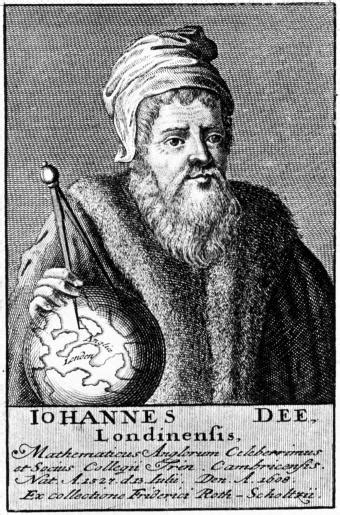
John Dee, a prominent figure in Elizabethan astrology
The Elizabethan Era: A Glimpse
The Elizabethan Era, a period from 1558 to 1603, marks the reign of Queen Elizabeth I in England. This period played a phenomenal role and saw significant advancements in various areas.
Religion's Role in the Elizabethan Era
Religion, undoubtedly, was one of the most influential aspects of the Elizabethan Era. The reign of Queen Elizabeth I marked a time of substantial religious shifts. The Act of Supremacy in 1559 not only re-established the Church of England but also proclaimed Queen Elizabeth I as the 'Supreme Governor' of the church. This made a considerable impact since it meant that the monarch, not a foreign pope, had ultimate authority over the Church in England.
As the state religion oscillated between Catholicism and Protestantism, people's lives were dictated by these religious transitions. The Elizabethan religious settlement brought about a unified Church of England, thereby creating a sense of religious harmony. An example of the profound impact of religion is noted in the way people spent their Sundays during this era. Due to religious laws known as the 'Blue Laws', people were expected to attend church services and abstain from any form of work or recreational activities. This showcases the depth of religious influence on day-to-day life in the Elizabethan Era.
Read also: Learn about Rick Levine and his contributions to astrology.
Religion also played a pivotal role in shaping Elizabethan's understanding of the cosmos. Elements of their worldview and their interpretation of natural phenomena were grounded in their religious beliefs.
Astrology in the Elizabethan Era
The Elizabethan Era, governed by strong religious beliefs, was also intrigued by the celestial world. Astrology, the study of the movements and relative positions of celestial bodies, was widely prevalent at this time. The stars and planets were believed to influence human lives and foretell future events.
During the Elizabethan Era, it was common to consult astrologers and use their knowledge to make decisions in the royal court, navigate sea voyages, and predict the fortune of new-born babies. Astrology was not considered a pseudoscience back then; instead, it was revered as a reliable and well-respected system of knowledge. Elizabethans believed in a universe where everything was interconnected.
The belief in astrology shaped many aspects of Elizabethan culture and society, influencing not only personal lives but also political decision-making. A principal function of Elizabethan astrologers was performing 'elections', picking the most auspicious times for events such as betrothals, weddings, and battles. To understand the grip astrology had on Elizabethans, consider the popularity of almanacs - an annual publication listing a set of events and other relevant data.
Shakespeare and Astrology
Astrology was widely reflected in Elizabethan literature, especially in the works of William Shakespeare. When mentioning the Elizabethan Era, it's impossible not to highlight the figure who left an indelible mark on the literature of the time - William Shakespeare.
Read also: The Secrets of Astrology and Numerology
Shakespeare's works were a reflection of the Elizabethan era, capturing the zeitgeist of the time. Textual analysis of his plays reveals a deep understanding of the socio-political conditions of the era. In many ways, his works were a mirror reflecting the issues of the time.
The repertoire of Shakespearean works encompassing the Elizabethan Era includes a staggering output of 37 plays and 154 sonnets. Shakespeare left an enduring imprint on the Elizabethan society, not just in the realm of drama and literature, but his influence permeated to the broader cultural, social, and linguistic facets.
Shakespearean Works
The collection of plays, sonnets, and other literature produced by William Shakespeare, an emblematic figure of the Elizabethan Era.
In ‘King Lear’ Gloucester comments on how the recent Solar and lunar eclipses are bad omens that natural philosophy can offer explanations for at the same time.
Shakespeare’s plays reflect the status of astrology in Elizabethan society on all levels both politically, intellectually and religiously. Astrology was used in so many different ways; to predict individual’s future, in medicine and science.
Read also: Leo Celebrities and Their Charts
Through his characters, Shakespeare shows the varying attitudes towards astrology, from superstition, belief, ridicule or mystery.
Elizabethan England- Shakespeare/Romeo And Juliet
The Elizabethan View on Fate
One utterly captivating aspect of the Elizabethan Era that merits discussion is its view on fate. In Elizabethan England, fate wasn't regarded as a broad, philosophically vague concept. Instead, it was concrete, coercive and carried a tangible impact.
Fate was perceived to be a divine plan, weaving tales of greatness or doom for individuals even before their birth. The world was viewed as a stage, and humans, mere puppets enacting their predetermined roles. It's critical to highlight that these beliefs were deeply ingrained and not just passing fashions.
To manifest this theorized fate, the Elizabethans indulged in multiple practices such as prophecy, astrology, and presage. These compelling views surrounding fate played a significant role in shaping the Elizabethan society.
Influence of Fate on Various Aspects of Life
The Elizabethans attributed success and downfall, joy, and sorrow, wellness, and illness to the unseen workings of fate.
- Law and Order: Legal processes often intertwined with beliefs in divinity and fate. Ordeal by water and the ducking stool were common methods of determining culpability, where 'fate' was allowed to decide the outcome.
- Medicine: Elizabethan medicine often incorporated superstitious elements.
- Navigation: Seafarers trusted the stars for their journeys.
- Warfare: Decisions to declare wars or battles were often based on astrological forecasts.
Theatre in the Elizabethan Era
The Elizabethan Era, epitomising a golden age in English history, witnessed a phenomenal surge in the arts, and a key element of this cultural blossoming was the ascendance of theatre. The intersection of increased literacy rates, wider dissemination of books, and an explosion of creative literature brought about a widespread appreciation for drama in the Elizabethan Era.
Elizabethan theatre began with travelling troupes who performed in courtyards or open public spaces, often surrounded by spectators from all walks of life. The formation of organised theatre companies brought more professionalism and structure to productions. To maintain social stability, the government introduced licensing acts.
Theatre served as a mirror to Elizabethan society, with plays often mirroring reality. This eminent growth of theatre infused the public's daily life with art and drama, making it an integral part of Elizabethan culture.
Daily Life in the Elizabethan Era
The Elizabethan Era, spanning the reign of Queen Elizabeth I from 1558 to 1603, is often regarded as the golden age in English history. Life in the Elizabethan Era was a contrast of courtly grandeur and harsh realities. It was an epoch underpinned by religious tension, scientific discovery, and the birth of the commercial theatre.
Daily life in the Elizabethan Era varied widely based on one’s social status, occupation, and gender. The importance of strict social decorum and religious practices were intrinsic to daily life. Leisure time in the Elizabethan Era was typically filled with socialising, attending theatre plays, or engaging in sports like archery, horseshoes, and stool ball.
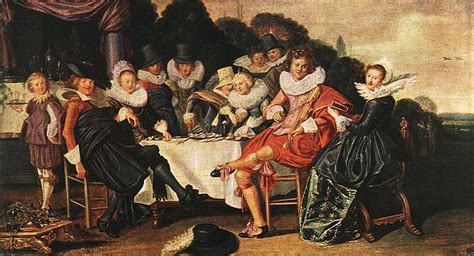
During the Elizabethan era, clothing was a clear indicator of one's social status and wealth. Only the higher classes could afford expensive fabrics, vibrant colours, and intricate designs.
Key Aspects of Elizabethan Life
- Social Hierarchy: Society was clearly divided into classes, and the monarch was at the top.
- Religion: Elizabeth reintroduced Protestantism as the state religion, ending the Catholic rule of Mary I.
- Education: A sound education was considered essential for boys of the upper and middle classes.
- Marriage & Family: Marriages were usually arranged, considering social class and property.
- Superstitions: The Elizabethans were highly superstitious.
The average life expectancy was significantly lower than today, due to poor hygiene, lack of medical knowledge and continuous illness outbreaks.
The Elizabethan Renaissance
By the early sixteenth century the mystery of what lay beyond the three known continents of Europe, Asia, and Africa had been solved. This discovery marked a gradual change in the way European people viewed the universe during the Renaissance, the era beginning around 1350 in Europe, in which scholars turned their attention to classical Greek and Latin learning and shifted to a more rational approach to philosophy, religion, and science. Historians consider the Renaissance the beginning of the last of three major divisions of European history: the classical or ancient era, during which the Greek and Roman civilizations flourished (c. 500 bce to c. 500 ce); the Middle Ages, or medieval era, which lasted from c. 500 to c. 1500; and the modern era, which began with the Renaissance and continues to the present.
Changing shape of the Universe
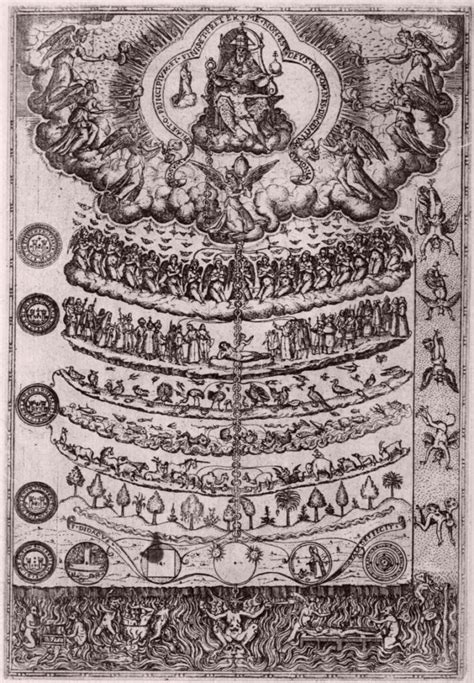
In ancient and medieval times there was little or no distinction between the disciplines of science, philosophy, and religion. What we call science today was a part of a wider system called philosophy that combined factual, spiritual, and moral knowledge. The medieval model of the universe described below demonstrates this concept.
Medieval Model of the Universe
Medieval scholars adapted the ancient model of the universe that had been described in detail in the second century by the Greek philosopher Claudius Ptolemy (c. 100-c. 178). It was usually depicted as a system of spheres. At the center was a stationary, or unmoving, sphere called Earth. The spheres surrounding the Earth were the seven so-called "planets": the moon, Mercury, Venus, the sun, Mars, Jupiter, and Saturn. Beyond the planets was a crystalline sphere where the stars existed as fixed objects. Beyond these spheres were the heavens, with progressively higher spheres for the angels, archangels, and seraphim. God existed outside of the spheres, where he could watch over the entire system. His primary focus, however, was on human beings at the center of the universe. Beyond the realm of God was the end of the universe, which was considered finite.
According to the Christian religion the Earth had become a place of change, corruption, and death after Adam and Eve committed the original sin of eating the forbidden fruit of the tree of knowledge. Medieval people considered everything in the sublunar sphere to be mortal, or subject to death, while everything above the sphere of the moon was eternal. The outer spheres rotated around the Earth in a state of perfect harmony, but because of Original Sin, no human being was able to experience this perfection unless he or she reached heaven after death.
In Elizabethan England most people accepted the medieval model of the universe and the moral lesson it conveyed. They had faith in the set order of the universe and feared chaos if the order of things-God's design-was disrupted. Everyone and everything had its assigned role and rank, or degree, in the universe, from the lowest rocks to the highest orders of angels. Evil and misfortune were thought to result when people tried to change their place in this order.
Heliocentric Theory
Although the medieval model of the universe persisted throughout the Renaissance, a new theory about the shape of the universe arose around 1512, when Polish astronomer Nicholaus Copernicus (1473-1543) wrote De Revolutionibus Orbium Coelestium (Revolution of the Heavenly Spheres), explaining his heliocentric theory. This theory held that the Earth, along with the other planets, rotated around the sun. Copernicus had arrived at this theory using mathematics and observation of the stars and planets. Though he was convinced of his findings, he was reluctant to publicize his ideas, since they contradicted the teachings of the church. According to church leaders the Earth was the center of the universe because the humans who lived there were the constant focus of God's divine rule. Copernicus waited more than thirty years to have his work published, but many European astronomers knew of his theories and some continued his work.
The heliocentric model of the universe would not find widespread acceptance until 1609, but by the time Elizabeth took the throne in 1558 people had started to doubt the medieval model. People began to understand the universe as an infinite realm, the human place within it grew increasingly uncertain. Where previously there had been an almost unquestioned belief that all human experiences were part of a divine plan, during the Renaissance many people began to believe in chance: the idea that events occur at random. The individual now felt that he or she had some control over daily life. Elizabethans found a new faith in the power of the individual to unravel the mysteries of the physical world-just as human beings in the early sixteenth century had explored the great unknown areas on the world map. These changes happened very gradually, however; most people during the Elizabethan Era held onto the medieval model of the universe even as they began to adopt a new worldview.
The Printing Press
The printing press arrived in England in 1476, when royal servant and translator William Caxton (c. 1422-c. 1491) established a press in Westminster, a city near London. Because European printers were already selling printed copies of ancient classics in England, Caxton decided to focus on original English works or translations in the vernacular, or everyday language. In his fifteen years as a printer at Westminster, Caxton published more than one hundred titles, helping to bring humanism to England. His works also promoted early English literature, providing a basis for the Elizabethan poets, essayists, and dramatists to come.
Modern Parallels
Magic and mysticism weren’t fringe. They were integrated into daily life, royal policy, even healthcare. And though the world would shift into the age of reason after the enlightenment. This era’s fascination with...
tags: #elizabethan #era #astrology