The Moon, a constant companion in the night sky, suddenly begins to fade and darken, only to return after some time with a blood-red hue. It’s beautiful to imagine how people across different cultures saw the same lunar eclipse. Their shared human experience of gazing up at the Moon and witnessing such an incredible event, albeit through different mythological and spiritual interpretations, connects us all-no matter where we live or when we live.
When we think of a lunar eclipse, it’s remarkable to imagine people from all corners of the world-from the vast deserts of Africa to the dense jungles of the Maya-gathering under the same sky, sharing in the awe and mystery of a darkened Moon. Solar and lunar eclipses have fascinated humanity for millennia, captivating cultures and spiritual traditions around the world with their awe-inspiring beauty and perceived mystical significance.
These celestial events are often seen as powerful omens or windows of heightened spiritual energy, offering unique opportunities for reflection, transformation, and connection with the divine. The red hue of the Moon during a total eclipse, which has been so impactful throughout history, continues to stir emotions in modern times as it did in the past.
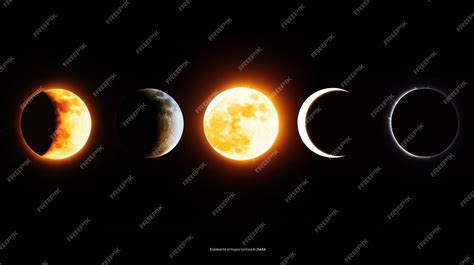
Sequence of a lunar eclipse
Read also: Weddings and Mercury Retrograde
Cultural Interpretations of Lunar Eclipses
Across various cultures, lunar eclipses have been imbued with deep spiritual meanings, reflecting unique beliefs and cosmologies.
Ancient Civilizations
- Ancient Greece and Rome: In ancient Greece and Rome, lunar eclipses were often considered bad omens, signifying disaster or conflict. The eclipse was believed to indicate great change or upheaval, possibly in the form of political shifts or natural disasters.
- Ancient Mesopotamia: In ancient Mesopotamia, lunar eclipses were seen as a divine warning. It was believed that the gods were sending a message through the eclipse, often associated with disasters or punishments for human wrongdoing.
- Ancient Egypt: In ancient Egypt, lunar eclipses were seen as part of the great cosmic cycle of life, death, and rebirth. The Moon was associated with the goddess Khonsu, who represented youth and healing. The eclipse was believed to be a time when the Moon was being reborn or renewed. Some Egyptians believed that during a lunar eclipse, the Moon temporarily descended into the underworld, or Duat, the realm of the dead.
Mythological Explanations
- Chinese Culture: In Chinese culture, lunar eclipses were often explained by a dragon devouring the Moon. According to legend, the dragon would slowly swallow the Moon, causing it to disappear, and then it would spit it back out, restoring it to its full glory. Eclipses were seen as a time of cosmic balance.
- Hindu Mythology: In Hindu mythology, lunar eclipses were caused by the demon Rahu, who tried to swallow the Moon. The tale comes from the myth of the churning of the ocean, where Rahu drank a drop of immortal nectar, and as punishment, was beheaded. However, his head continued to pursue vengeance by swallowing the Sun and the Moon during eclipses.
- Norse Mythology: In Norse mythology, the lunar eclipse was seen as a battle between wolves. The wolf Sköll chased the Sun, while Hati chased the Moon.
Mesoamerican and Indigenous Views
- The Mayans: The ancient Maya civilization had an extraordinary understanding of the Moon’s cycles. The Mayans viewed the Moon as an important celestial body, often associated with the gods. The Maya saw lunar eclipses as messages from the gods. They believed that the Moon’s darkening was a sign that the gods were angry or trying to communicate with the people. Similar to other Mesoamerican cultures, the Maya also linked lunar eclipses to a journey into the underworld. The Mayans often used lunar eclipses for rituals and ceremonies. They believed that an eclipse could influence the agricultural cycle, with some seeing it as a time to offer sacrifices or engage in divination.
- The Aztecs: For the Aztecs, lunar eclipses were considered a battle between the Moon and a jaguar. The jaguar was associated with nighttime and death, and the eclipse was seen as a cosmic struggle between light and darkness, life and death.
- The Inca: The Inca had a deep understanding of celestial events and believed lunar eclipses were significant for maintaining cosmic balance. During an eclipse, the Inca people would gather in large groups to perform rituals designed to bring fertility to the land and ensure good harvests.
- Native American Tribes: Some Native American tribes believed that lunar eclipses were a time of spiritual renewal and transformation. A few tribes believed that the eclipse marked a battle between the Moon and the Sun, representing a cosmic struggle between light and darkness.
Other Cultural Perspectives
- Aboriginal Australian Culture: In Aboriginal Australian culture, the Moon is often seen as a spiritual being whose movements influence the natural world. Some groups, particularly in the central and northern deserts, believed that lunar eclipses were caused by two lunar ancestors (sometimes depicted as the Moon spirit and a giant dog). Lunar eclipses were considered a perfect time for storytelling and myth-making. The eclipse symbolized a period of liminality, a threshold between the known and unknown, and this was when the sacred stories of the Dreamtime would be recounted.
- African Cultures: In many African cultures, lunar eclipses are seen as a time of restoration of balance in the universe. The Yoruba people of West Africa, for example, believed that the lunar eclipse was the result of the Moon being devoured by a mythical serpent or a great beast. Among other tribes, lunar eclipses were considered a time to honor the ancestors. Some African cultures believed that the Moon was a vessel for ancestral spirits, and during the eclipse, the spirits were thought to return to the sky.
- Ancient Japan: In ancient Japan, lunar eclipses were seen as portents of disaster or misfortune. The Japanese had a custom of making loud noises, such as shouting or banging drums, to ward off evil spirits during an eclipse. The Moon was revered in Japan, particularly through the worship of Tsukuyomi, the Moon god in Shinto. A lunar eclipse was thought to reflect disruption in the divine order, and the people believed that the eclipse caused a temporary blockage of the Moon’s divine light, disrupting the flow of spiritual energy.
- Medieval Europe: In medieval Europe, lunar eclipses were often associated with dark magic and witchcraft. Similar to other cultures, the blood-red color of the Moon during a total lunar eclipse was interpreted as a sign of war or violence.
Eclipses in Astrology & Witchcraft
Modern Interpretations and Spiritual Practices
In contemporary spiritual practices, lunar eclipses are viewed as potent times for introspection, emotional release, and transformation. Eclipses tend to supercharge the energies of the full or new moon.
Astrological Significance
Eclipses seasons are viewed in astrology as being deeply transformative times that can bring abrupt and sudden emotional change. On a lunar eclipse, the shadow of the Earth falls across the face of the Moon, this is when unconscious feelings may rise in to awareness, and we may see things more clearly than we had been able to before.
In a lunar eclipse, the earth momentarily blocks the illumination from the sun that creates a full moon, resetting the current emotional cycle and allowing the shadow to reveal what is hidden in our subconscious or keeping us blocked from seeing more clearly. The spiritual aspects of the moon represent our deep emotional tides, and so when the shadow passes over the moon, temporarily ceasing the illumination of our emotional being, there is an opportunity to reveal and transform our current emotional state.
Practices for Personal Growth
- Reflection and Introspection: These are important times for reflection upon your life, what you need to let go of and move on from. The energy of a full moon is about completion, clearing, and letting go.
- Emotional Release: The full moon is an opportunity to let go of an aspect of your emotional experience that you have outgrown and a time for anchoring in a new maturity or wisdom that was gained in the previous cycle; it is a perfect time for releasing something that no longer serves you.
- Rituals and Ceremonies: Doing a small personal ritual on the eclipses, like lighting a candle or writing an intention down on paper and burning it, can help you to engage the energies of release and usher in new changes.
- Mindfulness and Meditation: By developing a spiritual practice that is founded in earth based wisdom and honoring the cycles of the moon and seasonal cycles of change and growth we can live in greater peace and harmony in our daily lives.
Eclipse Seasons and Future Eclipses
Eclipses always come in pairs, and typically there are two eclipse seasons, one after the start of the year in Springtime and one toward the completion of the year in autumn. Year 2025 has 4 eclipses, 2 solar eclipses and 2 lunar eclipses.
Read also: Fired in a Dream? What the Bible Says
| Date | Type |
|---|---|
| March 13-14, 2025 | Total Lunar Eclipse |
| March 29, 2025 | Partial Solar Eclipse |
| September 7-8, 2025 | Total Lunar Eclipse |
| September 21, 2025 | Partial Solar Eclipse |
The final eclipse in this eclipse season will be a partial solar eclipse on September 21, 2025. Bookending the very powerful full moon lunar eclipse that happened on September 7.
These myths and legends continue to inspire awe, reminding us that the beauty of the universe and the mysteries of the cosmos transcend borders, eras, and civilizations.
Read also: Love and the Lunar Moon: A Deep Dive