Artificial Intelligence (AI) is pervasive, sparking debates from plagiarism and creative integrity to job security. Beyond these controversies, we should also ask how dependence on AI may rob us of our humanity.
Without an understanding of what intellect actually is, people theorize the possibility of artificial general intelligence (AGI), the hypothetical intelligence of a machine that can understand or learn any task that humans can, mimicking any human cognitive activity. We may fool ourselves into thinking we can engineer intelligence in machines, but there are certain things they will never be able to do.
I. The Image of God and the Essence of Humanity
To be human is to be the image of God. After God says “Let us make man in our image, after our likeness,” he explains what it means by giving humanity a mandate: “Be fruitful and multiply and fill the earth and subdue it, and have dominion over the fish of the sea and over the birds of the heavens and over every living thing that moves on the earth” (Genesis 1:26-28).
Zooming in to get more details on the creation narrative, we read in Genesis 2 that “God took the man and put him in the garden of Eden to work it and keep it” (2:15). Next, God brings the animals to the man so he can name them (1:19-20). Naming is an act of dominion, but more fundamentally an act of reason.
When God commissions man to be his viceregent ruling the earth, it is not as a despot but as a shepherd, studying the order of creation to put more order into it and cultivate it into something more than it could be on its own. To be a gardener is to understand creation so that you can cultivate it.
Making order from chaos is an integral part of the creation narrative. When Genesis 1:2 says that “The earth was without form and void,” what immediately strikes readers is not creation ex nihilo but creation out of chaos. In the Genesis account, God already exists and is outside and above chaos. “God is not a God of disorder but of peace” (1 Corinthians 14:33).
He puts order into creation, then commissions mankind to put more order into creation. Subcreating includes procreating as God made man and created him to make more men, but subcreating also includes what theologians call the “cultural mandate” to fill the earth and subdue it. That is, we are meant to continue Adam’s task of naming. We see how plants function, then put them in rows to make do more than they could by themselves. We turn rocks into buildings, minerals into computers, and cotton plants into clothing.
Besides science and technology, we also create culture (hence, “cultural” mandate), which is to say that we cultivate ourselves into civilization, producing not only technology but art. We compose symphonies, movies, fandoms, higher education, and bobble head figurines. These are all part of what it is to be human.
The cultural mandate as expressed in the Genesis narrative of gardening, naming, dominion, procreation are all fruits and effects of a common cause. The historical consensus through most of the history of theology and philosophy is that to be human is to be rational. What separates man from animal also separates man from machine.
Part of what it is to be human is to have intelligence, and as we forget what intelligence is, our ability to distinguish between authentic and artificial intelligence becomes fuzzy.
II. The Uniqueness of Human Reason
People have a lot in common with animals. We’re made of the same stuff and have bodies that feel pleasure and pain, express emotion, and even dream. We can learn habits, communicate with others, and even figure out how to use a stick to open a jar containing our favorite snack.
Since at least the fourth century BC, we’ve known that humans are uniquely gifted with reason. Aristotle (b. 384 BC) said, “All men by nature desire to know.” Augustine (b. 354 AD) said, “Man’s excellence consists in the fact that God made him His own image by giving him an intellectual soul, which raises him above the beasts of the field.” Tertullian (b. 160 AD) explains, “Consider first of all, from your own self, who are made ‘in the image and likeness of God,’ for what purpose it is that you also possess reason in yourself, who are a rational creature, as being not only made by a rational Artificer, but actually animated out of His substance.”
Human nature is philosophically defined as “rational animals,” which persists in the scientific classification homo sapiens (“wise man”). The designation rational animal is not meant to classify humans as mere animals but rather to highlight what makes us different within the broader category that acknowledges our similarity.
In fact, the thirteenth century theologian Thomas Aquinas emphasizes this point by saying that not all of what makes us human is the image of God, “The intellect or mind is that whereby the rational creature excels other creatures; wherefore this image of God is not found even in the rational creature except in the mind.”
The human body is not the image of God. The Bible is clear that “God is spirit” and “a spirit does not have flesh and bones” (John 4:24; Luke 24:39). Having a body is what makes us similar to animals. God made us to be physical creatures. God joined mind and matter in creating humans.
If reason separates us from animals, that means whatever we have in common with them is not part of the image of God and is not part of intellect. Instead, whatever we have in common with animals must be a function of material bodies, although the mind has quite a transforming effect on the functions of the body.
For example, animals have emotions, so emotions are a bodily function. It is common knowledge that stress affects health and medicine can change emotional states. Humans and their pet dogs both feel stress when away from family or in the presence of danger. Human intellect identifies delights or dangers that animals could never imagine, but the emotional aspect of our response is our body’s response or interaction with the mind.
This isn’t to say that desire, delight, and disappointment have no place in the intellect. Love, for example, may be expressed through the entire spectrum of emotion, from fury to fondness, which shows that love (as a virtue) is something more than emotion.
Humans and animals have a lot in common. We both dream, become emotionally attached to people, and need attention and play to remain physically healthy. Don’t believe Disney movies when they tell you that what makes us human is our emotion. That urban myth, combined with minimal understanding of human intellect, has given rise to people attempting to attribute personhood to animals. Not surprisingly, people are now “dating” AI girlfriends and attributing personhood to them as well.
If animals have emotions and no immaterial soul, then emotions are a physical function.
III. The Power of Reason and Language
The power of reason is defined by its actions. Just as the ability to speak, write, and sing are defined by the actions they produce, reason is defined by the acts of mind that define human intellect. Defining human nature as rational animal points to the essence of what it is to be human, and definitions point to the perfect expression of something. When people choose to act like fools, they are still rational animals. People with mental disabilities or fetuses and infants are also still rational animals. Babies will grow into reasoning adults, and disabilities may heal by medicine or miracle.
The human ability to speak, write, and sing is a function of language. While animals may have complex systems of signals and may be trained with human sign language, they can never understand language as language. Examples abound of humans teaching orangutans sign language, but they do not invent it themselves, and they do not display abstract understanding as will be described below.
By contrast, humans invent language because it is not so much a system of signals as it is a symbolic representation of human understanding. Human language provides infinite flexibility and creativity. The philosopher Heraclitus (c. 500 BC) was the first on record to say that the Greek word logos (“word”) also refers to reason because that’s what it represents.
Early Stoics spiritualized the laws of nature into a somewhat pantheistic divine Logos and later Stoics attributed personhood to it, saying that it even cares for humans and has personalized plans for their lives. When John 1 says that “the Word was God” and created all things, the apostle intentionally affirms the claim of widespread Roman stoicism that God is the creator.
Language is still a product of reason and not constitutive of it. In order to whittle intellect down to its essential attributes, we need to survey distinctly human actions and take note of their similarities. Animals do not have true language. They may create nests, but not art. They sing beautiful notes, but not songs. They collect in groups, but do not seek the common good.
Distinctly human actions are all the fruit of what both classical and modern logicians call the three acts of mind. The three acts of mind are the core function and definition of authentic intelligence that cannot be replicated by AI.
IV. The Three Acts of Mind
What logic calls “the first act of mind” is “understanding.” Understanding is the apprehension of abstract concepts. Dogs can pursue goals, like chasing a rabbit, and learn stimulus-response habits, like begging or house training, but they do not abstractly understand what they are doing. The understanding of concepts is expressed in terms and represented by words, but it is not confined to those words.
An easy thought experiment illustrates the point. We can think of what it is to be a tree and how trees are different from bushes. Trees have roots, trunk, and crown (leaves). A child may draw a tree with a couple vertical lines and a squiggly circle. I don’t know what species of tree that is, but I know that the word “tree” also applies to pine trees, palm trees, and willow trees, even though I mentally symbolize the abstract understanding of “tree” with a generic shape that more closely resembles an oak tree.
While an animal may pursue a goal, it cannot reflect on its action as a goal. The mind most commonly apprehends abstract concepts by observing many individual things (like trees), subtracting their differences (size, number of leaves, fruit), and abstracting their commonalities (trunk, roots, crown) to form a concept that universally applies to each of the individuals. Apprehending universals by abstracting commonalities is similar to pattern recognition, also known as induction.
But patterns can fail, so they only produce probable knowledge that something is likely to continue in the same pattern. When something “clicks” as being necessary, then probabilistic knowledge becomes certainty. For example, at first a child learns by practice that water doesn’t increase or decrease when poured into differently shaped containers, but at some point the principle of the conservation of mass clicks.
All knowledge begins with the basic ability to recognize commonalities and differences in things.
The second act of the mind is “judgement.” Judgement combines the understanding of abstract concepts into propositions that make truth claims expressed by declarative sentences. “A tree is tall” combines the concepts “tree” and “tall” to make a true claim while “a phoenix is real” combines terms to make a false claim.
The third act of the mind is “reason.” Reason combines truth claims into a syllogistic argument that explains why a claim is true by stringing together three claims. “Humans are mortal; John is a human; Therefore, John is mortal.” John is mortal because he is human. A syllogism claims a generality, claims or denies that something counts as an instance of that generality, then makes a conclusion.
Everyday thought is characterized by syllogistic reasoning. It is so integral to our mental activity that we are hardly aware of it most of the time. At its simplest, syllogistic reasoning is simply moving from one thought to another by way of some bridge or connection. Syllogistic reasoning uses judgements and understanding, so mental activity can be seen as cumulative or holistic in its simplicity.
V. AI and the Illusion of Understanding
As we become immersed in the evolving lexicon of science and AI, we must remain mindful of these risks. AI’s linguistic abilities invite us to rethink the boundaries of thought and understanding, but they also serve as a reminder: It is our human consciousness, our capacity for wonder, reflection, and deep introspection, that remains at the heart of philosophical inquiry.
AI, trained on vast amounts of human data, can generate text that seems to dance between profound insight and creative abstraction. The allure lies in their ability to weave complex ideas into coherent narratives, almost conjuring wisdom from the ether. AI's outputs are products of pattern recognition and data synthesis, not conscious thought. The sophistication of their prose can easily lead us to imbue them with qualities akin to a philosophical muse or even an oracle.
This anthropomorphizing risks blurring the line between human contemplation and machine mimicry, encouraging us to mistake elegant language for genuine wisdom or insight. While the rise of AI in philosophical discourse invites reflection on the nature of thought, creativity, and understanding, it's important to recognize the limits of machine-generated insight. If an AI can articulate complex ideas with apparent depth, what distinguishes its outputs from genuine human inquiry?
It’s a reminder that AI, no matter how sophisticated, mirrors human intellectual endeavors without partaking in the existential journey that underpins real philosophical inquiry. As AI grows more complex, some are beginning to wonder if we are on the brink of something extraordinary-a merging of machine intelligence with a higher-order reality. While AI can generate intricate and seemingly profound outputs, these are still rooted in the patterns of human language and data, not in any true understanding or sentience.
The seductive narrative of AI as a bridge to some “divine” reality is compelling, but it risks misleading us into believing that these machine-generated insights possess more depth than they do. The journey from the poetic language of quantum mechanics to the philosophical musings inspired by AI demonstrates the enduring power of language as both a tool for expression and a source of illusion.
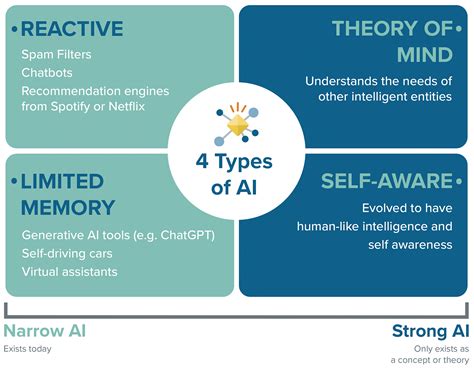
The following table summarizes key distinctions between human and artificial intelligence:
| Feature | Human Intelligence | Artificial Intelligence |
|---|---|---|
| Source | Biological, evolved | Engineered, programmed |
| Understanding | Abstract, conceptual | Pattern recognition, data synthesis |
| Consciousness | Subjective, self-aware | Simulated, lacking genuine sentience |
| Creativity | Original, based on insight | Generative, based on existing data |
| Existential Journey | Underpins philosophical inquiry | Mirrors human endeavors without participation |
Is AI the Apocalypse? Myths, Fears, and the Real Limits of Artificial Intelligence
tags: #metaphysics #artificial #intelligence