The Moon, our celestial neighbor, has captivated humanity for millennia. Its ever-changing phases have inspired myths, religions, and scientific inquiry. Understanding the lunar cycle and its influence on our planet is a journey through history, astronomy, and space weather.
It takes the Moon 29.53 days to orbit completely around the Earth in a full lunar cycle. During this time, the Moon will go through each phase. It’s the Moon’s journey as it orbits around Earth that creates the predictable dance between light and shadow. And while the changes may seem slow, on any given day the amount of Moon illuminated by the Sun can vary by as much as 10-percent.
The illustration is set to your computer’s clock and therefore gives you an accurate reading for your own particular time zone. The four main Moon phases in order are the New Moon, First Quarter Moon, Full Moon and Last Quarter Moon. These phases occur at very specific times and are measured by both the Moon’s luminosity and how far along the Moon is in its orbit around Earth. When people say “today is a Full Moon” it’s important to remember that doesn’t mean the Moon is full all day long, only that the Full Moon Phase occurs on this day. In reality, the exact moment of the Full Moon can be timed to the second.
The remaining four Moon phases occur at halfway points between the main phases. Unlike the main phases, these minor phases don’t happen at a specific time or luminosity, rather they describe the Moon’s phase for the entire time period between each main phase. These interim phases are Waxing Crescent Moon, Waxing Gibbous Moon, Waning Gibbous Moon and Waning Crescent Moon.
The New Moon Phase occurs when the Moon is completely dark with zero-percent luminosity, while the Full Moon Phase is completely bright with 100-percent luminosity. The First and Last Quarter phases happen when the Moon is exactly half illuminated, with 50-percent luminosity.
Read also: Leo Moon: Traits & Compatibility
The Lunar Cycle: Phases Explained
As the Moon orbits around Earth and Earth orbits around the Sun, the angle between the Sun, Moon, and Earth changes. As a result, the amount of sunlight that reflects off the Moon and travels to our eyes changes every day.
We see the Moon’s disk change from all dark to all light to all dark again: This span of time is called a lunar cycle, lunation, lunar month, or synodic month. The length of the cycle can vary slightly, but on average, it is 29.53059 days.
Astronomers have broken down this cycle into four primary Moon phases: New Moon, First Quarter, Full Moon, and Last Quarter. There are also four secondary phases: Waxing Crescent, Waxing Gibbous, Waning Gibbous, and Waning Crescent.
The primary phases occur at a specific moment, no matter where you are on Earth, which is then converted to local time. The secondary phases, however, represent a span of time rather than a specific moment.
Read also: Libra Full Moon: Spiritual Awakening
- New Moon: At this time, the Sun and Moon are in conjunction, meaning that they are closest together in the sky. From our perspective, the Moon appears totally dark.
- Waxing Crescent: At the beginning of this stage, we see a thin, crescent-shape Moon, which, in the Northern Hemisphere, appears on the right side. The lit area slowly widens each day.
- First Quarter: At this point the Moon has traveled 1/4 of the way through its orbit. From our perspective, 1/2 of the Moon’s surface is lit. In the Northern Hemisphere, the right side of the Moon is illuminated; in the Southern Hemisphere, it’s the left side.
- Waxing Gibbous: This phase occurs between the first quarter and the Full Moon and describes the Moon when it is more than half-lit but not yet fully lit.
- Full Moon: From our perspective, the full disk is illuminated. At this time, the Sun and Moon are in opposition, meaning that they are farthest apart in the sky.
- Waning Gibbous: This phase occurs between the Full and last quarter and describes the Moon when it is more than half-lit but not fully.
- Last Quarter: At this point, the Moon has traveled 3/4 of the way through its orbit. At this stage, we see 1/2 of the Moon’s surface lit. In the Northern Hemisphere, the left side is illuminated; in the Southern Hemisphere, it is the right side.
- Waning Crescent: The lit area slowly shrinks each day, covering less and less of the Moon’s surface until it looks like a very thin crescent on the left side. Eventually, the entire disk will be in darkness, at which point it will be the new Moon phase, and another lunar cycle will have begun.
Moon's Age
The term "Moon's age" is not a reference to how long the Moon has existed (about 4.5 billion years), but rather how many days it's been since the last new Moon. The span of time between one new Moon and the next is called a lunar cycle, lunation, lunar month, or synodic month and on average lasts for 29.53059 days. This translates to 29 days, 12 hours, 44 minutes, and 3 seconds.
Percent Illumination
Percent illumination tells us how much of the Moon’s disk is lit, as seen from Earth. Looking at the calendar on this page, you can see that from new to full, the percentage increases, indicating the waxing stages, and from full to new, the percentage decreases, indicating the waning stages. The New Moon is 0 percent illuminated (or totally dark); the First Quarter is essentially 50 percent illuminated (half of the disk is lit); the Full Moon is 100 percent illuminated (the entire disk is lit); and the Last Quarter is back to essentially 50 percent illuminated (half of the disk is lit).
Why does the Moon influence a person? (few people will answer)
Moon Rise and Set
Read also: Unveiling the Enigmatic Worm Moon
Below are general guidelines as to where to look for the Moon during each of its phases. Times mentioned are solar time, not clock time. The four primary phases (in italics) rise and set at a point in time; the four secondary phases occur over a broader timespan.
| Phase | Rises Near the East | Highest in the Sky | Sets Near the West |
|---|---|---|---|
| New Moon | Around sunrise | Around noon | Around sunset |
| Waxing Crescent | Between sunrise and noon | Afternoon | Between sunset and midnight |
| First Quarter | Around noon | Around sunset | Around midnight |
| Waxing Gibbous | Between noon and sunset | Evening | Between midnight and sunrise |
| Full Moon | Around sunset | Around midnight | Around sunrise |
| Waning Gibbous | Between sunset and midnight | Early morning | Between sunrise and noon |
| Last Quarter | Around midnight | Around sunrise | Around noon |
| Waning Crescent | Between midnight and sunrise | Morning | Between noon and sunset |
Earthshine
Earthshine is sunlight that dimly illuminates the dark part of the Moon’s surface that faces us. It occurs when light travels from the Sun to Earth, reflects off the Earth, travels to the Moon, and then bounces back to Earth to reach our eyes. When this happens, we can see part of the Moon that normally isn’t lit, but this portion is much dimmer than the section directly illuminated by sunlight. For example, during a waxing crescent stage, we might see a thin crescent brightly lit by direct sunlight, but also the rest of the Moon’s disk slightly illuminated by a much dimmer glow from Earthshine.
Imagine a Neanderthal peering out of his cave some dark summer night as the Full Moon rises above the horizon. Nothing on Earth was quite like this strange brilliant object arcing through the night sky. What did he think it was? It’s not hard to imagine how the Moon became the source of many religions, myths and legends throughout the ages.
The Greeks were among the first to take a scientific look at the Moon and her phases. Around 500 BC Greek philosopher and astronomer Pythagoras carefully observed the narrow boundary line-the terminator-between the dark and light hemispheres of the Moon. Based on how the terminator curved across the surface of the Moon, he correctly surmised the Moon must be a sphere.
A few centuries later, around 350 BC, Aristotle took Pythagoras observations even further. By observing the shadow of the Earth across the face of the Moon during a lunar eclipse, Aristotle reckoned that the Earth was also a sphere. He reasoned, incorrectly however, that the Earth was fixed in space and that the Moon, Sun and Stars revolved around it. He also believed the Moon was a translucent sphere that traveled in a perfect orbit around Earth.
It wasn’t until the 16th century that our understanding of the Solar System evolved. In the early 1500s Astronomer Nicolaus Copernicus developed a model of the Solar System where Earth and the other planets orbited around the Sun, and the Moon orbited around Earth.
One hundred years later Italian Astronomer Galileo used one of the first telescopes to observe the terminator and deduced from the uneven shadows of the Waning Crescent Phase that the Moon’s surface was pocked with craters and valleys and ridged with mountains. These observations were revolutionary.
Copernicus and Galileo upended the long-held Aristotelian view of the heavens as a place where Earth was the center of the Universe and the Moon was a smooth, polished orb.
Space Weather and Its Influence
Space weather starts on the Sun. The Sun is so much more than a glowing hot sphere in the middle of our solar system. The Sun is very dynamic and plays a key role throughout the entire Solar System.
The first thing we need to understand is that space is not as empty as it might look. Space is filled with a constant stream composed of highly charged particles (electrons) which come from the Sun. This stream is what we call the solar wind.
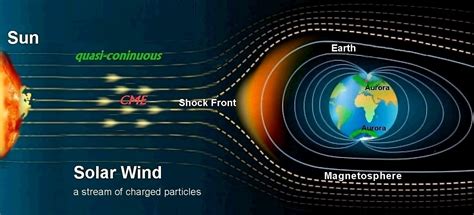
The magnetic field surrounding our planet makes sure that everybody who lives here is protected from this solar wind. If we wouldn’t have a magnetic field around our planet, Earth would like exactly like Mars: a barren planet without an atmosphere where we human beings wouldn’t be able to survive.
While it’s a great thing that we have this magnetic field around our planet to protect us, our magnetic field is not 100% watertight. The solar wind is still able to penetrate our atmosphere near weak spots in an oval shape around the magnetic poles of our planet.
The solar wind collides there with oxygen and nitrogen atoms that make up our atmosphere at an altitude mainly between 80 to 600 kilometers. When the solar wind collides with these atoms, the atoms in our atmosphere temporally get a boost of energy. This energy causes the atoms in our atmosphere to temporally release photons, which is a form of energy that we see as light. These atoms emit this light until they calmed down. The light that these atoms emit is the aurora that we see in the night sky.
The solar wind is the first piece of the puzzle that we need to know about to fully understand what space weather is all about. The second piece of the puzzle has to do with the magnetic field of the Sun. This is what we call the interplanetary magnetic field.
The interplanetary magnetic field is carried throughout the solar system by the solar wind and its properties change continuously. The interplanetary magnetic field constantly changes both in strength and direction. For aurora we want that the total strength of the interplanetary magnetic field to be as high as possible (indicated with Bt) and that the Z-component (Bz) of the interplanetary magnetic field turns southward.
But why is it so important for us that the Z-component of the interplanetary magnetic field turns southward? That is actually quite easy to understand if you ever played with bar magnets. If you take two ordinary bar magnets and try to put both of the north (or south-) poles together you will see that the magnets want to move away from each other. They repel each other. If you put the north and the south poles together you will see that they attract each other! The opposite polarities attract each other!
Exactly the same principle happens in space where the interplanetary magnetic field and Earth’s magnetic field meet as the magnetic field lines from Earth point from south to north. This is the Z-component of Earth’s magnetic field and this always points to the north. When the Z-component of the interplanetary magnetic field also points north we will see that just like the bar magnets that we have in our homes, the solar wind gets repelled and fails to make a connection with Earth’s magnetic field, making it harder to enter our atmosphere.
Now let’s pretend that the Z-component (Bz) of the interplanetary magnetic field has turned southward. We now know that because the magnetic field of the Earth points northward, the interplanetary magnetic field with a southward Z-component has a much easier time connecting with the magnetic field of our planet. With this connection, it will be much easier for the solar wind to enter out atmosphere.
The solar wind and the interplanetary magnetic field are not constant in their strength, direction, density and speed. These values can be dramatically different from moment to moment. The solar wind here at Earth has a speed of about 300km/s during normal conditions. However, this speed can increase drastically thanks to certain events on the Sun to 1.000km/s or sometimes even more!
The density of the solar wind (number of solar wind particles per square centimeter) can also be totally different from moment to moment. Even the interplanetary magnetic field can increase dramatically in strength what in turn can cause a much more dramatic response when it interacts with Earth’s magnetic field.
With a high solar wind speed and density and a strong southward directed interplanetary magnetic field we can see that Earth’s magnetic field gets overwhelmed by the solar wind, in turn causing more and more solar wind particles to reach out atmosphere. The aurora becomes brighter and the auroral oval will expand to lower latitudes than normal. When this occurs we speak of a geomagnetic storm.
Coronal Holes and Mass Ejections
We have two distinct phenomena that we need to learn about: coronal holes and coronal mass ejections.
A coronal hole is an area on the Sun where the Sun’s magnetic field lines stretch out far into space. This causes a hole to form in the corona, our Sun’s outermost layer. These coronal holes are areas on the Sun where solar wind can escape at a higher speed than normal. When such an area faces Earth, the solar wind of such a coronal hole will start to catch up with the normal solar wind which is often considerably slower than the solar wind from a coronal hole. This causes a shock wave to form where the solar wind has a higher density and carries with it a much stronger interplanetary magnetic field as well.
When the shock wave has passed we will see that the density and the interplanetary magnetic field strength decreases and the solar speed increases. Coronal holes are often the source of minor to moderate geomagnetic storms here on Earth.
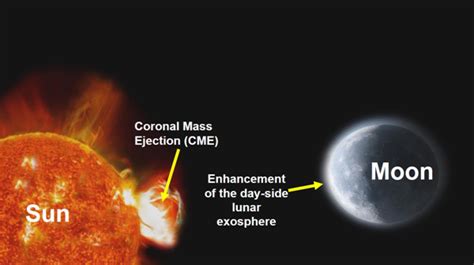
The most dramatic space weather effects come from so called coronal mass ejections. A coronal mass ejection (or CME for short) is basically a giant cloud of solar plasma drenched with solar magnetic field lines that get expelled by the Sun during dramatic events like solar flares and filament eruption. A coronal mass ejection is an enormous cloud of solar wind particles that is often much faster and denser than the ambient solar wind. The interplanetary magnetic field within such a coronal mass ejection is often much stronger as well.
The interplanetary magnetic field normally has a total strength (Bt) of about 6 nanoTesla here at Earth but inside a coronal mass ejection this can increase to 40nT or even more! You can imagine that Earth’s magnetic field can respond violently when the strength of the interplanetary magnetic field increases that much!
An important thing that we need to understand is that coronal mass ejections can be launched in any direction. More often than not they will be directed away from Earth. If we are lucky that we do have such a plasma cloud coming towards our planet, then with a bit of luck we can enjoy fantastic auroral displays often at much lower latitudes than normal.
Sunspots, Solar Flares and Filaments
The strongest coronal mass ejection are almost always the result of solar flares. Solar flares are intense explosions on the Sun that occur at complex sunspot regions. A solar flare is so incredibly powerful that we have a hard time imagining their strength. One solar flare equals the power of millions of nuclear bombs.
These explosions can break the magnetic field lines near a sunspot region and eject a part of the solar atmosphere (the corona) into space. The plasma that is being ejected and starts its journey through interplanetary space is what we call a coronal mass ejection.
Sunspots are darker and cooler areas on the solar surface where strong magnetic field lines come up from the interior of the Sun through the solar surface. When these magnetic field lines become entangled with each other and snap, they release a huge amount of energy which we call a solar flare.
Sunspots are however not something we can always find on our Sun, the Sun follows a pattern of about 11 years where the Sun goes from pretty much no sunspots to very many sunspots, and back to no sunspots again. This is what we call a solar cycle.
Also so called filament eruptions can launch a coronal mass ejection into space. Filaments are clouds of ionized gases that form above the solar surfaces between areas of opposite magnetic polarities. When a filament becomes unstable, it often collapses and gets reabsorbed by the Sun.
Another possibility is that it erupts and manages to escape the gravity of the Sun, the resulting plasma cloud is called… indeed you guessed it… a coronal mass ejection.
Violent solar events like solar flares and filament eruptions sometimes expel large amounts of charged particles into space. The most important particles are protons which can cause damage to satellites and make High Frequency radio communication at polar latitudes hard or even impossible. When these protons exceed a certain threshold we speak of a solar radiation storm.
Aurora and Geomagnetic Storms
Occasionally, we see a dramatic increase in the amount of solar wind that leaves the Sun: coronal hole solar wind streams and coronal mass ejections. The solar wind takes with it the magnetic field of the Sun which we call the interplanetary magnetic field. When the Z-component (Bz) of the interplanetary magnetic field turns southward (negative) then this causes a good connection with Earth’s magnetic field which in turn makes it easier for the solar wind to penetrate our atmosphere. When all the pieces of the puzzle fall in place we will see a dramatic increase in auroral activity which in turns causes the aurora to be visible from lower latitudes than normal. This is what we call a geomagnetic storm.