In a rapidly changing world filled with distractions and challenges, many individuals find themselves seeking deeper meaning and purpose in life. Spirituality has emerged as a guiding light, helping people navigate their personal growth journeys. But what exactly does spirituality mean? It can vary from person to person, but generally, it encompasses the search for connection, purpose, and understanding beyond the physical realm.
Spirituality is not solely about religion; it can exist outside traditional boundaries. It is often considered a personal experience that can help individuals grow psychologically and emotionally. For many, spirituality offers a way to explore their beliefs, values, and place in the universe. This fluid concept allows people to connect with something greater than themselves, whether that’s nature, the universe, or a higher power. As individuals cultivate their spirituality, they often find clarity and a sense of direction that drives personal growth.
Personal growth is focused on the development of the individual as a human being, the attempt to refine and perfect our human nature in all possible ways.
Spiritual growth helps us feel connected to something bigger than ourselves. This connection can guide us towards better mental health, support us through loss, and strengthen our relationships. Studies show that people who practice spirituality tend to handle stress better and enjoy improved overall health. This piece explores the basics of spiritual development. You’ll discover practical techniques for daily practice and proven ways to develop a deeper connection with yourself and others.
Spiritual growth is about discovering who we are and building meaningful connections with others and a higher power or purpose. It begins with personal development and gradually helps us expand our understanding, allowing us to form deeper bonds with ourselves, others and the world around us.
Read also: Meaning of Personal Year 11
I am really happy and thankful to be able to be a conscious and co-active participant in this endless voyage. With the inner growth there comes an increasing awareness of the inner processes and the deeper and higher levels of my Self.
Key Elements of Spiritual Growth
Spiritual growth is built on three key elements:
- Grace: The belief that a higher power is guiding and supporting our growth.
- Truth: The wisdom we find in spiritual teachings and our personal experiences.
- Time: The patience needed for steady development and maturity.
Spiritual growth has two distinct dimensions. Vertical growth builds a closer relationship with a higher purpose, while horizontal growth builds awareness of relationships with others and the environment.
I want to find and know the Divine and live it. For that to happen our aspiration needs to be sincere and true. Sincerity shields us from pretension, from trying to appear as more (or less) as one actually is. Pretension is one of the great pitfalls of the ego. And especially tricky, when it is a “spiritual ego”.
Common Misconceptions About Spiritual Growth
A common misconception is that spiritual growth is a straight, continuous path. In reality, it often involves periods of doubt and even stagnation. Another myth is that spiritual growth requires detachment from the physical world, but in fact, it often deepens our appreciation of life’s experiences and connects us more fully to the world around us.
Read also: Personal Year 9: A Guide
People often mistake spiritual growth for purely religious practice. While it can happen within religious contexts, it goes way beyond the reach and influence of religious boundaries. It includes secular approaches to personal development and ethical living. Furthermore, the idea that spiritual growth needs isolation or withdrawal from society isn’t accurate. Real spiritual development often strengthens connections with others and boosts community involvement.
Spiritual growth combines intentional practices and natural development through relationships with like-minded individuals. Progress becomes less about achieving specific milestones and more about recognizing subtle changes in awareness, relationships, and personal understanding over time.
I am not propagating that we all shall become Yogis now, Sadhus and walk around in orange robes ; ). Far from it.
The aim for me here, on that level of personal development, is the integration and refinement of the person, the development of a consistent and functional personal ego (in the positive sense of the word) that can serve as a healthy foundation in the world for the transcendence of itself ( sounds like a paradox, doesn’t it? It “happens” when the person is ready for it.
Also I begin to feel others too as part of “my” Self, and “the world” in union with myself.
Read also: Understanding anemia spiritually
How to Start Your Awakening Process | Spirituality for Beginners with Eckhart Tolle
Benefits of Spiritual Practice
Research shows that spiritual practices can significantly improve our overall well-being. People who engage in spiritual communities tend to live longer and have lower rates of depression and anxiety.
Spiritual growth can transform our mental well-being, physical health, and relationships. Research backs this up: People who engage in spiritual practices experience less stress, improved health, and deeper connections with those around them.

Mental Health Improvements
Spiritual practices bring remarkable changes to mental health. Research shows that people who participate in spiritual activities experience:
- A higher sense of purpose and peace
- Better confidence and self-esteem
- Stronger coping mechanisms
- Faster recovery from mental illness
Research also shows that spirituality helps reduce anxiety and substance misuse. It boosts recovery from various mental health challenges.
Physical Health Benefits
Spiritual practices offer benefits beyond mental well-being. People in support group communities tend to live healthier and longer lives. Those who maintain regular spiritual practices show better immune system responses and improved overall health.
Better Relationships
Spiritual growth strengthens relationships. Research shows that couples with spiritual practices communicate better and solve problems more effectively. Partners who pray together develop much stronger feelings of unity and trust. Spiritual practices encourage greater empathy and cooperation between partners, especially during tough times.
Enhanced Self-Awareness
Self-awareness is the life-blood of spiritual, emotional, and psychological growth. Spiritual practices help people develop deeper connections with their intuition and inner wisdom. This deeper self-awareness guides them to live more authentically and make better decisions.
Better self-awareness through spiritual practice helps break negative patterns effectively. People with strong self-awareness build healthier relationships, overcome addictions, and achieve lives that match their values.
As consciousness evolves, I experience myself more and more as un-identified with my physical, vital and mental nature and the outer appearances. Instead of being identified, I rather observe them as a “detached” witness. This is hard to explain because it does not mean that I feel disconnected from what is going on inside of my psyche and body and outside of myself.
Starting Your Spiritual Journey
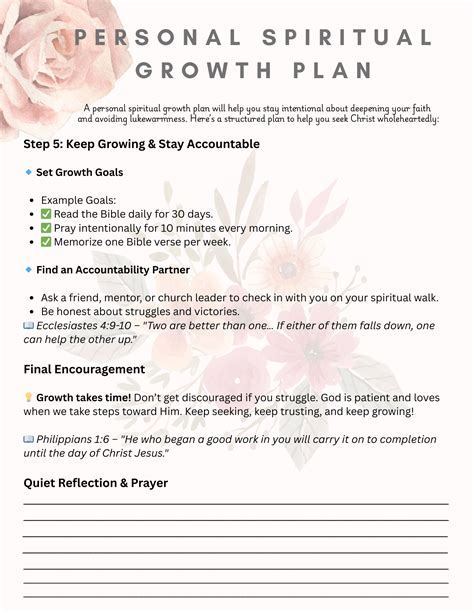
Starting your spiritual journey doesn’t have to be complicated. It begins with small, consistent actions that gradually grow into meaningful practices.
Simple Daily Practices
Simple daily activities are the foundations of spiritual growth. We started each day by setting intentions to create a focused mindset. Mindful moments throughout the day help maintain spiritual awareness. You might take conscious breaths, reflect quietly, or observe nature.
Physical meditation connects you deeply with yourself and the world around you. Each person expresses this practice differently, making it a personal spiritual journey. Mindful walking, conscious eating, and gentle movement develop deeper awareness naturally.
You can learn continuously by reading spiritual texts or listening to uplifting content during daily tasks. When you approach routine activities with awareness and purpose, they become channels for spiritual growth.
In order to improve our spiritual health, we, first, need a desire to grow, spiritually. Once we have that desire, it’s important to begin some form of daily spiritual practice. There are plenty of reasons to start a daily spiritual practice. Here are six I’ve discovered over the years.
1) We all have a spirit. And, when our spirit is unwell, our body, mind, and soul are unwell too. I know not everyone identifies as a “spiritual” person. That’s okay; we don’t have to identify as “spiritual” to have a spirit. When we neglect our spirit, it shows up in other areas of our life, whether we notice it or not. Taking care of our spirit makes all areas of life a little better. Don’t believe me? Just try taking care of your spiritual side for a while.
2) Spiritual practices improve health, increase personal growth, strengthen relationships, and are the way to true self-actualization. We can read and study and work until we’re blue in the face, and we can achieve great growth and learning this way. But, our greatest learning comes on the spiritual plane. It comes when we get quiet and still. Only then can we listen and hear and know the things we need-to improve ourself and our relationships, to be a better parent, spouse, partner, or child. Practices such as prayer, meditation, scripture study, pondering, stillness, yoga, and mindfulness (to name a few) open us up. They re-connect us with the Divine. They allow us to hear the fine whispers that can guide our life. They allow us to step out of our everday worries-out of our own “agenda”-and be who we really are. As one of my favorite men wrote, “We are very busy people. We have so much to do. We need to get off by ourselves once in a while and think of the spiritual things and build ourselves spiritually. If you have a study at home, lock yourselves in it. If you have a place in the basement where you can be by yourself, go there. Get by yourself…. Just meditate and reflect…about yourself and your relationship to [God].
3) Most spiritual tools and practices are not only backed by experience; they’re backed by research. Even though I know, from experience, these spiritual tools and practices lead to greater health, meaning, and purpose in life, you don’t have to take my word for it. Practicing meditation, mindfulness,[3] prayer,[4] and even being in nature have all been shown to improve health and wellness, in the scientific research too.
4) At the core of every trauma is a spiritual wound; and focusing on spiritual health can heal us. That’s what I have learned, not just from my own experience, but time and again from those I help in therapy. It may be easier to see or feel the physical, emotional, or mental wounds, but pain and trauma also impact the delicate spirit, whether we sense that impact or not. When we focus on creating spiritual health, we not only feel emotionally stronger.
5) When we engage in spiritual practice and “obey the whispers,” we’re not only healthier-physically, mentally, emotionally, socially, and spiritually. We grow. As I write in my memoir, This is How We Grow: “There are some principles that are time-tested to be true, and when we live according to those principles we experience an increase of joy. Obeying the whispers is one of these. Call it your conscience, the voice of God, the spirit, the Holy Ghost-it’s like a radio wave continually broadcasting which you can only hear if you sit and tune in. It is up to each of us to listen for this guidance and up to each of us to choose to obey.” As we listen and obey, we know what we need to do. And, we’re somehow given the strength to do it.
6) Having a Daily Spiritual Practice is the surest path to Joy. We all have joy, deep within. But, for most of us, our joy is covered up by the stress, drama, and trauma of life. Only when we get still, pray, connect, listen, do we begin to uncover our joy, leading to a continual source that improves our life and everyone around us. Bottom line: if we want true joy, we need to connect, spiritually. As Eckhart Tolle writes, “It is from inner space, the undconditioned consciousness itselt, that true happiness, the joy of Being emanates. To be aware of little, quiet things, however, you need to be quiet inside. A high degree of alterness is required. Be still. Look. Listen.
Creating a Spiritual Routine
A consistent spiritual routine needs dedication and structure. You should select a quiet, peaceful space Creating a spiritual routine takes dedication, but it’s worth it. Find a quiet space that becomes your sanctuary for daily reflection and connection. This space helps you build a meaningful routine.
To build an enduring routine:
- Pick a consistent point in your daily flow instead of rigid timing
- Begin with short, manageable sessions
- Add both morning and evening practices
- Include elements of gratitude and reflection
- Keep screen-free periods for a deeper connection
Sacred space marks the beginning and end of spiritual practice sessions. Simple rituals like lighting a candle or taking mindful breaths signal your transition into spiritual practice time.
Morning practices can include meditation, prayer, or journaling. Evening routines focus on reflection and gratitude. These practices become natural parts of daily life rather than extra tasks.
Time management plays a significant role in maintaining spiritual routines. Brief sessions that gradually expand help build green practices. Consistency matters more than duration - even five minutes of focused practice benefits you when done regularly.
The balance between structure and flexibility matters most. A spiritual routine should nurture rather than restrict you, allowing natural growth and adaptation over time. This approach will give you long-term sustainability while promoting genuine spiritual development.
“Nothing can be taught to the mind which is not already concealed as potential knowledge in the unfolding soul of the person. So also all perfection of which the outer man is capable, is only a realising of the eternal perfection of the Spirit within him. We know the Divine and become the Divine, because we are That already in our secret nature.
Signs of Spiritual Growth
Real spiritual progress is more than just temporary emotional changes. Some signs of true growth include:
- Increased kindness and generosity
- Greater calmness and balance
- Reduced attachment to material desires
- A deep, lasting inner joy
Spiritual maturity also shows through a better understanding of difficult people and seeing life’s cyclical nature.
Tracking Your Experience
Tracking spiritual progress is different from measuring other life achievements. This process needs regular self-reflection and honest evaluation of inner transformation. Spiritual evaluation becomes vital to sanctification and reveals how closely we align with our highest ideals.
A good approach looks at daily choices and how they match spiritual values. Each decision moves toward light or darkness and shapes spiritual development through small steps over time.
Overcoming Plateaus
Spiritual plateaus occur when progress seems to have stalled, often because we become too comfortable. We need to step outside our comfort zones and embrace new experiences to move past them.
Moving beyond plateaus means keeping consistent spiritual practices while embracing change. The process includes:
- Regular self-examination identifies areas that need improvement.
- Plateaus serve as periods that deepen our spiritual roots.
- Inner guidance leads to necessary transformations.
Getting through plateaus is a chance for growth. These challenging times develop stronger, more resilient spiritual practitioners. Progress comes from returning to points where spiritual growth stalled and making new choices.
Note that spiritual development rarely follows a straight path. Progress becomes clear over months or years, not day-to-day. Success comes from focusing on personal growth: increased love, better even-mindedness, and deeper contentment.