Stained glass art has captivated audiences for centuries, evolving from ancient Roman times to its peak in the Middle Ages with the construction of magnificent cathedrals. This art form, rich in color and symbolism, has found a unique expression in the world of tarot. Let's delve into the history of stained glass, explore its connection to tarot, and highlight contemporary artists who are merging these two captivating worlds.
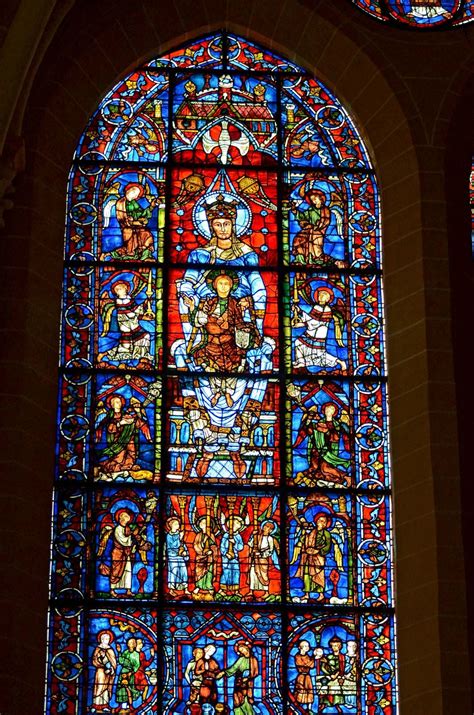
Stained Glass Windows in Chartres Cathedral
A Brief History of Stained Glass
We’ve had stained glass in the Western world since the times of ancient Rome. Yet the art form reached its zenith in the later Middle Ages, with the rise of the great cathedrals. Before the broad availability of paper, designs began with the vidimus - Latin for “we have seen” - crafted with wood and chalk. By the early 16th century, according to the Victoria & Albert Museum, paper allowed for a separation - one person could illustrate the design, and these designs “could be saved, reused and handed down from glazier to glazier. This made stained glass an exceptionally collaborative art.”
The Stained Glass Tarot: An Illuminated Journey
The illustrations and writing are both done by James Edward, and you know I always love a deck creator and illustrator in one! And how beautiful is this deck? The artwork does an excellent job of capturing stained glass art while keeping the images clear enough to recognize the cards. Inspired by the intricate symbols and colors of the stained glass windows of cathedrals and other sacred places, this 78-card tarot set draws the reader into a meditative state as they contemplate the mystical symbolism and stunning artwork of the cards.
“The Stained Glass Tarot” comes with a well written guidebook that features extensive perspectives on how to use the cards. Edwards explores the history of tarot in conjunction with Carl Jung, alchemy, numerology, and astrology. The accompanying guidebook provides thorough meanings for each card of both Major and Minor Arcana, and for their upright and reversed appearances, as well as evocative verses that invite the reader to explore each card’s esoteric symbolism.
Read also: Wine Pairing by Zodiac Sign
For the 22 Major Arcana, the author explains how each card fits into the progressive soul’s journey from The Fool to The World. For the Minor Arcana, he explains the significance of each of the suits and their key attributes and influences. He describes a number of ways to interpret each card and how to decide which interpretation to favor. He also includes a variety of card spreads and offers a glimpse into tarot history and its connections to astrology, numerology, alchemy, the Western esoteric tradition, and the teachings of Carl Jung.
This illuminating tarot set provides not only a highly detailed manual but also mesmerizing images that draw the eye and calm and focus the mind for an authentic divinatory experience. In this beautiful deck, The Stained Glass Tarot: An Illuminated Journey through the Cards, creator James Edward presents 78 stunning cards filled with rich imagery and breathtaking stained glass images. Each card features at least one stained glass window, which is usually the backdrop. The 9 of Cups has 13 stained glass windows!
The Stained Glass Tarot presents a guidebook that shares Edward’s inspiration for the deck, how to use the deck, and numerous ideas for spreads. Next, he includes a brief history of tarot and how tarot blends with astrology, numerology, and alchemy. In the back of the book, Edward provides a list of books on tarot for further information.
In addition to the daunting task of creating the stained glass inspired artwork for each card, Edward also gave himself the challenge to write a poem about the major arcana, the minor arcana, and every other card in the 78-card deck! For the 56 cards of the minor arcana, Edward devotes eight pages to a study of the suits and extensive information about each one. Next, he shares two to three pages on each card, starting with a poem about the main themes.
The cards are a nice size, at 3” X 5” and feature rounded corners and a white border. The cards are printed on a light card stock, so time will tell how it holds up with shuffling. The back of the cards highlights a beautiful stained glass window, with a round central design and an eight-pointed star. The front of the box honors the artwork from the Magician card.
Read also: Properties and Uses of Libyan Desert Glass
This deck would be great for any level of tarot reader, including a beginner. Due to the tarot history and “how to” section, as well as the guidance for each card, a novice would really benefit from practicing with this deck. I plan to keep The Stained Glass Tarot on hand for client readings. The extensive guidance will make a nice addition to my readings and the beautiful cards are an extra bonus.
James Edward has more than 20 years of experience in witchcraft, animism and other areas of the occult. He follows the symbology of the Rider-Waite tradition in creating this deck. As a chemist by day who works with a chemical company, Edward also enjoys house remodeling, cooking, and adding to his Tamagotchi collection.
Is James Edward’s “Stained Glass Tarot” breaking new tarot ground? No, but that is okay. This a beautifully illustrated deck, using excellent card stock, with an expertly written guidebook, presented in attractive packaging.
Here's a summary of the key features of the "Stained Glass Tarot" deck:
| Feature | Description |
|---|---|
| Cards | 78 full-color cards featuring colorful and detailed original adaptations of the tarot archetypes in stained-glass style |
| Guidebook | Provides thorough meanings for each card of both Major and Minor Arcana, for their upright and reversed appearances, as well as exploring each card’s esoteric symbolism |
| Instructions | Shares instructions on how to use the cards, explains a variety of card spreads, and offers a glimpse into tarot history |
| Connections | Explores tarot history and its connections to astrology, numerology, alchemy, the Western esoteric tradition, and the teachings of Carl Jung |
🎨🍷*The Stained Glass Tarot By: Crafterian And General Message📖
Raúl de Nieves: A Contemporary Vision
In Light of Innocence, a stained glass solo exhibition by Raúl de Nieves, currently on view at Pioneer Works, is also in many ways a collaboration - across tarot, Mexican folklore, and Catholicism, as de Nieves draws from these visual traditions to create a grand cathedral in the central gallery. By installing art with strongly spiritual and religious connotations, he’s transformed the space from a creative one to a contemplative one.
Read also: Heartbreak and the Three of Swords
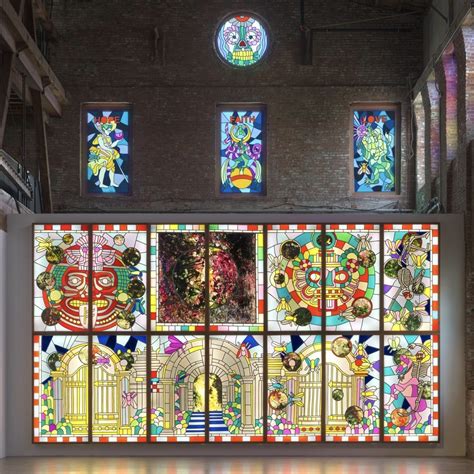
Raúl de Nieves: In Light of Innocence
When I arrived, I immediately gazed upward at the far back wall, where a calavera, or skull, occupies the top circular window. Figures signifying faith, hope, and love adorn the rectangular windows below. Just beneath them is a large installation of windows powered by a lightbox that includes depictions of flies, skeletons, steps under an archway, and the Mesoamerican deity Tlaltecuhtli. As the exhibition text notes, “Unlike traditional religious hierarchies, tarot allows for multiple perspectives and characters to hold equal power.”
And unlike a traditional cathedral, the second and third floors of Pioneer Works allow visitors to view the stained glass rows directly and from above, rather than just from below. The lightbox can be seen at eye level by climbing to the top floor and looking down on the installation. This enables, for example, a closer look at a set of three panels featuring a figure that looks like a blend of the Queen of Cups and Queen of Swords, another figure that resembles the meditative King of Pentacles, and a panel that reads “And we are here to contemplate the wonders of life.”
It’s a rare experience to be able to look downward at stained glass. From below, these panels evoke judgment and command, as if the gods of tarot themselves were reminding me of my purpose in life. From above, they are all too human, as confused and bewildered about the fact of existence as I am.
Flies, a surprising motif in stained glass, appear on the three adjacent panels. Back down on the ground, I got a better sense of their significance. One panel titled “The flies will lay their eggs” - an apparent reference to lyrics from Marilyn Manson’s “Tourniquet” - sits alongside another one with a figure of the Hanged Man tarot card. In New York City, flies might be associated with garbage and decay, rather than spiritual insight, but they have tremendous ecological importance as bridges between death and life. This feels, in many ways, like the very message of de Nieves’s installation. Death, life, faith, hope, love, calaveras, flies, and the royalty of tarot - their meanings all lay in how we shift our perspective.