Maurice Williams & the Zodiacs meet the most common definition of one-hit wonders, as they had just one top 40 hit on the Billboard Hot 100 - but, boy, what a hit. Their doo-wop classic “Stay” reached No. 1 in November 1960, becoming an iconic song of its era. Here, we honor the late Maurice Williams, who died on Aug. 5 at age 86, by looking at his lone No.
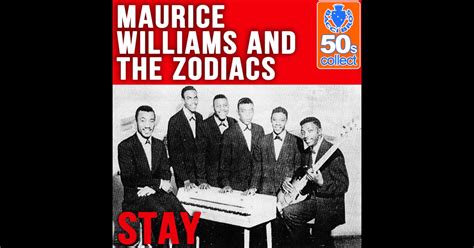
Maurice Williams and The Zodiacs. Source: discogs.com
The Story Behind the Song
Williams wrote the song in 1953 when he was just 15. The song was inspired by his crush on one Mary Shropshire. “[Mary] was the one I was trying to get to stay a little longer,” Williams told the North Carolina publication Our State in 2012. Williams wrote it the morning after his disappointment, weaving in what he had actually said to her (her name was Mary Shropshire) the night before. “It took me about 30 minutes to write ‘Stay,’ then I threw it away,” Williams told ClassicsBands.com.
“We were looking for songs to record as Maurice Williams & The Zodiacs. I was over at my girlfriend’s house playing the tape of songs I had written, when her little sister said, ‘Please do the song with the high voice in it.’ I knew she meant ‘Stay.’ She was about 12 years old and I said to myself, ‘She’s the age of record buying,’ and the rest is history.
The Zodiacs’ producer, Phil Gernhard, took the demo, along with some others, to New York City and played them for all the label reps that he knew. Al Silver of Herald Records was interested, but insisted that the song be re-recorded as the recording levels were too low. After the group recorded the tune again, it was released by Herald Records and was picked up by CKLW radio.
Read also: Fantasy vs. Reality: Zodiac Signs

Maurice Williams & The Zodiacs - Stay. Source: youtube.com
"Stay": A Chart-Topping Hit
The song entered the Hot 100 at No. 86 on Oct. 3, 1960 - though in a gaffe, Williams was credited as a solo artist. The billing was changed to Maurice Williams and the Zodiacs in Week 2, when the record vaulted to No. 40. The record hit the top 10 on Nov. 7 (when another great R&B record, The Drifters’ “Save the Last Dance for Me,” was No. 1). Two weeks later, it reached No.
“Stay” was only the third No. 1 in Hot 100 history (which commenced in August 1958) that was both written and recorded by a Black artist. Williams and the Zodiacs’ recording of “Stay” was the first major hit for producer Gernhard, who returned to the top five on the Hot 100 in the ’60s and ’70s as the producer of The Royal Guardmen’s novelty hit “Snoopy vs. the Red Baron,” Dion’s poignant “Abraham, Martin and John,” Lobo’s “Me and You and a Dog Named Boo” and “I’d Love You to Want Me,” Jim Stafford’s “Spiders and Snakes” and The Bellamy Brothers’ “Let Your Love Flow,” the latter, Gernhard’s second No. Billboard Hot 100 on October 3, 1960, and reached the number one spot on November 21, 1960. It was dislodged a week later by Elvis Presley's "Are You Lonesome Tonight?". By 1990, it had sold more than 8 million copies.
Over backing chants of “Stay!” by his fellow group members, Williams carries much of the song and its plea to a girl to stay out longer than she is supposed to. Her Daddy and Mommy won’t mind, Williams argues, not entirely convincingly.
Williams and the Zodiacs had two more Hot 100 hits in 1961, but both were minor - “I Remember” (No. 86) and “Come Along” (No. 83). The group had broken through near the tail-end of doo-wop’s peak. Few doo-wop artists outside of the 4 Seasons, which had doo-wop roots, had extensive pop careers as Motown and, starting in 1964, the British invasion took over.
A 1965 Williams song, “May I,” seemed promising, but the group’s label, Vee-Jay, went bankrupt just as the song was coming out. Williams had had that same frustrating experience, on a much bigger scale, in 1957, when his group The Gladiolas released the original version of “Little Darlin’” (which Williams also wrote).
The Gladiolas’ version reached No. 11 on R&B Best-Sellers in Stores and No. 41 on the Billboard Top 100, a forerunner to the Hot 100. But as was common in that era, a cover version by a white group, The Diamonds, became the bigger hit. The Diamonds’ version logged eight weeks at No. 2 on Best Sellers in Stores, and appeared in the 1973 film American Graffiti - a nostalgic film which was perfectly timed as the Watergate scandal broke wide open.
A Lasting Legacy: "Stay" in Film and Covers
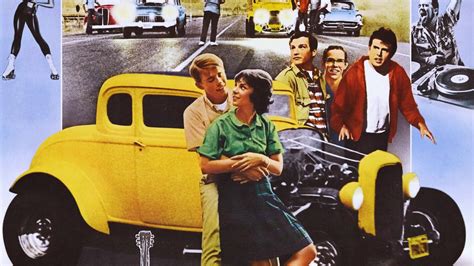
American Graffiti movie poster
“Stay” was memorably featured in two films - American Hot Wax, a 1978 film about legendary DJ Alan Freed, and the 1987 blockbuster Dirty Dancing, another nostalgic film that provided relief from the woes of that era, including Iran/Contra and AIDS. American Graffiti received an Oscar nod for best picture and was inducted into the National Film Registry in 1995.
Many artists have recorded successful cover versions of “Stay.” In November 1963, the song was released by The Hollies, whose bright, effervescent version shifted the focus from doo-wop to rock’n’roll. Their version reached No. In November 1963, the song was released by British band the Hollies, whose version reached No. 8 on the UK Singles Chart.
Two cover versions have reached the top 20 on the Hot 100 - one by the 4 Seasons in April 1964 (with Frankie Valli taking on Gaston’s falsetto part) and another by Jackson Browne in August 1978 (with David Lindley handling the falsetto vocals). Browne cleverly recast the song from a romantic plea to a performers’ plea to the audience to let them play a little longer. Instead of saying Mommy and Daddy won’t mind, he argues that the promoter, union and roadies won’t mind (again, not entirely convincingly!).
Browne’s version directly followed his own song “The Load-Out” on his hit album Running on Empty, a No. 3 album on the Billboard 200 and a Grammy nominee for album of the year.
There have been many other notable cover versions of the song. The Dave Clark Five recorded the song for their studio album Glad All Over, which reached No. 3 on the Billboard 200 in May 1964. Andrew Gold recorded a version of “Stay” for his 1976 album What’s Wrong with This Picture?, which also spawned his only top 10 hit on the Hot 100, “Lonely Boy.” Bruce Springsteen & The E Street Band teamed with Browne, Butler and Tom Petty to record the song at the No Nukes concert at Madison Square Garden in September 1979.
In 1963, The Four Seasons recorded a cover of "Stay" that first appeared on the 1964 compilation album Stay & Other Great Hits (a reissue of the shelved Folknanny), released by Vee-Jay Records amid the group's contractual disputes with the label. The track was produced by Bob Crewe and featured the group's adaptation of the original doo-wop style into their characteristic pop-rock sound, complete with Frankie Valli's prominent falsetto lead vocals and layered harmonies. Upon its 1964 single release, "Stay" achieved modest chart success, peaking at number 16 on the Billboard Hot 100 in March and number 12 on Canada's RPM Top Singles chart, where it spent eight weeks.
Cyndi Lauper included a soulful, orchestral rendition of "Stay" on her 2003 covers album At Last, transforming the song into a torch-style ballad with big-band arrangements. The track was issued as a promotional single in 2004 but received limited commercial distribution, primarily in Europe; it reached number 64 on the French Singles Chart.
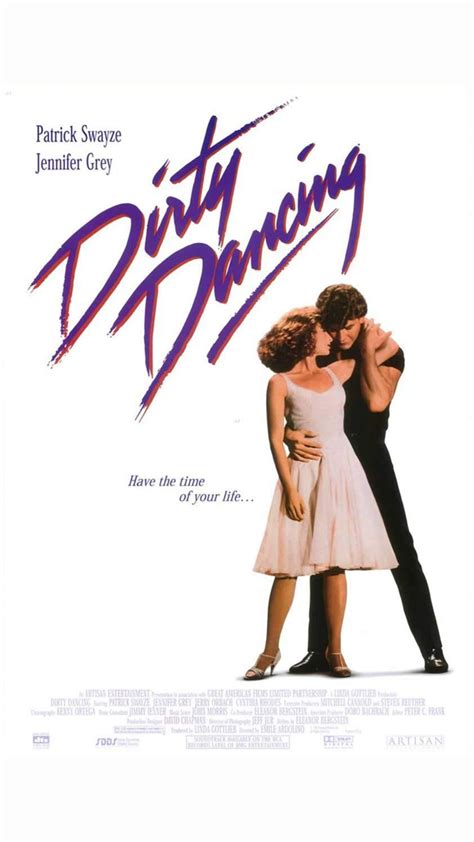
Dirty Dancing movie poster
Most significantly in terms of our memory banks, “Stay” is featured in the movie and soundtrack of “Dirty Dancing.” It sounds forth in a montage of scenes in which Johnny (Patrick Swayze) teaches Baby (Jennifer Grey) how to dance. The 1987 low-budget movie filmed at Lake Lure, N.C., has become a part of American pop culture.
The Brevity and Impact of "Stay"
The track runs just 1:38. It is the shortest of the 1,174 singles that have reached No. 1 on the Hot 100. You could play the song in its entirety six times in the time it would take to play the longest-running No. 1 hit, Taylor Swift’s “All Too Well (Taylor’s Version)” (which runs 10:13, per the dominant version the week the song topped the Hot 100 in 2021) just once. But despite its historic brevity, the record never feels that short. It’s simply exactly as long as it needed to be to tell its story.
Running just 1:38, this is an incredibly compact song, and the shortest ever US #1 hit on the Hot 100. Despite it's brevity, it still tells a story and contains a bridge. The layered vocals help give it more nuance.
Maurice Williams: A Humble Giant
Maurice Williams didn’t have enough hits to receive major honors. He’s not in the Songwriters Hall of Fame (despite writing two colossal hits). He and the Zodiacs haven’t even been nominated for the Rock and Roll Hall of Fame.
Charlotte’s Larry Farber, who once managed Williams and now runs a jazz club and members-only concert series (Music With Friends), says he was the most humble musician/celebrity he ever worked with. In 2008, Farber brought Jackson Browne to Charlotte to perform at Spirit Square uptown. Browne is one of many artists (more on the others in a bit) who covered “Stay.” When he learned that Williams lived here, Browne invited him to sing it with him.
As Farber writes in his memoir, “Noted Memories”: “I remember Jackson introducing Maurice to the band as if he was a music god. He is.”
Williams began singing in the church choir in Lancaster, S.C., as a child. His early groups went by various names - among them The Gladiolas and The Royal Charms - before The Zodiacs (named for a popular Ford car back in the day) became his band of renown. “Stay” saw to that.
Maurice Williams and The Zodiacs were giants of doo-wop, the 1950s genre that bloomed from R&B in largely African-American communities in cities like New York and Philadelphia.
On Nov. 21, 1960, it became the shortest single to hit No. 1 on the Billboard Hot 100 chart. We pause so you can sing it to yourself. Let the nostalgia carry you back to more harmonious times.
Williams died Aug. 6 at age 86. He finally stopped performing when his health gave out. Over the years, he sang in the church choir. He enjoyed watching soap operas. He and his wife, Emily, lived in Charlotte for years. They were married 63 years, long enough for her to master the one-liner about “Stay” and the girl it was written for and to. “I’m glad she didn’t stay,” Mrs. Williams says.
Despite all the superstars who covered it, “Dirty Dancing” features the original version by Maurice Williams & The Zodiacs. Of course it does.
Chart performance
| Chart (1960-1961) | Peak position |
|---|---|
| Canada (CHUM Hit Parade) | 9 |
| UK Singles Chart | 14 |
| US Billboard Hot 100 | 1 |