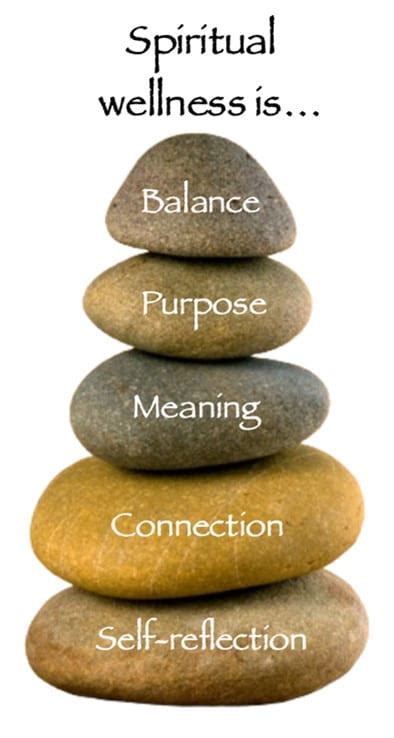
Spirituality is a personal journey, an awareness of existence beyond this earthly experience. Others may help you on the way, but it is ultimately a solo experience. It recognizes a higher power that each of us is connected to.
Defining what is spirituality is not easy because there are many different types of spirituality.
People who practice spirituality can be heart-centered, dogmatic, intellectual, or a combination of these types of belief systems.
Most spiritual mindsets believe that there are many paths that lead to the same destination, or point of awareness.
There is no one spiritual mindset that is better or more important than another.
Read also: Interpreting Blood Dreams
Now that this has been clarified, let’s talk about the different types of spirituality.
How Do You Get Started With Spirituality? | Sadhguru
1. Dogmatic Spirituality
Dogmatic spirituality is a strict belief system that promotes rules, leaders, and teachers.
An example of this is when people call themselves spiritual but believe things must be done a certain way.
They might believe the Law of Attraction only works one way, or there is only one true way to practice yoga.
Another example is believing spirituality and religion can’t go hand-in-hand.
Read also: Decoding Common Dreams
Dogmatic spirituality can be helpful when one’s faith is wavering. The individual can hold tightly to a spiritual belief system, such as Karma, until they find, or regain an open-hearted mindset.
2. Heart-Centered Spirituality
Heart-centered spirituality believes one’s outer world is a reflection of their inner world. It focuses on self-reflection and self-love.
Being heart-centered means that you believe there is a connection between all things: If one suffers, we all suffer.
Equally as powerful is each individual’s joy; each of us has the power to bring joy to the world.
Heart-centered spirituality emphasizes allowing energy to flow, versus the impossible attempt to control outcomes and people.
Read also: Understanding Mercy as a Gift
It is empowering, in that it teaches observation of emotions.
3. Intellectual Spirituality
A seeker practices intellectual spirituality. This can be fun and exciting as new practices and theories are learned.
The focus is on understanding the intellectual content versus getting lost in the experience.
The continuous seeking of knowledge and new insights is, in my opinion, one of the healthiest forms of spirituality.
I am convinced that education is the key not only to success but also to wisdom and happiness.
And I am sure that most of the global problems could be solved with the help of comprehensive education for everyone.
Through knowledge, we also gain freedom in the sense of independence.
For if we do not know the details, we are left with hardly anything else to do but to trust the word of others.
However, if we have learned to think for ourselves and also have the necessary background knowledge, then we are also in a position to question.
And it is precisely this ability that is so important!
If more people had been able to question the intentions of the Inquisition in the Middle Ages, some women might have been spared great suffering.
And if in some countries people were able to question what their church leaders tell them about homosexuality, affected same-sex couples might be able to live more freely.
In order to actively practice charity with the necessary civil courage, it is absolutely essential that we acquire a lifetime of knowledge.
Below is a table summarizing the key aspects of each type of spirituality:
| Type of Spirituality | Focus | Characteristics | Example Beliefs |
|---|---|---|---|
| Dogmatic Spirituality | Rules and Leaders | Strict adherence to beliefs, structured practices | "The Law of Attraction only works one way," "Religion and spirituality can't coexist" |
| Heart-Centered Spirituality | Self-Reflection and Love | Connection between all things, emotional flow | "Our outer world reflects our inner world," "Joy brings joy" |
| Intellectual Spirituality | Knowledge and Understanding | Seeking new insights, questioning and learning | "Education is the key to wisdom," "Freedom comes through knowledge" |
How to Blend the Three Popular Spiritual Mindsets Using the Law of Attraction
The Law of Attraction is the perfect opportunity to see how these three mindsets can support or work against each other.
Intellectual exploration of possibilities delivered humanity to the concept of the Law of Attraction.
We continue to explore and potentially improve our understanding of this and other universal laws.
Dogmatic spirituality has helped humanity create rules to follow when attempting to find predictable outcomes with the Law of Attraction.
In the dogmatic mindset of spirituality, there is a belief that you have some control of how, when and why something is going to happen.
Open-hearted spirituality is where we freely create with the Law of Attraction.
We understand that joy brings joy and the form doesn’t matter, it is the vibration or emotion that attracts like energy.
Open-hearted spirituality focuses on the feelings, not so much the how, when or why things happen.
Most of us weave in and out of these three types of spiritual practices.
At our best, we are opened-hearted.
There is a place for intellectual and even dogmatic spiritual practices to keep us evolving on our spiritual path.
Too much of the intellectual or dogmatic spirituality can close the door to miraculous events.
A balance is great, but if in doubt, lean towards the open-hearted spiritual lifestyle.