International Moon Day is commemorated on July 20th, marking a pivotal moment in human history. This day celebrates the anniversary of the first human landing on the Moon as part of the Apollo 11 mission.
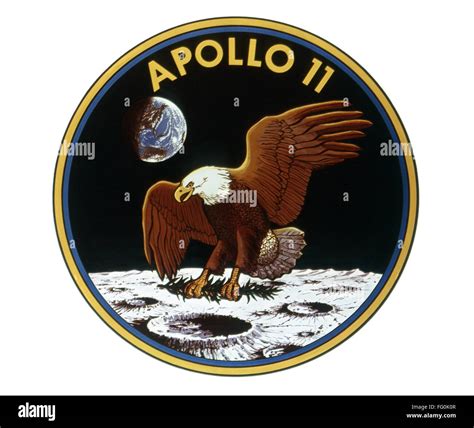
The United Nations originated International Moon Day in 2021. The UN explained that it “aims to commemorate the anniversary of the first human landing on the Moon as part of the Apollo 11 mission, as well as to celebrate the achievements of all States in exploring the Moon and to raise public awareness of the exploration and sustainable use of the Moon”.
The Historic Apollo 11 Mission
On July 20, 1969, American astronauts Neil Armstrong, and Edwin ‘Buzz’ Aldrin became the first humans in history to land on the Moon. The grand Apollo 11 mission took place eight years after the national goal announcement by President John F. Kennedy.
At the time of Kennedy’s proposal, the United States was still head-to-head with the Soviet Union in advancements in space exploration and, since it was during the time of the Cold War, the proposal was welcomed.
The first unmanned Apollo mission was initiated by the National Aeronautics and Space Administration, NASA, after five years of effort and hard work by their international team of engineers and scientists.
Read also: Spotting Planets Close to the Moon
On July 16, 1969, the whole world witnessed Apollo 11 take off from Kennedy Space Center with three astronauts on board. Neil Armstrong was the commander of the mission. The spacecraft entered the lunar orbit after three days, on July 19. The lunar module, Eagle, disengaged from the main command module the next day, manned by Armstrong and Aldrin.
The primary objective of Apollo 11 was to complete a national goal set by President John F. Kennedy. Additional flight objectives included scientific exploration by the lunar module, or LM, crew; deployment of a television camera to transmit signals to Earth; and deployment of a solar wind composition experiment, seismic experiment package and a Laser Ranging Retroreflector.
During the exploration, the two astronauts were to gather samples of lunar-surface materials for return to Earth. They also were to extensively photograph the lunar terrain, the deployed scientific equipment, the LM spacecraft, and each other, both with still and motion picture cameras.
Apollo 11 launched from Cape Kennedy on July 16, 1969, carrying Commander Neil Armstrong, Command Module Pilot Michael Collins and Lunar Module Pilot Edwin “Buzz” Aldrin into an initial Earth-orbit of 114 by 116 miles. Two hours, 44 minutes and one-and-a-half revolutions after launch, the S-IVB stage reignited for a second burn of five minutes, 48 seconds, placing Apollo 11 into a translunar orbit. The command and service module, or CSM, Columbia separated from the stage, which included the spacecraft-lunar module adapter, or SLA, containing the lunar module, or LM, Eagle.
After transposition and jettisoning of the SLA panels on the S-IVB stage, the CSM docked with the LM. The first color TV transmission to Earth from Apollo 11 occurred during the translunar coast of the CSM/LM.
Read also: Understanding the Black Moon
Later, on July 17, a three-second burn of the SPS was made to perform the second of four scheduled midcourse corrections programmed for the flight. On July 19, after Apollo 11 had flown behind the moon out of contact with Earth, came the first lunar orbit insertion maneuver. At about 75 hours, 50 minutes into the flight, a retrograde firing of the SPS for 357.5 seconds placed the spacecraft into an initial, elliptical-lunar orbit of 69 by 190 miles.
Later, a second burn of the SPS for 17 seconds placed the docked vehicles into a lunar orbit of 62 by 70.5 miles, which was calculated to change the orbit of the CSM piloted by Collins. The change happened because of lunar-gravity perturbations to the nominal 69 miles required for subsequent LM rendezvous and docking after completion of the lunar landing.
On July 20, Armstrong and Aldrin entered the LM again, made a final check, and at 100 hours, 12 minutes into the flight, the Eagle undocked and separated from Columbia for visual inspection. At 101 hours, 36 minutes, when the LM was behind the moon on its 13th orbit, the LM descent engine fired for 30 seconds to provide retrograde thrust and commence descent orbit insertion, changing to an orbit of 9 by 67 miles, on a trajectory that was virtually identical to that flown by Apollo 10.
At 102 hours, 33 minutes, after Columbia and Eagle had reappeared from behind the moon and when the LM was about 300 miles uprange, powered descent initiation was performed with the descent engine firing for 756.3 seconds. The descent engine continued to provide braking thrust until about 102 hours, 45 minutes into the mission.
Partially piloted manually by Armstrong, the Eagle landed in the Sea of Tranquility in Site 2 at 0 degrees, 41 minutes, 15 seconds north latitude and 23 degrees, 26 minutes east longitude. This was about four miles downrange from the predicted touchdown point and occurred almost one-and-a-half minutes earlier than scheduled. It included a powered descent that ran a mere nominal 40 seconds longer than preflight planning due to translation maneuvers to avoid a crater during the final phase of landing. Attached to the descent stage was a commemorative plaque signed by President Richard M.
Read also: Comprehensive Guide to Moon Water
The flight plan called for the first EVA to begin after a four-hour rest period, but it was advanced to begin as soon as possible. Nonetheless, it was almost four hours later that Armstrong emerged from the Eagle and deployed the TV camera for the transmission of the event to Earth. At about 109 hours, 42 minutes after launch, Armstrong stepped onto the moon. About 20 minutes later, Aldrin followed him. The camera was then positioned on a tripod about 30 feet from the LM.
Commemorative medallions bearing the names of the three Apollo 1 astronauts who lost their lives in a launch pad fire, and two cosmonauts who also died in accidents, were left on the moon’s surface. During the EVA, in which they both ranged up to 300 feet from the Eagle, Aldrin deployed the Early Apollo Scientific Experiments Package, or EASEP, experiments, and Armstrong and Aldrin gathered and verbally reported on the lunar surface samples.
After Aldrin had spent one hour, 33 minutes on the surface, he re-entered the LM, followed 41 minutes later by Armstrong. Armstrong and Aldrin spent 21 hours, 36 minutes on the moon’s surface.
After a rest period that included seven hours of sleep, the ascent stage engine fired at 124 hours, 22 minutes. It was shut down 435 seconds later when the Eagle reached an initial orbit of 11 by 55 miles above the moon, and when Columbia was on its 25th revolution. As the ascent stage reached apolune at 125 hours, 19 minutes, the reaction control system, or RCS, fired so as to nearly circularize the Eagle orbit at about 56 miles, some 13 miles below and slightly behind Columbia.
Subsequent firings of the LM RCS changed the orbit to 57 by 72 miles. Docking with Columbia occurred on the CSM’s 27th revolution at 128 hours, three minutes into the mission. Armstrong and Aldrin returned to the CSM with Collins.
Trans-Earth injection of the CSM began July 21 as the SPS fired for two-and-a-half minutes when Columbia was behind the moon in its 59th hour of lunar orbit. Following this, the astronauts slept for about 10 hours. An 11.2 second firing of the SPS accomplished the only midcourse correction required on the return flight. The correction was made July 22 at about 150 hours, 30 minutes into the mission.
Re-entry procedures were initiated July 24, 44 hours after leaving lunar orbit. The SM separated from the CM, which was re-oriented to a heat-shield-forward position. Parachute deployment occurred at 195 hours, 13 minutes.
After a flight of 195 hours, 18 minutes, 35 seconds - about 36 minutes longer than planned - Apollo 11 splashed down in the Pacific Ocean, 13 miles from the recovery ship USS Hornet. Because of bad weather in the target area, the landing point was changed by about 250 miles.
July 20, 1969
17:44 UTC (1:44 pm ET) The lunar module with Armstrong and Aldrin aboard was undocked from the command module. The Apollo 11 Lunar Module ascent stage, with Astronauts Neil A. Armstrong and Edwin E. Aldrin Jr.
July 21, 1969
17:54 UTC (1:54 pm ET) The ascent from the lunar surface began. At 21:35 UTC (5:35 pm ET) lunar module would rendezvous with the command and service modules, where Michael Collins would welcome back Aldrin and Armstrong.
| Event | Date (UTC) | Time (ET) |
|---|---|---|
| Lunar module undocked | July 20, 1969 | 1:44 pm |
| Ascent from lunar surface | July 21, 1969 | 1:54 pm |
| Rendezvous with command module | July 21, 1969 | 5:35 pm |
Apollo 11: The Untold Story Of the IBM Team Behind the Moon Landing
Why Celebrate Moon Day?
Moon Day celebrates the anniversary of the day in 1969 when humankind first walked on the Moon. In a historic speech on May 25, President John F. Kennedy signals the start of NASA's Apollo space program as well as his plan to see an American on the Moon by the end of the decade.
For the first time, American TV viewers get to view the Moon's cratered surface from images transmitted by NASA's unmanned probe, Ranger 7. NASA's Apollo 8 orbits the Moon 10 times as the first manned flight while Americans watch on television. The world breathlessly watches as Apollo 11's three-man team becomes the first humans to step onto the Moon's surface.
No matter how many years pass, we will always be in awe of the first moon landing in 1969. Landing on the moon was a huge step for mankind and our understanding of the great realm we exist in.
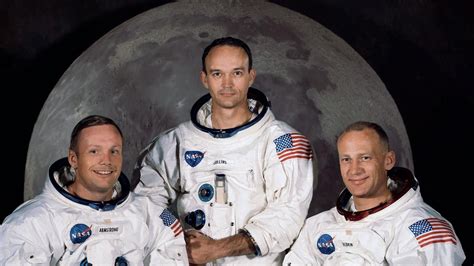
When the Apollo program was still going, Senate Joint Resolution 101 was passed, requesting the President to issue a proclamation for National Moon Walk Day. Nixon's proclamation was only for 1971, though, and some have since pushed for Moon Day to be a permanent national holiday.
Ways to Celebrate Moon Day
- Visit your local planetarium: These domed theaters, with massive telescopes, project images of the starry night skies filled with countless spectacular objects we may not be able to see with the naked eye. Visiting the planetarium encourages us to learn about our universe and, more importantly, where we fit in as human beings. Going to a planetarium is also a unique, educational experience where we can learn about astronomy and other related sciences.
- Hang out with your local astronomy club: An astronomy club can point you in the direction of upcoming events where other like-minded souls gather to discuss all the celestial bodies in the universe.
- Make plans to see the next lunar eclipse: Get ready for a nighttime show! Put a reminder in your calendar about the next lunar eclipse. Make plans to bring a picnic basket filled with goodies, a blanket, binoculars, or a telescope and head out to your favorite viewing spot. Enjoy one of nature's most dramatic shows!
Interesting Facts About the Moon
- The moon exploded into existence: The moon formed when a giant Mars-sized object hit earth 4.6 billion years ago and a cloud of vaporized rock spun into orbit encircling the earth. Once the cloud cooled, it transformed into smaller chunks that combined together, creating our moon.
- The moon is not as big as you think: Although the moon is the brightest object we see in the night sky, its diameter is about one-quarter the size of Earth but with less gravity. For example, if you weigh 150 pounds, you'd only weigh 25 pounds on the moon. Also, our moon is not the largest one in the galaxy. The moon is only about the fifth largest one in our immediate solar system.
- The moon shakes with quakes: The moon has earthquakes (or in this case, moonquakes) that sometimes form cracks where gasses escape. What a strange landscape for the Apollo crew to walk on, don't you think?