Have you ever wondered what spiritual growth really means? At its core, spiritual growth is about evolving your inner self. In other words, it’s about looking inward to grow outward. While religion supports spiritual understanding through external frameworks like traditions, symbols, and practices, spirituality itself is a state of being. To be spiritual, in this sense, means connecting to the divine directly from within you.
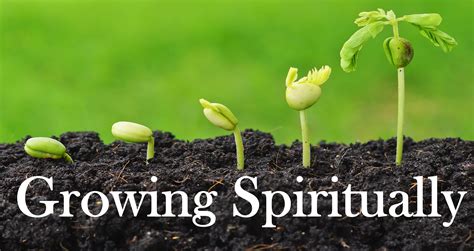
The term “spiritual growth” is used a lot in the health and wellness industry-and for good reason. In other words, growing spiritually comes from putting a conscious effort into learning who you really are and trusting (even through tough times) that you are being guided. So, there’s no fixed path in spiritual growth, only one you must create for yourself by accepting that life is as divine as it is material.
What is Spiritual Growth
Spiritual growth for a Christian is the phrase that we use to describe the changes that take place in us through the indwelling of the Holy Spirit. It just means that as we are changed by God, that change is labelled spiritual growth. Spiritual growth begins at Christians’ conversion and continues until they die. It is an aspect of the application of redemption wherein spiritual maturity is developed in the lives of those who have been redeemed by Christ.
Christians grow in grace by a diligent application of a variety of God-appointed means and spiritual disciplines such as corporate worship, private worship, prayer, Bible study, fellowship, and discipleship. The person and work of Christ form the basis of the spiritual growth of Christians. The Bible teaches that the Son of God united to Himself a human nature, and over the course of His life, Jesus “increased in wisdom and in stature and in favor with God and man” (Luke 2:52). According to His human nature, Jesus grew in spiritual wisdom, and in that respect He serves as a model for growth. But Jesus is more than a model. His work on behalf of sinners is what makes spiritual growth possible.
Jesus Christ died and rose again to set His people free from the guilt and the power of sin. By His death on the cross, Jesus secures the believer’s justification and sanctification. In justification, God imputes the sin of His people to Christ and the righteousness of Christ to believers (2 Cor. 5:21). The death of Jesus removes the guilt of the sin of His people. In sanctification, God progressively purifies His people. The Holy Spirit is the agent of spiritual growth.
Read also: Interpreting Blood Dreams
The means of grace are instruments by which the Holy Spirit enables Christians to receive Christ and the benefits of redemption. The Reformed confessions and catechisms state that the three principal ordinary means of grace are the Word of God, the sacraments, and prayer. In the context of corporate worship, the reading and preaching of the Word of God, together with prayer, are the primary means by which spiritual growth results in the lives of Christians. They are also the means of revival in God’s church. Baptism and the Lord’s Supper are also God-appointed means by which believers grow in the faith.
Family worship and private worship are additional spiritual disciplines that aid spiritual growth in grace. The Scriptures instruct parents to diligently teach their children the whole counsel of God (Deut. 6:6-7; Eph. 6:4). The Bible is also full of examples of individuals meditating on God’s Word and spending time in communion with Him in prayer (e.g., Dan. 6:10; Ps.
Discipline is another means by which believers experience spiritual growth. The word discipline is closely related to the word discipleship. In Scripture, a disciple is someone who is instructed in the teaching of Christ. Biblical discipleship occurs when believers are instructed in the Word of God. Believers are called by God to pursue self-discipline. Scripture also exhorts parents to discipline their children, bringing them up in the discipline and training of the Lord (Eph. 6:4). However, there is sometimes a corrective element to discipleship. This is evident from the biblical teaching on church discipline (Matt. 18:15-20; Heb. 12:3-11). Church discipline functions in such a way as to preserve the honor of Christ’s name, to restore offending brethren, and to restrain evil in the church. By this process, believers may be aided in the process of spiritual growth.
Signs of Spiritual Growth
But if you pay attention to how you think and feel when you interact with the world, you’ll start to notice the signs.
- Presence: Close your eyes and focus inward. Do you notice that there’s nothing left to observe but your own presence? In his program, Jeffrey explains further on this, explaining that your presence is easily sensed whenever you’re fully in your body. He says, “Your body is your here and now-it’s the part of you that exists in the present moment."
- Resilience: Another sign of spiritual growth is the ability to find the light even in the darkness of life-and face the pain from difficult experiences head-on without repressing it to cope. Resilient individuals, Jeffrey explains, are grounded as they tend to remain steady even outside of their comfort zones.
- Intuition: Spiritual growth is about knowing how to receive spiritual guidance. It’s the little “nudges” life gives you-a sudden gut feeling about a situation or a person, seeing recurring spiritual symbols or angel numbers (like 11:11), or a sudden aha! “Your spirit guides are always there, coordinating opportunities and helping you align with your highest good,” he says.
How to Initiate Spiritual Growth
The start of your spiritual growth can feel like you’re stepping into the unknown.
Read also: Decoding Common Dreams
- Address Emotional Pain: Initiating your spiritual healing means addressing any emotional or energetic pain that’s holding you back. But for clarity to set in, you have to first be present in your body-it’s the best way to tune into your discomfort. Breathe more deeply with any of the breathing techniques you prefer. Be mindful of what you consume. Consider fasting, a practice leaned upon in many spiritual traditions, and for a good reason: it detoxifies your system.
- Clear Misunderstandings: Where there’s a lot of emotional pain, confusion tends to follow. To grow from it, Jeffrey suggests clearing any misunderstandings that hold you back. Reframe your thoughts by analyzing recurring doubts. Talk it out with a mentor, a coach, or a trusted friend.
- Strengthen Intuition: Intuition is your inner compass, guiding you to decide on what feels right without overthinking. Strengthening this connection is key to spiritual growth. Practice mindfulness. Pay attention to synchronicities. Document your intuitive hunches so you can retrace how they play out whenever you need to.
- Build Consistency: Consistency builds momentum. Jeffrey points out that healthy habits are the bedrock of spiritual growth. Set realistic goals so you don’t overwhelm yourself with massive changes. Prioritize inspiring hobbies, whether it’s a daily walk in nature, yoga, or even mindful cooking.
- Embrace Group Energy: “Group energy is a shortcut to healing,” Jeffrey emphasizes. Be open to interfaith discussions.
Affirmations for Spiritual Growth
Sometimes, all you need is a single phrase to get you going.
- “I am connected to the divine presence within me and all around me."
- “With every breath, I release tension and welcome peace."
- “I trust that everything is happening for my highest good."
- “I am resilient and supported by the divine."
- “Show me the way that leads to my highest good."
- “May I see the divine in myself and everyone I meet."
- “I am a part of the infinite web of existence."
- “All of your emotions are inside you. They are playing all the time, like different radio frequencies."
- “Your beliefs influence your experience of the world."
- “When we touch the earth, we become one with it."
- “If there is a creation, there must be a creator."
- “You are not a drop in the ocean."
- “We don’t have to do all of it alone."
- “Happiness is your birthright. It’s part of your DNA."
- “There is only one place to find real peace, real harmony."
The truth is, everyone and everything on Earth is divine-but in their own unique way.
Like Rumi once said in a poem, “Pay attention to how things blend. Why talk about all the known and the unknown?
Spiritual Growth in Daily Life
Spiritual growth is not a one-way street. Spiritual growth can be categorized into two different forms: vertical and horizontal. And they don’t always go hand-in-hand! A person can develop vertically but not horizontally, or vice versus. In this type of spiritual growth, you gain awareness of the components that make up your life: your behaviors, your relationships, etc.
Here are some activities that can help you connect with your inner self and develop a sense of gratitude for everything happening in your life:
Read also: Understanding Mercy as a Gift
- Meditation: Spending time in meditation is a great way to connect with your inner self and develop a sense of gratitude for everything happening in your life.
- Dancing: Whether you dance all night or only have time for a 2-minute dance session between projects at work.
- Journaling: If you aren’t religious, give journaling a try! Spend time writing about your deepest thoughts, worries, ambitions, and dreams.
- Spending time in nature: Spending time in nature is a great way to connect with the environment and notice that the earth is full of life and energy.
The ultimate goal of growing spiritually is to become a more conscious, connected person who has a clear and grounded view and appreciation of the reality around them.
Transcend the Illusion: Guided Meditation for Spiritual Growth and Inner Peace | ACIM Lesson 185
The Center for Bible Engagement (CBE) Spiritual Assessment Model
The CBE has adopted this definition of spiritual growth: Spiritual growth is the transformative process of the Holy Spirit that aligns believers with the life and teachings of Jesus Christ. Simply said, spiritual growth means becoming more like Jesus. The behavior outcome is: Becoming less of the person I was before I surrendered my life to Jesus and more like Christ in my thoughts, words and deeds.
To measure spiritual growth, we translated these conceptual definitions into concrete, observable behaviors, and then developed a simple Spiritual Assessment Model-grounded in Scripture and our former research-to help people see where they are on their spiritual journey. Are people merely curious about Jesus, do they believe in Jesus, are they active disciples of Jesus, or are they fulfilling His Great Commission by discipling others?
Based on their answers, we then divide populations into four broad personas (P1 to P4), called “P-Levels.” In many ways, CBE’s Spiritual Assessment categorization (below) parallels the Parable of the Sower in Matthew 13:1-8. The focus of the parable is not on the Sower or the seed, but on the four soils. It considers our responsibility as Christ-followers to be fertile soil. The supernatural result comes from the divine Word and the work of the Holy Spirit.
| P-Level | Description | Needs |
|---|---|---|
| P1: Needs Evangelism | People who do not believe they will go to heaven because of faith in Jesus Christ. | Evangelism, answers to questions, sense of purpose and meaningful relationships. |
| P2: Needs Discipleship | People who believe they will go to heaven because of faith in Jesus Christ but lack core disciplines. | Equipping to read the Bible well and regularly, help discovering the Bible’s truths. |
| P3: Needs Activation | Followers of Jesus who read the Bible regularly but are not in the habit of discipling or sharing their faith with others. | Encouragement and equipping to engage in the Great Commission. |
| P4: Active Disciple-Makers | People who are saved by grace through faith in Jesus and engage the Bible regularly, intentionally discipling others. | Resources that equip them to engage with the world and aid in their discipling. |
CBE’s Spiritual Assessment Model is not intended to be comprehensive. As evidenced in our categorization, people’s spiritual needs are diverse. Spiritual growth is complex. The process is not always linear; it is often elliptical, with some regression along with progress. In reality, we are like all four types of soil in the Parable of the Sower throughout our lives. Our four categories simply help people understand where they are (or where someone else is) on their spiritual journey at a given time and how to best “nudge” them toward maturity.
Our model, then, can be used as a starting point to identify, understand, and support people at different phases in their spiritual journey. It also provides a visual of spiritual growth with basic, but fundamental growth goals. Because we’ve based our model on frequent Bible engagement, a reliable predictor of spiritual growth (CBE, 2012), it can also be used to establish a baseline with a given individual, community, or population to assess spiritual growth over time.