Overwhelmed? Confused? The stars offer boundless insight, which these days is frequently presented through horoscopes. It’s no longer a quirky question. Astrology is officially mainstream, and checking astrology apps has become part of our morning routines. So today I am going to explain all the components of a birth astrology chart (otherwise known as a natal chart) so you understand the basics of astrology.
Our horoscopes can illuminate our daily experiences and help us recognize how the planets' movements - such as Saturn's retrograde - can help us make helpful life changes. What can we learn from connecting to the cosmos and understanding our birth charts? These questions are fundamental to learning the basics of reading your birth chart, which reveals the location of the planets in the sky at the time of your birth. An analysis of this chart, also called a natal chart, can provide deep insight into your personality, motivations, and desires. Let's take a look at how the art of astrology and the craft of reading birth charts formed, and how you can apply it to your life.
With the invention of artificial light, it’s easy to forget about the original lights - the planets, stars, and the luminaries (sun and moon). There are many schools and systems of thought within astrology. One common thread among them is the idea that the sky is a mirror of life on earth. Astrology is also a language that offers perspective, clarity, imagination, and new insights into our own movements, beliefs, and feelings. It can be clarifying and exhilarating to place our life happenings into planetary language and context. I find that astrology is most inspiring when used as an instrument for greater connection with the self and the cosmos.
Astrology is a way of seeing the world and positioning ourselves within a larger cosmic conversation. To benefit from astrology’s wisdom, you don’t need to “believe” that the planets are impacting our day-to-day lives (i.e., Pluto traversing your house of relationships isn’t causing drama with your beloved).
How to Read a Birth Chart.. in Minutes!
What is a Birth Chart?
If you’ve ever wanted to explore the world of astrology, you can think of a birth chart as your requisite map. While it’s most well-known for revealing one’s big three-the sun, moon, and rising signs-a full birth chart holds so many more insights, as long as you’re able to read one or have someone do it for you.
Read also: Interpreting Blood Dreams
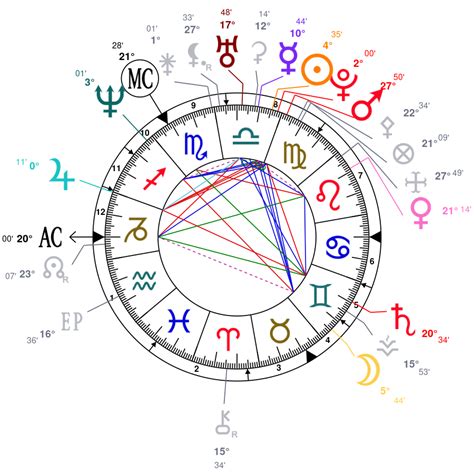
A birth chart (also called a natal chart or astrological chart) is a snapshot of the sky from the very moment you landed earth-side - with your birth time, date, and location at the center. It also reveals conversations that these planets were having with each other (aspects). You can think of aspects as lines of sight between the planets, which dictate how they see and engage with one another’s energies. Think about the energetic difference of standing across the room from someone and looking them in the eye vs. standing right next to someone for the same eye contact.
My favorite definition so far is from the famed astrologer Dane Rudhyar, who called it “the earth’s aura.” You can think of your natal chart as the aura of the earth at the exact moment you were born, a picture of what energies are inherent in you. Your birth chart is also always changing and getting activated in various ways by constantly transiting planets.
A birth chart, also known as your natal chart, is a “snapshot of where all the planets were in their orbit the moment you were born,” Edut says. “The birth chart tells a story: your life story of what your soul came here to do and learn and become.” While accurate, scientific diagrams of the sky are heliocentric, meaning the sun is at the center of the universe, Edut explains that on a birth chart, the Earth is at the center. “It’s like our view of the sky from Earth, as if all the planets are orbiting us.”
You can create a birth chart for yourself (or anyone!) at astro.com, Cafe Astrology, or with apps like CHANI by inputting your birth location, date, and time. And voila! The volume of astrological info available out there can be overwhelming. My favorite app is TimePassages. You can store your birth chart information in the app and it offers explanations about how the current transits are impacting your chart. This is a stellar way to get acquainted with these energies.
Now, this is where things can get a bit complicated. There are three main parts to interpreting a birth chart: the planets, the signs, and the houses. A birth chart will show the snapshot of where each planet is in the sky, but then within this snapshot, the sky will be divided up into 12 equal slices for the 12 zodiac signs, so every planet will fall within a certain zodiac sign. For example, if the planet Venus falls within the Sagittarius slice, you would say you have a Sagittarius Venus.
Read also: Decoding Common Dreams
The sky will then also be divided up into 12 houses with each planet falling within a specific house. So while everyone will have the same planets in their charts, Edut explains, they typically won’t be in the same zodiac signs or houses, giving everyone their unique chart. In the image below, you’ll see that the innermost circle shows the 12 houses, the outermost circle shows the 12 zodiac signs, and symbols representing the planets fall within the slices:
Elements of a Birth Chart
So, how do these three elements all work together? The AstroTwins have a signature way of breaking it down:
- First there are the planets, which are like the actors in the movie of your life.
- Then there are the zodiac signs, where are like the costumes each planet wears. For example, the planet Venus will always be about romance and love, but how you love will be determined by what sign Venus is in.
- Lastly, there are the houses, which is where the action takes place. So if you had Venus in the first house, Edut explains, you’re someone who maybe feels the most romantic when you’re doing something adventurous and daring and cultivating yourself.
There’s also a fourth piece to the puzzle, which are the aspects, or the angles formed in the chart, and per Edut, there are seven major angles. “The distance between two planets in a chart, if they form one of those seven key angles, then it’s kind of like they’ve stepped into a chat room together. Like, we’re going to be communicating in a certain way. Some of the angles are called soft angles, which is an easy, flowing communication, and others are called a hard aspect, which are challenging.” To carry on the movie metaphor, Edut says you can think about aspects as the dialogue or script between the characters.
Next, you’ll see a heap of red and blue (and green) lines that can send you a little crazy. These are your aspects. The red ones depict challenging aspects (or challenging relationships between the planets). The blue lines represent harmonious aspects ( or harmonious relationships between the planets).
The Planets
If you need to, refresh yourself on all the zodiac signs (fire, water, earth, and air) and their individual qualities. Then, you can move onto the planets to learn which roles they each play in your life. As Edut explains:
Read also: Understanding Mercy as a Gift
- The sun is your personality and how you shine
- The moon represents your emotions and what you need to feel safe and secure, as well as how you nurture yourself
- Mercury is how you communicate
- Venus is all about romance, seduction, and your aesthetic tastes
- Mars is your motivation and drive, including your sex drive
- Jupiter is the area where you’ll grow and expand and be lucky
- Saturn is where there will be challenges and hurdles in your life
- Uranus is where you’re bound to break the rules and be innovative
- Neptune is all about your dreams, your subconscious, fantasy, and illusions, including where you might need extra boundaries
- Pluto is your unconscious, your secrets, as well as the key to your evolution
The Planet is the ‘what’. What are you trying to understand more about in your chart e.g. The Zodiac Sign that this planet is in is the ‘how’. How does this planet express itself and how will it play out? Look to the description of that zodiac sign as well as which element (Air, water, fire, earth) and the descriptive words for the relevant element. For example, my Mars is in Capricorn. The house is the specific aspect of your life that is most affected or the ‘where’. My Mars is in my fourth house of home - I like to think of this as reflecting my ability to be focused and disciplined working from home. Being an entrepreneur working from my home office really works for me!
The Houses
Then, you get into the 12 houses. If you were to go through the zodiac signs in order (Aries, Taurus, Gemini, Cancer, Leo, Virgo, Libra, Scorpio, Sagittarius, Capricorn, Aquarius, Pisces), Edut explains that you’d see how each house corresponds in a lot of ways to its numerically-matching sign. For example, the 10th house, which is all about career and public prestige, matches up with Capricorn, the sign that’s known to be ambitious and high-achieving.
Each house represents a different area of life. When a planet occupies a house, it has something to say about the energy of that house. Think of it this way:
- Planets are what’s happening.
- The zodiac signs are how the planet operates.
- The houses show where the action is going down.
For instance, understanding that you have a Pisces Moon in your 8th house can empower you with the knowledge that you possess powerful gut instincts. Why? The 8th house is associated with intuition, and so is the Moon. Watery Pisces adds emotional depth, enhancing your intuitive abilities.
Here's a breakdown of each house:
- The first house is where you express yourself, take initiative, and how you represent yourself to the world
- The second house represents your values
- The third house is your communication style
- The fourth house is your roots and your emotional security
- The fifth house is your creativity, fame, and where you’ll find that flirtatious teen romance
- The sixth house is all about wellness, work, and daily routines and admin
- The seventh house is about collaborations and equal partnerships, including marriage and commitment
- The eighth house is wealth, debt, investments, sex, and reproduction
- The ninth house is travel, knowledge, and expansion
- The 10th house is your career and public prestige
- The 11th house is all about technology, innovation, the future, and community
- The 12th house is about transitions, release, and spirituality
| House | Area of Life | Cardinality |
|---|---|---|
| 1st | Self-Image | Angular |
| 2nd | Money and Values | Succedent |
| 3rd | Mind and Communication | Cadent |
| 4th | Root and Home | Angular |
| 5th | Creativity and Children | Succedent |
| 6th | Work and Health | Cadent |
| 7th | Relationships | Angular |
| 8th | Intimacy and Shared Resources | Succedent |
| 9th | Expansion and Higher Mind | Cadent |
| 10th | Reputation and Career | Angular |
| 11th | Social Life and Goals | Succedent |
| 12th | Inner World and Self Undoing | Cadent |
Reading a Birth Chart
It’s time to put it all together. Edut explains there are two ways to read a chart: to get someone’s personality and to do predictive astrology, where you take into account where the planets are now in relation to where they were when someone was born. When Edut is tackling a birth chart, she says she first looks at someone’s “big three”-their sun, moon, and rising signs-to “get the vibe of who they are.” Then, she’ll look at Mercury for how they’re going to communicate, as well as Mars and Venus. “Those are the most immediate things that tend to show up for people,” she says. “But I’ll also then look at which planets are in aspect to each other. Is there a hard aspect going on that’s going to be challenging for them in their lifetimes, or is there going to be ease? I look to see how the planets are talking to each other.”
For predictive astrology, she’ll also take a look at where the planets are now. “Like, where is Saturn right now?” she says. “Saturn’s in Pisces. Well, is this person born with Saturn in Pisces? Then they’re going through their Saturn return. Or, is Saturn and Pisces in an aspect to a planet in their charts? Is it squaring their sun? Well, they may be having a bit of an identity crisis right now where they feel like they have to prove themselves.”
All in all, it’s one giant puzzle, Edut says. “It really is an interpretive dance. Allow yourself to suspend the idea that there’s one right answer and just think of it as a sort of self-inquiry. What fits me, or how do I see this showing up for me?
Once you have your natal chart (or astrology birth chart), you can learn about the positions of the planets and points by sign, house, and aspect. The following are resources for exploring your natal chart in-depth - from the basics to advanced topics - through planetary aspects. planets and points in signs and houses, planetary patterns, emphasized signs or hemispheres, lunar phases, midpoints (cosmobiology), house rulers, and planetary retrogrades. Don’t have your birth chart? Find out how you can get your astrology chart positions free with our simple steps.
Whether your goal is to become a professional astrologer or simply make sense of your birth chart, understanding the planets, signs, and houses can expose the complex depths of astrological wisdom. Spend lots of time with your birth chart: Your ability to interpret the placements in it will be strengthened as you apply the chart to your everyday life. Don't be afraid to create narratives and make bold observations. After all, that is how the solar system was discovered.