White sage, known botanically as Salvia apiana, is a plant with impressive medicinal properties and is used in many wellness rituals. It can be purchased in a bundle, and you can also drink it as a tea. This plant is deeply rooted in the cultures and lifeways of the Indigenous communities of Southern California and northern Baja, the only region where white sage naturally occurs in the world.
Sage is just like every other herbal remedy you’ve heard of. You can take herbs as a dietary supplement (think ginger, echinacea or dandelion), drink tea from the plant (think chamomile or coffee), or apply an herb as a compress (think of calendula). It’s all medicine.
Harvesting Sage
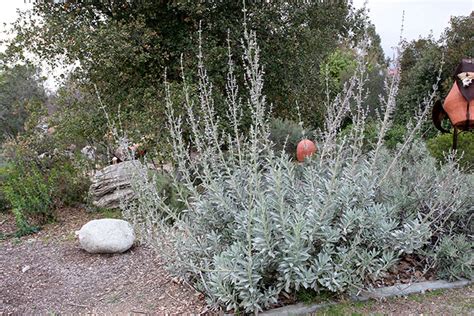
White sage plant (Salvia apiana). Source: Wikipedia
History and Cultural Significance
White sage has a long history of use as a healing herb. The Chumash, a Native American people living along the central and southern coastal regions of California, considered white sage sacred. They used the leaves, seeds, and roots for various therapeutic purposes.
For example, an infusion of white sage roots was drunk by women of the Cahuilla tribe (also indigenous to Southern California) to facilitate passage of the afterbirth and promote healing. They even used the seeds and leaves as a cosmetic, shampoo, and an essential food source. White sage seeds offered nutritional value as a protein, fat, and carbohydrate source.
Read also: Interpreting Blood Dreams
While the Chumash did not distill the essential oil from white sage, they did use and still use this perennial evergreen shrub for smudging during cleansing and prayer ceremonies. The smoke emanating from burning a white sage smudge stick has a powerful aroma and is thought to help carry prayers to God.
Many native families ended up in California cities like Los Angeles through government work training programs (aka assimilation and relocation) in the 1950s. White sage, similar in many ways to sagebrush and other aromatic plants used in ceremonies back home, was adopted by relocated people. Its use then spread throughout Native America and attained a pan-Indian status.
In the 1960s, the hippie movement co-opted the use of white sage and evolved into the New Age Movement. Use of white sage exploded along with it. White sage smudging is popularized in movies and television.
Plant Details
The white sage plant is native to California, Northwest Mexico, and Baja California. This explains why it is sometimes called California white sage. It mainly grows wild in areas of chaparral vegetation, in scrubland below 5,000 feet. This growing environment is characterized by high temperatures, very low rainfall, and warm soils.
Five Benefits of White Sage
Here are five potential benefits of using white sage:
Read also: Decoding Common Dreams
1. Cleans the Air
Burning the embers of sage (aka smudging) in a room is helpful if someone is sick. It's designed to clean a room where someone has been coughing or sneezing from pneumonia or influenza, for example, and you desire to clear the airspace of these germs so you don’t catch it too.
If you work in nursing homes, clinics, or hospitals, you might want to go home and smudge yourself to help deter infection from pathogens that hitched a ride on your clothes. Research has found that burning sage for an hour reduced the levels of bacteria in the air by 94 percent, and this benefit lasted for 24 hours. If you don’t want to burn it, drinking sage tea is an option.
2. Treats Sinus Infections
You can inhale the aroma given off by a burning white sage bundle for a few minutes, or you can drink it as a tea. However you do it, it’s the compound called “eucalyptol,” also known as 1,8-cineole, that, when inhaled, reduces painful sinus inflammation. It may kill the associated pathogens too! Sage tea, as you know, will reduce mucous secretions of the sinuses, throat, and lungs.
3. Relieves Menstrual Pain
White sage tea might provide relief from menstrual period cramps and possibly some symptoms of menopause like sweating and hot flashes. This benefit occurs because sage contains phytoestrogens, which are plant-derived estrogens.
4. Provides Cleansing Energy
Sage is kind of like an eraser; it will help remove the day’s burdens and ease emotional suffering. It may help with mild anxiety or depression. Smudging is the quickest way because when you inhale, the compounds go straight to your bloodstream and brain. The practice of burning herbs (aka smudging) is a non-religious one. You’re just burning plant leaves rather than swallowing the supplement. If you’d like, you can certainly pray while you burn the medicine.
Read also: Understanding Mercy as a Gift
5. Improves Mood and Cognition
A clinical study showed that Spanish sage oil, a very similar essential oil with a comparable range of constituents, modulated mood and cognition in healthy young adults. This suggests that white sage essential oil could be effective in providing support for mild cognitive impairment. Perhaps it’s because white sage oil has a fresh, penetrating, uplifting aroma that there’s interest in using it as a component in perfumes. It does blend well with Atlas cedarwood, lavender, lemon, pine, rosemary, and thyme.
How to use White Sage
The powerful and sacred essential oil of white sage has several uses to support optimal health and wellness. Aromatic constituents in the essential oil can help promote comfort with minor aches and pains associated with daily activities. It also can provide support for overall body system resilience. Most importantly, diffusing white sage essential oil can enhance a balanced state of mind, promote relaxation, and improve your mood. Who doesn’t need an aromatic mood boost given our stressful times?
According to Native American traditional uses a tea made from white sage will decrease sweating, salivation, milk secretions, and mucous secretions of the sinuses, throat, and lungs. Historically, an infusion made from the leaves of white sage could be drunk for its diuretic and diaphoretic effects. Native Americans found that white sage was one of the best herbal treatments for decreasing lactation in animals or humans during weaning. An infusion prepared from white sage leaves was considered a stomach tonic and valuable for treating sore throats. The infusion was first gargled and then swallowed. The white sage leaf infusion was drunk to ease heavy menstruation, but it was unsuitable for new mothers who planned to breastfeed.
Much of the curiosity about white sage essential oil and herb centers around several of its compelling topical therapeutic uses. The potential for white sage essential oil to alleviate minor aches and pains associated with daily life may result from some of its components. A major component of white sage essential oil is 1,8 cineole which is known to have biological activities that can support joint movement and flexibility.
How to Burn Sage
The practice of burning sage is fairly simple, with few necessary tools.
- Basic tools include: a sage bundle.
- Some recommend a seashell or bowl of ceramic, clay, or glass to hold burning sage or capture ash.
- Some recommend matches over a manufactured lighter.
- Optional feather or fan for fanning smoke.
There are many types of sage that are usable for cleansing. Traditional examples include:
- White sage (Salvia apiana)
- Other Salvia species
- White prairie sage or estafiate (Artemisia ludoviciana)
- Other Artemisia species
Before burning sage, some recommend setting intentions if cleansing for spiritual, energetic, and negativity-clearing purposes. Remove animals or people from the room.
It’s also important to leave a window open before, during, and after cleansing. This allows smoke to escape. Some believe smoke also takes impurities and negative energy with it, so don’t skip this step.
These steps apply whether you’re cleansing yourself, your home, or an object. You can cleanse any of these as often as you’d like.
Light the end of a sage bundle with a match. Blow it out quickly if it catches on fire.
The tips of the leaves should smolder slowly, releasing thick smoke. With one hand, direct this smoke around your body and space while holding the bundle in the other.
Allow the incense to linger on the areas of your body or surroundings you’d like to focus on. Using a fan or a feather can also help direct the smoke, though this is optional.
Allow the ash to collect in a ceramic bowl or shell.
Cleanse Your Home or Living Space
In this instance, direct sage smoke over all surfaces and spaces in your home or living area. Be thorough.
Some recommend working in a clockwise direction around your home, ending back where you started, especially for spiritual purposes. Others recommend counterclockwise.
Do what feels best for your situation and follow your intuition.
Cleanse an Object
Direct smoke around and over the object of your choice.
This can be done to a new item, such as jewelry, furniture, or clothing, to protect or dispel it of negative energy. Items related to negative experiences or memories may also be cleansed.
Some people burn sage over special objects to acknowledge the object with sacred meaning.
Aromatherapy
You can also light and burn sage to improve odor, fragrance, and mood.
Simply waft sage smoke in and around your home. You can place the bundle in a fireproof bowl or burner and allow it to smoke for a while.
Make sure your sage bundle is completely extinguished. You can do this by dabbing the lit end into a small bowl of ash or sand. Avoid using water, since it may be challenging to reignite sage if it is extinguished by water.
Check the end closely to make sure there are no more embers burning. Once it’s completely put out, store it in a safe, dry place out of the sun.
When done correctly and respectfully, burning sage is completely safe, and the effects last after the smoke clears.
Safety Precautions
Be careful with sage when it’s lit. If you aren’t careful, burns and even fire is possible. Have water nearby.
Never leave burning sage unattended. Make sure to put your sage bundle out completely after every use.
Setting off smoke alarms is common. Consider this if burning sage in a public building.
People with asthma and other respiratory conditions may be more sensitive to the smoke and have adverse reactions.
Always leave a window open while burning sage. Inhaling smoke can be hazardous to your health.
As a general safety precaution, always take great care when using essential oils that have more than 10% 1,8 cineole. Essential oil of white sage contains 1,8 cineole ranging from 24.6 to 71.7%. Note 1,8 cineole is also called eucalyptol or cajuputol. Children are susceptible to 1,8 cineole. Always check the percentage of 1,8 cineole in essential oils. If 1,8 cineole is above 10%, note the following safety precautions: Do not apply full strength to the face, eyes, or nose. Avoid diffusion for longer than 15 minutes in a well-ventilated room for children under 10 years of age. Do not apply, even diluted, to the face or nose of infants or children under 10 years of age.
Sustainability and Ethical Considerations
Metric tons of white sage (Salvia apiana) are being poached to supply an international demand. The devastating theft and the appropriated trend that it fuels stand in sharp contrast with the values and traditional practices of regional native communities.
The only place that white sage (Salvia apiana) occurs naturally on Earth is between Santa Barbara and northern Baja California. In this limited range are a slew of internationally famous cities, including Los Angeles, Malibu, Santa Monica, San Diego, and Tijuana. Almost 50% of white sage populations have been lost to urbanization.
Populations that have not been destroyed or impacted by development are under threat from poaching, climate change, drought, and intense wildfire.
White sage is an important food source for bees, butterflies, birds, and numerous other forms of wildlife.
Know your source and boycott wildcrafted sage products. Speak with store managers and write e-tailers, asking them to stop selling sage products harvested from the wild.
Grow your own white sage and other native plants. Through cultivation, you enter into a relationship with your plants. By taking care of these plants, you know the source and quality of the food, medicine, and resources you might gather from them.