The question of whether we are alone in the universe has captivated humanity for centuries. With the vastness of space and the ever-increasing discovery of exoplanets, the likelihood of extraterrestrial life seems more plausible than ever. In fact, when surveyed, 86.6 per cent of astrobiologists recently said they either agreed or strongly agreed that extraterrestrial life likely exists somewhere else in the Universe. When asked the same question but for complex or intelligent life, the agreeing percentage only drops to 58.2 per cent. But what would motivate aliens to visit Earth? This article explores the potential reasons behind such an extraordinary event, drawing on scientific insights and addressing the ethical considerations that arise.
The Abundance of Habitable Planets
The Copernican principle suggests that there is nothing special or remotely unique about Earth or humanity. Many who study extraterrestrial life believe that Earth’s habitable state, combined with the development of diverse intelligent life, is a sign that the same is possible elsewhere. Our galaxy contains somewhere between 100 and 400 billion stars. Astronomers have already confirmed around 4,000 planets orbiting other stars - and that’s in our galaxy alone. That’s an incomprehensibly large number. It’s not that there's likely more planets in the Universe than grains of sand on Earth, but 13.33 billion times more.
“We now know that most stars have a planetary system. That means there are loads of places where life can arise. Besides, simple life arose so quickly on Earth. From our perspective, the Milky Way seems giant.
The basic ingredients for life are more common than you might think. Carbon, hydrogen, oxygen and nitrogen - the elements that make up living things on Earth - have all been detected on comets, asteroids and distant worlds. Take KOI-5715.01 - an exoplanet around 3,000 light-years from us. Even more extreme is Deinococcus radiodurans, a microbe whose name roughly translates to “terrible radiation-surviving berry”.
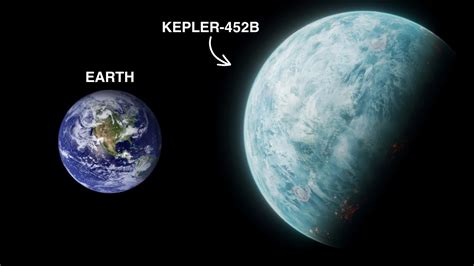
Artist's Conception of Kepler-452b
Read also: Contact with Extraterrestrials
Reasons for Alien Visitation
If aliens wouldn’t be bothered about enslaving or breeding with us, might they simply be coming to Earth for a drive-by meal?
Nutritional Resources: The question of whether an alien biochemistry would be able to digest us as food actually comes down to some very fundamental features of the molecules of life. Our cells are made up of various organic molecules: proteins (polymers of amino acids), nucleic acids DNA and RNA (polymers of bases and sugars), and membranes of phospholipids. And so for making more cells for reproduction, growth and repair of our bodies we need a source of these simple building blocks. We eat other animals or plants and our digestive system breaks them down into their component amino acids, sugars, and fatty acids, which we then use as the building blocks for ourselves.
Water: All life on Earth is water-based; H2O is astonishingly versatile as a solvent and participant in biochemistry and so it seems likely that extraterrestrial life would also be based on this compound. In fact, Europa, one of the moons orbiting Jupiter, contains more liquid water in the global ocean beneath its frozen surface than our entire planet-Europa, and not Earth, is the Waterworld of our solar system.
Mining: Perhaps they intend to wipe away our cities and begin strip-mining the crust of the planet for ores to extract metals and build more vast spaceships. But in fact, because the Earth formed from a molten state with iron sinking down to the core, our planet’s crust is actually pretty depleted of useful metals like iron, nickel, platinum, tungsten and gold.
Plate Tectonics: Perhaps terrestrial planets are common, but terrestrial planets with plate tectonics are rare. Plate tectonics is thought to be vital for keeping the Earth’s climate stable over billions of years to allow complex life like ours to evolve, and it also acts to concentrate certain metals into rich ores.
Read also: UFO Sightings
The Fermi Paradox and the Search for Extraterrestrial Intelligence
Even if alien life is out there, part of the challenge is finding it.
So if aliens likely exist out there, why haven’t we discovered them yet? And why have we never received any extraterrestrial visitors? It was a question that cut straight to the heart of the matter - and one scientists are still wrestling with today.
“Science is inherently sceptical. We want proof - and so far, there’s no direct proof of life beyond Earth,” says Vakoch. “But a few decades ago, the same was true for planets orbiting other stars. That changed in the 1990s, when the first exoplanets were confirmed. Today, astronomers have discovered thousands, proving that other worlds are not only possible but abundant.
Humans have inhabited Earth for a couple of hundred thousand years, which, in the grand scheme of the Universe, is short. Other intelligent civilisations could have come and gone, or are in the early stages of development.
The Fermi paradox raises the question: With 300 billion stars in the Milky Way, many with solar systems, and ten billion years or more in which a civilisation could have arisen in this galaxy, it is difficult to believe that no lifeform ever reached the point where it could travel across interstellar distances. As the great Italian physicist Enrico Fermi said, it’s hard to explain why aliens haven’t made it to Earth. We have to think outside the box.
Read also: The Ethics of Contacting Aliens
The Fermi Paradox II — Solutions and Ideas – Where Are All The Aliens?
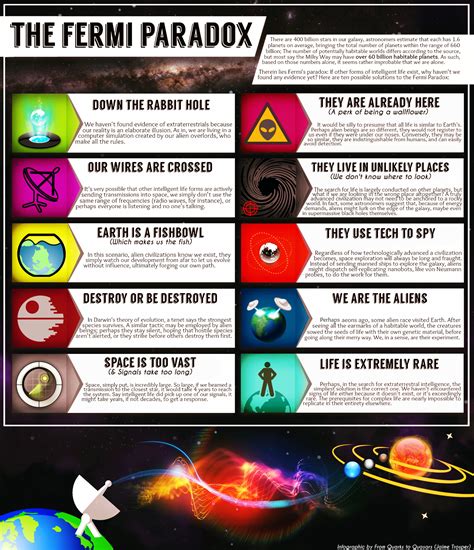
Illustration of the Fermi Paradox
Ethical and Safety Concerns
The search for extraterrestrial intelligence is a fascinating and important scientific quest that raises significant ethical and safety concerns. One of the most notable scientists to highlight these concerns was the late physicist Stephen Hawking, who cautioned that actively attempting to communicate with extraterrestrial civilizations could harm humanity.
Hawking expressed grave concerns on multiple occasions about humans attempting to contact technologically advanced alien civilizations by broadcasting signals into the vastness of space. While he supported the search for alien life through listening, he warned against active attempts to make contact, citing humanity’s own history as evidence that advanced aliens may not be benevolent. He believed that the potential for advanced extraterrestrial civilizations to possess more sophisticated technology and weaponry than humanity could lead to disastrous consequences.
There is a possibility that Stephen Hawking’s notion of avoiding contact with extraterrestrial intelligence could be an “Intelligence Trap,” as pointed out by Robson.
Deciding to initiate contact with extraterrestrial civilizations is a complex issue that requires balancing scientific curiosity with concerns for our own safety. It is crucial for scientists and policymakers to carefully weigh the potential risks and benefits of such efforts and proceed with caution.
Detecting Alien Life
“We’re in a much better position to discover it now than we were five years ago. Everything is going in the right direction for detection. Vakoch agrees.
“To find them, astronomers first had to believe they were out there,” Vakoch adds. For many researchers, alien life feels like it’s at the same stage exoplanets once were: strongly suspected, but still unseen.
Life on Earth, and specifically photosynthetic life such as plants and cyanobacteria that grow by absorbing the energy of sunlight and splitting water, has been releasing oxygen as a waste gas at such a high rate that it has built up in the atmosphere, first to just a few per cent, and today constituting a fifth of the Earth’s air. Oxygen is a very reactive gas, and the only reason it has been able to accumulate in the atmosphere is that it is constantly being replenished by living organisms.
We are currently on the verge of building space-based telescopes that use spectroscopy to read the composition of the atmospheres of terrestrial exoplanets, and so survey the night sky for signs of life.
Here's a table summarizing the key points:
| Reason | Description |
|---|---|
| Abundance of Planets | Our galaxy contains billions of stars and planets, increasing the likelihood of habitable environments. |
| Basic Ingredients for Life | Elements like carbon, hydrogen, oxygen, and nitrogen are common in the universe. |
| Nutritional Resources | Earth has organic molecules that alien life might be able to digest. |
| Water | Earth is a water-based planet. |
| Mining | Aliens may want to strip-mine the planet for ores to extract metals and build more vast spaceships. |
| Plate Tectonics | Terrestrial planets with plate tectonics are rare. |
| Detection Methods | Using spectroscopy to read the composition of the atmospheres of terrestrial exoplanets, and so survey the night sky for signs of life. |