The Christmas tree tradition, rich in history and symbolism, has evolved over centuries, intertwining with various cultural and religious beliefs. Its roots reach back to the sacred trees of Northern European mythology, such as Yggdrasil, the giant ash tree at the center of the Norse cosmos. Let's delve into the fascinating origins and meanings associated with the Christmas tree, exploring its connection to both pagan and Christian traditions.
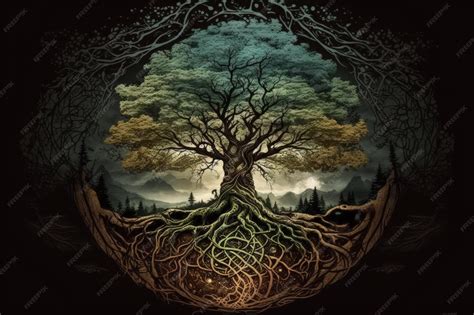
Yggdrasil, the Norse world tree
The Sacred Trees of Northern Europe
The Christmas tree tradition emerged from the “sacred trees” of Northern European mythology such as Yggdrasil, the giant ash tree at the center of the Norse cosmos that holds all the worlds in its roots and branches. Ancient Northern European peoples worshipped trees of all kinds, from the Norse Yggdrasil, a mythical ash and the literal world tree, to specific living trees like Thor’s oak, which was considered sacred by pagans in what is now Hesse, Germany until it was cut down by Christian missionaries in the 8th century AD.
St. Boniface and the Transformation of Tree Symbolism
It is said that St. Boniface came upon one such sacred tree during his mission to the Germanic tribes in 723. Witnessing pagans preparing a sacrifice at an oak tree, he intervened and attempted to cut it down. Upon finding devotees preparing to sacrifice a child to Thor at the “Thunder Oak,” Boniface intervened and miraculously chopped down the tree with one swift swing. He used its wood to build a Christian chapel, and in the spot where the oak had stood, he placed a small fir tree.
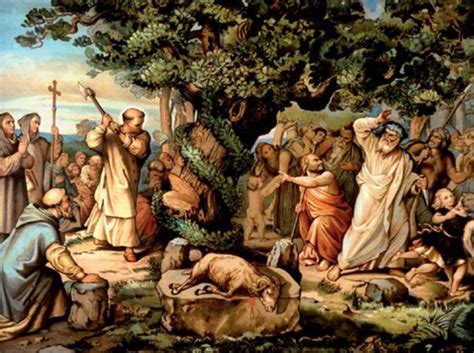
Saint Boniface cuts down Thor's Oak
Read also: The phrase "So Mote It Be"
Perhaps unaware, St. Boniface gathered up all the traditions that use evergreens at the Winter Solstice to mark fertility and new life in a time of darkness. The tree, once a pagan symbol, became a Christian one representing eternal life and hope.
The Reformation and the Christmas Tree Tradition
Though the Reformation sought to rid Christianity of “pagan” vestiges, it actually expanded the Christmas tree tradition and returned it closer to its indigenous roots. After wandering home through the winter forest at night, Martin Luther put candles on a tree to evoke the stars above, making the Christmas tree a more perfect image of the cosmos. To Luther, the tree remained a symbol of Christ, but in giving it a cosmic scope, he was also unconsciously portraying Christ as the new Yggdrasil.
Trees in the Bible
Trees in the Bible hold profound significance, often marking divine encounters and covenantal moments. “Sites marked with trees often became associated with appearances of Yahweh that involved divine revelation. Isaiah 60:13 highlights the reverence of trees in worship, prophesying their adornment of the temple. Judges 6-7: An angel appeared to Gideon under an oak, calling him to lead Israel.
The Winter Solstice and Rebirth
Evergreens were powerful symbols of rebirth at the winter solstice, the shortest day of the year. The winter solstice marked the rebirth of the sun, and with it the fertility of the Earth and everything on it. The earliest Christmas tree decorations were fruits, nuts, and flowers, which invoke fertility, and candles and tinsel (yes, tinsel, Dad!), which symbolize the return of the sun. The ritual of decorating the home with evergreen boughs and symbols of fertility at the winter solstice seems to have been passed down, more or less unchanged, from pre-Christian Europeans, however the tradition of decorating the tree has probably changed significantly since then.
Origins of the Christmas Tree
Modern Interpretations: Intent Matters
Idolatry is unequivocally condemned throughout Scripture, but intent determines whether a practice honors or dishonors God. Modern Christmas trees, as symbols of celebration and remembrance, are entirely different from the idols Jeremiah describes. While the Israelites misrepresented God with an idol, the Christmas tree is not an attempt to represent God. It serves only as a symbolic or decorative element, not an object of worship. The Christmas tree, like the cherubim, is not intended for worship or to represent God in any way.
Read also: New Funko Pops Revealed
Decorating Christmas trees has become a Christian tradition, symbolizing new life, eternal life, and the birth of Jesus-not pagan worship. The key is the intent behind it.
Christian Freedom and Traditions
Christian freedom in traditions should always be evaluated through the lens of biblical values. Ultimately, our goal should be to honor Christ in all things, ensuring that He remains the focus of our celebrations. Whether it’s a Christmas tree or any other tradition, we must ask ourselves: does this practice glorify God and point to His truth? If so, it can be a meaningful part of our Christian freedom; if not, we should reconsider our approach.
Here's a table summarizing the key points discussed:
| Topic | Description |
|---|---|
| Origins | Sacred trees of Northern European mythology, such as Yggdrasil. |
| St. Boniface | Cut down Thor's Oak, replacing it with a fir tree, symbolizing Christ. |
| Winter Solstice | Evergreens symbolize rebirth and fertility. |
| Intent | Key factor in determining whether a tradition honors God or not. |
| Christian Freedom | Traditions should be evaluated through the lens of biblical values. |
Read also: Discover Your Wiccan Identity