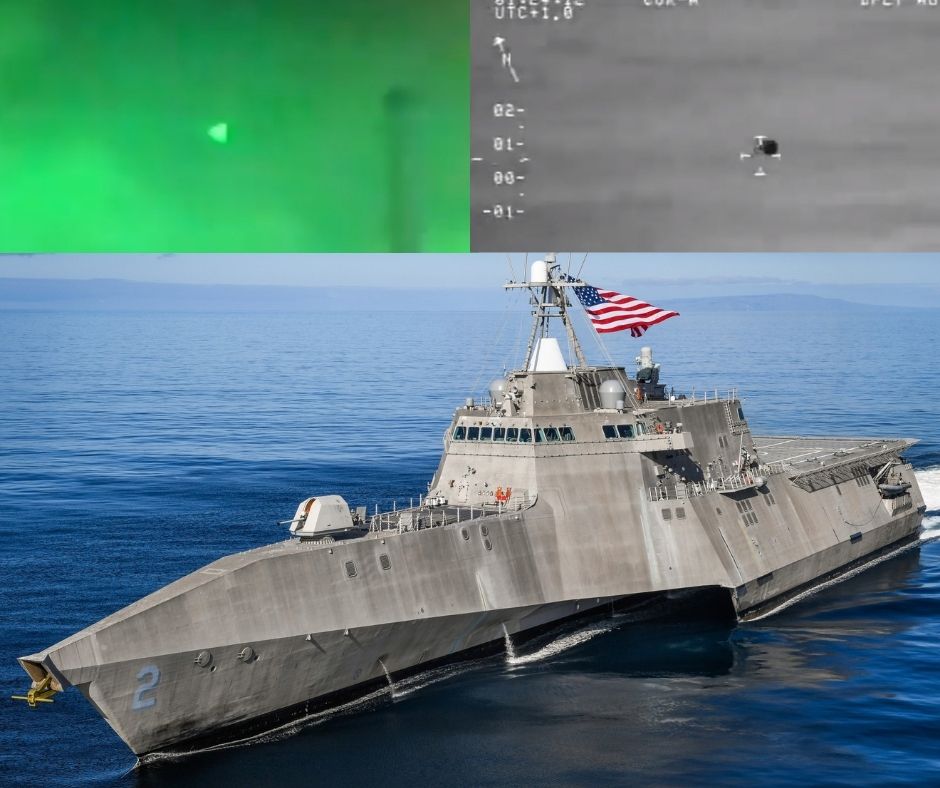
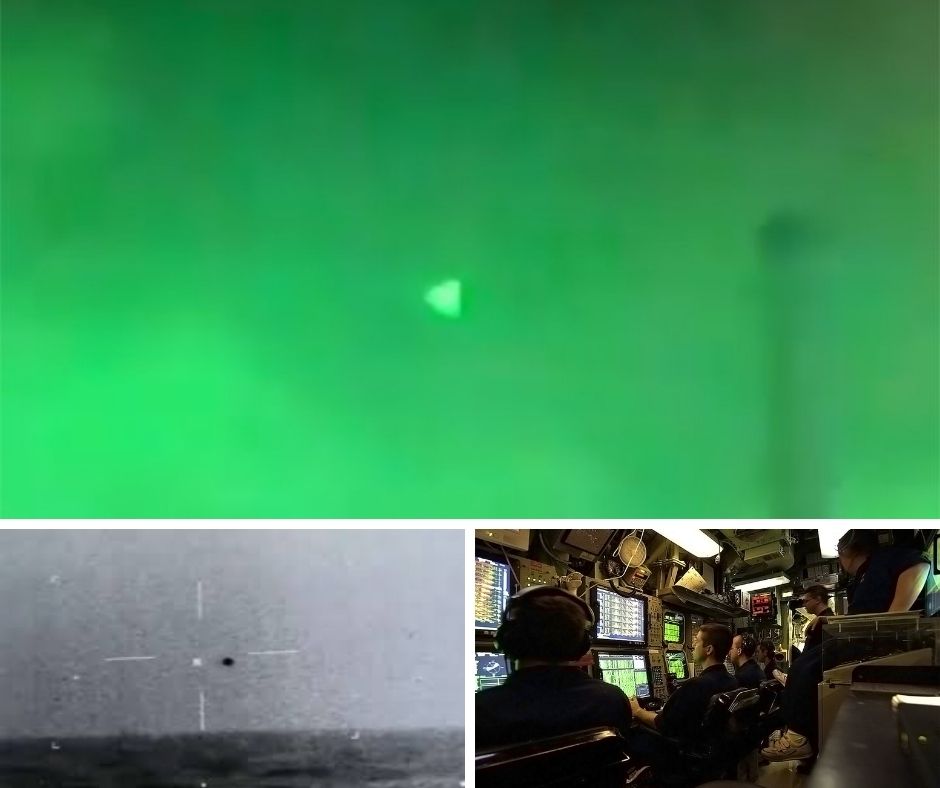
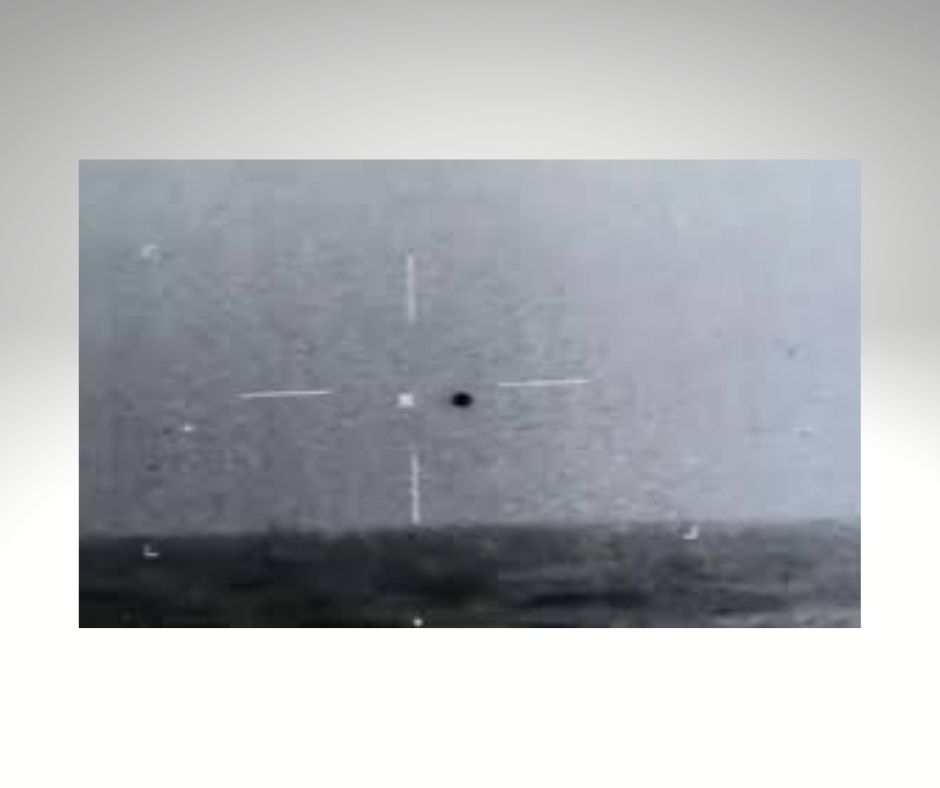
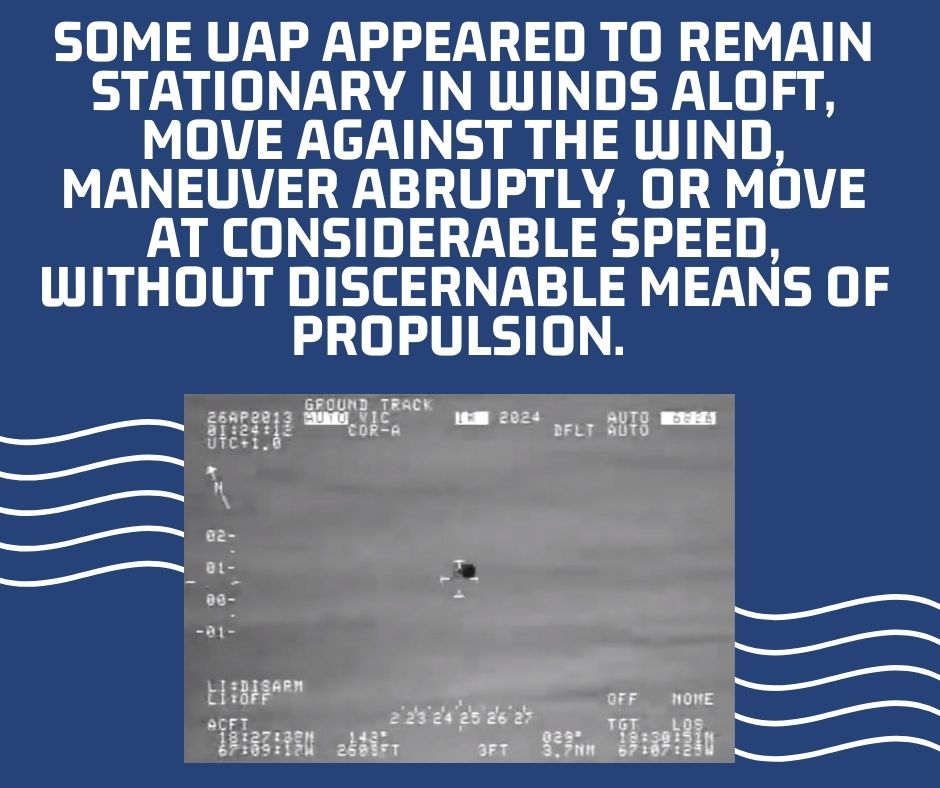
Wondering what the new proposed UAP Office is means? Don’t worry. I’ve got you covered. WASHINGTON, D.C., has published the text of FY 2022 National Defense Authorization Act (NDAA), H.R. 4350, now approved by the U.S. House of Representatives Armed Services Committee, which includes a 571-word section to force new obligations on the Department of Defense concerning UAPs or Unidentified Aerial Phenomena.
Here is a link to the release of the US 2022 National Defense Act, which directs the creation of an office to investigate Unexplained Aerial Phenomena. Full Report PDF.
H.R. 4350 was accepted by the full House Armed Services Committee on September 2, 2021, by a 57-2 vote, and the text has now been made public. And this section will establish an office within the Office of the Secretary of Defense to carry out the mission currently performed by the Unidentified Aerial Phenomenon Task Force and require an annual report.
The House committee’s Unidentified Aerial Phenomena-related specifications differ from those included in a proposed Intelligence Authorization Act (IAA) (S. 2610), supported by the Senate Select Committee on Intelligence in July. The two bills are not in direct opposition, but they take somewhat different approaches–the House language has more detailed substantive obligations on some points but requires less frequent reports to Congress.
These two sets of Unidentified Aerial Phenomena-related obligations should be viewed as recommendations part of a work-in-progress involving at least four key congressional committees and other players as well, including officials of the Executive Branch. Defense authorization and Intelligence authorization bills are often merged during the legislative process. A single set of Unidentified Aerial Phenomena-related conditions, applicable to both military and intelligence community components, will be hammered out during the coming months.
The Senate Armed Services Committee approved its version of an NDAA on July 21; the text has not been made public. The House Intelligence Committee has not yet produced its version of an IAA.)
Below you can find some key points from the House Armed Services Committee’s H.R. 4350.
The bill defines “unidentified aerial phenomena” as “airborne objects observed by a pilot or aircrew member that are not immediately identifiable.” This definition of Unidentified Aerial Phenomena is too narrow in several respects. E.g., a security team could see a giant glowing disc land on a Minuteman III silo, which wouldn’t fit the description. Such defects are not uncommon at this stage, especially in big multi-subject bills such as this (1362 pages, work of seven subcommittees) and on “new” subjects. I do not expect any overly constrictive definition of Unidentified Aerial Phenomena will be classified by Congress, either in an NDAA or in an Intelligence Authorization Act.
The bill would mandate that within 180 days of enactment, the Secretary of Defense, in consultation with the Director of National Intelligence, will establish a new UAP office “within the Office of the Secretary of Defense to carry out, on a Department-wide basis, the mission currently performed by” the UAP Task Force; the UAPTF will later be terminated. Enactment of this language would be a congressionally mandated elevation of the subject matter of Unidentified Aerial Phenomena.
This bill requires that beginning December 31, 2022, the Secretary of Defense submit an annual report on Unidentified Aerial Phenomena to the congressional armed services, intelligence, and foreign affairs committees (six committees); it does not seem specific whether these reports should be submitted in classified or unclassified form or both.
This new bill lists 7 “duties” for the new Unidentified Aerial Phenomena office, including centralization and standardization of UAP-reporting procedures “from each military department,” “coordinating with other departments of the Federal government,” “evaluating links between unidentified aerial phenomena and adversarial foreign governments, other foreign governments, or non-state actors,” “evaluating the threat that such events present to” the U.S., and “coordinating with allies and partners of the United States, as appropriate, better to assess the nature and extent of unidentified aerial phenomena.”
This bill mandates that these reports “shall include” ten specific things, including “(B) An analysis of data relating to unidentified aerial phenomena collected through– (i) geospatial intelligence; (ii) signals intelligence; (iii) human intelligence; and (iv) measurement and signals intelligence. (C) The number of reported incidents of UAPs over restricted air space of the United States….(H) An update on the coordination by the United States with allies and partners on efforts to track, understand and address unidentified aerial phenomena. (I) An update on any efforts underway on the ability to capture or exploit discovered unidentified aerial phenomena. (J) An assessment of any health-related effects for individuals that have encountered unidentified aerial phenomena.”
The Unidentified Aerial Phenomena language in the bill originated with Rep. Ruben Gallego (D-AZ, 7th congressional district), the chairman of the Subcommittee on Intelligence and Special Operations of the House Armed Services Committee. There was no separate roll call on the UAP language when the full Armed Services Committee held its “mark-up” (voting session) on the bill on September 1, 2021. As revised at the mark-up, the entire bill was favorably reported to the full House of Representatives on a roll call of 57-2. Action by full House has not yet been scheduled.
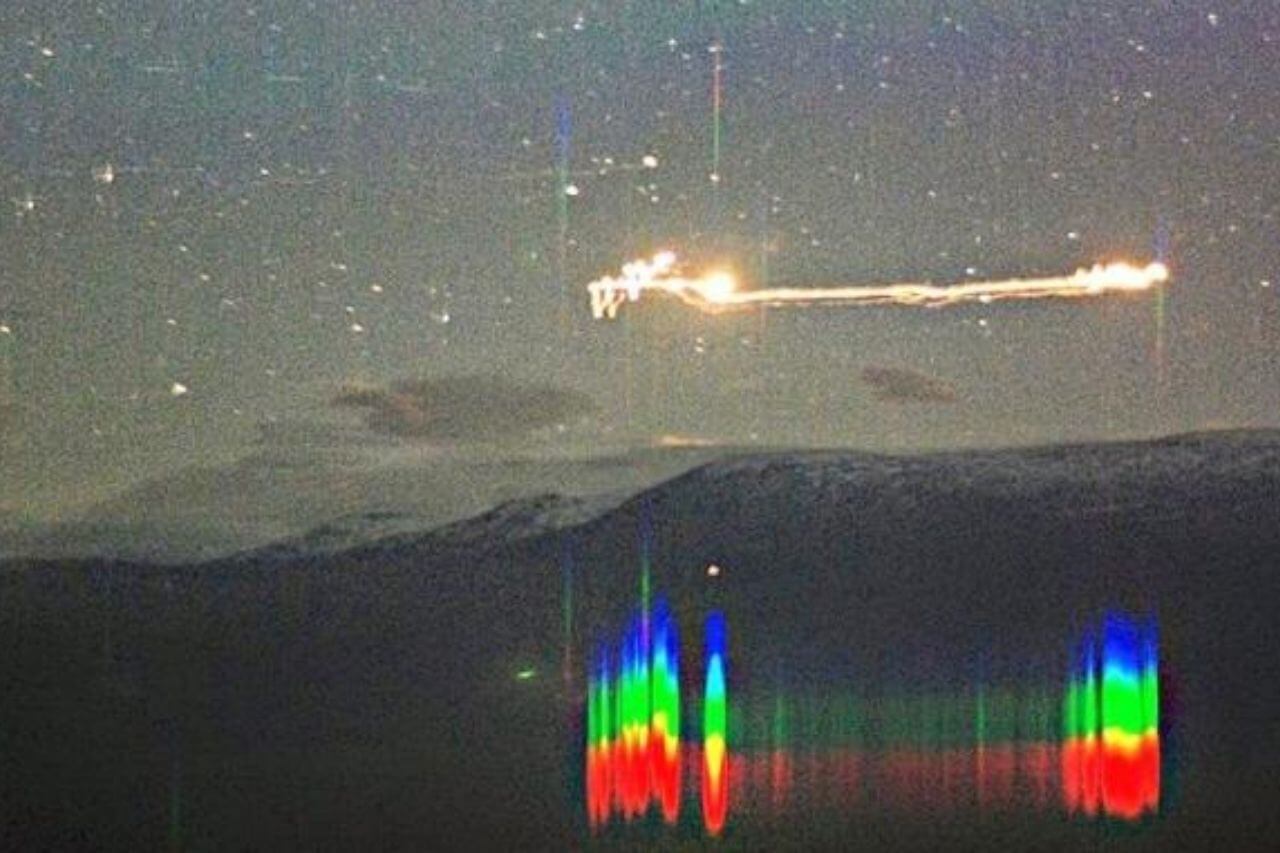
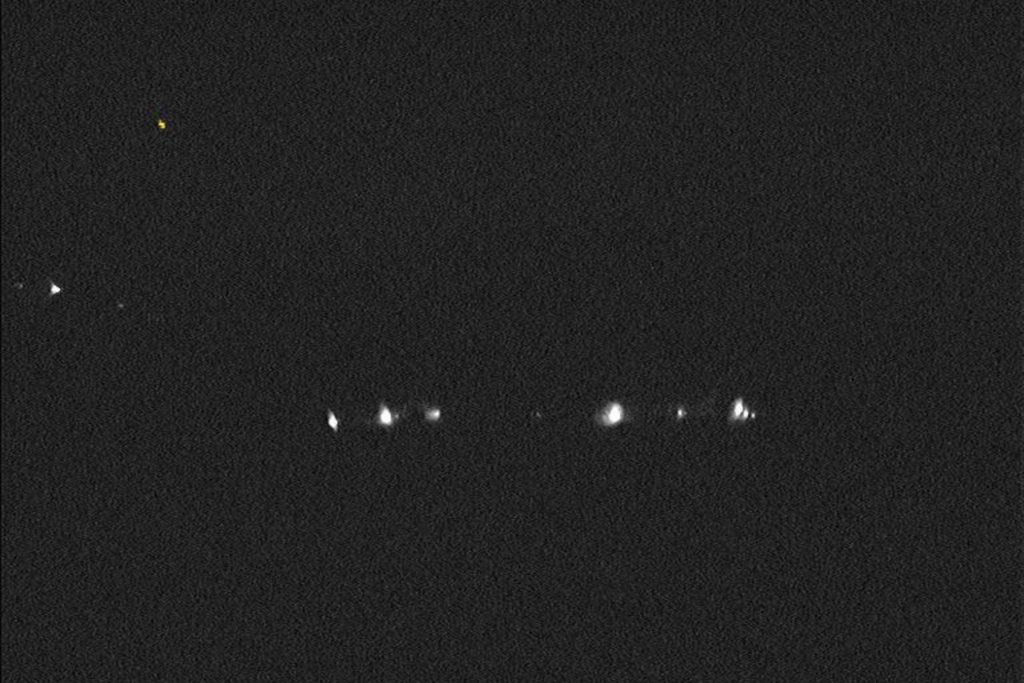
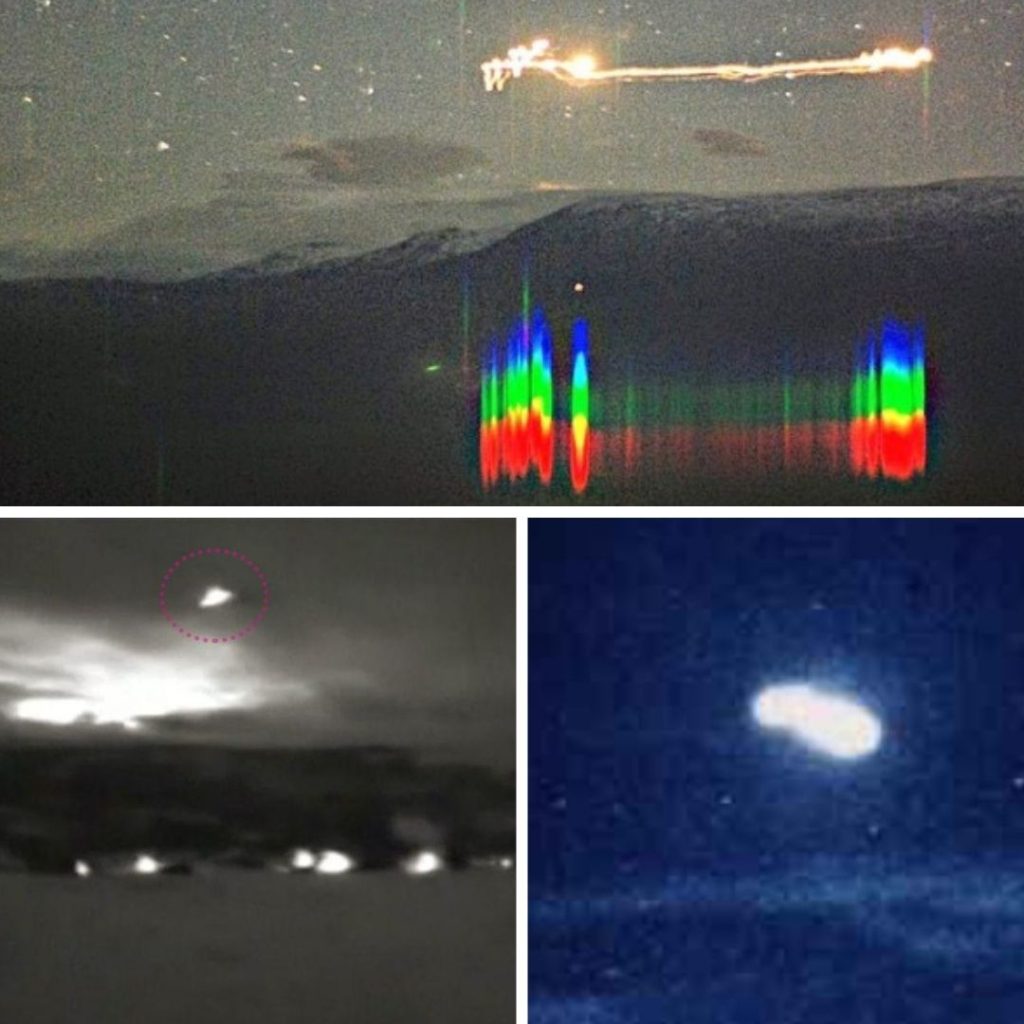
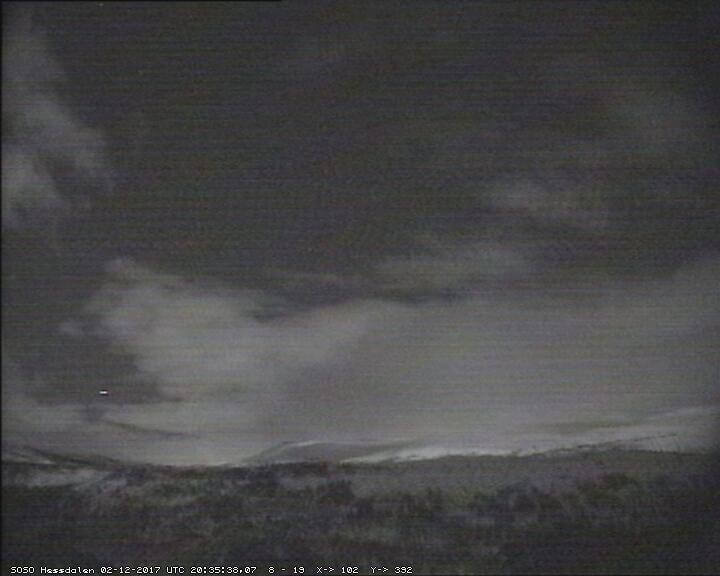
The Hessdalen lights or Hessdalen Phenomena are unexplained lights observed in rural central Norway’s 12-kilometer-long (7.5 mi) range of the Hessdalen valley.
History of Hessdalen Phenomena
The Hessdalen lights are of unexplained origin. They are generally bright white, yellow, or red and can appear over and under the horizon. They appear to appear both by day and night and appear to float through and above the valley.
The duration of the lights, maybe a few seconds to well over an hour. Sometimes the lights move with tremendous speed; at other times, they seem to oscillate slowly back and forth. On yet other occurrences, they hover in mid‑air.
Strange lights have been reported in this region since at least the 1930s. The mainly high activity happened between December 1981 and mid-1984, during which the lights were being observed 15–20 times per week, drawing many overnight tourists who arrived at Hessdalen for a sighting. And as of 2010, the number of observations has decreased, with only 10 to 20 sightings made annually.
Hessdalen Lights
Research and Field Studies
Following 1983, continuous scientific research was referred to as “Project Hessdalen,” launched by UFO-Norge and UFO-Sweden. This project was running as a field investigation from 1983–1985.
A group of engineers, journalists, and students collaborated as “The Triangle Project” during 1997–1998 and recorded the Hessdalen lights in a pyramid shape that bounced up and down.
Furthermore, despite the ongoing studies, there is no convincing explanation for the Hessdalen phenomenon. Nevertheless, there are many working hypotheses and even more speculations.
One plausible explanation connects the phenomenon to an incompletely understood combustion involving oxygen, hydrogen, and sodium, which happens in Hessdalen because of the large deposits of scandium.
Another new hypothesis proposes that the lights are formed by a group of macroscopic Coulomb crystals in a plasma generated by the ionization of dust and air by alpha particles when radon decay in the dusty atmosphere.
Numerous physical properties, including oscillation, light spectrum, and geometric structure observed in the Hessdalen lights, can be explained through a dust plasma model.
Radon decay produces alpha particles (responsible for helium emissions in Hessdalen Light’s spectrum and radioactive elements such as polonium.
In 2004, Teodorani reported an occurrence where a higher level of radioactivity on rocks was detected near the area where a massive light ball was reported. Computer simulations reveal that dust immersed in ionized gas can organize itself into double helixes like some occurrences of the Hessdalen lights; dusty plasmas may also form in this structure.
Some of the sightings have been positively identified as misperceptions of celestial bodies, car headlights, aircraft, and mirages.
Hessdalen Phenomena
Can Piezoelectricity explain Hessdalen Phenomena?
Another hypothesis explains the Hessdalen phenomena as a product of piezoelectricity generated under specific rock strains. Several crystal rocks in Hessdalen valley include quartz grains that can create an exceptional charge density.
Furthermore, in a 2011 paper, based on the dusty plasma theory of Hessdalen phenomena, Carlton Taft and Gerson Paiva suggested that quartz’s piezoelectricity cannot explain a peculiar property assumed by the event of the Hessdalen light – the presence of geometrical structures in its center.
Carlton and Gerson have shown a mechanism of light ball cluster formation in Hessdalen phenomena by nonlinear interaction of ion-acoustic in combination with dusty-acoustic waves with low-frequency geoelectromagnetic waves in dusty plasmas.
Therefore, the velocity of ejected light balls is about 10,000 m/s or 33,000 ft/s. That is in good agreement with some ejected light balls’ observed velocity, measured at 20,000 m/s or 66,000 ft/s.
The center ball is white, while the ejected balls that are observed are constantly green in color. This is ascribed to radiation pressure created by the synergy between VLF or very low-frequency electromagnetic waves and atmospheric ions (present in the central white-colored ball) through ion-acoustic waves. O+ 2 ions (electronic transition b4Σ−g → a4Πu). The green emission lines are presumably the only ones transported by those waves. Electronic bands of O+ 2 ions happen in auroral spectra.
The measured temperature of Hessdalen lights is about 5,000 K (4,730 °C; 8,540 °F). And at this temperature, the rate coefficients of dissociative recombination will be around 10−7 cm3 s−1 for the nitrogen ions and 10−8 cm3 s−1 for the oxygen ions. Therefore, in the Hessdalen light plasma, the nitrogen ions will decompose (N+2 + e− → N + N*) quicker than oxygen ions.
green light balls in Hessdalen
Ion-acoustic waves transport exclusively ionic species. Consequently, oxygen ions will dominate in the emitted green light balls in Hessdalen, displaying a negative band of O+2 with electronic transition b4Σ−g → a4Πu following ion-acoustic wave formation.
Taft and Paiva presented a model for resolving the conflicting spectrum observed in Hessdalen lights. The spectrum is almost flat on the top with steep sides due to the bremsstrahlung spectrum’s optical thickness.
At low frequencies, self-absorption changes the spectrum to follow the Rayleigh-Jeans part of the blackbody curve. Such a spectrum is characteristic of dense ionized gas.
Furthermore, the spectrum created in the thermal bremsstrahlung process is flat up to a cutoff frequency, νcut, and later falls off exponentially at higher frequencies. This series of events forms the typical spectrum of the Hessdalen phenomenon when the atmosphere is bright, with no fog.
According to this model, the spatial color distribution of luminous balls commonly observed in the Hessdalen light phenomenon is produced by electrons accelerated by electric fields during the rapid fracture of piezoelectric rocks under the ground.
Solar Activity, Earthquakes, and Hessdalen Phenomenon, is there a connection?
One potential explanation for Hessdalen lights is similar to how you listen to music or radio. It’s the effect known as the speedo electric effect. And it’s how the speakers on your phone or your computer are producing sound by applying electricity to a particular element.
We can create vibrations in that element and vice versa. Certain crystals, if you apply pressure to them, can also produce electricity. Still, in this case of Hessdalen lights, if this is what’s happening, then the highly charged particles coming from the sun may act on earth as if it was a speaker and therefore make it vibrate.
And these vibrations obviously can then cause massive earthquakes. That’s one potential explanation for the Hessdalen Phenomenon. Because we know earth holds a lot of earth quartz on the inside, and quartz is very highly affected by the piezoelectric effect.
This would actually make some sense to this phenomenon. It would make sense that electricity coming from space would make it vibrating and destabilize the system around it. But right now, this is theoretical and doesn’t have any physical proof.
We need a lot more investigation and different types of new theories to explain if the observations of massive earthquakes and solar activity are indeed caused by the electrical effects displacing the quartz inside the planet. And if so, we might even find a way to control this later on.
Hessdalen Ball Lightning
Ball Lightning phenomena in Hessdalen Area?
Because of the abundance of copper and quarts in Hessdalen valley, this might explain the creation of Ball Lightning phenomena seen in this area.
These lights can be produced by piezoelectricity. But despite numerous theories and attempts to recreate the phenomenon in a laboratory, ball lightning has remained an enigma to modern science.
Thermodynamics tells us that when a plasma ball expands, it must cool rapidly (according to Perfect Gases’ law with a drastic decrease of luminosity), but this doesn’t happen with the Hessdalen phenomenon.
Are we dealing with a “self-confined plasma”? A mixture of ions and electrons trapped by a strong magnetic field and self-maintained by a strong central force similar to gravity?
Or is the Hessdalen lights not due to a light emission mechanism “plasma-ball” (Ball Lightning), but due to an artificial illumination system? (UAP/UFO)?
The problem is caused by the “constancy of temperature” seen in spectroscopy pictures that have been examined from research studies in Hessdalen by an Italian research group (2002 Italian “Optical and Ground Survey in Hessdalen”) is completely solved if the lights are made of artificial lamps of any kind. (UFOs).
Recent or future hypotheses on the formation of Ball Lightning and related light phenomena such as “Earthlights” might be able to explain Hessdalen Lights as a natural phenomenon that apparently is not.
One is the right theory, natural or artificial, will depend on the willingness to construct an interdisciplinary and open collaboration between scientists and physicists of the proper specialization.
The natural possibility of “silicon-triggered lights” and their strict connection between the Ball Lightning phenomenon and ground piezoelectricity must be carefully investigated and with in-depth geophysical surveys in the Hessdalen valley.
Conclusion of the Hessdalen Phenomenon
Hessdalen Lights shows to be highly elusive, and its behavior is most often unpredictable. The exact nature of the phenomenon is not known yet. It is now difficult to make any assumption to what this phenomenon is without a military-like technology consisting in this specific case of a totally automated radar-guided and laser-telemetric sensor platform (TV monitor, very high-resolution multifilter CCD camera, high-resolution spectrograph, multifilter photon-counting photometer, microwave parabolic antenna, and spectrometer, IRST detector, Lidar, polarimeter, electrostatic detector). It is strictly used in connection with a portable VLF-ULF antenna & spectrometer and a mobile atmospheric station that registers all relevant parameters of the Hessdalen phenomenon.
A collaboration between physical scientists, geophysicists, and engineers might be very useful to solve this mystery.
That’s it. Thanks for reading this article about the fascinating and mysterious phenomena in Hessdalen. If you want to know more about Hessdalen Phenomena, then check out this book, Hessdalen Lights! Author Nils Magne Ofstad.*
*We are a participant in the Amazon Services LLC Associates Program, an affiliate advertising program designed to provide a means for us to earn fees by linking to Amazon.com and affiliated sites.
Some of the links used are affiliate links. As a customer, you do not pay any extra because of an affiliated link. I may receive a small percentage of the sale from an affiliate link, which helps support this website. Thank you so much for your support.
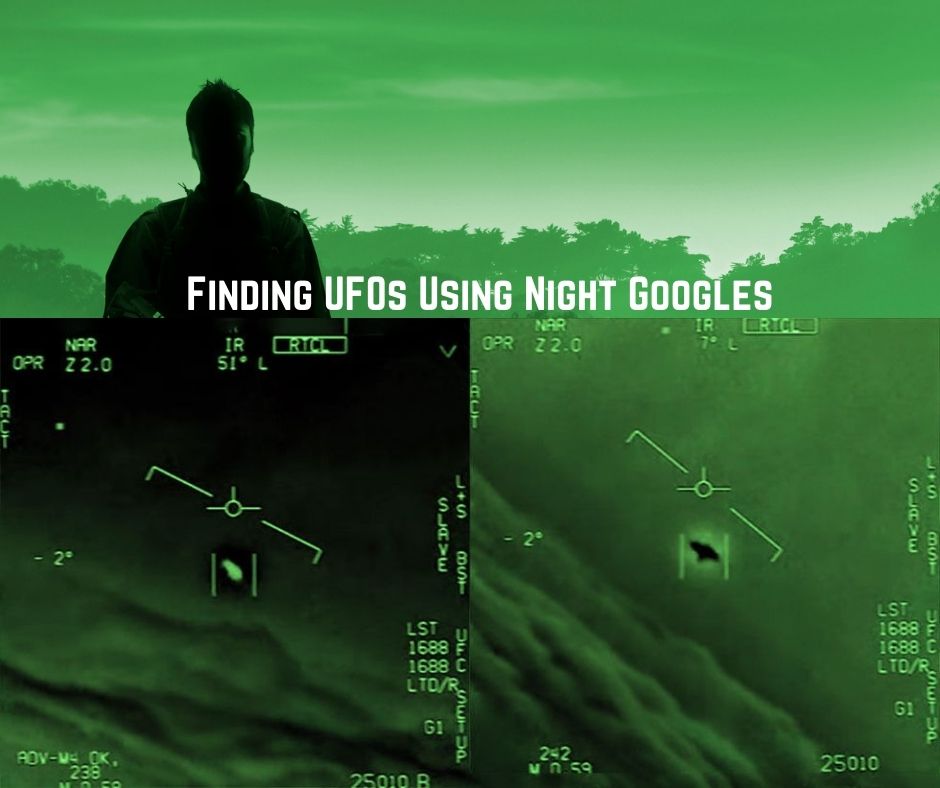
Here are the best night vision goggles to spot UFOs 2021. Did you know that human eyes can see only a short range of light spectrum between 400-700nm? This article is about using and getting the best night goggles to find UFOs.
Posted on
The study of 600 UAP cases reported by civilian and military pilots
Most of the results (in percentages) found in this analysis of 600 cases indicating that regardless of the total number of cases analyzed, more or less the same patterns are found. This study confirms the potential impact on aviation safety and the need for a serious study of these UAP phenomena. Only a systematic collection of detailed testimonies from pilots and crews will enhance the scientific research on this enigmatic UAP phenomenon. Summaries of these 600 UAP events are contained in the AIRPANC Catalogue (2nd edition, 2010).
What Is The Shape Of UAPs?
Disc (or circular, saucer, round)
Spherical (Sphere, balloon, orb)
Oval (elliptical, egg)
Cigar (fuselage)
Triangle (delta, flying wing)
Missile (rocket, torpedo, bullet)
Cylindrical
Half-sphere (inverted bowl, half-moon)
Changing (UAP shape changed during observation)
Other shapes (Crescent, banana, mushroom, rectangle)
Type of UAP observed by pilots are classified in two categories:
the “lights” point and
the “objects” when it has a “solid” aspect.
Of 600 reported UAP cases from civilian pilots, they were distributed as follows:
Distribution by type of UAP
Object 443 cases 74%
Light (LT) 156 cases 26%
Unspecified (UN) 1 case
Number of UAP
Of the 600 cases (474 cases – 78%), the witnesses have reported only one UAP.
In 117 cases (20%), pilots reported the sighting of two or more UAPs.
In 12 cases, there were groups of more than 10 UAPs observed at the same time.
UAP estimated altitude
Of 332 UAP cases, the estimated altitudes are distributed as follows:
UAP Estimated Altitude (in feet)
Between 2,000 ft and 4,999 ft 51 cases
Between 5,000 ft and 9,999 ft 89 cases
Between 10,000 ft and 19,999 ft 64 cases
Between 20,000 ft and 29,999 ft 48 cases
Between 30,000 ft and 49,999 ft 53 cases
Between 50,000 ft and 100,000 ft 11 cases
> 100,000 ft 2 cases
Altitude not mentioned 268 cases
In 305 cases, more than half of the cases (51%), the UAP estimated altitude was between 2,000 feet and 50,000 feet. The lowest measured altitude reported by a pilot was 500 feet. The highest UAP altitude reported was 246,000 feet by Major Joe Walker. It happened when he was flying the X-15 rocket-powered aircraft during a test flight at more than 2,000 mph when his rear-view movie camera captured five disc-shaped or cylindrical objects flying in echelon formation in April 1964.
UAP behavior
This classification enables us to attribute a “level of strangeness” or unconventionality to the UAP phenomenon.
Stationary phenomena (one light or one object appearing motionless.)
Phenomena following a uniform/constant trajectory and/or a speed.
Phenomena with a variable trajectory and/or speed (UAP is performing various maneuvers).
Of 600 UAP cases gives the following results.
Anomaly (AN) 39 cases 7%
Flyby (FB) 222 cases 37%
Maneuver (MA) 339 cases 56%
The crew of a Varig C-47 cargo plane witnessed a luminous object. After a quick maneuver, the disc-shaped object was ahead of them and crossed to the right side, following a horizontal trajectory. The UFO stopped for a moment and then abruptly went into a dive and was out of sight in the cloud bank below.
When the UAP reached the right side of the aircraft, the engines began acting up, coughing and missing, and the lights in the cabin dimmed and almost went out. It seemed like the whole electrical system was going to collapse. When the UFO dived into the clouds, everything became normal again. This happened in Brazil in 1957.
Interaction between the UAP and the aircraft
In 299 cases, there have been reported interactions between UAPs and aircraft. These cases concern these events:
UAP performs maneuvers to approach, chase, or escape from the aircraft.
Dogfight with military aircraft.
UAP circles the aircraft or performs maneuvers close it.
Distribution of interaction cases by type of aircraft
Military aircraft (M) 141 cases.
Commercial aircraft (C) 86 cases.
Private aircraft (P) 66 cases Commercial and Military (C+M) 4 cases.
Commercial and private (C+P) 2 cases.
Impact on flight safety
Among the 600 UAP cases, a possible impact on flight safety was noted in 290 cases (48%). These 290 events are distributed by type of aircraft (Commercial, Private, Military, Multiple aircraft cases) as follows:
Commercial aircraft (C) 125 cases 43%
Military aircraft (M) 95 cases 33%
Private aircraft (P) 65 cases 22%
Multiple aircraft : C+M (3) / C+P (2) 5 cases 2%
In some instances, electromagnetic or other effects on aircraft systems were reported when the UFO was close to the aircraft. For 108 events (37%), pilots determined that the impact on flight safety was high enough to submit an Airmiss/Airprox report.
A fast white cylindrical UAP that overflew their plane
During a flight in the USA 1997, three crew members of a B747-300 observed a very fast white rocket-like UAP that overflew their plane between 200 and 400 feet above in the opposite direction. They observed no wing on the UAP, which they described as cylindrical. There was no TCAS9 alert. The UFO passed overhead very fast. The UAP was close enough that the Flight officer ducked his head because he believed it would hit them. It was white and had a round shape to it. There was no smoke or fire noticeable from the object. No radar echo was detected in the aircraft opposite direction by ARTCC. The National Transportation Safety Board has no conclusion concerning the identification of the UAP but considers this case officially closed.
Summary
The study of 600 UAP cases reported by civilian and military pilots has shown a number of key points.
The distribution of cases comes from the whole Earth (Continental and maritime zones).
There are slightly more nocturnal cases (54%) than daylight cases.
Witnesses were two or more in 69% (more than two-thirds) of the cases.
Pilots have officially reported their sightings in 197 cases (33% of the 600 cases).
Commercial pilots have reported their sightings officially in 35% among 233 cases.
Most of the sightings occurred during the cruise phase of flight (85%).
Visual sightings are confirmed by radar detection in 27% of the cases.
More UAP is described as « objects » (74%) than point sources of lights. Circular (disc) is the most reported shape (42%).
Weapon systems were momentarily ineffective when targeting UAP.
UAP performs maneuvers in more than half of the cases (56%), and their behaviors seem to reflect an interaction with the aircraft in almost 50% (299) of the 600 cases.
In 48% (almost half) of the 600 cases, UAP has had or could have had an impact on flight safety, including 31 cases in which pilots had to make an evasive action to avoid a collision with UAP.
Electromagnetic effects were reported in 14% of the 600 cases. Radio and compass systems were the most affected.
Private aircraft are more affected by the E-M effects allegedly caused by UAP.
Did you know that human eyes can see only a short range of light spectrum between 400-700nm? This article is about using and getting the best night goggles to find UFOs.
Here are the best night vision goggles to spot UFOs 2021. Did you know that human eyes can see only a short range of light spectrum between 400-700nm? This article is about using and getting the best night goggles to find UFOs. Do you know that light waves up to 400nm are called ultraviolet light, and light waves over 700nm are named IR-light? And both are not visible by the eyes. Therefore, only the visible range of the spectrum is considered a norm for humans.
Have you been hooked on spending your nights alone looking up at the night sky? But whether you’re tracking UFOs or UAPs on the down-low like Instagramming each satellite you see, you’ll want a great set of UFO spotting night-vision goggles. I’ve been examining night-vision googles in this article, and now I’m ready to tell you what the best ones are.
Finding the best IR goggles
But creativity does not have easy ways. If we cannot see some things, it doesn’t mean it doesn’t exist—the same thing with UFOs. And by using IR or Night goggles, you can find UFOs, which will be radically different from what you see with your eyes. Using IR goggles requires a lot of time and serious investment in equipment and accessories.
And also, it forces the UFO-spotter to think entirely differently. But it’s worth it, and you will find out many things are buzzing around out there. Not everyone may find using IR interesting, but surely there will be those to whom this article will help make their first steps in this genre.
What Are The Types of Night Vision Goggles?
There are two types of night vision goggles:
Infrared Night Vission Goggle.
Thermal Night Vission Goggle.
1) INFRARED NIGHT VISION GOGGLES
Infrared (IR) night vision goggles rely on the light outside the visible spectrum range to illuminate the images you see in low-light environments. A standard option is green light waves, so numerous night vision goggles rely on a green phosphor. Nevertheless, those night vision goggles cannot work in total darkness or when it is bright outside. Without any light, it’s impossible to produce an image for you to see. And bright light will hurt the technology and make the goggles inoperable.
2) THERMAL NIGHT VISION GOGGLES
As opposed to IR technology, thermal technology relies on temperature and heat detection to produce an image. While the picture isn’t as clear as with infrared night vision goggles. Because those visual displays don’t rely on light and can work in complete darkness. They even work in the absence of light outside of the visible spectrum. If you’re considering a pair of night-vision goggles for hunting UFOs in total darkness, thermal-based models are the best option.
This post contains affiliate links, and as an Amazon Associate, I earn from qualifying purchases that help keep this content free.
What to think about when buying night vision goggles
Let’s examine some of the basics you’ll need in any good IR goggle purchase.
Are They Head Mountable?: This may not be an issue for everyone, but I always want to know if I can wear the goggles on my head and if they come with a strap to do so.
Battery Life: We’re not just talking about how long the batteries will last, but what kind of batteries the goggles need. Some require regular AA batteries others have specialized built-in lithium batteries.
FPS: Nope, not first-person shooter, but frames per second. The higher the frames per second, the better the IR goggles, in theory. I find that 15 is fine, but many other people swear by 30.
What Are The Price range For Night Vision Goggles?
Up to $500: In this price range, you can find a quality pair of uncomplicated goggles with limited functionality designed for casual observing.
$501 to $1,000. In this price range, you’ll find night vision goggles designed for activities such as hunting, driving, or shooting.
$1,001 and up. On the higher price range spectrum, you’ll find high-quality and high-performance goggles, including ones that would qualify as ideal for tactical activities.
What Are The Night Vision Goggle Generations?
Night vision goggle generations are divided into:
Gen 1.
Gen 2.
Gen 3.
Gen 1 night vision goggles are the cheapest, with low resolution and a 75-yard visual range.
Gen 2 night vision goggle models are median-priced and ideal for hunting, shooting, and driving with enhanced optics, light amplification, longer battery life, and a 200-yard visual range.
Gen 3 night vision goggles models are the most expensive but are similar to tactical grades used by U.S. Military special forces with the best battery life and a 300-yard long-range view.
Should you buy Monocular or Binocular?
Monocular night vision goggle models can be ideal for hunting or scouting, whereas a binocular model is best for casual observing.
Here are the best UFO night vision goggles/binocular
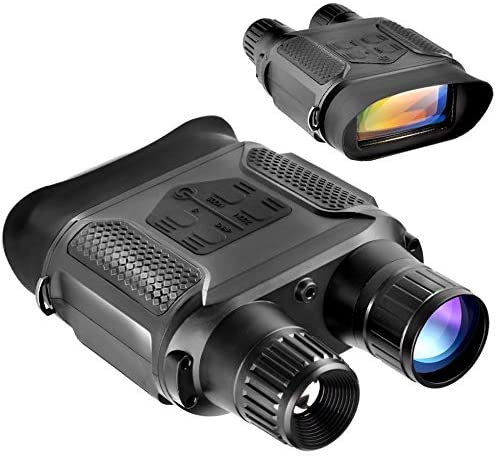
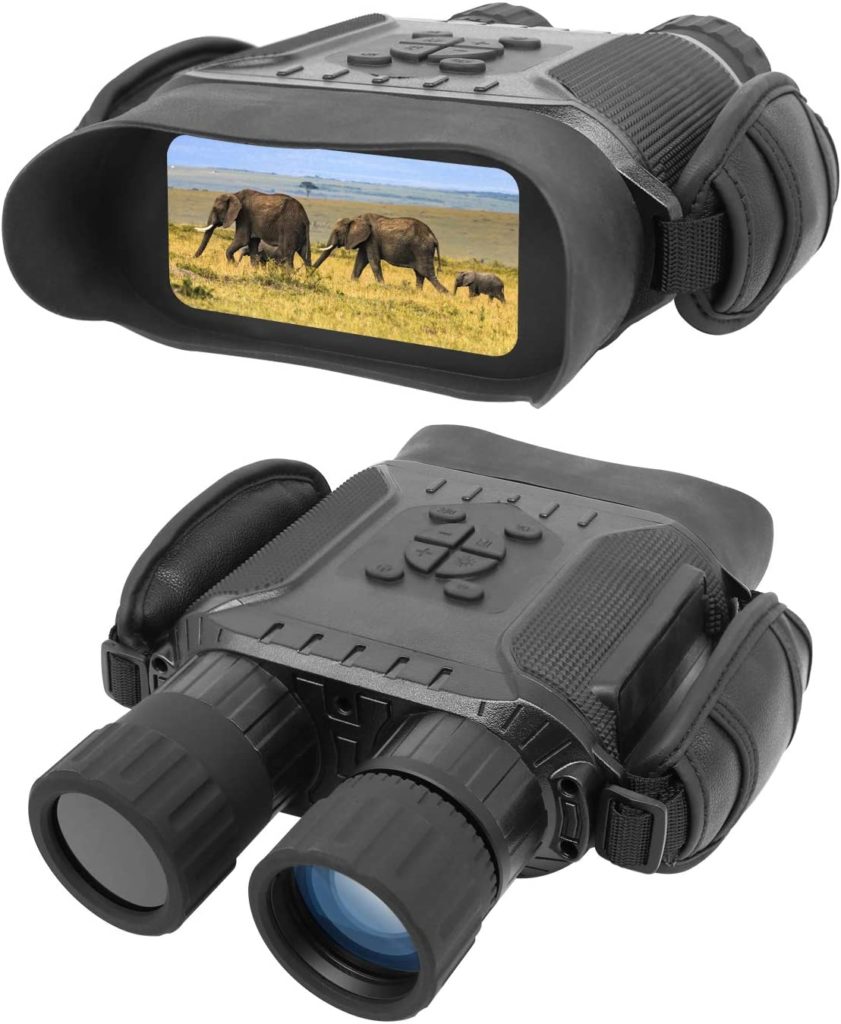
The device uses a superior grade CMOS sensor that is IR sensitive. The 4-inch viewing screen gives top-class image clarity. The 4.5x optical zoom and a viewing distance of 1400 feet improve overall effectiveness.
Pros
It can also be used during the daytime like regular binoculars
It can record videos and images with sound
The user interface is well-designed, making it so easy to use
Cons
The rubber around the periphery of the screen can be uncomfortable through prolonged use.
It is not suitable for very close distance viewing
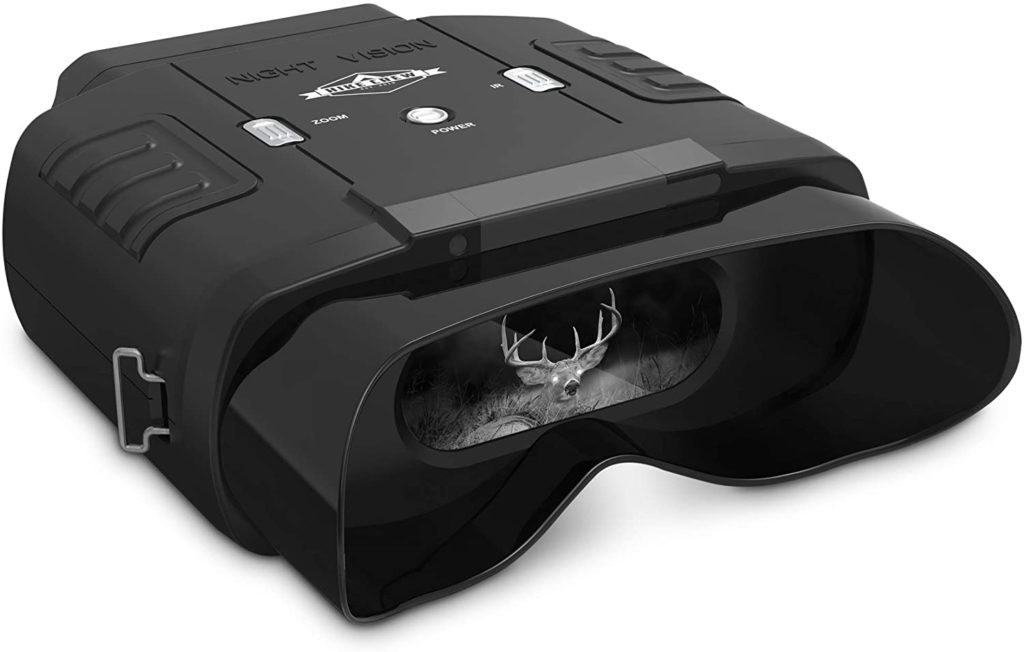
These night-vision goggles use adjustable infrared light to bring out clear images at night and have a nighttime viewing distance of 197 feet. The large LCD screen decreases eye strain and allows for more extended viewing periods.
Pros
User-friendly, tripod-mountable design with three buttons. Increased daytime viewing distance.
Soft, roomy eye caps allow for comfortable viewing.
It allows the user to adjust the brightness to suit the ambient lighting.
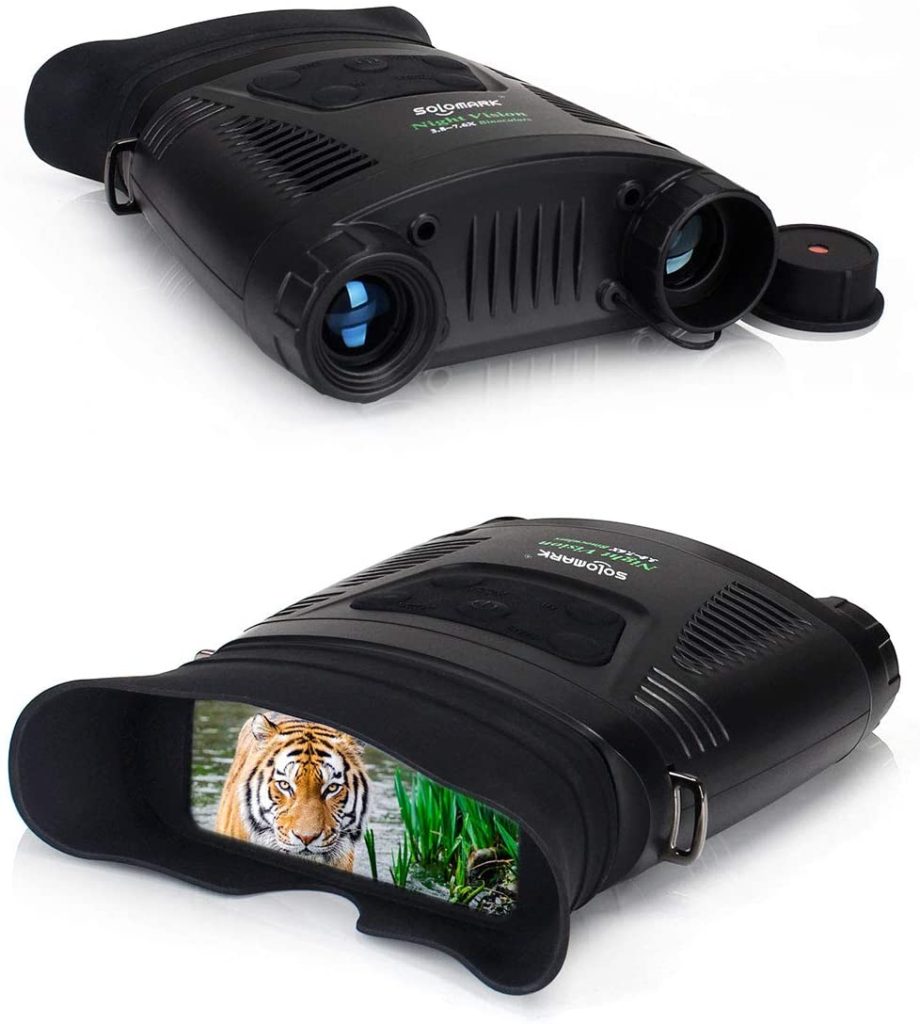
This gadget uses 3W infrared LED technology to allow nighttime viewing for up to 820 feet. You can use it to capture pictures and videos, which are typically stored in a micro SD card.
Pros
It comes with a filter cover to reduce glare.
IPX4 is rated for water resistance.
It is also suitable for both day and night use.
It comes fully multi-colored for optimal light transmission.
8GB micro SD card included.
Cons
The focusing knob could be sturdier.
The batteries are sold separately.
The lens isn’t fog proof.
Tips
Bright light sources can work negatively against night vision goggles. To prevent any damage, do not expose it to such light sources.
I hope you enjoyed this short article about the best night vision goggles to spot UFOs. Most people associate night vision goggles with tactical military missions, but they’re ideal for nighttime UFO-hunting trips. This is one of those times that adulting can be fun. Now you can own a wicked pair of night vision goggles instead of just pretending.
Posted on
How does an alien existence change human culture and society?
Imagine tomorrow, and an alien craft crashed down on Earth. It’s a drone. There are no life forms in it. But it’s undoubtedly extraterrestrial in origin. So we are confronted with the knowledge that we’re not alone, that we are might be watched, and we have no way to make further contact. How does that change our human society and culture?
John Brennan, C.I.A. director, stated in an interesting interview with the economist Tyler Cowen that “some of the phenomena we’re going to be seeing continues to be unexplained and might be some phenomenon that is the result of something that we don’t yet understand and that could involve some activity that some might say constitutes a different form of life.”
So, Governments would be seen as having withheld a profound truth from the public, whether or not they did. We live in a true age of conspiracy theories. There would be immense power and money in shaping the story humanity told itself.
If we were to assume that the contact was intimidating, military budgets would swell all over the world. A more peaceful interpretation might orient humanity toward space travel or at least interstellar communication.
Maybe An awful lot of people would basically shrug, and it’d be in the news for three days, not more. A lot of people would be very keen on continuing with their lives and systems no matter what. There is thick literature on how evidence of alien life would shake the world’s religions.
Most people might believe and have always believed that we share both the Earth and the cosmos with other beings — gods, angels, spirits, ghosts, ancestors.
The whole of human civilization is a testimonial to the fact that we can really believe we are not alone and still obsess over our daily concerns. Maybe the Russians and Chinese would never believe us, and frankly, large numbers of Americans would be much more likely to think that Russia or China was behind it.
And maybe A more cohesive perception of ourselves as a human species, and our planet as one ecosystem, might lead us to take more care with what we already have and the conscious life we already know. Don’t you agree? What are your thoughts?
We can indeed state that one answer to the many more UFO encounters is the upgrade in the military systems. New advanced radar systems have made these UAPs more visible in the last decades. It started with the upgrade around the F-18 fighter planes in 2004 when the classic USS Nimitz UFO encounter occurred. Since then, many more observable UAPs have been monitored. This might explain the uprise in UFO encounters between the U.S Navy and UAPs.
We now have the tools and the “mindset to report” UFOs. The UFO subject is too interesting to walk away from. And the “burn to subdue” this phenomenon might be boiled down to the pilot sightings or the space tracking radars we have, as it was then called the ballistic missile early warning center system like RAF filing dales in Yorkshire.
And when those sorts of people report ufos and tell you about sightings involving speeds, maneuvers, and accelerations that have them impressed, then it’s exactly the same situation as we’ve seen recently with these people like Commander David Fravor and Alex Dietrich. When these elite men and women, these top guns, when they get excited, I get excited, and you should too.
So what is flying around in our airspace? Who or what is piloting these UAPs? To get a more exact answer to these questions, one must ask oneself whether they are from our planet or elsewhere. If they are Drones from, let’s say, Russia or China, well, then there is a problem with the security of our airspace. But let’s say these crafts are from another world, well, then there is another problem.
I think, though, they might have been here for millennia, and they pose no real threat to our civilization. I think there must be a supervising effort taking place here. But you might oppose this idea and say, well, we might intrude in their environment. But in any case, I don’t think we really have to face any danger from these visitors.
Maybe is this just part of when we discovered the atom bomb and suddenly interfered in their world on a quantum level? Who can tell? But don’t you think it’s strange that they are quite interesting in our atomic weapons capabilities and fly around the nuclear stations and our nuclear hangars?
It’s obvious, even for the blind to see, that they are interested in our atomic energies and our nuclear weapons, don’t you think? We can make sure that they are here to stay, and we have just been able to track those intruders. This seems to be the beginning of a new era in our modern civilization and our thinking about these strange UAPs.
One thing that has caught my mind is that there seems to be an agreement about the size of these drones. They seem to be relatively small, around 40 feet, and for their smaller drones, approximately 20 feet. Is this telling us something about their agendas or capabilities, or even about the sizes for the pilots of their crafts?
Artificial Intelligence To Look For UFOs
Maybe we can use AI, artificial Intelligence to see trends and patterns for these UAPs. For example, look at the Chinese new UAP task force. They are using this new system. Maybe we should too. We can not lag behind China in this part. If we don’t do this, we can not learn so much about these UFOs because they otherwise are impossible to track and find.
One other thing we should focus on is; where do they come from and where do they end up. I hope there is some registration for this in our radar systems, but that will not be released for the public any time soon. Maybe we should get these answers from the government. It would settle the dispute about where they come from and where they are going. It could rule out advanced conventional technologies. Maybe something for “the Black Vault” to look into?
The satellites should be able to reveal these circumstances. But it seems to be a problem to find out who has these secret data and files and information about this. To find this information requires the proper clearances. Another problem seems to be that FOIA might not be enough to track this information because most of the data might be in the private sector.
Are we on the cusp of a Disclosure? Are we getting there? Are we not alone? Are we living this disclosure right now? Is Lue Elizondo part of it. Even President Obama has discussed this, and he was dead straight with this phenomenon. It seems to be a real phenomenon and nothing to be laughed at. All these things are happening right now.
It’s just a realization of the world we are living in. The stigma still exists, but we are getting there to overcome this UFO stigma. I quote Nick Pope “If you see something, you say something.” Because this is a serious defense subject, Nick will give the “Inside perspective” on the UFO topic. “Hope for the best but prepare for the worst.” It’s a sober foundation to have these days.
We will need these insights and experiences to dig a little bit deeper into the UFO enigma. Let’s listen to people like Nick, Lue, and Mellon to continue this UFO topic. I hope you are continuing this journey with me. Thanks for reading, and I hope you come back for more revelations that I will disclose the more I learn.
Who do you trust the most of these UFO influencers?
1. Lue Elizondo
2. Steven Greer
3. Nick Pope
4. Chris Mellon
5. Third Base of the Moon
6. George Knapp
7. Jeremy Corbell
8. David Fravor
9. Alex Dietrich
Please leave a comment below. Have I missed someone? Again thanks for reading this UFO blog. More to come, be sure. Have a great day, UFO friends.
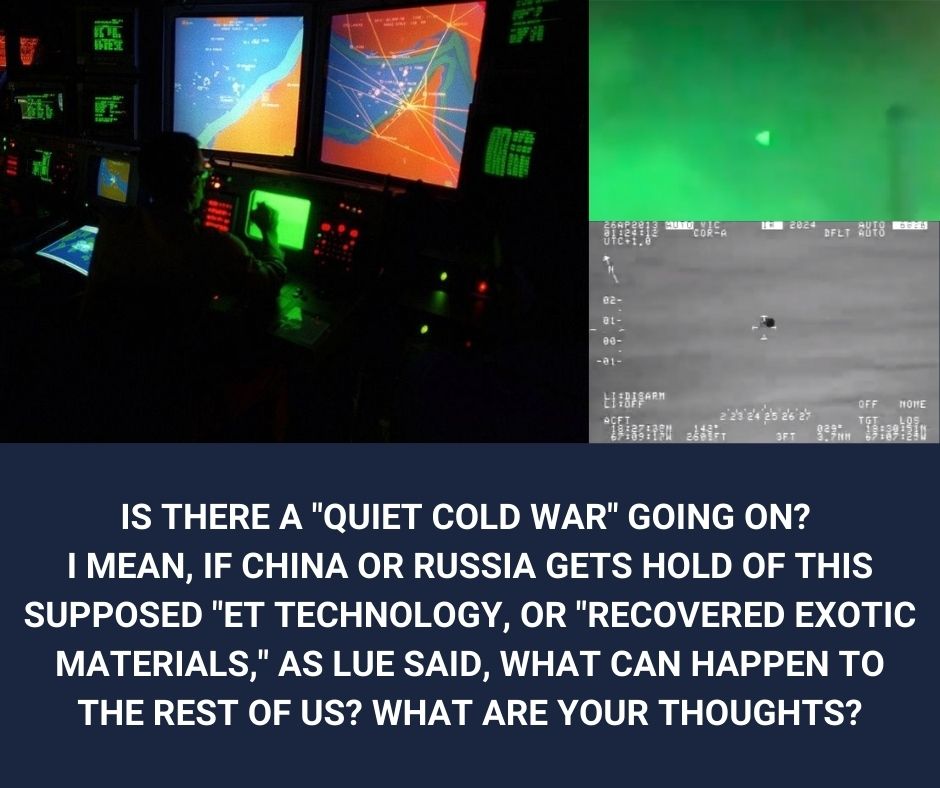
So what are those UAPs? Are they advanced drones from Russia or China? Maybe the “terrestrial drones” are part of what’s going on. Are the USA’s most advanced military systems being exposed and analyzed? Is the U.S. being spied on with balloons and advanced drones?
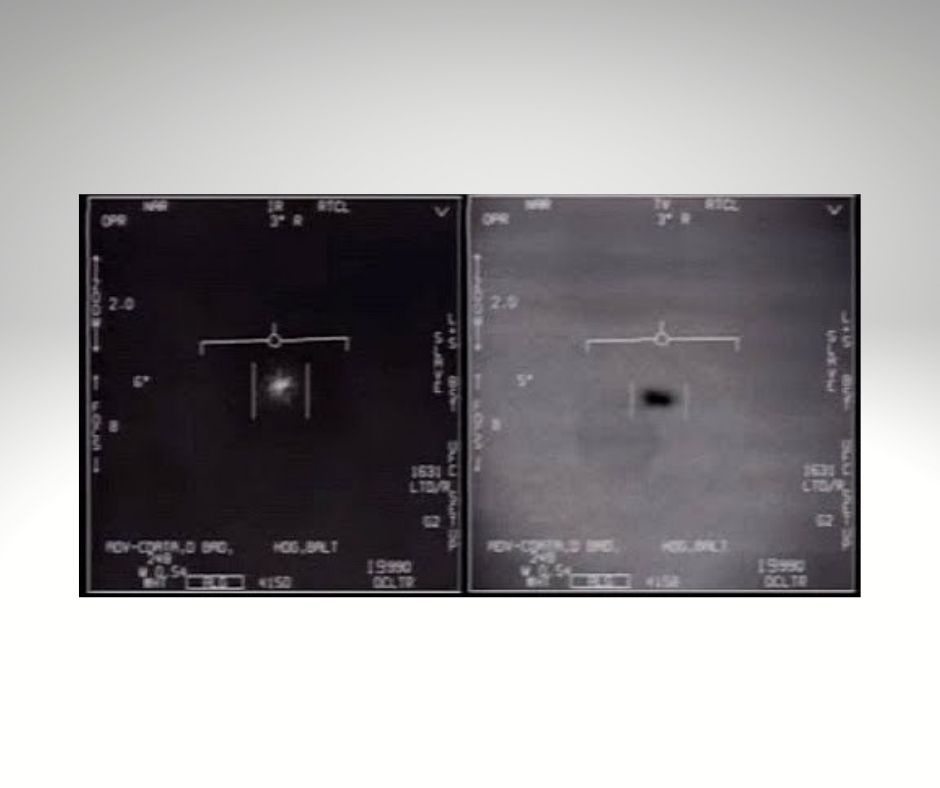
Maybe, but it doesn’t answer what you have heard on the 60 minutes program recently. It isn’t so much of what those Navy videos show, but what the Navy F-18 pilots (Commander Fravor and Alex Dietrich) said they encountered back in 2004. Fravor stated how the tic-tac UAP moved, the incredible speed, and the darting fashion. How it flew up towards his F-18 fighter jet, and later, in front of him, it took off faster than the eye can see.
Can a drone do that back in 2004? Maybe it was a drone, but then it must be of extremely high technology of propulsion and structure. But nobody has ever seen any rotor blades or exhaust on this thing. Furthermore, the fact that several pilots have seen these UAP “dematerialize” and become invisible to the naked eye but remain visible on FLIR.
What country has that technology? Russia and China would love to be able to spy on U.S. Navy exercises and probably do. But there are some properties the UAP exhibit that can not be explained. Therefore, it’s looking more and more towards the UFO report named “Others.” What are your thoughts? Drones from Russia and China or Aliens?
The capability of our military to produce balloons that appear to have extreme capabilities like projecting I.R. and swarm effect to make it appear these are moving at excessive velocity. Still, it’s a stretch to say an adversary is doing this inside an exercise zone without being detected. But no technology today can perform maneuvers like those described by the Navy pilots described in the 60 minutes program. The G forces would disable the function of electronics inside those crafts. Zero to 80K feet in 1 second that’s more than 15 miles per second and a complete stop.
Moreover, remember escape velocity on earth is 7 miles per second. Indeed, there are explanations. They just are beyond our known technological ability at this time. Thus there are signs that there is something to the fact that these UAPs are very interested in the U.S. armed forces and the navy in particular. However, if they are E.T. in origin, our forces would be of little concern to species capable of faster than light travel except a science type of study like archeology.
Has Russia or China designed the most technically superior drones?
If they did, they are capable of these things:
Flying at ~20MPH for over 3 hours, in a windy environment, reach altitudes of over 1K feet, with the ability to silently hover and dart around (which implies a helicopter-type propulsion system) powering bright lights, communications systems, and multi-spectrum sensors. The battery capacity to meet these capabilities must be both enormous and out-of-this-work efficient.
Able to track U.S. warships over multiple nights implies active control but without the U.S. Navy’s most powerful destroyers able to discern the location of that control. They might achieve this via a Chinese sub releasing them and hiding in the depths, but without the U.S. Navy’s most powerful acoustic platforms able to pick up any communications between the submarine and its fleet of drones.
But remember, balloons and drones are not transmedium vehicles. They don’t travel through space, air, and water, they don’t travel hundreds of meters underwater and then go in the air, and they indeed don’t fly circles around fighter jets like they are paper airplanes. And they also don’t drop 80,000 feet to 50 feet in less than a second.
UAPs can not hide
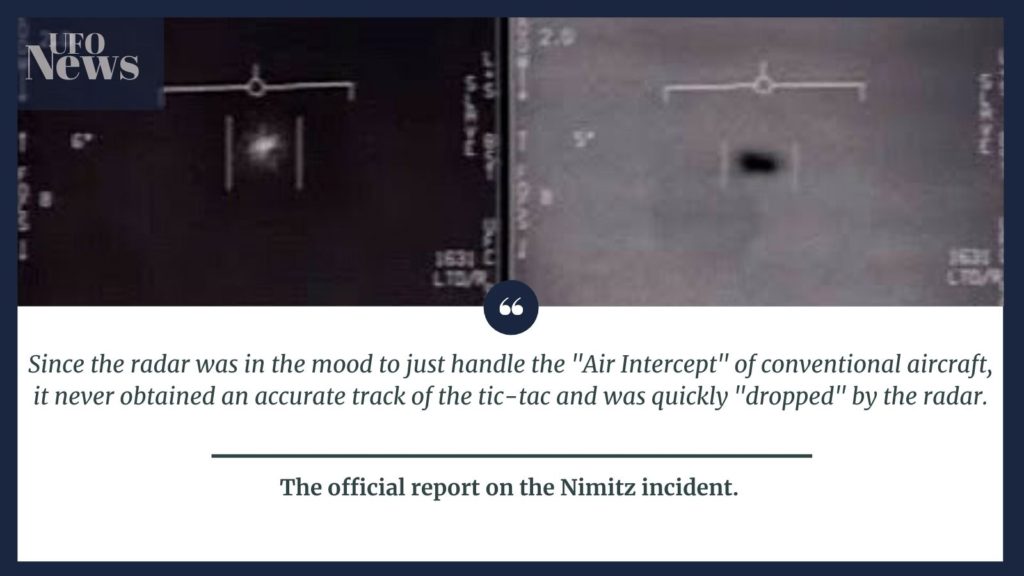
The tic-tac descended “very rapidly” from about 60,000 feet down to about 50 feet in a matter of seconds. But since the radar was in the mood to just handle “Air Intercept” of conventional aircraft, it never obtained an accurate track of the tic-tac and was quickly “dropped” by the radar. If the radar were set up in the mode for “Ballistic Missile Tracking,” they likely would have had the capability to track the tic-tac. What are your thoughts?
More sensitive and capable radars will equip the U.S. Navy’s new and some of its older warships. The U.S. Army is revitalizing its surface-to-air sensor systems, including gallium nitride-based AESA arrays.
Navy and Air Force fighters will soon be flying with an advanced infrared search and track pods, giving them a passive form of long-range detection and yet another sensor to bring to bear on low radar cross-section UAP contacts. Moreover, the U.S. Air Force is building new sensing layers in space, especially ones that can detect and track hypersonic missiles careening through the atmosphere at extreme speeds.
U.S. Space Force is contracting out various telescopes to track objects in orbit optically and detect suspicious changes in those objects’ activity. New artificial intelligence (A.I.) enabled software will automatically detect and monitor strange targets on all types of sensors easier than ever before.
The massive Long Range Discrimination Radar in Clear, Alaska, will provide radar data of an unprecedented fidelity over a vast area—it’s capable of reliably verifying ballistic missile countermeasures and decoys from reentry vehicles. This will increase the data set on UAP/UFO events and will make many more people aware of this unique drone problem, which could make it much harder to keep under wraps. What are your thoughts?
Posted on
Bethune UFO Encounter (1951)
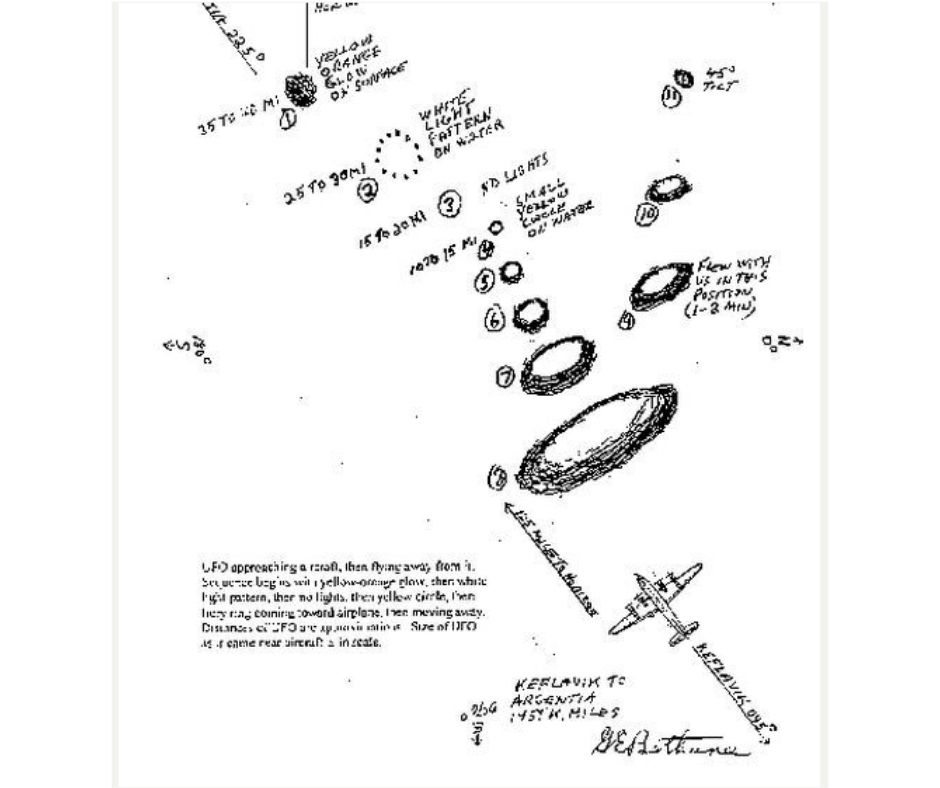
This historic UFO case happened on 21 February 1951. Lt. Graham Bethune of the United States Navy was flying Navy R5D, Bureau No. 56501 with LCDR (Lieutenant Commander) Fred Kingdon and Lt. Noel Koger. They were on a scheduled eight-hour passenger flight from Keflavik, Iceland to Argentia, Nova Scotia, while two other crews slept on board. It was a clear northern night, and the pilots were flying on autopilot at 10,000 ft with a ground speed of over 200knots. Lt. Bethune and Lieutenant Commander Kingdon were on watch for other aircraft.
And Around four and a half hours out of Keflavik, Lt. Bethune noticed a bright yellow glow below the horizon around 30 to 35 miles away that appeared to be city lights. They were concerned that they were off course. They had Lt. Koger confirms the navigation and verifies that there were no ships in the area.
Bethune UFO Encounter (1951).
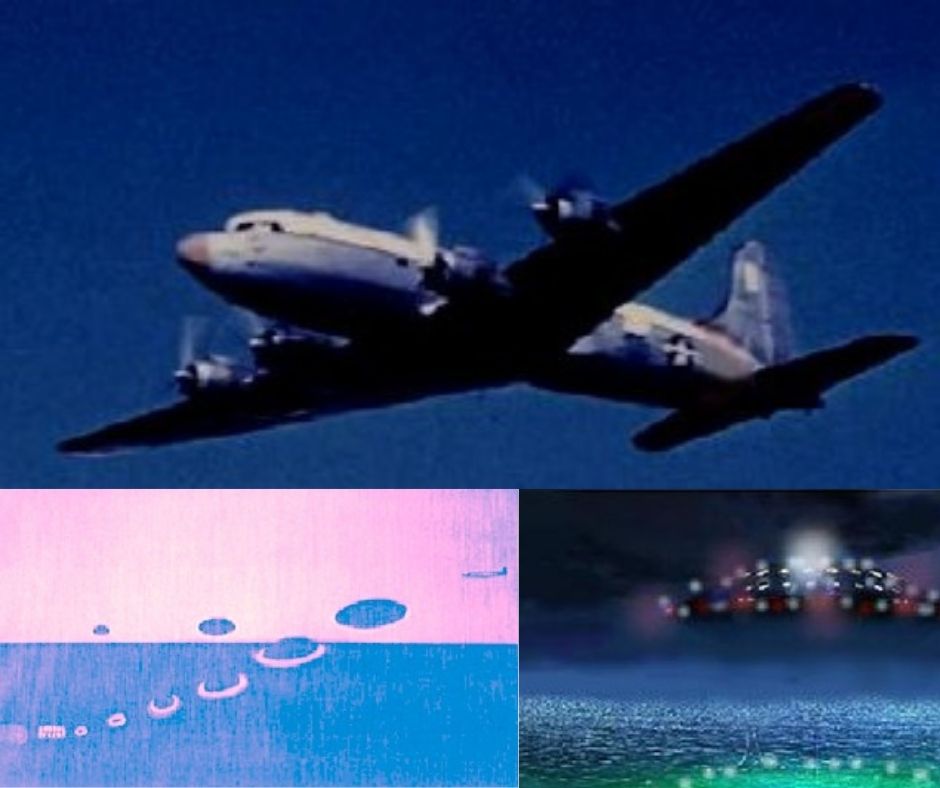
Lt. Jones and Lt. Meyer was awakened and came forward into the cockpit. The consent was that the lights were presumably due to a ship. When the lights from the UFO were approximately five to seven miles away, it was about thirty degrees to the right, the lights went out, and a circular yellow halo appeared on the water. This was an unusual sighting. The halo from the UFO turned from yellow to orange and later to a fiery red when it was rising suddenly to meet them, turning to a blueish red around the perimeter.
The UFO arrived at approximately 100 to 200 feet below their altitude in a fraction of a second and around 200 to 300 feet in front of the airplane. The UFO was observed to be a metallic disk-shaped object that was approximately 200 to 300 feet in diameter.
The UFO flew with the airplane for about five min and was witnessed by most of the passengers on board before leaving at speed above 1500mph, which was later confirmed to be about 1800mph by Gander Center Radar Newfoundland, Canada.
It should be mentioned that the airspeed record of 698.505mph was made roughly two years later, in November of 1952. It was done by General J. Slade Nash flying a North American F-86D Sabre.
In Lt. Bethune’s letter to Stuart Nixon from the National Investigations Committee on Aerial Phenomena (NICAP), he stated that the UFO was about 5 to 7 miles away when it began its ascent. However, in his interview with Sirius Disclosure, he later says that the UAP was about 15 miles away.
The UAP/UFO was described as rising from the sea at a distance of approximately five to seven miles to the approximate position and altitude of the craft in a fraction of a second. You might assign uncertainties to these distances and times to accommodate the possibility that the pilot and witnesses could have been in error. The reported duration of this maneuver was done with a fraction of a second. Is this a real UFO? What are your thoughts?
Unidentified Aerial Phenomena (UAP) are also described as unknown anomalous aircraft, referred to as Unidentified Anomalous Vehicles (UAVs) or Unidentified Flying Objects (UFOs). They have been observed globally for many years. The UAP phenomena were studied officially by the United States Air Force in a series of UFO projects: Project Sign (1947), Project Grudge (1949), and Project Blue Book (1952–1969). Other nations, such as Chile, France, New Zealand, Denmark, Australia, Brazil, Canada, Russia (the former Soviet Union), Sweden, the United KingdomSpain, Uruguay, and the Vatican, have also conducted UAP-studies, or are currently studying, UAPs.
Furthermore, In December of 2017, it was revealed that the U.S. Government had been studying Unidentified Aerial Phenomena (UAP) through at least one secret program called the Advanced Aerospace Threat Identification Program. (Successor: Unidentified Aerial Phenomena Task Force). There have been times when U.S. Navy pilots have had to deal with nearly daily encounters with UAPs.
What Are Unidentified Aerial Phenomena?
These UAPs typically exhibit anomalous flight characteristics, such as changing direction or accelerating at extremely high rates, traveling at extremely high speeds, and hovering motionless for long periods of time. Furthermore, these UAPs appear to violate the laws of physics in that they do not have visible flight or control surfaces, any visible means of propulsion violating Newton’s Third Law. They are “transmedium” vehicles. That means they can also operate in multiple media, such as air, space (low Earth orbit), and water without apparent hindrance, heat dumps, or sonic booms.
Several Unidentified Aerial Phenomena (UAP)encountered by the military, commercial, and civilian aircraft have been reported to be structured craft that exhibits near impossible flight characteristics. Consider a handful of well-documented UFO/UAP encounters, including the 2004 encounters with the Nimitz Carrier Group off the coast of California, and consider lower bounds on the accelerations exhibited by the craft during the observed maneuvers.
Approximated accelerations range from almost a hundred G-Force to about thousands of G-Forces with no observed air disturbance. Also, no sonic booms and no evidence of excessive heat commensurate with even the minimal estimated energies.
UAPs Exhibit Strange And Extraordinary Flight Characteristics
Following observations, the estimated parameters describing the behavior of these crafts are both strange and extraordinary. The extreme flight characteristics reveal that these observations are either fabricated or seriously in error or that these vehicles exhibit technology far more advanced than any known craft on Earth.
In many UAP encounters, the number and quality of witnesses, the variety of roles they played in these encounters, and the equipment used to track and record the UAPs favor the latter hypothesis that they are technologically advanced crafts.
Moreover, the observed flight characteristics of these strange UAPs are consistent with the flight characteristics required for interstellar travel. I.e., suppose these observed accelerations were sustainable in space. In that case, these enigmatic UAPs could easily reach relativistic velocities in minutes to hours. If so, they could cover interstellar distances in a matter of days to weeks, proper time.
Reasons To Investigate UAPs
The origin, nature, and purpose of these UAPs are unknown. Moreover, it is not known if they are piloted by a biological entity, controlled remotely, or autonomous, maybe from artificial intelligence (AI). It has been made very clear by U.S. officials that if those UAPs were hostile, they would pose a serious threat. If some of these crafts are of extraterrestrial origin, it would be necessary to assess their potential threat.
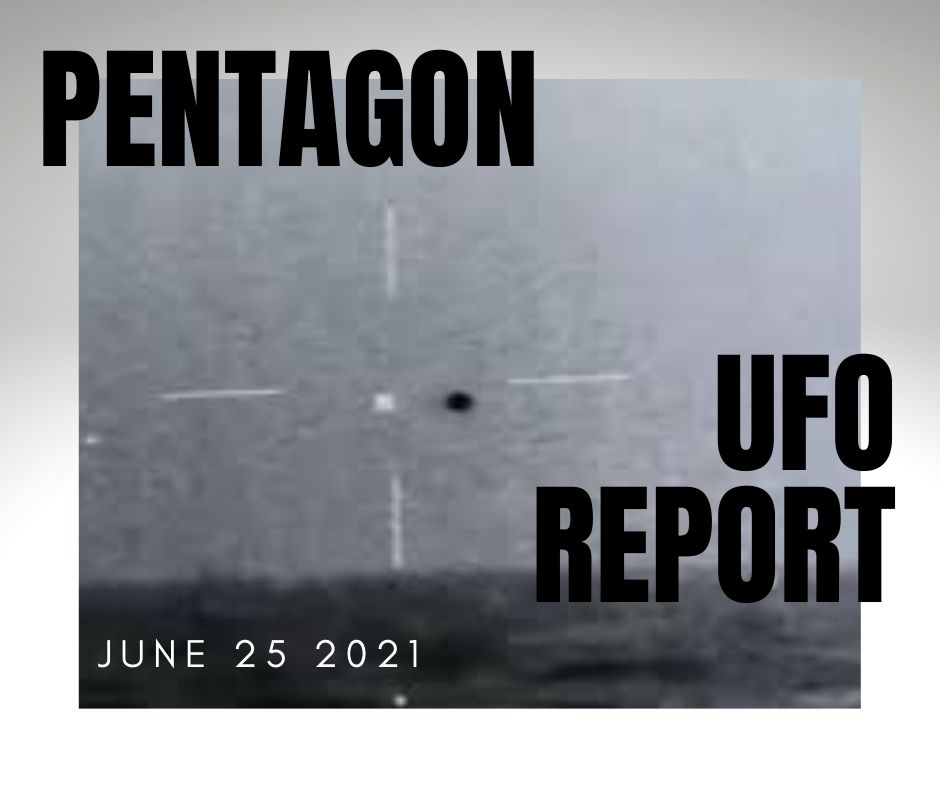
More interestingly, these UAPs have the potential to provide new insights into aerospace engineering and other technologies. The possibility of a serious threat, the promise of advancements in engineering and science, evolving expectations about (ET) extraterrestrial life, and even a deeper understanding of the acts of misperception and misinterpretation are all important reasons for scientists to study and understand these objects seriously. Read about the recently released Pentagon’s UFO Report from 25 June 2021.
Posted on
Does The UAP Task Force Report Provide Substance?
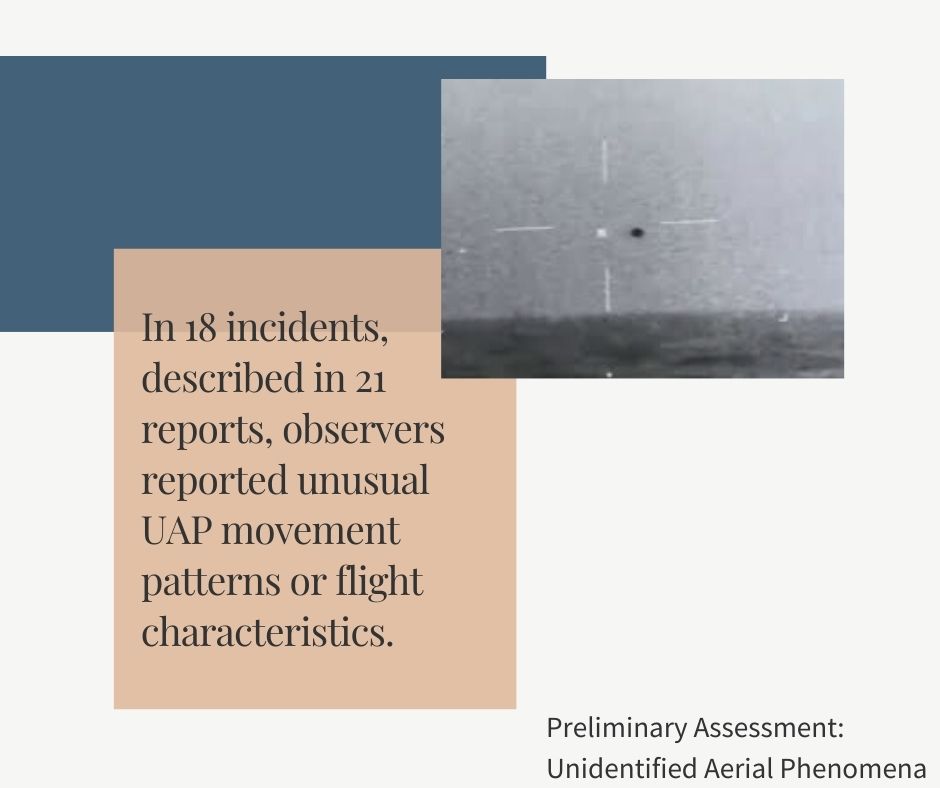
This is not a UAP report. This is a UAP Task Force status report. Whether that’s what it should have been is another story. The UFO Report tells us that the task force has identified 18 encounters with phenomena they can’t identify. These cases are given a designation of “other.” There’s no video evidence or deep dive into any of these encounters. But it does give us insight into what the UAP Task Force has been up to.
Many thought the UAP Task Force was purely looking at these objects because they feared they were foreign adversarial systems. The report makes clear this is not the case. There are, of course, foreign adversarial systems, and sometimes encounters with these systems are initially designated unidentified. But that’s not what this task force is about. They are not simply trying to get more details on unidentified but presumed foreign craft. The UAP Task Force’s mandate is clearly to study reports on the truly bizarre encounters classified as “other.”
11 near misses with UAPs in recent years
Another similar concern is that the UAP Task Force exists solely to advance the threat narrative, the notion that we need to study these unknowns intensely because if we don’t, we could be in trouble. The report throws cold water on that idea. Although the report does tell us that there have been 11 near misses with UAPs in recent years, that’s an aviation threat within the scope of the FAA. There’s no indication that there’s any military threat posed by the phenomena.
A recent article by Tim McMillan of the Debrief makes this point even more clear. Tim interviewed Ray Mabus, secretary of the U.S. Navy, from 2009 to 2017. During this time, we know the navy had a number of UAP encounters. Mabus confirms that these incidents reached his desk and that he never received a rational explanation. When I read this, I thought it insane.
Who would hear about something that could literally be an alien craft and then not relentlessly search for the answer? Well, if your other priorities are keeping China and Iran in check while trying to avoid nuclear war with North Korea, benign objects darting around the skies. Probably isn’t taking up a lot of mental cycle issues where real tangible lives are at stake come first, and so Mobis focused on the very real and very important priorities he had, and that’s essentially the tale of how all government officials treated the UAP issue.
The UAP Task Force is beginning to apply AI
Until now, the UAP Task Force Report is confirmation that they are now taking the issue seriously, whereas previous reports were stifled by stigma and no reporting mechanisms. This started changing two years ago. Because of this change, most of the UFO incidents studied by the UAP Task Force were very recent, but this doesn’t mean that historical cases are cold.
One of the most tantalizing details of the UAP Report was the hint that the UAP Task Force is beginning to apply AI and machine learning data mining techniques to historical data. This could be huge. This would find anomalies in satellite data, things like “fastwalkers.” Could you imagine if historical satellite data from November 14, 2004, the day of the famous “tic tac” incident, revealed a “fastwalker” entering our atmosphere?
This could provide the corroborating evidence needed to determine the nature of these objects. And we can now be sure that there are people in the government who are digging into this topic. It’s not a balloon, and it’s not a wild goose chase. It’s a serious investigation that has a good chance of producing serious results.
So what’s next? Well, we need to press for regular updates from the UAP Task Force. They are doing very interesting things. We also need to press for more information on the existing reports. We now know there are 21 of these, covering 18 encounters with these “others.” Let’s get them released. There’s also a wealth of threads left completely untouched—things like metamaterials, incidents prior to 2000, and any theories to the nature of these “others.” We’re left to speculate on those topics.
Background to the UFO Report
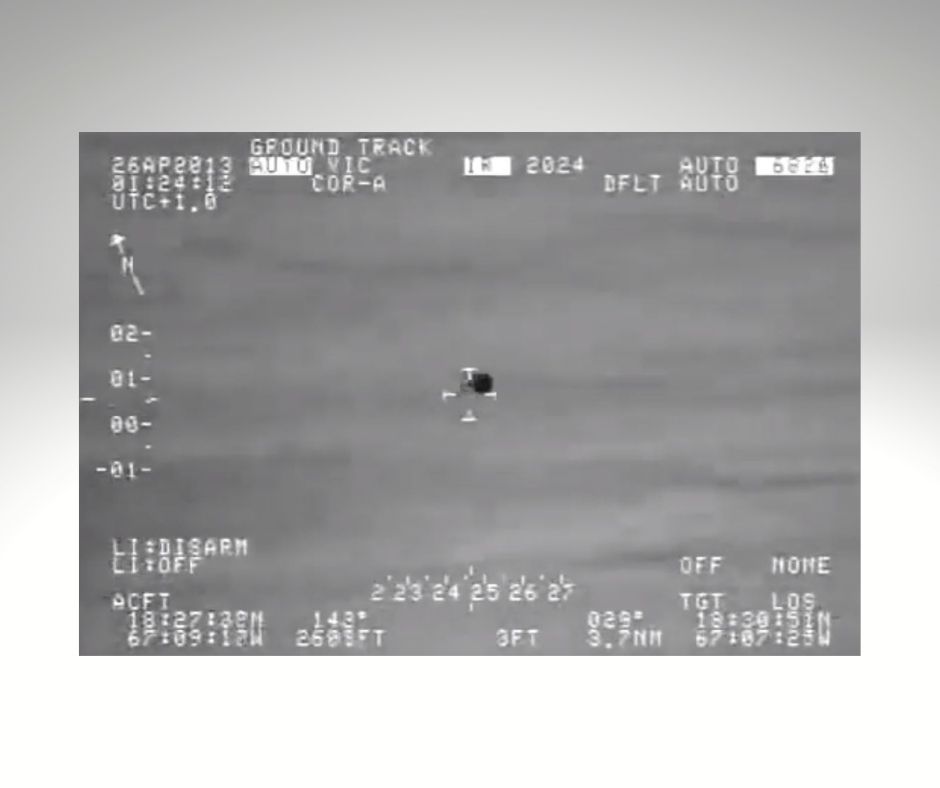
The Office of the Director for National Intelligence has released a highly awaited report detailing the U.S. government’s assessments of military encounters with unidentified aerial phenomena (UAP). The nine-page report, titled “Preliminary Assessment: Unidentified Aerial Phenomena,” details the results of an analysis of 144 reports drawn from United States government sources. “Of these, 80 reports involved observation with multiple sensors,” the report states, adding that the majority of the incidents examined “described UAP as objects that interrupted pre-planned training or other military activity.”
“The Unidentified Aerial Phenomena Task Force (UAPTF) considered a range of information on UAP described in U.S. military and IC (Intelligence Community) reporting, but because the reporting lacked sufficient specificity, ultimately recognized that a unique, tailored reporting process was required to provide sufficient data for analysis of UAP events,” the report’s Executive Summary states.