Mainstream historians and archaeologists regard the ‘fertile crescent’ between the Tigris and Euphrates rivers in what is now Iraq as the "cradle of civilization." Between 4000 and 1900 BC, this area was the home of the Sumerian people of Mesopotamia. Virtually nothing was known about Sumer until its archeological discovery 180 years ago.
The Sumerians were extraordinary people. They supposedly created an advanced civilization when most of the world still lived in the Stone Age. Yet, despite all their accomplishments, and according to conventional history, Sumer grew out of a collection of hunter-gatherer clans who banded together to form the first human civilization within the Tigris-Euphrates Valley around 4000 BC.
So, what and who enabled the sudden initial spurt of civilization in Sumer six thousand years ago? The Sumerians invented the first known writing system using a cuneiform script on clay tablets. These tablets were kept in large libraries. About 500,000 of these clay tablets have now been found.
Through these clay tablets, as well as cylinder seals, and stele, the Sumerians provided a richly detailed version of humankind’s early history - including the creation story of both Earth and humans. There are startling and numerous similarities between the Sumerian creation stories, later Babylonian myths, and the subsequent Judeo-Christian Bible verses. Virtually every story in Genesis originates in ancient Sumer.
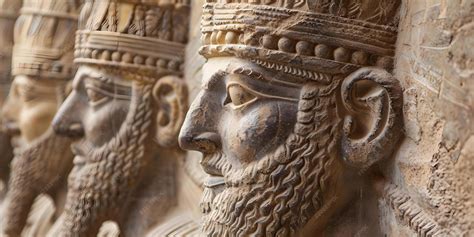
Mesopotamia: The Cradle of Civilization
Read also: Unveiling the Mystery of Space Aliens
Deciphering the Cuneiform Texts
In 1976 - after studying Sumerian cuneiform tablets and carvings for 30 years - noted scholar, academic, researcher, and author Zecharia Sitchin published his translations of the ancient Sumerian texts in a series of books called “The Earth Chronicles.”
As deciphered by Sitchin - and confirmed by many other credible researchers - the Sumerian cuneiform texts describe an alien race known as the ‘Anunnaki’ who came to Earth thousands of years ago from their home planet, Nibiru (the legendary so-called 12th planet in our solar system).
The Sumerians texts describe the Anunnaki as coming to Earth on a special mission - to bring wisdom and to mine certain minerals. They had tremendous knowledge and power over the entire world.
And so, for your consideration - and according to the deciphered interpretations of the Sumerian clay tablets - what follows is a condensed version of the fascinating story of the Anunnaki.
The Anunnaki - Part 1
About 450,000 years ago, before the Great Flood and during Earth’s Pleistocene ice age, the Anunnaki arrived on Earth. These ancient astronauts established their initial base camp in Mesopotamia in the Fertile Crescent between the Tigris and Euphrates rivers.
Read also: Pop Culture Aliens
Here they set up a mission control center, a spaceport, and mining operations. The supreme Anunnaki ruler, Anu, supervised the effort from the home planet of Nibiru as the Anunnaki began a systematic colonization of Earth under the leadership of Anu’s two sons, Enlil and Enki.
The Anunnaki gold mining operations
Over thousands of years (Earth time), the Anunnaki established a thriving colony. During this time, their focus was on their primary objective - gold. The Anunnaki sought gold for highly technological procedures to repair the degraded condition of the atmosphere on their home planet.
The extraction process on Earth proved inefficient and time-consuming when the Anunnaki attempted to retrieve gold only from the Persian Gulf. So, to ease the increasing rivalry between the half-brothers Enlil and Enki, their father, Anu, placed Enlil in charge of the Mesopotamian colony E-din (perhaps the basis for the biblical Eden).
Meanwhile, Enki led a foray to Abzu, or Africa, the “land of the mines,” - and eventually to South America - where he set up gold-mining operations. The mined ore was then transported from the far-flung mines by cargo craft back to Mesopotamia for smelting and processing into hourglass-shaped ingots called zag, or “purified precious.” Some of the actual ingots have been found in archaeological excavations.
The Anunnaki mined gold on Earth for more than 100,000 years until the rank-and-file Anunnaki - who were doing the backbreaking work in the mines - mutinied about 300,000 years ago. On top of the unrelenting toil of the mining operations, climate change presented many difficulties for these extraterrestrial colonists.
Read also: Alleged Alien Species
Enlil wondered aloud if there was not another way to mine for gold. At this point, Enki suggested that a primitive worker, called an Adamu, could be created to take over the difficult mining work. Enki pointed out that a primitive humanoid - hominin - was prevalent in Abzu (Africa), where he maintained a laboratory.
Human Genetic manipulation
Realizing the toll on the Anunnaki to mine the gold, King Anu and the Council on Nibiru was desperate for a different solution. They debated the morality of tinkering with a species. Enki argued that producing a hybrid - half Anunnaki and half primitive humanoid - would not be an act of creation but merely improving the existing species.
And so, Anu decreed that their eminent geneticist, Enki, would employ advanced genetic engineering to fashion an upgraded version of the primitive hominin by manipulating its DNA to become the new worker slave (the Adamu).
The genetic process
The Anunnaki medical officer on Earth was a female named Ninhursag. The Sumerian tablets describe how Enki and Ninhursag produced the first so-called ‘test-tube’ infant by combining DNA and creating a hybrid humanoid in the laboratory.
It is written that Enki and Ninhursag took the reproductive cell or egg from a primitive African female hominin and fertilized it with the sperm of a young Anunnaki male. The fertilized ovum was placed inside an Anunnaki woman who carried the child to term. And so began the creation of a new race of human workers (the Adamu).
The first hybrid human could not procreate. The Anunnaki had to constantly create new batches of human workers (the Adamu), which was time-consuming considering the timespan between in vitro fertilization and birth.
So, Enki and Ninhursag set about to create an Adamu that could reproduce itself. The result of their efforts was finally a male Adama with the ability to reproduce through sex with an Adama female. This was the final solution to the first modern human beings - the perfect slave race. An intelligent and subservient prototype was ultimately created that we now call Homo sapiens.
The new and improved hominin - the Adamu - Human 1.0
When the Anunnaki infused their DNA and genetic material, they effectively bestowed upon the new hominin many physiological features, strengths, and abilities not previously occurring in then-existing hominins.
The early Adamu that bred among themselves lived for hundreds of earth years. The Nephilim (half human and half Anunnaki) lived for thousands of years. All this longevity was thanks to Anunnaki genes. And in the opinion of ancient humans, the extreme life spans of the pure-blooded Anunnaki made them appear immortal.
One of the concerns of the Anunnaki, including Enlil, was that the new humans would want to live for as long as their pure-blooded Anunnaki overlords. As a result of this concern, the Anunnaki set about manipulating the DNA of humans to reduce their life span drastically and limit the total capacity of their brains.
The final genetic version of Human 1.0 incorporated these modifications. The Anunnaki denied Homo sapiens the intelligence and extreme longevity that the Anunnaki possessed because it did not suit their purposes. Homo sapiens were invented to be slave workers, nothing more.
What is often misunderstood about Human 1.0
The process described in the Sumerian tablets was a breeding program like what has been done and is being done today with various animals and humans by humans to improve the stock.
The skeptics of the Sumerian story about the origin of Homo sapiens should not lose sight of today’s knowledge concerning cloning, in vitro fertilization, genome mapping, gene splicing, gene sequencing, and gene modifications.
Only 30 years ago, the concept of gene manipulation would have been incomprehensible - even to the most learned scholar trying to interpret the Sumerian tablets. But today, the Sumerian account of modern human creation becomes more plausible.
The Anunnaki Creation Story: The Biggest Secret in Human History - Nibiru is Coming
Stories of the Anunnaki - Myth, Religion, or History?
As expected, it is highly controversial that the Sumerian cuneiform texts (as deciphered and translated by credible scholars) say that the Anunnaki were ancient astronauts that came to Earth to mine gold, impart great knowledge, and created Homo sapiens to function as slaves.
Mainstream scholars assume that the ancient Sumerians were talking about mythical, imaginary beings in their reference to the Anunnaki. But we should question why ancient scribes would have taken the time and effort to write down fables painstakingly. Is it not more reasonable to assume that they wrote down their stories to recount history instead of fanciful myths?
Many non-mainstream researchers have opened our eyes to a much more detailed and credible understanding of the human creation story - first recorded by the Sumerians long before it was plagiarized and transcribed as the Bible.
It is essential to understand that early on, the Sumerians never referred to the Anunnaki as “gods.” The reference to sky beings as “gods” was shaped by western and near eastern civilizations and religions that followed Sumer - including the Babylonians, Egyptians, Romans, Greeks, Judaism, and Christianity.
A better explanation of what transpired in the ancient past is that the original writings from Sumer were recordings of actual events. This history was later rewritten to form a distorted base for new religious cults - including Judaism and Christianity. The corrupted religious dogma was so different from the original writings that the early accounts in Sumer became viewed by today’s mainstream scholars as “mythology.”
The writings inscribed into ancient Sumerian clay tablets have much greater merit than the fantasies presented in the Bible. Also, the non-mainstream and credible interpretations of the Sumerian texts help to counter the highly questionable explanations which mainstream science offers as fact regarding the evolution of Homo sapiens and the origins of modern civilization.
The Anunnaki in Mesopotamian Mythology
Anunnaki, class of gods within the ancient Mesopotamian pantheon. The precise meaning of the term (“princely seed” in Sumerian) remains ill-defined, as the number of these gods, their names, and their functions vary according to the limited historical texts scholars have recovered.
Among the gods named in some texts as members of the Anunnaki are Enlil, Ea (Enki), Ninhursag, Sin (Nanna), Shamash (Utu), and Ishtar (Inanna). Enlil, the god of air who separated heaven and earth, is generally regarded as the most prominent of these. The ancient Hittites and Hurrians, whose mythologies refer to a set of “former gods” banished to the netherworld by a newer generation, eventually identified the former gods with the Anunnaki. In treaties they were invoked as witnesses to ensure that oaths were kept.
The Anunnaki had several functions in Mesopotamian mythology. The Sumerian myth Enki and the World Order suggests that one of their main functions in early mythology was to decide the fates of human beings. They were initially associated with the heavens, but over time both literary and administrative texts reflected an increased role for the Anunnaki in earthly affairs. In the Babylonian creation epic, the Enuma elish, the chief Babylonian god Marduk has authority over some 600 Anunnaki gods. He directs 300 of these gods to reside in the heavens and 300 to reside on earth.
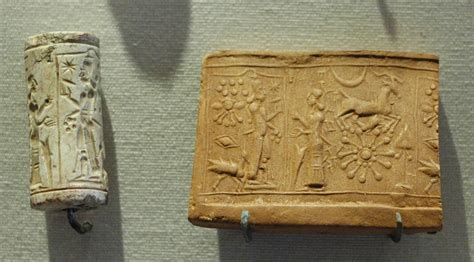
Cylinder seal depicting Ishtar
However, other texts seem to place the Anunnaki as gods of the underworld. This is the case in the Epic of Gilgamesh, in which the Anunnaki are described as judges of the dead. The idea is echoed by the Sumerian myth Descent of Inanna to the Underworld, in which the goddess Inanna crosses into the realm of the dead, seeking to overthrow her sister, the queen of the dead. To date, archaeologists have not uncovered any indication that the Anunnaki were worshipped collectively. Rather, each of the gods had an individual cult, and different cities had temples dedicated to individual deities as a city patron.
The Anunnaki (Sumerian: 𒀭𒀀𒉣𒈾, also transcribed as Anunaki, Annunaki, Anunna, Ananaki and other variations) are a group of deities of the ancient Sumerians, Akkadians, Assyrians and Babylonians. In Sumerian, the name of this group of deities is variously written as "da-nuna", "da-nuna-ke4-ne", or "da-nun-na", meaning "Princely offspring" or "Royal offspring". Because this was likely pronounced as "anunak", it entered into the Akkadian language as the loanword "anunnak(k)u". The ancient Mesopotamians believed that their deities lived in Heaven, after an earlier history of visiting earth in the mythological texts, and that a god's statue was a physical embodiment of the god himself.
- Reverence begets favour
- Sacrifice prolongs life
- Prayer atones for guilt
Akkadian texts of the second millennium BCE follow similar portrayals of the Anunnaki from Inanna's Descent into the Netherworld, depicting them as chthonic Underworld deities. During the Old Babylonian Period (c. 1830 BCE - c. From the Middle Babylonian Period (c. In the standard Akkadian Epic of Gilgamesh (c.
The Anunnaki in Popular Culture and Conspiracy Theories
Over a series of published books (starting with Chariots of the Gods? in 1968), pseudoarchaeologist Erich von Däniken claimed that extraterrestrial "ancient astronauts" had visited a prehistoric Earth. Ronald H. David Icke, the British conspiracy theorist who popularised the reptilian conspiracy theory, has claimed that the reptilian overlords of his theory are in fact the Anunnaki. Clearly influenced by Sitchin's writings, Icke adapts them "in favor of his own New Age and conspiratorial agenda". Icke's speculation on the Anunnaki incorporates far-right views on history, positing an Aryan master race descended by blood from the Anunnaki. It also incorporates dragons, Dracula, and draconian laws; these three elements apparently linked only by superficial linguistic similarity.
In his 1976 book The Twelfth Planet, Russian-American author Zecharia Sitchin claimed that the Anunnaki were actually a race of extraterrestrial beings from the undiscovered planet Nibiru, who came to Earth around 500,000 years ago in order to mine gold. According to Sitchin, the Anunnaki genetically engineered homo erectus to create modern humans to work as their slaves. Sitchin claimed that the Anunnaki were forced to leave Earth when Antarctic glaciers melted, causing the Flood of Noah, which also destroyed the Anunnaki’s bases on Earth.
| Deity | Associated Celestial Body |
|---|---|
| Inanna | Venus |
| Utu | Sun |
| Nanna | Moon |
| An | Stars of the equatorial sky |
| Enlil | Stars of the northern sky |
| Enki | Stars of the southern sky |
Celestial Associations of Mesopotamian Deities