Deep in the Schwarzwald, Germany’s Black Forest, tradition, landscape, and folklore are woven into everyday life. Among the most enduring figures of this region is the Schwarzwald Hexe, the Black Forest witch. These mythical characters embody the magic, wisdom, and deep connection to the natural world that have defined this region's culture for generations. Today, these stories still shape the way locals relate to the land and they offer us a powerful lens for understanding resilience, nature connection, rootedness, and the ancestral practices that help us feel more at home in the modern world.
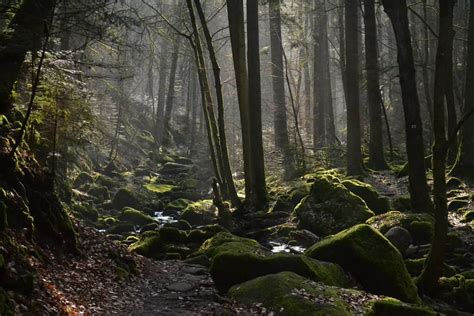
The Black Forest is full of natural beauty, although, once immersed, it’s easy to envision fairytales, legends and darker stories that have been born from it.
The Schwarzwald Hexen: Myth and Reality
The Schwarzwald, Black Forest's association with witches is a complex interplay of ancient pagan beliefs, medieval witch hunts, folklore narratives, and evolving cultural interpretations. Whether portrayed as wise healers, vengeful spirits, or playful tricksters, they reflect a range of female identities that have been both feared and revered throughout history. The association of witches with wild, untamed nature also ties them to ideas of freedom and independence, qualities that were often suppressed in the historical treatment of women, especially during the era of witch hunts. Despite this dark history, the Hexen are also remembered for their wisdom and contribution to the survival of their communities.
These women were often misunderstood and persecuted, especially during the witch hunts of the 16th and 17th centuries, which deeply affected the region. They were integral to their communities, using plants and remedies from the forest to treat ailments. These stories remind us that healing has always been local, relational, and rooted in nature. A truth many of us are relearning today.
Celebrations and Traditions
Carved wooden witches honor the rich traditions, cultural heritage, and local practices of the Hexen in the Black Forest, Schwarzwald region of Germany. Their presence is particularly felt and celebrated during Carnival (Fastnacht), on Walpurgis Night on May 1st, and throughout the dark winter months. Here, witches are not feared but celebrated as playful, cunning, and magical figures. Villages and guilds called "Narrenzünfte" create their own witch characters, each with unique masks and costumes, for elaborate Umzüge, parades and processions.
Read also: Enigmatic Allure: Black Cats
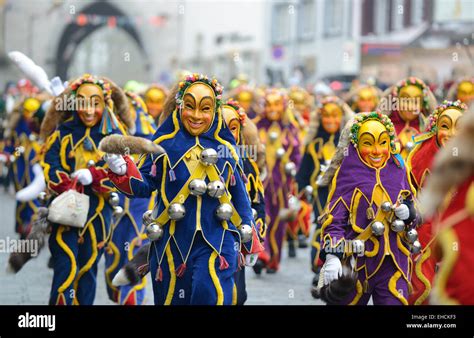
Villages create their own witch characters for Umzüge (parades and processions) during Fastnacht.
These masks, called “Larve” are intricately carved from a master wood carver, “Schwarzwald Holzbildhauermeister”, honoring the traditional practice of wood carving which have been passed down through generations (Steidel, 2024). Did you know: Larve is the technical term for the masks. It originally comes from Latin and means ghost. Many of the larvae wearers look like ghosts; if they drop their mask, they are "unmasked" in the truest sense of the word (Steidel, 2024).
These Fastnacht celebrations are more than mere festivities. They serve as powerful rituals to drive away winter's darkness and invite the blessings of the coming spring.
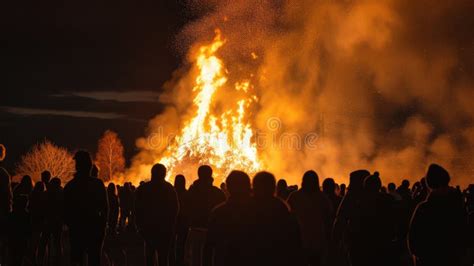
Walpurgis Night mixes Pagan tradition with a touch of Christianity.
Walpurgisnacht: Witches' Night
Legends, stories, and traditions featuring witches have long been part of German culture. Think about all the Fairy Tales you heard as a child cautioning you about witches. Witches in Germany date back to the pagan times, before Christianity, and some celebrations and customs still appear in the modern world. Walpurgisnacht or Hexennacht (Witches’ Night) mixes Pagan tradition with a touch of Christianity. (Why else would it be named for a Christian Saint?).
Read also: Dreaming of Black Bears: A Guide
Christian Löffler - Dir Jehova (Walpurgis Night in the Harz Mountains - 2024)
Early in Germany’s history, people celebrated the coming of Spring. The end of a long winter meant the end of hunger and a chance for new life. According to tradition, to help usher in the new season, all the Witches and Warlocks would fly in from around Germany on Broomsticks (or goats) to gather on the Brocken on April 30th. This highest peak of the Harz Mountains was the meeting place for Walpurgisnacht.
The Brocken, aka. Blocksberg (in the Harz) has been associated with witches since the third century (although it’s more likely that these were just ordinary pagans looking for a place to celebrate in privacy). In the 8th century, Charlemagne declared all witchcraft and even witchy behavior punishable by death, and the witch trials of 1484 intensified the fears. The Blocksberg area is quite high up and often shrouded in cloud cover. The woods surrounding the mountain are denser than the Black Forest. What began as a celebration of Spring morphed into something else.
In villages and towns, people decided that noise would scare the witches away, so beginning at Sunset, men and boys would do all they could to make noise all night long, banging pots and shooting pistols into the air. Chanting and the banging of boards against the house wall were also thought to chase spirits. And village bonfires kept witches away.
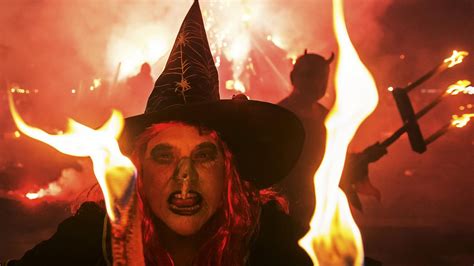
Bonfires are lit in the Harz Mountains, and thousands of people dressed in Witch, Warlock, or Devil costumes come from all over to dance and celebrate on a plateau called the Hexentanzplatz near Thale.
Read also: 2010 Taurus Review
Legends of the Schwarzwald Hexen
Each village in the Schwarzwald seems to have its own witch, steeped in legend and local lore. These stories give life to the landscape, with specific mountains, valleys, and forests associated with witch gatherings or magical events. Witches were said to haunt the stables of cattle and horses. They untied the animals, chasing them around in the night until the creatures were exhausted and covered in foam by morning. The witches would steal milk from the cows and intricately braid the manes of the horses. Despite the mischief and ruckus they caused, when anyone entered the stable to investigate, all would fall mysteriously silent, and the animals would appear tied up and in deep rest. Locals believed that the witches came from Schägenest and would retreat back to this infamous place after causing havoc in the stables.
To safeguard against these malevolent forces, farmers erected "Bildstöckle", religious shrines, which were believed to ward off the witches. The mountain with stunning views of the Rhein plains and Vosges Mountains, was once called the “Blockula of the Black Forest” or the legendary place where the devil held his earthly court during the witches’ Sabbath. The Kandel is believed to be infused with magical energy as the witch's stronghold. Adding to its mystical allure.
The upper part of the Kandel Rock, the so called Teufelskanzel (Devil’s Pulpit), collapsed in the night from April 30 to March 1 in 1981. Roughly 2,000 cubic meters of stone became loose, fell down and have been lying underneath the rock since then. Some residents believed in a demonic origin of the rockfall as it happened in the Walpurgis Night and a broom was found in the rubble (Schwarzwald, 2020).
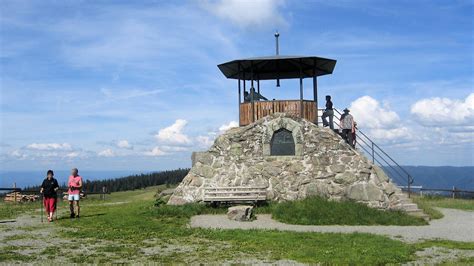
The Kandel is believed to be infused with magical energy as the witch's stronghold.
Josefa Schuler: The Kandelhexe
Josefa Schuler, known as the "Plattenwieble" or "Kandelhexe," was a 19th-century figure from the Black Forest, Schwarzwald, characterized by her eccentric lifestyle, including wearing multiple skirts and a man's hat, while catching frogs, smoking cigar stubs and running around yearlong barefoot. After losing her daughter to diphtheria, she became increasingly reclusive and was remembered for her broom-making and unique personality, which has since inspired local folklore and carnival traditions. (Bollwahn, 2013).
Josefa Schuler, known as the "Plattenwieble" or "Kandelhexe," was a 19th-century figure from the Black Forest.
Gfällrote: The Shapeshifting Witch
Gfällrote: A shapeshifting witch who wreaks havoc poaching with her two ghostly hounds. According to legend, in the forests of Haslachsimonswald she can transform into harmless-looking flora when threatened, blending seamlessly with the natural environment. Her ghostly dogs, however, can be slain and resurrected repeatedly, reflecting the cyclical nature of life and death.
According to the legend when the hunters caught the Gfällhexe's dogs one day, they hung the hunting dogs on a fir tree, assuming that their mistress would come and get them. The hunters lay in wait for the witch there for three days and only left when the dogs, which had died in the meantime, began to stink. Then the Gfällhexe came and cut her dogs off the fir tree and they came back to life. Her spirit is said to wander these lands, serving as a reminder of the tragic witch hunts that gripped the region in the 16th and 17th centuries (Seiler, 2021).
The Hexenhaus and the Wisdom of the Witches
A particularly symbolic structure in this region is the Hexenhaus, or Witch’s House. These small wooden dwellings, often built in secluded areas of the forest, are more than mere relics of folklore. They symbolize the deep connection between humankind and nature. Although prevalent today, Hexen was not always the most common German term for witches. It derives from the Old High German Hagazussa, the name for the female spirit in Nordic mythology and symbolizing a “hedge witch,” which highlights their role as keepers of the boundary between the natural and supernatural worlds (Brauner, 1995). These women lived on the fringes of society, gathering the plants and wisdom that would help heal their communities. You can still find these wood huts today, often used by farmers and local groups.
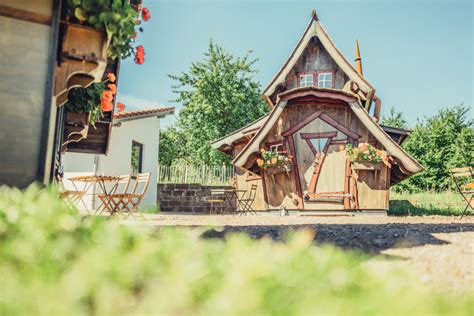
The witchy highlight of the trail is the Hexenhäuschen, or “witches’ cottage,” on the Sohlberg mountain.
Abnoba: The Celtic Goddess of the Black Forest
When exploring Abnobâ, one cannot overlook the significance of Artemis, the Greek goddess of the hunt, wild animals, and wilderness, as a comparative figure. While Diana, her Roman counterpart, provides an immediate parallel, Artemis offers deeper insights into understanding Abnobâ’s nature. Artemis, much like Abnobâ, was revered as a protector of untamed lands, a deity of the wild who presided over forests and animals (Larson, 2007). Artemis was also closely linked with the moon and nocturnal rites, just as Diana and her association with the mysteries of the night (Farnell, 1896).
Artemis’ own rites often involved offerings made in remote wilderness areas, similar to the secluded Black Forest region where Abnobâ was worshiped (Green, 1997). Artemis also played a protective role, safeguarding women and children, while maintaining the balance of life and death in the natural world (Larson, 2007). Both deities are powerful symbols of wild nature, untouched by civilization. Their worship invites an intimate relationship with the natural world, encouraging humans to respect and protect the balance of life that the wilderness offers. Through studying Artemis’ reverence for nature and nocturnal mysteries, we gain a clearer understanding of Abnobâ’s role as a Dêuâ of the night and wilderness within the Gaulish pantheon.
Meet Abnobâ, a vibrant goddess within the Gaulish pantheon who embodies the spirit of the forest, the thrill of the hunt, and the mysteries of the night and moon. She’s a multi-faceted Dêuâ, watching over sacred wilderness, flowing rivers, and the celestial wonders above us. As our protector of nature, Abnobâ show us just how important it is to cherish and preserve the environment around us, reminding us of our role in maintaining the delicate balance of life in Bitus.
Abnobâ invites us to dive deep into practices that connect us with the cosmos. Imagine participating in night vigils filled with meditation, dream magic, stargazing, and quiet reflection. In those moments when you feel lost, picture standing by a river’s edge-Abnobâ’s presence shines light into the shadows, guiding you toward clarity. As a huntress, she teaches us to engage responsibly with the natural world, encouraging ethical hunting practices and the protection of our forests.
Rituals to honor Abnobâ can be a lot of fun! Picture river ceremonies that celebrate the ever-changing nature of life, or community gatherings that foster healing and connect us with all living beings. Through her guidance, we gain valuable insights from the mysteries of the night, the sacred wilderness, and the flowing currents of life. When it comes to magic, Abnobâ’s focus is all about connecting with nature and its rhythms. With her deep ties to the moon, rivers, and forests, she’s a powerful ally for those seeking healing, protection, and transformation.
Think about performing rituals under the moonlight to harness its energy for renewal and personal growth. Abnobâ encourages us to care for the wild spaces we inhabit. Living in harmony with her magic means embracing our responsibility to protect our environment and flowing with life’s natural currents. So why not step into the wild, find your sacred space, and dance with her under the moonlight? With Abnobâ by our side, we learn to draw strength from the moon, rivers, and forests, discovering spiritual connection and wisdom in nature’s ever-changing cycles.
Connecting with Nature Through Folklore
These local legends offer profound insights into how we relate to nature. The Hexen remind us that we are not separate from the world around us, but integral parts of a larger, living ecosystem. Their connection to the land and the unseen forces that animate the natural world serve as an invitation for us to cultivate a more harmonious and reciprocal relationship with our environment.
Exploring the legends of the Schwarzwald Hexen is not just a journey into myth, but a call to reconnect with the cultural and ecological heritage of the Black Forest. Belonging. Intuition. Ecological knowledge. Courage to live as ourselves. These narratives help up remember our deeper capacities for resilience, groundedness and inner wisdom.
tags: #black #forest #witchcraft