The question of whether the Buddha was a shaman is intriguing. To address this, we will explore what shamanism is and its relevance to Buddhism. We will examine the influence of soma, an ecstatic plant medicine central to the Aryan Vedic cult, on Buddhism. Then, we will compare elements of the Buddha’s life and teachings to the archetype of the shaman. Finally, we will discuss the use of psychedelics in Buddhism, focusing on whether the Buddha was a shaman, rather than whether he advocated psychedelic use.
The word “shaman” comes from the Tungus word, saman. It is related to the Sanskrit and Pali words for an Indian ascetic of the 5th and 6th centuries BCE, a shramana or samana. Shamanism is associated with the northern steppes, near the reputed origin of the Aryans, who created the Vedas and initiated the Vedic cultural complex that influenced the Buddha. Shamanic motifs and ecstatic techniques have been found in Asia, Africa, and America.
The essential task of a shaman is the cultivation of the ecstatic trance journey. Through this journey, he experiences contact with intelligent entities that provide spiritual teachings, prophecies, and cures for maladies. Thus, the shaman is the archetypal “wounded healer,” healed by the same medicine he offers to others. These entities are often described as “spirits.”
The ecstatic trance state of the shaman may be induced in many ways, including the use of psychedelics such as ayahuasca, yage, iboga (ibogaine), soma, and cannabis. These sacred plant medicines seem to enable the user to access higher dimensions of consciousness and other ontic levels of existence. During the rest of this talk, I will explore the similarities between shamanism and samanism, known to antiquity as the Samanaeans a.k.a. Gymnosophists, followed by a discussion of the soma cult of the Aryans and its influence on late Vedic culture.
Finally, we will compare the life and teachings of the Buddha to the archetypal pattern of the shaman.
Read also: The Connection Between Buddhism and Spirituality
The Intersection of Shamanism & Buddhism
The Samanas and Their Practices
When the Buddha abandoned his father, wife, child, home, and inheritance at the age of 29, he adopted the brownish-orange robe of an Indian samana. Samanism was a non-Vedic, anti-Brahmanic Indian religious counterculture that was already well-established by the 5th century BCE. The samanas gave rise to yoga, Jainism, Buddhism, and the notions of samsara and moksha, but most of all to the proto-Shaivites, worshippers of Shiva.
The practices of the Shaivites bear many resemblances to the samanas. The Pali Canon contains detailed descriptions of the kinds of practices that the samanas, including the Buddha prior to his enlightenment, engaged in, including living and sleeping in charnel grounds or forests, torturing the body, self-starvation, cross-legged meditation, regulating the breathing, and various mental exercises designed to develop the will and detachment from pain and desire in the pursuit of spiritual emancipation or moksha.
The Buddha took self-mortification, including eating his own excrement and subjecting the body to extremes of hot and cold, to the threshold of dying. He also mastered the meditations corresponding to the “spheres” of nothingness and neither-perception-nor-non-perception (the top two planes of samsara).
The samanas exhibit many similarities with the later Shaivite cult. The Shaivites worshipped Shiva, who was famous for consuming datura, cannabis, psilocybin, and strychnine, as well as soma. The samanas also sat cross-legged, meditated, and practiced many austerities.
Later Buddhism certainly incorporated Shiva himself in at least ten forms, including Avalokiteshvara, the bodhisattva of compassion, who holds a flask of amrita, and Mahakala, a fearsome Buddhist protector, amongst others.
Many scholars believe that shamanism represents the Paleolithic proto-religion of humanity, from 2.6 million years ago to 10,000 years ago. The prehistoric cave paintings of France and Spain, which date from about 30,000 to 40,000 years ago, are highly consistent with modern representations of presumed spiritual, mystical, or ecstatic states.
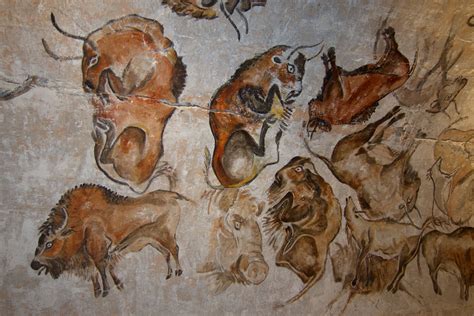
Cave paintings in France and Spain suggest ancient spiritual practices.
The Aryan Influence and Soma
The Aryans are supposed to have progressively merged with and displaced the native Dravidian population over a period of several centuries about 1500 BCE. They are reputed to have emigrated from the northern steppes. 1000 BCE is the threshold to the late Vedic period.
For a reason that has yet to be satisfactorily explained, but may be related to migration or weather or environmental changes, the recipe for soma was lost and the ritual cult of Brahmanism developed a more rigid and authoritarian religious and social structure including the caste system and the oppression of women.
This period was also a period characterized by a mythic war between two groups of divinities, the devas (“shining ones”) and the asuras (literally “lords” but interpreted based on a folk etymology which means “anti-gods”). The Brahmans, no longer able to experience the original soma, substitute a relatively innocuous surrogate, made from a non-psychoactive vine or concoction made from herbs, grain, and saffron.
Thus, Vedic India is an example of a culture that is explicitly based on the cultivation of the psychedelic experience. It is a prime argument for the “stoned ape” hypothesis that psychedelics are responsible for the rapid evolution of the human neocortex and, indeed, human civilization itself.
Professor Iravatham Mahadevan has identified a filter that he associates with soma usage, or some similar substance, during the Indus Valley period (3300-1300 BCE). Cannabis may also have been smoked during this period. It also seems likely that the inhabitants of the Indus Valley, who had cultivated cattle for generations, were familiar with psilocybin, which grows on cow dung. The universal veneration of the cow in Indian culture is interesting in this context.
The use of entheogens is also documented in the Oxus Valley civilization (2300-1600 BCE), the ancestors of the Indo-Iranians, located to the north of the Indus Valley civilization. This civilization shows evidence of the use of cannabis, poppy pollen, and ephedra in the context of ritual fire worship. Viktor Sarianidi regards this as a precursor of the soma/haoma cult (“haoma” is the Iranian term for soma).
Soma is associated with the chief of the Vedic pantheon, Indra. Indra drinks it insatiably and is also associated with mushrooms. Thus, soma is both the object and the source of the enlightenment of the rishis, the inspired ecstatic vates. The essence and source of their enlightenment is the soma sacrifice, called the agni-hotra.
One hundred and fourteen hymns of the ninth book of the Rigveda are dedicated to the god of soma. Soma is the source of the divine timelessness. This mythos reappears in the Hebrew Bible, in which the Elohim (literally “gods”) cast Adam and Eve out of the Garden of Eden lest they eat of the tree of life and live forever, like the gods themselves.

Soma, the drink of the gods, central to Vedic rituals and enlightenment.
Similarities Between Buddhism and Shamanism
Since the Buddha was certainly a samana, one might, therefore, ask the question: Was the Buddha also a shaman? Is Buddhism shamanic? The Buddha himself refers to a forgotten, ancient tradition that he himself rediscovered in the current age. This is the dharma, the truth of things as they are or the cosmic order (rita). Similarly, the shaman enters the other world to obtain ontic knowledge.
The Buddha could not be referring to Brahmanism or even the Vedas, which were well-known and which he explicitly rejected, but he may have been referring to something within the Vedas that had been forgotten (or hidden, because the Buddha also attacked secrecy), or even to a lost prior civilization.
The English word ecstasy is derived from Latin ex + PIE *sta, meaning ‘to stand.’ Thus, ecstasy means, “to put out of place.” In Pali, the English word “ecstasy” is translated as jhanam. This refers to the four jhanas. This term may also be translated as “trance” or “meditative state.” They were central to the practice of meditation as taught by the Buddha.
Shamanism is, primarily, a technique for altering consciousness in order to communicate with the spirit world. By means of this contact, the shaman brings back knowledge and benign power. Similarly, when the Buddha achieved the experience of enlightenment, he remained in a deep trance state for an entire week. During this time, his body became physically rigid and he became impercipient.
The Buddha’s original purpose was to discover the cure for the primary ill of humanity, dukkha or existential suffering. Similarly, the shaman brings back cures to heal the sickness of the people. During his enlightenment experience, the Buddha experienced intense visions of Mara that included various hallucinations and culminated in a conversation with the chief deva of the Brahma realm.
The Buddha also stated that devas came to him at night and gave him teachings. The Buddha taught his disciples a wide variety of mental techniques for altering consciousness. These included the cultivation of the mental body. The mental body is a psychic projection of the physical body. In this state, one is able to experience other ontic realms inhabited by spirits and other deva beings. This is all explicitly documented in the Pali Canon.
Similarly, the Buddha refers to devas or “spirit(ual) beings” whose lives intersect our own. These include relatively minor deities such as nature spirits, the great forces of nature, and sublime spiritual beings far more beautiful, intelligent, longer-liv...
As it spread across Asia, Buddhism was deeply influenced by animism, a belief system that sees all elements of the natural world-animals, plants, rivers, mountains, and even objects-as alive, sentient, intelligent, and imbued with a consciousness. These influences reflect Asian Buddhism’s engagement with Indigenous spiritual practices, incorporating elements from Taoism, Shintoism, shamanism, and the Tibetan Bon religion.
These shamanic aspects are prominent in many forms of Buddhism, such as Tibetan/Vajrayana Buddhism, Zen Buddhism in Japan, as well as the Shingon and Tendai (Mikkyo) esoteric branches of Japanese Buddhism, Korea’s Jingak Order, Theravada forest traditions, and Southeast Asian folk Buddhism.
Animistic or Shamanic Practices in Buddhism
These Indigenous dimensions express themselves within various Buddhist spiritual practices and techniques, including the following:
- Entering Altered States of Consciousness: Shamanism often involves entering altered states of consciousness for spiritual work. Similarly, advanced Buddhist meditation practices aim to transcend ordinary (small-self) perception and move towards shunyata (Shiva realm in Tantric traditions or Mu in Zen) or formless jnanas. Techniques for developing samadhi (concentration) and vipassana (insight) can lead to states where practitioners feel deeply connected to universal invisible energies. Tibetan Buddhist practices like deity yoga involve visualization and identification with a deity, akin to shamanic spirit possession or invocation. Many Buddhist traditions focus on long hours of chanting or prostrations instead of seated meditation.
- Role of the Teacher as a Mediator: In some Buddhist traditions, monks, roshis, lamas, or spiritual leaders serve as intermediaries between humans and spiritual forces, a role analogous to Indigenous elders or shamans. They may conduct rituals for healing, protection, or exorcism, often invoking specific deities or using symbolic tools to channel spiritual power. Shamanic traditions often involve symbolic and/or “spiritually alive” objects, and Buddhism incorporates similar tools such as prayer wheels, bells, Zen staffs, whisks and drums are used in rituals to invoke spiritual forces. Mandalas, intricate designs symbolizing the universe, are used as spiritual maps, guiding meditation or connecting with cosmic energies. The phurba in Tibetan Buddhism functions as a tool for balancing energies/spirits.
- Connection with Spirit Worlds: Asian Buddhists believed in spirits and non-human invisible energy fields. In many Buddhist traditions, there is an acknowledgment of beings such as devas (gods), asuras (demigods), nāgas (serpent spirits), and pretas (hungry ghosts), which echoes shamanic cosmologies of multiple invisible spiritual realms. Practices to pacify malevolent spirits or seek blessings from local deities were/are quite common in Asia.
- Focus on the Feminine: Healing of the Body & Emotions: Asian Buddhism has honored the “feminine” aspects of relating to body, mind and community. Like Indigenous Peoples, Buddhists engaged in rituals and chants believed to have healing properties. The Buddha is often referred to as the "Great Physician" who provides teachings to heal the suffering of samsāra. Tibetan Buddhism incorporates rituals specifically for physical and spiritual healing. For example:Like Indigenous traditions across the world, Buddhists in Asia considered menstrual blood, womb/placenta both sacred and very powerful. The book “Shamanic Bones of Zen” describes this well.The recitation of mantras, like the "Om Mani Padme Hum" in Tibetan Buddhism, is believed to purify negative energies and promote well-being.Forest monks in Southeast Asia often use herbal remedies and blessings, blending Buddhist teachings with local shamanic healing traditions.
- Guidance for the Dead, Protection and Exorcism: A key Indigenous elder or shaman’s role is to guide souls after death, a practice mirrored in Buddhist traditions like:The Bardo Thodol (Tibetan Book of the Dead), which provides instructions for navigating the intermediate state (bardo) between death and rebirth.Theravāda monks or Zen priests perform chanting rituals to assist the dead in achieving complete and full passing from the world of the living or a favorable rebirth.Shamanism often deals with protection against malevolent forces and appeasing elements and sacred sites, and Buddhism incorporates similar practices. The chanting of protective sutras (e.g., the Heart Sutra or Lotus Sutra) or mantras is believed to ward off negative energies. Buddhist rituals involve prayers, as well as fire or water offerings. This is not unlike several Indigenous communities creating dances for fire and water to communicate with the elements.
- Syncretism with Animism, Nature Worship and Sacred Sites: As Buddhism spread across Asia, it integrated with local animistic and shamanic traditions. In Southeast Asia, Buddhist monks perform protective rituals invoking local spirits and deities. In Japan, Zen Buddhists absorbed elements of Shinto animism, and emphasized a spiritual connection with nature and kami (spirits).Indigenous shamanism emphasizes a connection to nature, a sentiment echoed in Buddhism. Sacred trees, such as the Bodhi tree under which the Buddha attained enlightenment, hold deep spiritual significance. Many Buddhist practices and pilgrimages are centered around natural sites, seen as imbued with spiritual energy.
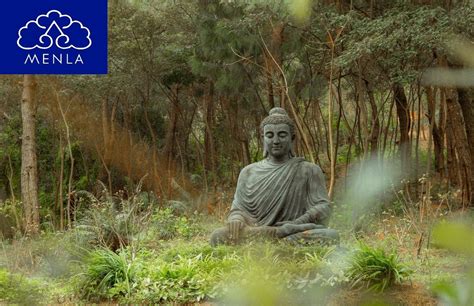
Korean shamanic ritual, showcasing the integration of shamanic elements in Buddhism.
Similarities: Indigenous vs. Buddhist Worldviews
While mainstream Western Buddhist lineages have come to acutely focus on spiritual liberation through meditation and mindfulness practices, Buddhism’s Asian worldviews or cosmology often reflect shamanic or animistic teachings of Indigenous Peoples across the world. Buddhism (including Theravāda, Mahayana and Vajrayana lineages) and spiritual traditions of Tribal Nations (or Indigenous Peoples) share several foundational perspectives, even though their cultural expressions might differ, especially in the West. These commonalities reflect shared insights into humanity’s relationship with nature, the cosmos, and the sacred.
- Reverence for Interconnection and Interbeing: Central to our Buddhist teachings is inter-dependence (pratītyasamutpāda), which highlights the interconnectedness of all phenomena. Everything arises in dependence on everything else, embodying mutual co-arising. Like Indigenous elders, Buddhists in Asia often communicated with “spirit” (i.e., energy that moves in everything) including in departed ancestors, elements, lands, ecosystems, waters, plants, animals and rocks. Indigenous Peoples’ worldviews also emphasize the unified web of life, where humans, animals, plants, elements, and spirits are intricately connected. Actions are understood to ripple through this network, affecting the whole.
- Cyclical and Sacred Views of Time: In Buddhist teachings, time is seen as cyclical, with the concepts of samsāra (the cycle of birth, death, and rebirth) and impermanence (anicca) emphasizing the constant flux and renewal of existence. Similarly, many Indigenous cultures also perceive time as cyclical, marked by the rhythms of nature, seasons, and life cycles. Ceremonies and rituals are often tied to these natural rhythms.
- Deep Relationship with Nature: Nature is integral to Buddhist practice. The Buddha attained enlightenment under the Bodhi Tree, and nature often serves as a teacher and refuge in Zen and Theravāda traditions. Monastics traditionally lived in forests, meditating and harmonizing with the natural world. Indigenous spirituality is deeply rooted in the land. Forests, rivers, mountains, and other natural elements are not just resources but are regarded as sacred relatives, alive, and deserving of respect.
- Direct Experiential Pathways to Wisdom & Communion: The Buddhist path to enlightenment involves direct experience through meditation, mindfulness, and insight into the nature of reality. Practices often guide individuals toward union with universal truths. Indigenous spiritualities also emphasize experiential and direct knowledge, often gained through rituals, vision quests, or shamanic journeys that reveal the interconnectedness of life and the wisdom of the spirit world. Both Buddhist and Indigenous Nations’ traditions across the world ask their practitioners to be mindful of five senses. Communication with the unseen spirit world happens through calming the thinking mind and then being non-conceptually aware of sounds, images, body sensations, smells, thoughts and emotions and what appears in the world beyond our body in the environment.
- Non-Duality, “Not separate” and Sacredness of All Life: Non-duality (Advaya or Advaita) is a key Buddhist concept, teaching that distinctions between self and other, sacred and mundane, are illusory. This fosters reverence for all forms of life as...
Both Buddhism and Indigenous traditions offer frameworks for responding to the climate crisis by encouraging a spiritual and ethical reorientation toward harmony with nature, respect for all beings, and the recognition of the interdependent nature of reality.