Hey there, fellow tabletop enthusiasts! If you’re anything like me, you’ve probably spent countless hours rolling dice, slaying dragons, and saving kingdoms in the wonderful world of Dungeons & Dragons 5th Edition (D&D 5e). It’s a fantastic game with a rich history and a massive fan base. But, have you ever considered stepping into the eerie, mysterious, and downright terrifying world of Call of Cthulhu (CoC)?
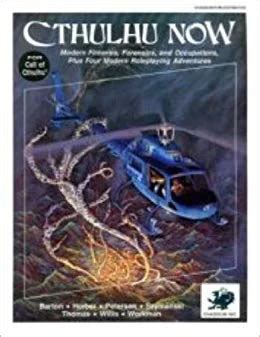
Two years ago, I posted how I was running a Pulp-Era game that was essentially mixing Call of Cthulhu and old horror movies using a modified Cyberpunk 2020 Interlock system. It was a fun game and very rewarding to build something new. I also have even more respect for RPG designers, since there is a whole lot of work that goes into tiny details.
Then my friend and fellow author Clay Sanger sold me on trying the new Dungeons & Dragons 5th Edition. It took some convincing, but I gave it a shot and spent all of 2015 playing D&D. It’s a clean system and it’s very apparent that they put a lot of work into making it Dungeon Master Friendly instead of only focusing on it being Player Friendly (after all, who cares how bad ass a system is if no one is willing to endure the nightmare of running it?). Also, I judge an RPG by its art and layout, and the aesthetics of 5e D&D is seriously top-notch. Nothing against the game at all. As a die-hard First Edition player, I’ll admit that 5th Edition D&D is amazing.
Now, I hadn’t been looking to leave D&D. My players and I had finally gotten proficient enough with the new system that we were really stretching our legs with it. First, Call of Cthulhu is really more of my kind of game right now.
At the end of the day, both Dungeons & Dragons 5e and Call of Cthulhu are incredible games that offer their own unique experiences. Let's delve into what sets these two titans of tabletop RPGs apart.
Read also: Call of Cthulhu: A Must-Play for Horror Fans?
The Atmosphere: Dread vs. Heroism
First things first, let’s talk about the atmosphere.
D&D 5e is all about high-fantasy adventure. You get to play as powerful heroes, cast incredible spells, and face off against epic monsters. It’s like stepping into your favorite fantasy novel or movie, and it’s awesome.
But Call of Cthulhu takes a different approach. Instead of being the hero, you’re an ordinary person thrown into extraordinary and often horrifying situations. Inspired by the works of H.P. Lovecraft, CoC is steeped in cosmic horror. The emphasis is on mystery, investigation, and the sheer dread of facing the unknown. Imagine playing a detective in a noir film, unraveling a dark conspiracy, or an archaeologist stumbling upon an ancient, cursed artifact.
In D&D 5e, you’re often on a power trip. Your characters start off strong and only get stronger. You can take a hit from a dragon and still swing your sword. It’s exhilarating, but it can sometimes make the game feel a bit… safe. Your characters are heroes, after all.
Call of Cthulhu, on the other hand, doesn’t pull any punches. Your characters are regular folks-academics, journalists, detectives-people who aren’t used to fighting monsters. Combat is dangerous, and running away is often the best option. And then there’s the sanity mechanic. Encountering eldritch horrors can drive your character mad, and managing your mental state becomes as crucial as solving the mystery. This focus on realism and consequence makes every decision, every encounter, and every clue feel vital.
Read also: Descent into Madness
Character Creation and Development
Creating a character in D&D 5e is like picking your favorite superhero. Do you want to be a mighty barbarian, a cunning rogue, or a wise wizard? Your character’s class, race, and abilities define what they can do, and as you level up, you get to unlock even more awesome powers.
Call of Cthulhu, however, emphasizes a different kind of character development. Since your characters are regular people, their backgrounds, skills, and personal histories play a huge role in the game. The game encourages you to create deep, multi-faceted characters whose personal lives and experiences are just as important as their ability to handle a shotgun. And because the game is so lethal, every character arc is precious.
Being skill-based, players aren’t restricted by character classes where they only advance once they’ve achieved a set number of Experience Points. Characters can use any skill and advance in those individual skills as they use them.
Character creation is wonderful, and they offer a lot of tools to make it easy. A player can quickly make a character with intimate details in a way that’s easy and very personable. Cyberpunk had a great character creation system too, but CoC’s is much easier to use not only during creation, but within the game itself. I don’t have to remind any of them about character histories because they are so well ingrained and easy to reference.
The other issue was that the character personalities were not as good as they should be. That’s no fault of D&D, but it is more common in it since Feats and Abilities can overshadow a player’s attention to the character itself. Something needed to change. I was about to kill that campaign and start a new one, letting everyone write fresh characters now that we all had a better understanding of the game mechanics.
Read also: Detailed Weapon Analysis
The Game Master's Role
If you’ve ever been a Dungeon Master (DM) in D&D 5e, you know it’s a mix of storytelling, world-building, and refereeing combat.
In Call of Cthulhu, the Game Master (known as the Keeper) takes on a role more akin to a director in a horror movie. The Keeper crafts intricate plots filled with suspense, mystery, and a constant sense of dread. You’re guiding the players through a narrative that prioritizes atmosphere and psychological tension over combat. It’s a fantastic challenge for those who love weaving complex stories and creating memorable experiences.
Setting and Versatility
Sure, Call of Cthulhu is known for its Lovecraftian horror, but the game is surprisingly versatile. You can set your campaigns in the 1920s, modern-day, or even the distant future. Each setting offers unique opportunities for storytelling. Imagine solving a mystery in the roaring twenties, complete with flappers and speakeasies, or investigating a haunting in a high-tech sci-fi world.
D&D 5e, while versatile in its own right, is firmly rooted in the high-fantasy genre. You’ve got your medieval kingdoms, your dragons, your magic spells-it’s a fantastic setting, but it does have its thematic limits. Even when you adapt it to other settings, the core mechanics are designed for fantasy adventure.
Collaboration and Social Experience
One of the best parts of any RPG is the social experience-working together with your friends to overcome challenges and tell a great story.
In D&D 5e, this often means strategizing for battles, planning your next dungeon crawl, and figuring out how to use your abilities to their fullest potential.
Call of Cthulhu shifts the focus to collaboration and investigation. You and your fellow players need to pool your skills and knowledge to solve mysteries and survive. It’s less about who can do the most damage and more about who can find the crucial clue, interpret the ancient text, or keep their cool when things go south.
Emotional Investment and Stakes
Let’s talk about emotional investment. In D&D 5e, it’s easy to get attached to your character as they grow stronger, acquire powerful gear, and accomplish heroic deeds.
Call of Cthulhu, though, takes emotional investment to another level. The game’s high stakes-where death and madness are always lurking-mean that you’re constantly on edge, deeply invested in your character’s survival and sanity. When your character unravels a mystery or survives a harrowing encounter, the victory feels immensely rewarding.
Combat in 7th Edition is nasty. Characters do not magically gain hit-points like they do in D&D, so they’re always weak and a small weapon is seriously scary (No matter how awesome you are, a hobo with a shank will still fuck you up). Also, things like Healing Potions, or Cure Wound spells are absent, which means getting hurt is a big deal. Taking away their safety nets makes the player much more cautious and play smarter.
The other great thing about CoC combat is that it’s extremely simple. One of the biggest selling points for me was the Chase Rules. Normally, chases in an RPGs are handled by taking Initiative and Movement Rate. Fastest movement wins. Pretty simple. It’s also kinda boring. But Chaosium knew that with combat being so brutal, and most of the monsters being so deadly, that characters would spend more time running from baddies than they would fighting them. The Idea Roll is also another thing I appreciate.
Over they years, I’ve noticed D&D players become more careless as their characters’ accrue a good number of hit-points and armor. In systems without hit point increases, they become more careful the longer they play because they are more attached to their character who are still just as squishy as a 2nd level D&D character.
Accessibility and Complexity
D&D 5e is known for being relatively accessible, especially compared to earlier editions. The rules are streamlined, and it’s easy for new players to jump in and start having fun.
Call of Cthulhu has a bit more of a learning curve. The mechanics are different, and the focus on investigation and psychological horror can be a shift for players used to D&D’s combat-heavy style. However, this complexity also brings depth. The detailed character creation, the sanity mechanics, and the emphasis on storytelling create a rich, immersive experience.
Backwards Compatibility
Finally, the coolest thing about 7th Edition CoC is that it’s backwards compatible. Meaning that a GM can pick up a 1980’s adventure module and can convert the game to 7th Edition in their head. It take a little getting used to, and it isn’t my ideal way of running a module, but it’s also awesome. That means that any CoC adventure that has ever been written over the last 35 years are still available for Game Masters to use. One of the things that saddened me when we started 5th Edition D&D was that all of the modules and supplements for each previous edition (many of which I owned) were completely obsolete and that future generations of players would never know them.
In fact, when we played 5th Edition D&D, I had converted The Secret of Bone Hill, a classic 1st Edition adventure that I loved, to 5th Edition. The conversion process was hell. It was insanely difficult and took a lot of time. So far this year, we’ve played four Call of Cthulhu adventures: The Haunting and Dead Light, which are 7th Edition, Crack’d and Crook’d Manse (6th Edition), and Edge of Darkness (5th Edition). All have been a massive success.
And since I mentioned my affection for great art and layout, the art was what drew me in in the first place. Both Dungeons & Dragons 5e and Call of Cthulhu 7e are brilliant in their executions and feel like they are written not as a cash-grab to strong-arm players into buying all new books, but as a real evolution of the games with 35+ years of experience behind them. I’d gladly recommend either of them.
Table: D&D 5e vs. Call of Cthulhu 7e
| Feature | Dungeons & Dragons 5e | Call of Cthulhu 7e |
|---|---|---|
| Setting | High Fantasy | Lovecraftian Horror, Historical, Modern, Sci-Fi |
| Character Focus | Heroic, Powerful | Ordinary, Vulnerable |
| Gameplay | Combat-Heavy, Level-Based | Investigation, Mystery, Sanity |
| Game Master Role | Dungeon Master | Keeper |
| Complexity | Accessible, Streamlined | More Complex, Immersive |
| Emotional Investment | Attachment through Power | Attachment through Survival |
Is Call of Cthulhu Better Than Dungeons & Dragons?
So why not give it a try? Gather your friends, light some candles, and prepare to dive into the unknown.