Chakras are the energy centers of the body. They are located in the astral body, along the spine, starting at its base and running upwards to the crown of the head. The astral body is the energy body residing inside our physical body. Each physical body part has a corresponding astral body part. The astral body cannot be seen or touched. This is also a reason why we cannot see the chakras.
Each chakra radiates a specific color and energy. Each one coincides with a gland in the physical body. Since each chakra relates to specific spiritual, emotional, psychological, and physical aspects of our being, it is believed that their blockage or malfunction can lead to physical, psychological, and emotional disorders. The conscious awareness and balancing of these energy centers, on the other hand, is believed to lead to well-being and good health. The above ties into the purpose of yoga.
Through asana practice, yoga seeks to stimulate and balance these chakras or energy centers in the body. Read on to learn more about the 7 chakras, their symbols, attributes, effects, and balancing techniques.
Chakra (cakra in Sanskrit) means “wheel” and refers to energy points in your body. They are thought to be spinning disks of energy that should stay “open” and aligned, as they correspond to bundles of nerves, major organs, and areas of our energetic body that affect our emotional and physical well-being. Some say there are 114 different chakras, but there are seven main chakras that run along your spine. These are the chakras that most of us are referring to when we talk about them.
Each of these seven main chakras has a corresponding number, name, color, specific area of the spine from the sacrum to the crown of the head, and health focus.
Read also: Evidence for Chakras
How Many Chakras Are There in the Body?
Mostly, we hear about the ‘seven chakras’ but, there is an infinite number of chakras in the human body. A specific vibration, color, symbol and sound are associated with all 7 chakras. Depending on whether these energy centers are healthy or blocked, you may experience different attributes of your physical, mental, and emotional health.
The 7 main chakras as they appear in the body are:
- Muladhara Chakra - Root Chakra
- Svadhishthana Chakra - Sacral Chakra
- Manipura Chakra - Solar Plexus Chakra
- Anahata Chakra - Heart Chakra
- Vishuddha Chakra - Throat Chakra
- Ajna Chakra - Third Eye Chakra
- Sahastrara Chakra - Crown Chakra
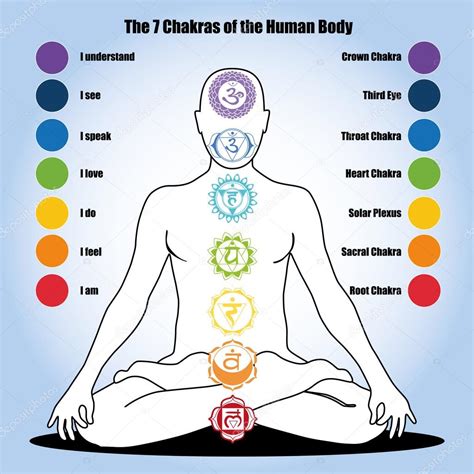
The seven main chakras aligned along the spine.
Does a Chakra Have a Shape?
There are many myths about the shape of the chakras. Some say they are like whirling discs, while others believe they are like flowers hanging from the spine. Some people even think that they resemble an ice cream cone! All these different ideas exist simply because the chakras cannot be seen by the eyes or by any device. So, we tend to believe whatever becomes commonly circulated.
The ancient scriptures say that a chakra is shaped like a sphere or a ball. And it is even believed that planet earth is a major chakra of the solar system and a minor chakra of our galaxy, the Milky Way. It rotates to distribute some energy, but knowing more about this remains beyond the scope of the human imagination.
What Is the Size of a Chakra?
Some people say that chakras are one foot in radius, while others say that they change their size according to the energy flow. Scriptures, on the other hand, tell us that the chakras are very small, as they are located in the astral spinal cord, which is further located inside the physical spinal cord.
Read also: Chakra Balancing for Weight Management
How Do Chakras Work?
The chakras act as distribution centers. They distribute the five pranas to their associated local regions. For example, the root chakra will distribute the ‘apana prana’ to the pelvic region and provide energy for the organs in this region. When a chakra is blocked or not functioning properly, this distribution pattern gets disturbed, and physical or psycho-emotional/energy issues arise.
Why Are Chakras Important?
Chakras are more than just energy centers; they are pivotal in shaping our awareness. When a chakra is out of balance, our awareness gets trapped at that level, preventing us from ascending to higher states of consciousness. Only by balancing each chakra can we climb this ladder of awareness.
Take the Root Chakra, for instance, which anchors our sense of security and survival. If this chakra is off balance, we might find ourselves overwhelmed by fears and insecurities similar to those seen in animals. Animals often act primarily from this chakra, driven by the survival instinct.
In contrast, humans often get stuck in the second chakra, which is all about desires. This fixation means that many of our actions are aimed at fulfilling these desires, sometimes to our detriment.
Here are the seven levels of awareness, each associated with a specific chakra, from the root up to the crown:
Read also: Seven Candlesticks: A Chakra Connection?
- Survival - Root Chakra
- Desires - Sacral Chakra
- Intellect - Solar Plexus Chakra
- Compassion/Unconditional Love - Heart Chakra
- Acceptance - Throat Chakra
- Perception of Truth - Third Eye Chakra
- Freedom from Illusion - Crown Chakra
15 Minute Chakra Balance Guided Meditation
A Complete Guide to the 7 Chakras
Understanding the location of each chakra point is essential for those on a journey of self-discovery and holistic well-being.
1. Muladhara Chakra - Root Chakra
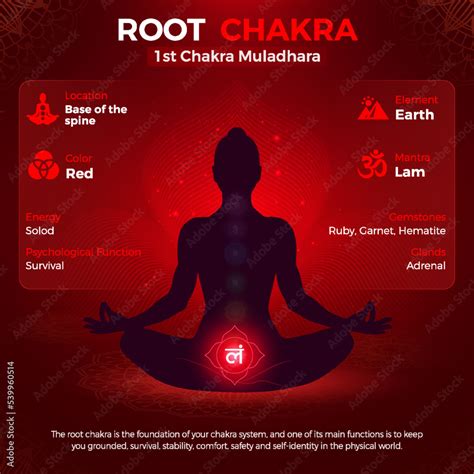
- Symbol: The Root Chakra symbol consists of a 4-petalled lotus flower, a square, and a downward-facing triangle. Each element is said to represent the 4 aspects of the human mind, uniting to form the birth of the human consciousness.
- Color: Red
- Element: Earth
- Location: The Root Chakra also known as the Muladhara Chakra is located at the base of the spine, between the anus and the genitals.
- Attributes: It is characterized by the emotions of survival, stability, ambition, and self-sufficiency.
- Symptoms of a blocked Root Chakra: When this chakra is out of balance, a person starts feeling unstable, ungrounded, lack of ambition, lack of purpose, fearful, insecure and frustrated.
- Signs of a balanced Root Chakra: However, when the Root Chakra is balanced, these are replaced by more positive emotions, and you feel stable, confident, balanced, energetic, independent, and strong.
- Mantra: The seed mantra (beej mantra) of Muladhara Chakra is ‘Lam’.
- Yoga poses to balance the Root Chakra: Tree Pose (Vrkshasana) and Mountain Pose (Tadasana).
- Associated organs: Skeletal system, legs, feet, large intestine, adrenal glands.
2. Svadhishthana Chakra - Sacral Chakra
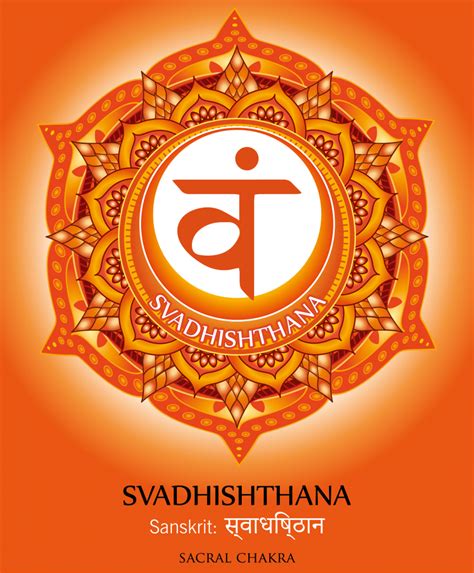
- Symbol: The symbol for the Svadhishthana Chakra or Sacral Chakra is made up of multiple circles, a crescent moon, and six lotus flower petals. The circles and crescent moon represent the cyclical nature of life, death, and rebirth, while the 6 petals portray the 6 negative aspects of our nature that we need to overcome to open this chakra.
- Color: Orange
- Element: Water
- Location: The Svadhishthana Chakra, more commonly known as the Sacral Chakra, is located in the lower abdomen, about four fingers below the navel.
- Attributes: Its attributes include the basic need for sexuality, as well as creativity and self-worth.
- Symptoms of a blocked Sacral Chakra: When the Sacral Chakra is imbalanced, a person may feel emotionally explosive and irritable, sense a lack of energy and creativity, feel manipulative, or obsessed with sexual thoughts.
- Signs of a balanced Sacral Chakra: When balanced, it makes one feel more vibrant, happy, positive, satisfied, compassionate, and intuitive.
- Mantra: The seed mantra (beej mantra) of Svadhishthana Chakra is ‘Vam’.
- Yoga poses to activate the Sacral Chakra: You can work on balancing the Svadhishthana Chakra by practicing poses like Crow Pose (Kakasana) or standing poses like Triangle Pose (Trikonasana).
- Associated organs: Reproductive organs, kidneys, bladder.
3. Manipura Chakra - Solar Plexus Chakra
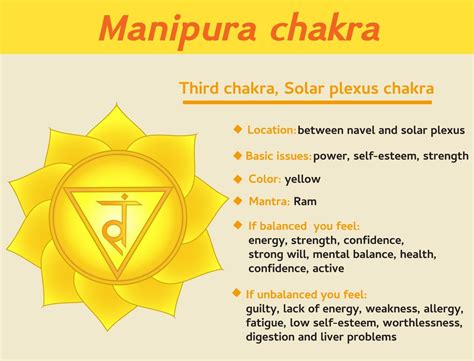
- Symbol: The Solar Plexus Chakra symbol consists of a downward-pointing triangle within a ten-petalled lotus flower. The ten petals symbolize ten negative character traits that we have to conquer, while the triangle is the Agni tattva or fire of kundalini energy which signifies our inner strength.
- Color: Yellow
- Element: Fire
- Location: The Manipura Chakra is located at the solar plexus, between the navel and the bottom of the rib cage.
- Attributes: It is characterized by emotions like ego, anger, and aggression.
- Symptoms of a blocked Solar Plexus Chakra: An imbalance of the Solar Plexus Chakra can manifest physically as digestive problems, liver problems, or diabetes. On an emotional level, one might struggle with depression, lack of self-esteem, anger, and perfectionism.
- Signs of a balanced Solar Plexus Chakra: By balancing this chakra, we feel more energetic, confident, productive, and focused.
- Mantra: The seed mantra (beej mantra) of Manipura Chakra is ‘Ram’.
- Yoga poses for Solar Plexus Chakra alignment: Working on Manipura Chakra can be done in poses like Classical Forward Bend (Paschimottanasana), Classical Cobra Pose (Bhujangasana), and Bow Pose (Dhanurasana).
- Associated organs: Digestive system (stomach, intestines, liver, pancreas), adrenal glands.
4. Anahata Chakra - Heart Chakra
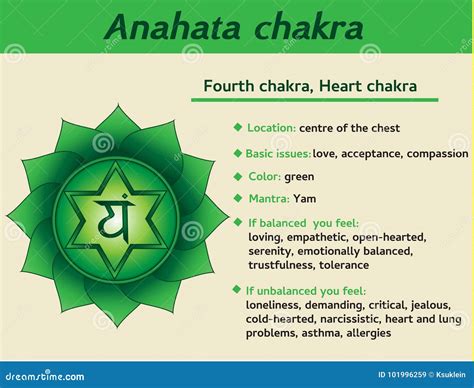
- Symbol: In the Heart Chakra symbol, two triangles intersect to form a yantra which represents the balance of yin and yang, or upward and downward forces. Outside, there is a lotus flower with 12 petals symbolizing the twelve divine qualities associated with the heart.
- Color: Green
- Element: Air
- Location: As the name implies, the Anahata Chakra is located in the heart region.
- Attributes: This chakra is the seat of balance, and it is characterized by emotions of love, attachment, compassion, trust, and passion.
- Symptoms of a blocked Heart Chakra: When the heart chakra is imbalanced, a person may deal with emotional issues like anger, lack of trust, anxiety, jealousy, fear, and moodiness.
- Signs of a balanced Heart Chakra: By harmonizing this energy center, a person begins to feel more compassionate, caring, optimistic, friendly, and motivated.
- Mantra: The seed mantra (beej mantra) of Anahata Chakra is ‘Yam’.
- Yoga poses to balance the Heart Chakra: Heart Chakra can be balanced by practicing poses like Half Bridge Pose (Ardha Setubandhasana), and Fish Pose (Matsyasana).
- Associated organs: Heart, lungs, circulatory system, thymus gland.
5. Vishuddha Chakra - Throat Chakra
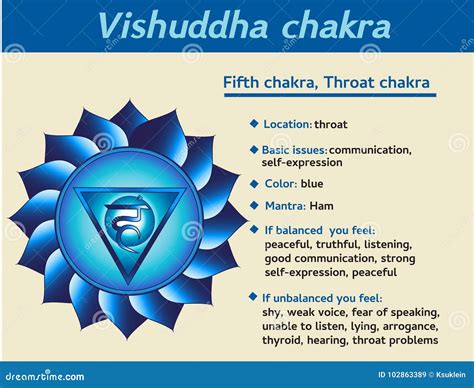
- Symbol: The symbol of the Throat Chakra consists of a 16-petalled lotus flower surrounding an inverted triangle which holds a circle within. This represents spiritual growth and the purification of the body, mind, and spirit.
- Color: Blue
- Element: Space
- Location: The Visuddha Chakra is located at the base of the throat, coinciding with the thyroid gland.
- Attributes: It is associated with inspiration, healthy expression, faith, and the ability to communicate well.
- Symptoms of a blocked Throat Chakra: A blockage in the throat chakra may be experienced as timidity, quietness, a feeling of weakness, or the inability to express our thoughts.
- Signs of a balanced Throat Chakra: When this chakra is balanced, it enables creativity, positive self-expression, constructive communication, and a sense of satisfaction.
- Mantra: The seed mantra (beej mantra) of Vishuddha Chakra is ‘Ham’.
- Yoga poses for Throat Chakra balance: Throat Chakra is stimulated in poses like Shoulderstand (Sarvangasana) and Plough Pose (Halasana).
- Associated organs: Throat, thyroid gland, vocal cords, respiratory system.
6. Ajna Chakra - Third Eye Chakra
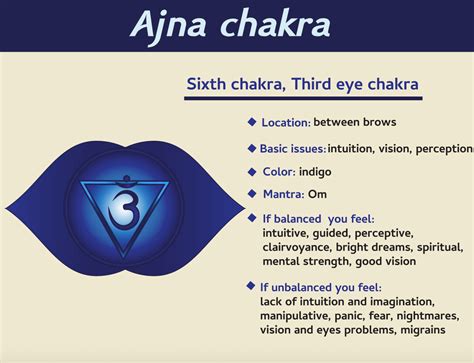
- Symbol: The Third Eye Chakra symbol consists of an inverted triangle resting in a circle between two lotus petals. The two petals and downward-facing pyramid both signify wisdom, emphasizing the Third Eye Chakra’s role in our journey to spiritual awareness.
- Color: Indigo
- Element: None
- Location: The Ajna Chakra (pronounced as ‘Agya Chakra’) is located between the eyebrows. Also known as the Third Eye Chakra, it is often used as a focal point during asana practice to develop more concentration and awareness.
- Attributes: It is said that meditating upon this chakra destroys the karma of past lives and brings liberation and intuitive knowledge. Its attributes are intelligence, intuition, insight, and self-knowledge.
- Symptoms of a blocked Third Eye Chakra: When imbalanced, it may make you feel non-assertive and afraid of success, or on the contrary, it can make you more egotistical. An imbalance can manifest as physical problems like headaches, blurry vision, and eye strain.
- Signs of a balanced Third Eye Chakra: When this chakra is active and balanced, a person feels more vibrant and confident, both spiritually and emotionally. In the absence of the fear of death, one becomes his own master and remains free of all attachment to material things.
- Mantra: The seed mantra (beej mantra) of Ajna Chakra is ‘Om’.
- Yoga poses to balance the Third Eye Chakra: Ajna Chakra is stimulated when practicing Headstand (Shirshasana).
- Associated organs: Brain, eyes, pineal gland, nervous system.
7. Sahastrara Chakra - Crown Chakra
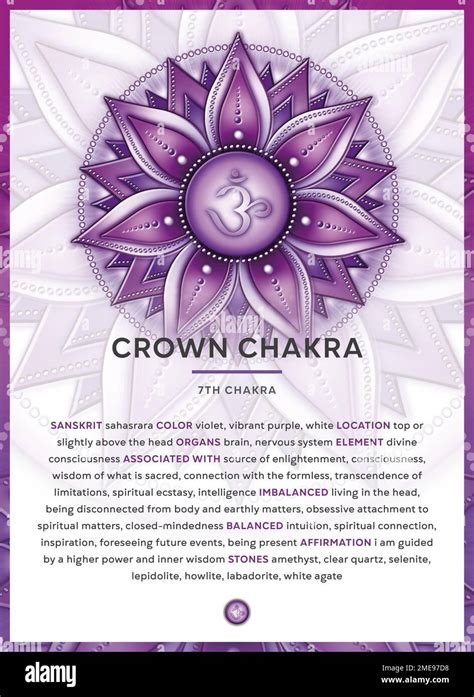
- Symbol: The Crown Chakra symbol is depicted as a ring of a thousand lotus petals surrounding an inverted triangle. This symbolizes the rising of divine energy into the Crown Chakra, bringing spiritual liberation and enlightenment.
- Color: Violet White
- Element: None
- Location: The Sahastrara or Crown Chakra is located at the crown of the head.
- Attributes: The seventh chakra is the center of spirituality, enlightenment, and dynamic thought and energy. It allows for the inward flow of wisdom and brings the gift of cosmic consciousness.
- Symptoms of a blocked Crown Chakra: When it gets imbalanced, one might suffer from a constant sense of frustration, melancholy and destructive feelings.
- Signs of a balanced Crown Chakra: A balanced Crown Chakra promotes spiritual understanding, inner peace and a clear perspective on the world.
- Mantra: The seed mantra (beej mantra) of Sahasrara Chakra is ‘Aum’.
- Yoga poses to align the Crown Chakra: Balancing Sahasrara Chakra can be done by practicing Headstand (Shirshasana).
- Associated organs: Brain, pituitary gland, nervous system.
Can Chakras Influence Health?
Chakras are associated with the organs and glands of the particular region where they are located. As such, they have a strong bearing on our health, our mental state, and our relation with others. Based on various factors such as our lifestyle, environment and surroundings, or past experiences, the chakras can either be balanced or imbalanced.
If a chakra is imbalanced, it goes into either a hypoactive or a hyperactive mode. A hypoactive or blocked chakra’s functioning is either insufficient or reduced. Likewise, a hyperactive chakra means there is too much energy flowing into that particular region, and as such, there is an imbalance in the overall flow of energy throughout the body.
How Do I know If My Chakras Are Blocked?
Since chakras are interrelated, when one of them is imbalanced, it causes a disturbance in the functionality of the other chakras as well. This makes people feel disconnected, anxious, fearful, and it also manifests as health problems in one or more areas of the body. To function at their best, your chakras need to be balanced. And for this, you need to know what the chakras actually do and what are some of the things you can do to take care of them.
How to Balance Your Chakras
Every chakra rotates at a specific frequency and speed. This frequency and speed can change due to various factors like diet, lifestyle, thought patterns, etc. An imbalance starts creating problems with the distribution of the pranas. Imagine what will happen if a 50 watt light bulb starts getting a 500 watt or 10-watt electricity supply!
When we speak about balancing or awakening the chakras, we mean bringing them back to their regular speed. There is no one single method to unblock your chakras, but rather several. The best way to unblock your chakras will be different for everyone, and it’s a matter of trial and error to find out which method works for you.
Chakras have only recently become more well-known, with the growth in popularity of yoga and New Age philosophies in general. They are a complex and ancient energy system that originated in India. They were first mentioned in the Vedas, ancient sacred texts of spiritual knowledge dating from 1500 to 1000 BC. There’s a lot one can study about them.
Below is a table summarizing the key aspects of each chakra:
| Chakra | Location | Color | Element | Mantra | Balanced Signs | Imbalanced Signs | Associated Organs |
|---|---|---|---|---|---|---|---|
| Root (Muladhara) | Base of Spine | Red | Earth | Lam | Stable, Confident, Energetic | Unstable, Fearful, Frustrated | Skeletal system, Legs, Feet, Large intestine, Adrenal glands |
| Sacral (Svadhishthana) | Lower Abdomen | Orange | Water | Vam | Vibrant, Happy, Compassionate | Irritable, Lacking Energy, Manipulative | Reproductive organs, Kidneys, Bladder |
| Solar Plexus (Manipura) | Solar Plexus | Yellow | Fire | Ram | Energetic, Confident, Focused | Digestive Problems, Depression, Anger | Digestive system, Adrenal glands |
| Heart (Anahata) | Center of Chest | Green | Air | Yam | Compassionate, Caring, Optimistic | Anger, Lack of Trust, Anxiety | Heart, Lungs, Circulatory system, Thymus gland |
| Throat (Vishuddha) | Base of Throat | Blue | Space | Ham | Creative, Positive, Communicative | Timidity, Quietness, Inability to Express | Throat, Thyroid gland, Vocal cords, Respiratory system |
| Third Eye (Ajna) | Between Eyebrows | Indigo | None | Om | Vibrant, Confident, Intuitive | Non-Assertive, Egotistical, Headaches | Brain, Eyes, Pineal gland, Nervous system |
| Crown (Sahasrara) | Top of Head | Violet/White | None | Aum | Spiritual Understanding, Inner Peace | Frustration, Melancholy, Destructive Feelings | Brain, Pituitary gland, Nervous system |
Remember, balancing your chakras is a personal journey. Experiment with different techniques and find what works best for you to achieve overall well-being.
tags: #chakras #and #corresponding #organs