In Hinduism and Buddhism, chakras are focal points of energy, or prana, in the body. The concept of chakras has influenced many holistic medical practices worldwide, including yoga, Ayurveda, and some modern therapies, such as sound baths. This article reviews more about what chakras are, where they come from, the seven-chakra system, and how they relate to health.
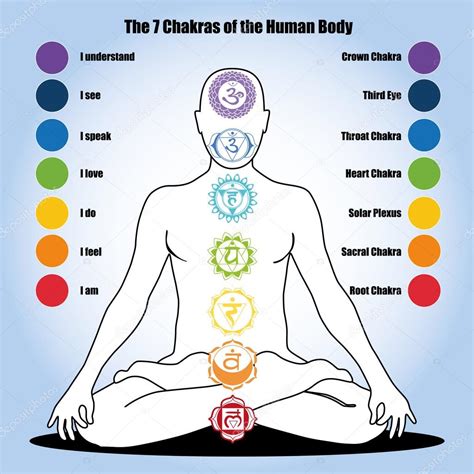
The seven main chakras situated along the spine, from the base of your spine to the crown of your head.
What are Chakras?
In Hinduism and Buddhism, chakras are thought of as energy centers in the body. They mark places where spiritual energies intersect. The Sanskrit word “chakra” translates to the English word “wheel.” This refers to the way that chakras resemble spinning wheels or discs, according to a 2019 review of the history of chakras. In between these wheels are energy channels, which allow the energy to flow from one place to another.
The concept of chakras ties into the early Hindu concepts of a physical body and a subtle body. While the physical body consists of mass and is visible, the subtle body - which includes the mind and emotions - consists of energy and is invisible. In this system, spiritual or psychic energy from the subtle body influences the physical body and vice versa. This means that the status of a person’s chakras can shape their overall health and well-being.
Where are the Chakras Located?
Typically, people believe that the chakras exist along the spinal column, from the head to the base of the spine. The number of chakras varies depending on the tradition a person follows. In Buddhism, there are four primary chakras. There are usually seven in Hinduism. Other traditions hold that there are thousands of energy centers but a few are the most important. The important chakras are stated in Hindu and Buddhist texts to be arranged in a column along the spinal cord, from its base to the top of the head, connected by vertical channels.
Read also: Chakra Balancing for Weight Management
The earliest written record of chakras comes from the Vedas, which are ancient Indian texts that describe the philosophy of yoga. The precise age of the Vedas is unknown, but they are thousands of years old. Over time, the concept of chakras evolved, influencing various Hindu and Buddhist traditions and healing therapies. They belong to a set of beliefs known collectively as Tantra.
In the early 20th century, European spiritualists and occultists began publishing books about aspects of Tantra, including chakras. Today, these books are the basis of the Western understanding of chakras. The association between chakras and the colors of the rainbow appears to have come from Western thinkers of the 20th century. Since then, chakras have also become associated with different:
- metals
- astrological signs
- foods or herbs
- crystals or minerals
- tarot cards
Some refer to this relatively new way of thinking about chakras as the Western chakra system. It has gone on to influence various New Age alternative health practices, such as crystal healing and homeopathy.
The Seven Primary Chakras
Hindu philosophy identifies seven primary chakras and many more minor chakras. People who believe in chakras argue that imbalances in an individual’s chakras may undermine their health. For example, an imbalance in the navel chakra may affect digestion or a person’s ability to manage emotions.
Here's a brief overview of the seven major chakras:
Read also: Seven Candlesticks: A Chakra Connection?
- Muladhara (root chakra): This chakra is at the bottom of the spine, between the anus and genitals. It purportedly influences the basic urges of sex, food, sleep, and self-preservation. When the root chakra is balanced, it is thought to create feelings of security, positivity, energy, independence, and strength.
- Svadhisthana (sacral chakra): Located at the pelvis, this chakra influences the regulation of emotions and desires. The sacral chakra is considered to be responsible for sexuality, creativity, intuitiveness, self-worth, compassion, and adaptability.
- Manipura (navel chakra): This chakra is just below the navel. Strength in this chakra aids digestion and the ability to process life’s experiences. The solar plexus chakra is considered to be the center of self-esteem and emotions like ego, anger, and aggression.
- Anahata (heart chakra): This chakra is located at the heart, and its purpose is to help a person connect with unconditional love. The heart chakra connects lower chakras to the higher ones. The heart chakra is considered a link to compassion, trust, passion, and love for self and others.
- Vishuddha (throat chakra): Positioned at the pit of the throat, this chakra’s function is authenticity and personal expression. Balancing throat chakra is believed to regulate the flow of hormones and help inner thoughts to be spoken in a positive manner.
- Ajna (third eye chakra): Located between the eyebrows, this chakra is a seat of inner knowledge and consciousness. According to this belief system, an open and balanced third eye chakra allows you to notice the connections in this world and beyond.
- Sahasrara (crown chakra): Located just above the top of the head, this chakra’s role is to promote a more enlightened approach to the world. Opening the crown chakra is believed to connect a person to their higher self since it’s the place of spirituality, enlightenment, and energetic thoughts.
Chakra-Based Therapies
Depending on the philosophical and spiritual orientation of the practitioner, a person may promote healthier chakra energy with a range of chakra-based therapies, such as:
- Ayurvedic medicine, which may make dietary and other lifestyle recommendations
- yoga, including the use of specific yoga positions to promote energy flow
- meditation to visualize unblocking the chakras
- Reiki, which is a form of energy healing
Here are many practices that people might use to unblock, balance, heal, or align chakras that are out of balance using chakra-based therapies, including:
- Meditation and breathing exercises. Meditation is a way to calm your mind, be present in your body, and focus on the moment. Breathing exercises are often part of meditation. Some styles of meditation relate to the chakras. For example, people might picture a light or warmth on the area associated with each chakra. This may help to align your chakras, reduce stress, and help you respond more calmly to challenges in your life.
- Yoga. Yoga, an ancient system for building spiritual and physical well-being, teaches that prana, or life energy, moves through your body and connects you to the universe. According to people who believe in the practice, yoga can help balance chakras through techniques like focused breathing, poses (exercises), and meditation and can help reduce stress and make you feel healthier.
- Reiki. Reiki is a system of energy healing that began in Japan. With Reiki, a practitioner helps direct the flow of energy and light through your body and unblocks areas where energy might be stuck. Some Reiki practitioners use the chakras as energy centers. People who get Reiki often say it's relaxing, and some think it helps their well-being.
- Ayurveda. Ayurveda is a holistic system of health care based on ancient Indian texts. Many people still use it today. Ayurveda uses herbs, plants, metals, yoga, meditation, physical and spiritual exercises, and other treatments to balance chakras and improve well-being.
- Color therapy and crystal healing. People might associate certain colors, crystals, or stones with each of the chakras. Some people will look at a color or hold a crystal in their hands, or put it directly on the area of their body that’s near the chakra they want to balance.
Scientific Perspectives on Chakras
The Ultimate Guide to CHAKRAS | How to Unblock For Full 7 CHAKRA Energy! (POWERFUL!)
No scientific evidence supports the existence of chakras in the spiritual sense. However, some scientists have argued that they correspond to physical body parts, particularly in the nervous system. The nervous system consists of a person’s brain and spinal column, which contain nerves. These nerves branch off from the spine in bundles (plexuses) and connect to other areas of the body.
The primary chakras, which are located down the spine, may correspond to the central nervous system. Their connection to specific aspects of health may relate to different nerve plexuses. For example, a 2017 cadaver study identified that the root chakra might be related to the inferior hypogastric plexus, which sends signals to the reproductive organs and rectum, two of the functions this chakra is meant to influence.
Read also: Understanding Deadly Sins
This may explain how the chakra system developed in the way it did, mirroring what scientists now know about the human body. However, not everyone agrees with this interpretation and experts need to conduct more scientific research.
There is no conclusive evidence that chakra-based therapies work because they target chakras. However, many people do feel a benefit from practicing them. It is difficult to know why this is, as there is a lack of experimental research on the subject. Several papers emphasize the value of chakra-based therapies, but few actually prove that they work.
From the perspective of Western medicine, chakra-based therapies may be popular for several reasons. For example, they may support relaxation and promote a sense of well-being.
Potential Benefits of Chakra-Based Therapies
Many therapies that target chakras can be relaxing. For example, yoga involves a combination of movement and mindful breathing, which may help calm the nervous system. Meditation, Reiki, and other practices may have similar effects. Activating the relaxation response generally benefits health, particularly for people who are often stressed. A sense of spiritual well-being may also impact mental or physical health.
Meditation
Meditation is often a part of chakra unblocking. Many studies have shown it has mental and physical health benefits. Experts claim that these benefits include:
- reducing stress
- easing anxiety and depression
- lowering blood pressure
Many types of meditation seem to have this effect, including chakra-based meditation. In a 2020 study, 223 participants enrolled in various chakra-based meditation programs. Participants reported generalized reductions in anxiety and improvements in their perception of their health. However, the study did not compare these results to a control group and does not prove that chakras are the reason for the improvements.
Placebo Effect
It is also possible that chakra-based therapies improve well-being via the placebo effect. This is when a person believes that a treatment will help, resulting in a positive outcome. This does not mean the benefits are fake - placebos can create genuine reductions in symptoms. Researchers are still learning about how this works, but if a person finds something helpful and it causes no ill effects, it may be a valuable part of their self-care.
Recent Scientific Studies
Margaret Moda conducted a review of the research on the anatomical and physiological evidence of the chakras. Her study was published in the April 2022 issue of the International Journal of Healing and Caring. After reviewing the literature on the evidence of the chakras, Moda concluded that there is some evidence that chakras emit electromagnetic radiation and have possible anatomical correlates. There is, indeed, some scientific evidence for the chakras!
In this study, Moda sought to examine the evidence for the chakras based on electromagnetic radiation or anatomical correlates. Moda searched databases for studies on the anatomical and physiological studies of the chakras. She excluded papers on theory or intuitive descriptions and expanded her search to include books containing scientific studies. Thus, sixteen studies met the search criteria.
Moda grouped her results in two categories: anatomical studies and physiological studies.- Anatomical Studies: Two studies found that the chakras align with known nerve plexuses: Rokade (2017) found a plexus of nerves near the location of the purported heart chakra. Sweta and colleagues (2018) found a plexus of nerves near the location of the purported base or root charka.
- Physiological Studies: Several studies found electromagnetic emissions from the chakras:
- One study by Motoyama (1981) used a magnetometer, copper wire and photoelectric cells. When the subjects activated a chakra, the photoelectric cells emitted a faint light and the copper electrode detected high-frequency oscillations.
- Hunt used an electromyograph (EMG) (1977, 1986). She detected wave forms and frequency bands from 100 Hz to 1 KHz, corresponding to various colors, in the area of the chakras. Further, she found that, as the subjects activated or "opened" a chakra, the frequency increased.
- In 1997, Wirth and colleagues attempted to replicate the findings and did, but others have questioned their research.
- Rewold and Husen (2020) used electrodes to measure frequencies above 200Hz in a group of biofield practitioners and university students. In both groups, the frequency bands matched what Hunt had found. Additionally, the frequency band power was higher among the biofield practitioners than the students.
- Jalil et al (2015) used radiofrequency meters with dipole whip antennas to detect electromagnetic radiation from the chakra locations in young healthy subjects. They found that each chakra emits a particular band of frequencies. Interestingly, their findings (chakras emit frequencies of 29 MHz - 86 MHz) matches the overall frequency of the human electromagnetic field of about 53 MHz.
In each case, there were measurable electromagnetic emissions from the chakras. This study adds to our understanding of the human electromagnetic field and rounds up some evidence for the chakras. While many Westerners remain skeptical of the meridians, chakras, and biofield, these concepts are aligned with what we know about physics. Humans have electromagnetic energy and bioelectric fields.
Subtle Energy and Integrative Medicine
The Scientific Basis of Integrative Medicine looks at how various forms of energy (e.g. light, sound, electromagnetism or even prayer) translate into the chemical and electrical signals that orchestrate our physical health and mental well-being. It has been scientifically documented that factors, such as faith, prayer and love, influence our recovery from illness. These partially understood modalities currently are spoken of in terms of ‘energy’, ‘healing energy’ or ‘subtle energy’.
In order for Western medicine to have a cohesive physiological system, it must account for the existence of energy fields within as well as outside of the human body. According to Eastern medical systems, the body contains channels through which flows an invisible but nutritive energy called chi, loosely translated to mean vital energy or life force. Furthermore, there is a purported energy surrounding the body, referred to as subtle energy. Subtle energy both informs and transcends the faculties of the five senses. It is taken into the body via openings, called chakras, and translated into a form of energy that the body can use, literally use, at the cellular level. Just as the pineal is the energy transducer for environmental information, the chakras are the energy transducers for subtle energy. Subtle energy is a healing energy that anyone can learn to perceive and utilize.
tags: #chakras #scientific #evidence