The Ouija, also known as a spirit board, talking board, or witch board, is a flat board marked with the letters of the Latin alphabet, the numbers 0-9, the words "yes", "no", and occasionally "hello" and "goodbye", along with various symbols and graphics. It uses a planchette (a small heart-shaped piece of wood or plastic) as a movable indicator to spell out messages during a séance.
Participants place their fingers on the planchette, which is moved about the board to spell words. Paranormal and supernatural beliefs associated with Ouija have been criticized by the scientific community and are characterized as pseudoscience.
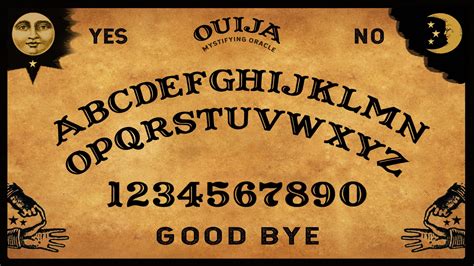
An example of an Ouija Board.
Origins and History
One of the first mentions of the automatic writing method used in the Ouija board is found in China around 1100 AD, in historical documents of the Song dynasty. The method was known as fuji "planchette writing".
Following the American Civil War in the United States, mediums did significant business in allegedly allowing survivors to contact lost relatives. As a part of the spiritualist movement, mediums began to employ various means for communication with the dead.
Read also: Cultural impact of the Ouija board
In 1886, newspapers reported on a new phenomenon taking over the Spiritualists’ camps in Ohio. It was, for all intents and purposes, a Ouija board, with letters, numbers and a planchette-like device to point to them. The article was read far and wide, but it was Charles Kennard who saw it as a business opportunity.
Charles Kennard, the founder of Kennard Novelty Company, claims to have invented the board with his business partner, Elijah Bond, who patented it with help from his sister-in-law, spiritualist and medium Helen Peters Nosworthy. The local patent office at first refused a patent. Bond and Nosworthy then traveled to Washington, D.C.
According to Murch’s interviews with the descendants of the Ouija founders and the original Ouija patent file itself, which he’s seen, the story of the board’s patent request was true: The men knew that they wouldn’t get their patent if they couldn’t prove that the board worked, so Bond brought the indispensable Peters to the patent office in Washington, D.C. when he filed his application. There, the chief patent officer demanded a demonstration-if the board could accurately spell out his name, which was supposed to be unknown to Bond and Peters, he’d allow the patent application to proceed.
They all communed with the spirits, and the planchette faithfully spelled out the patent officer’s name. Whether it was mystical spirits or the fact that Bond, as a patent attorney, may have simply known the man’s name, is unclear, Murch says. This first patent describes the device but offers no explanation as to how it works.
The Name "Ouija"
The popular belief that the word Ouija comes from the French (oui) and German (ja) words for yes is a misconception. But first, Kennard’s talking board needed a name. Contrary to popular belief, “Ouija” is not a combination of the French word for “yes,” oui, and the German equivalent ja.
Read also: Enigmatic Ouija Board
In fact, the name was given from a word spelled out on the board when medium Helen Peters Nosworthy asked the board to name itself. According to Murch, it was Bond’s sister-in-law, Helen Peters (who was, Bond said, a “strong medium”), who supplied the now instantly recognizable handle. When she asked the board what they should call it, the name “Ouija” came through. The board also told her that the word meant “good luck.”
Eerie and cryptic-but for the fact that Peters acknowledged that she was wearing a locket bearing the picture of a woman with the name “Ouija” written beside it.
How it Works: Ideomotor Effect
The planchette is guided by unconscious muscular exertions like those responsible for table movement. Nonetheless, in both cases, the illusion that the object (table or planchette) is moving under its own control is often extremely powerful and sufficient to convince many people that spirits are truly at work.
The unconscious muscle movements responsible for the moving tables and Ouija board phenomena seen at seances are examples of a class of phenomena due to what psychologists call a dissociative state. This correlates with the ideomotor phenomenon because both rely on unconscious movement. The difference is that the ideomotor phenomenon is based on the idea that just the idea that something can happen tricks the brain into doing it.
The boards are not, scientists say, powered by spirits or demons. Ouija boards work on a principle known to those studying the mind for more than a century: the ideomotor effect. In 1852, physician and physiologist William Carpenter published a report for the Royal Institution of Great Britain examining automatic muscular movements that take place without the conscious will or volition of the individual (think crying in reaction to a sad film, for example).
Read also: Enigmatic Ouija Board
Almost immediately, other researchers saw applications of the ideomotor effect in popular Spiritualist pastimes. The effect is very convincing. As Chris French, an anomalistic psychologist at Goldsmiths, University of London, explains, “It can generate a very strong impression that the movement is being caused by some outside agency, but it’s not.”
Other devices, such as dowsing rods, or the fake bomb detection kits that deceived scores of international governments and armed services about a decade ago, work on the same principle of non-conscious movement.
“The thing about all these mechanisms we’re talking about-dowsing rods, Ouija boards, pendulums, these small tables-they’re all devices whereby a quite small muscular movement can cause quite a large effect,” he says.
“With Ouija boards, you’ve got the whole social context. It’s usually a group of people, and everyone has a slight influence,” French adds. Not only does the individual give up some conscious control while participating-it can’t be me, people think-but also, in a group, no one person can take credit for the planchette’s movements, making it seem like the answers must be coming from an otherworldly source.
Controversy and Religious Objections
These religious objections to use of the Ouija board have given rise to ostension type folklore in the communities where they circulate. Practically since its invention a century ago, mainstream Christian religions, including Catholicism, have warned against using Ouija boards, claiming that they are a means of dabbling with Satanism.
Even in recent years, Christian religious groups remain wary of the board, citing scripture denouncing communication with spirits through mediums. Catholic.com calls the Ouija board “far from harmless.” In 2011, “700 Club” host Pat Robertson declared that demons can reach us through the board.
Occultists are divided on the Ouija board's value. Jane Roberts (1966) and Gina Covina (1979) express confidence that it is a device for positive transformation and they provide detailed instructions on how to use it to contact spirits and map the other world.
The Ouija board has been condemned by many religious groups due to its association with divination, which many believe involves communication with the occult.
Table: Perspectives on Ouija Boards
| Perspective | View on Ouija Boards |
|---|---|
| Scientific Community | Pseudoscience, explained by the ideomotor effect |
| Mainstream Christian Religions | Dangerous, a means of dabbling with Satanism |
| Occultists | Divided; some see it as a tool for positive transformation |
| Skeptics | Merely a board, with movement caused by a player |
From one perspective, the term Ouija is trademarked by Hasbro, a company known for popular games and toys. Before Hasbro acquired Parker Brothers in 1991, Ouija was produced alongside other famous Parker Brothers board games like Monopoly, Risk, and Clue. If Ouija is being produced and sold by game companies, wouldn’t that make it a game? There are certainly arguments for it. Many a sleepover is graced by the presence of the Ouija board.
Ouija Boards in Literature and Pop Culture
Ouija boards have been the source of inspiration for literary works, used as guidance in writing or as a form of channeling literary works. Pearl Lenore Curran (1883-1937), alleged that for over 20 years she was in contact with a spirit named Patience Worth.
In 1982, poet James Merrill released an apocalyptic 560-page epic poem titled The Changing Light at Sandover, which documented two decades of messages dictated from the Ouija board during séances hosted by Merrill and his partner David Noyes Jackson. Sandover, which received the National Book Critics Circle Award in 1983, was published in three volumes beginning in 1976. The first contained a poem for each of the letters A through Z, and was called The Book of Ephraim.
Aleister Crowley had great admiration for the use of the ouija board and it played a passing role in his magical workings. Jane Wolfe, who lived with Crowley at Abbey of Thelema, also used the Ouija board. She credits some of her greatest spiritual communications to use of this implement.
Crowley also discussed the Ouija board with another of his students, and the most ardent of them, Frater Achad (Charles Stansfeld Jones): it is frequently mentioned in their unpublished letters.
In March, Crowley wrote to Achad to inform him, "I'll think up another name for Ouija". But their business venture never came to fruition and Crowley's new design, along with his name for the board, has not survived.
Early press releases stated that Vincent Furnier's stage and band name "Alice Cooper" was agreed upon after a session with a Ouija board, during which it was revealed that Furnier was the reincarnation of a 17th-century witch with that name.
According to their story (written for them by a fiction author, Jeremy Robert Johnson), Omar Rodriguez Lopez purchased one while traveling in Jerusalem. At first the board provided a story which became the theme for the album.
Strange events allegedly related to this activity occurred during the recording of the album: the studio flooded, one of the album's main engineers had a nervous breakdown, equipment began to malfunction, and Cedric Bixler-Zavala's foot was injured.
What Makes Ouija Boards Move?
Ouija Boards in Film
A Ouija board is an early part of the plot of the 1973 horror film The Exorcist. Using a Ouija board the young girl Regan makes what first appears to be harmless contact with an entity named "Captain Howdy".
The 1986 film Witchboard and its sequels center on the use of Ouija. The 1991 film And You Thought Your Parents Were Weird features use of a Ouija board in an important early scene. What Lies Beneath (2000) includes a séance scene with a board.
Another 2007 film, Ouija, depicted a group of adolescents whose use of the board causes a murderous spirit to follow them. Romancham (Goosebumps) is a 2023 Malayalam-language horror-comedy film.
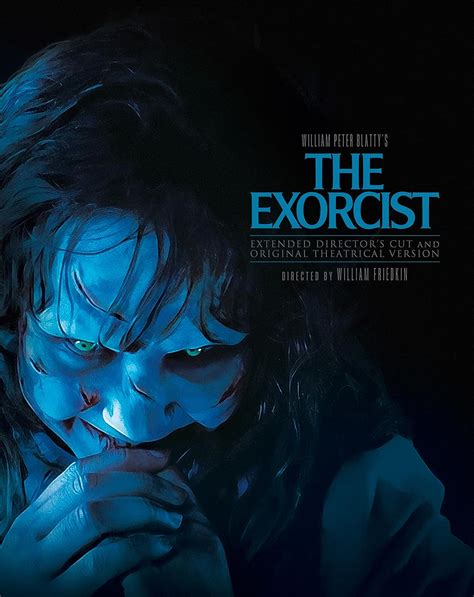
The Exorcist film poster.
Since the early 1990s, Metallica guitarist Kirk Hammett has used several guitars featuring Ouija board graphics on the body of the guitar itself. The British singer Morrissey released a controversial single titled "Ouija Board, Ouija Board" in 1989.