Ego death, in psychoanalysis, mysticism, and some religions, refers to the disappearance of an individual’s sense of self, or the removal of one’s perception of oneself as an entity separate from one’s social or physical environment.
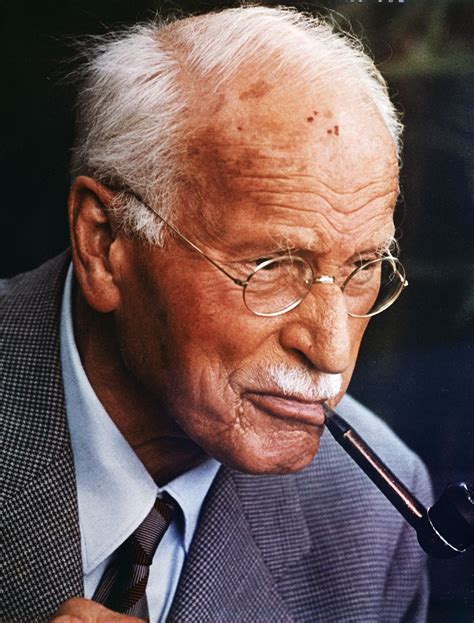
Carl Jung
It is a phenomenon also known as ego dissolution, which can be experienced through various means including psychedelic drugs.
Historical and Religious Contexts
Ego death as a practice can be traced to early shamanistic, mystical, and religious rites in which subjects sought ego death as a way of communion with the universe or with God. Such unity was thought to be realized in prolonged meditation or religious ecstasy-exemplified in the latter case by St. Teresa of Ávila (1515-82), according to some interpretations of her Christian mysticism.
Ego death is also associated with Zen Buddhism, which emphasizes enlightenment, or unity with the Buddha, as practiced in dedicated meditation. In addition, it is associated with Muslim Sufism, specifically the state of fana, or the complete annihilation of the self in preparation for union with God.
Read also: Dreams About Losing Teeth
Ego Death and Psychedelic Substances
Since the mid-20th century, ego death has frequently been referred to as a consequence of the use of psychedelic drugs such as psilocybin and LSD (lysergic acid diethylamide).
The best-known early exploration of the relationship between ego death and psychedelic substances in the West is The Psychedelic Experience: A Manual Based on the Tibetan Book of the Dead (1964) by the American psychologists Timothy Leary, Ralph Metzner, and Richard Alpert. The Psychedelic Experience openly borrows from the Tibetan Book of the Dead (the Bardo Thödol) as it breaks down the components of a “trip” (i.e., a hallucinogenic experience induced by a psychedelic drug). According to the authors, it is during the trip’s first step-the “First Bardo”-that ego death is achieved and the psyche can thus be reborn.
The pioneering research of Leary and his colleagues found further scientific footing in the work of the Czech-born psychiatrist Stanislav Grof, who argued for the existence of additional levels of the unconscious that are not detectable by means of traditional psychotherapeutic methods but that can be revealed through the use of psychedelics or specific forms of breath work. Grof identified ego death as a level of the unconscious associated with the perinatal experience of the human fetus as it is expelled from the womb and pushed through the birth canal immediately prior to birth.
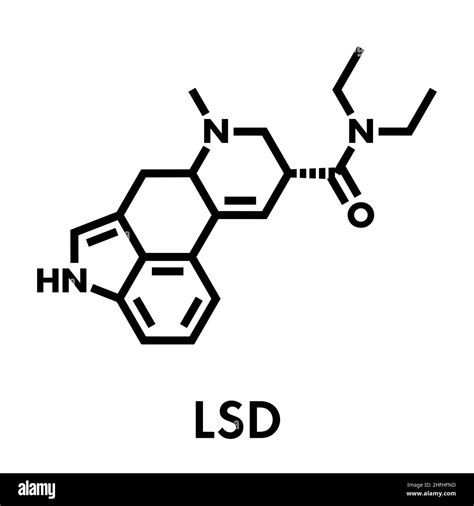
LSD molecule
What's an ego death? (Jungian psychology) - Jordan Peterson
Psychological Perspectives
Ego death was first defined in psychological terms by the Swiss psychoanalyst Carl Jung. In The Archetypes and the Collective Unconscious (1959; 2nd ed., 1968), Jung characterized ego death (which he referred to as “psychic death”) as a fundamental reordering of the psyche with the liberating potential to reset human consciousness so that it might better align with the “natural” self.
Read also: Spiritual Perspective: Death Dreams
To achieve the transcendence promised by psychic death, an individual must reconcile conflicting archetypes (primordial images and ideas that form part of the collective unconscious of humankind), a process that can occur only during a period of intense suffering.
Modern Research and Implications
More-recent research has grounded the causes and effects of ego death in the physical topography of the brain. Since the 1960s, prominent psychologists, social critics, and spiritual practitioners have raised concerns and doubts regarding whether such experiences as ego death can or should be the result of, or be reduced to, pharmacology and brain chemistry. Some have regarded psychedelics and other such technologies as being, at best, a means for experiencing an analog of ego death, awakening one to the possibility of authentic enlightenment. In that role, it is argued, they may initially help motivate and inform long-term regular spiritual practice, such as daily meditation and compassionate service to others, but they cannot substitute for the realization of ego death that can come only through that practice.
All are examples of a phenomenon known as ego dissolution, which can also be experienced through the use of psychedelic drugs.
Binghamton University Distinguished Professor of Psychology Steven Jay Lynn, Associate Professor of Psychology Richard E. Mattson, and clinical psychology doctoral candidates Fiona G. Sleight and Charlie W. In their article, “Cross-Validation of the Ego Dissolution Scale: Implications for Studying Psychedelics,” they connect ego dissolution to a network of other variables related to the self, personality, and everyday experiences.
There has been a renewed interest in psychedelics in recent years for the treatment of complex conditions, such as post-traumatic stress disorder, addiction, major depression, and anxiety related to the end of life. Ego dissolution can potentially be a vehicle for growth in these cases through increasing psychological insight and flexibility, although it also carries the risk of negative consequences.
Read also: Death Date Numerology
It’s a new area of research, Sleight said, and questions remain about whether some people are naturally disposed to these states of consciousness.
“Flow states arise when we are absorbed in an enjoyable and attention-engaging activity; think of reading a good book, completing an assignment you are immersed in or playing a sport you love,” Sleight explained. In ordinary consciousness, we experience ourselves completing actions, feeling emotions or thinking thoughts. That experience can be profound and positive, fostering a sense of unity with other human beings, nature and the universe.
“Our scale can be described in three parts: A total scale score and subscale scores we called ego loss and unity,” McDonald explained. Ego loss consists of negative experiences such as depersonalization, detachment from reality and dissociation, and even psychosis, while unity carries a mystical sense of oneness with a larger whole, he explained.
Unity experiences are associated with mindfulness, positive emotions and an extraverted personality, which naturally seeks connections with others.
The researchers also explored variables associated with ego dissolution. A tendency to be mindful in everyday life, for example, was negatively related to ego loss, but positively associated with unity. Similarly, sleep problems and disruptions - which include sleep apnea, insomnia and narcolepsy - were also correlated with ego dissolution and ego loss in particular.
Individuals who score high on a trait known as “transliminality” are also more apt to experience ego dissolution. Being highly sensitive individuals who are acutely aware of their thoughts, emotions and perceptions, as well as subtle changes in the environment, they are also more likely to daydream, endorse paranormal beliefs, and experience altered states of consciousness.
“One of the reasons why we developed our scale was to answer such questions in future studies, which are largely unexplored territory,” Sleight said.
Cautions and Considerations
In psychedelic spaces, the term ego death gets tossed around a lot. It’s often described as a kind of mystical dissolving-where your sense of self fades away and you’re left floating in something vast, infinite, and beyond words. For many, this experience is sought after. It’s seen as a spiritual awakening, a shortcut to enlightenment, or proof of having transcended the small self.
And sometimes, it really is profound. But like most things that touch the soul, it’s also complex-and it comes with risks we don’t often talk about enough.
As a depth psychotherapist and psychedelic integration therapist, I hold space for people after these kinds of experiences. Some return from ego death feeling awe-struck and alive. Others return feeling fragmented, disoriented, or unsure how to make sense of what just happened.
Dissolving the ego can open doors, yes-but without proper grounding, it can also leave us unmoored.
| Aspect | Description |
|---|---|
| Ego Loss | Negative experiences such as depersonalization, detachment from reality, dissociation, and psychosis. |
| Unity | A mystical sense of oneness with a larger whole, associated with mindfulness, positive emotions, and an extraverted personality. |
The Role of the Ego in Psychological Health
Unlike Eastern traditions that seek to dissolve the ego entirely, Carl Jung saw the ego as a necessary structure-one that must be refined, not destroyed.
Psychedelics, particularly substances like psilocybin, LSD, and DMT, can temporarily dissolve the ego, but without the necessary foundation and groundwork, this dissolution may not lead to true psychological growth.
Ego death can be seen as a forced confrontation with the unconscious. Jungian theory suggests that this encounter should be gradual and conscious, allowing the individual to integrate repressed fears, desires, and unresolved traumas-rather than being overwhelmed by them. When ego dissolution occurs too suddenly, the psyche may not be prepared to handle what surfaces, leading to severe destabilization.
The Protective Function of the Ego
We often hear about the ego as something bad-something to get rid of. But that’s not how I see it. And it’s not how Jung saw it either.
Your ego is the part of you that organizes your sense of identity. It helps you get dressed in the morning, hold boundaries, and navigate everyday life. It’s not the enemy. It’s not meant to be destroyed. What often does need to happen is softening the grip of an overprotective ego-especially when it’s built on fear, trauma, or old survival strategies that no longer serve you.
Psychedelics can dissolve the ego temporarily, giving us a glimpse of what lies beyond it. But if we haven’t done the foundational work-if we haven’t met the wounded parts of ourselves, or built a sense of inner safety-that dissolution can feel more like falling apart than waking up.
Potential Pitfalls of Rapid Ego Death
Some of the most destabilizing experiences I’ve witnessed in integration work come from people who had beautiful intentions, but weren’t prepared for what surfaced.
Here are a few things I often explore with clients post-journey:
- Unfiltered Shadow Material
Psychedelics can tear open the veil between the conscious and unconscious. Suddenly, long-buried fears, shame, grief, or trauma can flood in all at once. This isn’t always a sign that something’s gone wrong-it’s just that the psyche needs time and support to make meaning of what it reveals. Without that, people can spiral into anxiety, paranoia, or emotional overwhelm.
- False Enlightenment + Spiritual Bypassing
Having an ego death experience doesn’t mean we’re suddenly enlightened. It might be a glimpse of oneness, yes-but real growth is measured in how we live afterward. Sometimes, people return with a sense of spiritual superiority or detachment that actually distances them from others. Integration asks us to stay humble, to stay connected to our humanity, and to keep doing the inner work.
- Losing the Ground Beneath Us
The ego has a protective function. When it gets stripped away too quickly, we can feel untethered-like we don’t know who we are or what’s real. This can lead to dissociation, depersonalization, or even manic states. That’s why I believe that psychedelic experiences should be approached with great care, reverence, and ongoing support.
Psychedelics as Tools, Not Shortcuts
Psychedelics can open powerful doors. They can help us access buried truths, reconnect with the sacred, and feel more deeply alive. But they’re not magic pills. And they’re definitely not substitutes for the long, soulful journey of healing and self-discovery.
In my view, true transformation happens through integration-the slow, tender process of weaving insight into your daily life. Of tending to what was revealed. Of learning how to stay with the parts of yourself that are scared, skeptical, or still unsure.
Depth psychotherapy, dreamwork, inner child work, and active imagination are all tools that can help you make sense of what emerges. And more importantly-they help you build the inner structure needed to hold what you’ve seen.
A More Balanced Approach
You don’t need to chase ego death to be transformed. In fact, some of the most beautiful changes I witness in therapy happen through softening-not dissolving. Through becoming more human, not less. Through reclaiming lost parts of the self, not transcending them.
Integration
Those seeking self-transcendence through psychedelics should do so with caution, proper preparation, and an understanding that true growth comes not from the destruction of the ego, but from its evolution.