When it comes to fire safety, prevention starts with awareness-and that’s where fire safety signs and meanings play a critical role. These signs communicate important information that can save lives during emergencies. Fire safety signs and meanings are designed to guide, warn, and instruct people during a fire emergency. Fire safety signs are vital for maintaining a safe and compliant environment. Understanding fire safety signs and meanings is essential for preventing fire-related accidents and ensuring quick, safe responses during emergencies. You can see fire safety signs in buildings, workplaces and many public areas.
If you have a role in fire safety within your organisation or setting, such as being a nominated fire warden or the designated fire safety responsible person, this article will provide valuable information to help you fulfil your duties effectively with regards to fire safety signage. It explains the different types of fire safety sign and meanings and offers more detailed information about their colors, shapes, text, graphics and purposes.
We’ll also explore the legal responsibilities workplaces have regarding fire safety signage, including who is accountable for maintaining them and how they contribute to overall workplace safety.
Fire safety symbols play an important role in keeping buildings and workplaces safe. These symbols offer clear, easy-to-understand instructions about fire safety. They guide people on how to react in emergencies.
In the confusion of a fire emergency, visibility and understanding are everything. Not everyone is familiar with your facility layout. Installing fire safety symbols is often a legal requirement under OSHA and local fire codes.
Read also: Importance of Fire Sprinkler Room Signs
Visible Safety Signs: Fire safety signs must be easy for you to see and understand. In order to help people see clearly in the dark, fire signs must stay visible even when the power goes out. Signs must be placed at a good height so you don’t miss them. If they’re on walls, they should be about 2 meters from the floor. You need to add text along with images when needed to make signs easier for everyone to understand. This helps people know exactly what to do, even if they’re unsure of the symbol.
Even the best signs lose their impact when misused. Always place signs at eye level and ensure they are well-lit, even during power outages.
Here are the main types of fire signages:
- The fire equipment symbols locate different fire safety equipment for emergency situations.
- The exit symbols give you clear directions in order to escape from the place as soon as possible.
- These types of symbols forbid you from doing something that can cause fire risks.
- These signages are commonly in yellow color that warns you about a specific thing or place.
- The purpose of mandatory signs is to tell you exactly what to do to keep yourself safe at that moment.
Understanding Fire Safety Sign Colors
Now you are wondering what these red, blue, green & yellow color fire safety signs mean, right?
- Red is globally accepted as the warning indicator. It is generally used to express danger & alarming conditions. And the red color safety signs are used to show the prohibition or restriction of something in that place. These signs are normally in circle shape with white background color. A black color picture is inside the red circle area with a red cross line.
- The blue color shows calmness and you need to follow its instructions without panic, known as “mandatory signs”. They usually appear with a blue background and a white symbol. These are also circular in shape and sometimes you also see text written on them.
- Green signs are also known as action signs because they tell you a lot about the safety actions.
- Because of the high visibility of yellow color, these symbols show safety warnings to avoid potential hazards. Some of them are text based and in rectangular shape.
Fire alarm signs are generally of red color because they show danger. When there’s a fire, a dangerous situation can spread quickly. That’s why fire safety signs are placed to guide you. They help you find the nearest exit without wasting time.
Read also: Fire, Water, Earth, Air: A Jungian Perspective
In addition to showing the way out, some signs warn you about dangers like flammable items.
So wherever you are, always pay attention to the signs around you. When a fire breaks out, different signs guide you, warn you or tell you what to do.
Directed Escape Route Signs: You also need signs to guide you all the way out. Therefore, escape route signs must be placed from start to finish. Directional Arrows: They point you to the safest and fastest way out. For example, if there are two hallways, a clear arrow helps you choose the correct one.
Categories of Fire Safety Signs
Fire safety signs fall into five different categories:
- Mandatory signs
- Safe condition signs
- Location of fire safety equipment signs
- Prohibition signs
- Warning signs
1. Mandatory Signs
Mandatory signs are characterised by a blue circle with white text or symbols. These signs communicate clear instructions that must be followed to ensure safety and compliance in various situations, including general operations and emergencies.
Read also: Safety Tips to Prevent Fires
Example: Fire door signs
A common mandatory sign is the fire door sign, which ensures that fire doors remain closed to help prevent the spread of flames and smoke during a fire. These signs often include specific instructions, such as ‘Fire door - keep shut’ or ‘Fire door - keep clear’ to reinforce proper usage. They should be prominently displayed near or on fire doors, ensuring visibility and adherence to safety protocols.
Example: Fire action signs
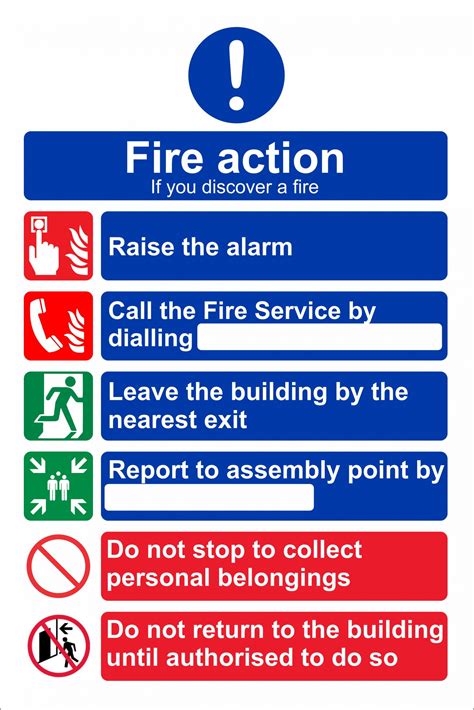
Under the Regulatory Reform (Fire Safety) Order 2005, it is a legal requirement for the ‘responsible person’ to ensure that all building occupants are informed of fire safety procedures. One effective way to meet this obligation is by displaying fire action signs throughout the premises.
Fire action signs provide clear, detailed, step-by-step instructions on what to do in the event of a fire. These signs typically include pictograms and text that indicate actions such as sounding the alarm, evacuation instructions and ‘do not’ information, for instance, do not use the lift or refrain from re-entering the building until you are authorised to do so.
While fire action signs are often blue and rectangular to denote instructions, they may also include red elements to highlight prohibition messages and green for information about safe exit routes. These notices are commonly placed next to fire alarm call points, near exits and in areas accessible to all occupants to ensure visibility and compliance with the regulations.
2. Safe Condition Signs
Safe condition signs are characterised by their green background with white text or symbols. These signs indicate a safe condition and provide guidance on how to reach safety during a fire emergency and play an important part in effectively evacuating occupants from the building.
Example: Fire exit, emergency assembly point or refuse point signs
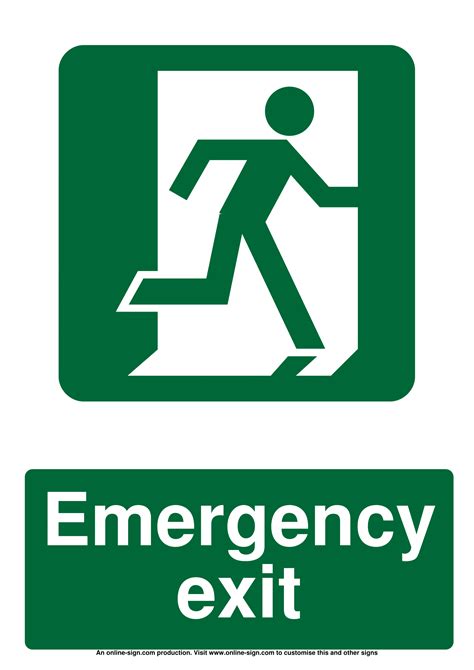
Fire exit signs must be compliant with BS 5499 and BS ISO EN 7010, and may read ‘fire exit’ or ‘exit’ but must feature a pictogram of the ‘walking man running through a rectangular doorway’ with an arrow to indicate direction to walk. These signs should be strategically placed along all designated escape routes, showing the quickest way to safety.
The final fire exit sign, positioned above the emergency exit door, should not include a directional arrow but should say ‘Fire Exit - Keep Clear’, ensuring it is easily identifiable as the exit point.
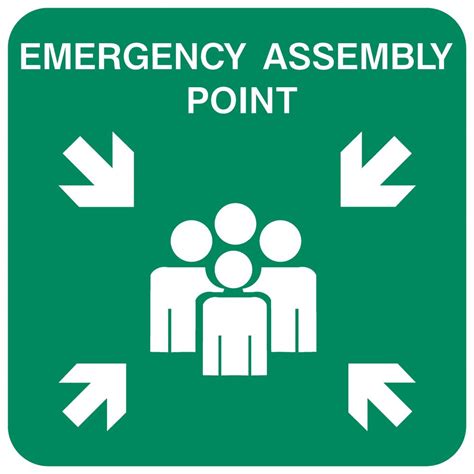
Assembly point signs mark safe gathering areas after evacuation, while refuge point signs indicate locations where disabled individuals can wait temporarily for assistance during an emergency.
3. Location of Fire Safety Equipment Signs
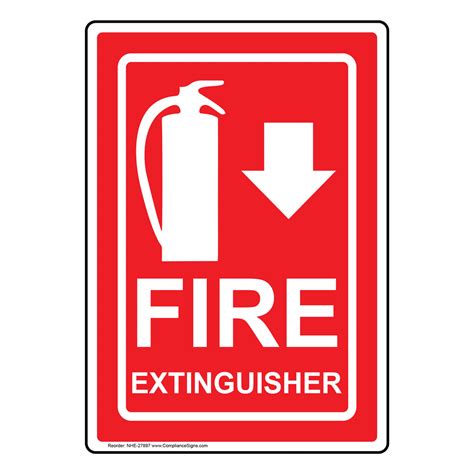
These signs are red rectangles with white pictograms or symbols and they may include text to specify the type of equipment they refer to. Their purpose is to guide individuals quickly to the necessary equipment, such as fire extinguishers, fire hoses, fire blankets or fire alarm call points.
For maximum effectiveness, these signs, along with the equipment they reference, must be prominently displayed and highly visible and play a role in ensuring swift and safe responses to fire emergencies.
Example: Fire extinguisher, fire hose reel and fire blanket signs, which mark the location and storage of fire safety equipment. A fire alarm call point sign is located at all fire alarm activation points.
According to OSHA, extinguishers must be clearly marked and easy for you to reach without anything blocking the way. For Class A fires, you should find one within 75 feet. Mounting also matters, lighter extinguishers should be hung no higher than 5 feet. If your building has more than one floor, there must be at least one extinguisher on each level.
4. Prohibition Signs
Prohibition signs are circular signs featuring a red border with a diagonal red line and a white background. Designed to function like a ‘stop’ symbol on a road, they indicate actions that are prohibited or not allowed in specific areas.
These signs rely on universally recognised pictograms to communicate their message, often without accompanying text, ensuring they are easily understood by everyone.
Example: No smoking signs or no naked flame signs. These signs prohibit smoking in designated areas and prevent activities like lighting matches or igniting open flames.
You have probably seen no smoking signs in areas like petrol stations or flammable storage spaces. These types of symbols forbid you from doing something that can cause fire risks.
5. Warning Signs
Warning signs are typically yellow triangles with a black border and a black symbol in the centre that represents the specific hazard. These signs are used to alert individuals to nearby dangers or hazards.
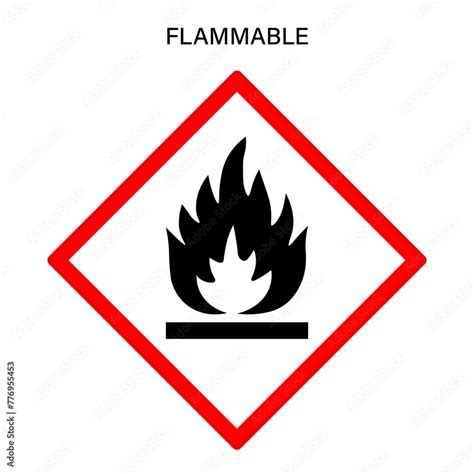
Example: Fire risk warning sign. These feature a flame symbol above a black horizontal line, indicating areas with a heightened fire risk. Some yellow warning signs also include supplementary information, such as directional arrows or text.
These signages are commonly in yellow color that warns you about a specific thing or place. Like if a location is highly flammable where explosive gases or liquids are present, you will see these signs there.
How to Carry out a Fire Risk Assessment
The Importance of Safety Symbols
As one of the widely used industry practices in preventing injuries and accidents, safety signs and symbols inform individuals of the presence of hazards, dangers, or risks associated with certain items or places.
According to the ISO standard on safety colors and signs ( ISO 3864-1:2011 ),“there is a need to standardize a system of giving safety information that relies as little as possible on the use of words to achieve understanding.”
Safety signs and symbols are used as safety communication tools-they help send clear messages, instructions, and warnings without the use of too many words. They speed up the level of understanding of individuals, and are useful especially in scenarios where a quick response is needed.
With the use of visual aids, safety signs and symbols reduce the risk of accidents and create awareness on hazards present in specific areas or materials.
Legal Obligations for Fire Safety Signs
If you are the ‘responsible person’ for fire safety, you are required under the Regulatory Reform (Fire Safety) Order 2005 (RRFSO) to conduct fire risk assessments and implement appropriate fire safety measures. In accordance with the RRFSO, fire safety signage must also be used.
It also states that non-automatic firefighting equipment must be clearly indicated by suitable fire safety signs and emergency routes and exits must also be marked with the appropriate signage.
Employers must provide employees with information and instructions on fire safety procedures and this is normally done through relevant signs to identify danger areas and communicate procedures effectively.
All fire safety facilities, equipment and signage must be maintained in good working order to ensure they remain effective over time.
Under the Health and Safety (Safety Signs and Signals) Regulations 1996, safety signage must adhere to standardised formats to ensure consistency and clarity in conveying essential safety information.
Employers, landlords and building owners are responsible for displaying the signs in the correct locations as outlined in these regulations. The signs must be visible, legible and strategically placed to effectively communicate risks and emergency procedures to building occupants.
The legal obligations under the Fire Safety Order 2005 are the responsibility of the ‘responsible person’.
ISO 7010 is an International Organization for Standardization technical standard for graphical hazard symbols on hazard and safety signs, including those indicating emergency exits. The ISO standard provides a registered number for pictograms that have officially been made part of the ISO 7010 standard.
GHS Pictograms
Aside from the above-mentioned safety signs and symbols, there are labels that are specifically or are mostly used for identifying potential chemical hazards called GHS pictograms.
tags: #fire #protection #signs