In the Bible, frogs are primarily mentioned in the context of the plagues of Egypt, serving as a symbol of divine judgment and a demonstration of God's power over creation. However, frogs are also mentioned in the New Testament, specifically in the book of Revelation, where they are associated with demonic spirits.
Let's leap into the biblical meaning of frogs-most notably in Exodus and Revelation-and explore what God wants us to learn from them. Whether literal or symbolic, frogs play a powerful role in revealing God’s power, His wrath, and His ultimate plan for victory.
What do frogs mean in the Bible?
Frogs in the Old Testament
The mention of this reptile in the Old Testament is confined to the passage in Exodus in which the plague of frogs is described, and to Psalms 78:45; 105:30. The references in Psalms, as well as in Exodus, are to the plague of frogs.
The word tsephardea` probably referred both to frogs and to toads.
Exodus and the Plague of Frogs
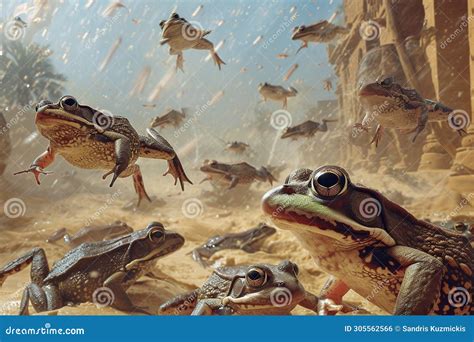
The most notable reference to frogs is found in the book of Exodus, where they are the second of the ten plagues that God inflicts upon Egypt to compel Pharaoh to release the Israelites from bondage. The account of the plague of frogs is detailed in Exodus 8:1-15.
Read also: Understanding anemia spiritually
God commands Moses to go to Pharaoh and demand the release of the Israelites. When Pharaoh refuses, God instructs Moses to stretch out his hand over the waters of Egypt, causing frogs to come up and cover the land.
The Berean Standard Bible describes this event as follows:
"So Aaron stretched out his hand over the waters of Egypt, and the frogs came up and covered the land of Egypt." (Exodus 8:6)
The frogs invaded Egyptian homes, bedrooms, and even their kitchens, becoming a source of great distress. Pharaoh, overwhelmed by the nuisance, pleads with Moses and Aaron to pray to the Lord to remove the frogs, promising to let the Israelites go.
Moses agrees, and the frogs die, leaving the land reeking with their decaying bodies. Despite this, Pharaoh hardens his heart and refuses to let the Israelites go, setting the stage for further plagues.
Read also: Light Blue: Calmness and Healing
Pharaoh’s heart was hardened, and despite the discomfort of the frogs, he refused to listen. Even when relief was offered, he delayed it: "Tomorrow,” Pharaoh said. Why tomorrow? Why not now? That’s the irony of sin-it makes us choose delay over deliverance.
Lesson: Don’t wait until tomorrow to obey God. The longer we delay, the more we suffer.
Symbolism and Significance in Exodus
In the biblical narrative, frogs symbolize uncleanliness and chaos, disrupting the order of Egyptian life and demonstrating the impotence of Egypt's gods compared to the God of Israel. The Egyptians revered the frog-headed goddess Heqet, associated with fertility and childbirth. The inundation of frogs can be seen as a direct challenge to this deity, showcasing the supremacy of the God of Israel over the Egyptian pantheon.
This wasn’t just a minor inconvenience. Frogs came from the Nile and infested every part of Egyptian life-houses, beds, kitchens, and even ovens. Imagine trying to bake bread only to find frogs crawling in the dough!
But what’s more significant is why God sent frogs. They weren’t random. By sending frogs in abundance, God mocked Egypt’s false gods and demonstrated His supremacy. What the Egyptians revered, God used as a judgment.
Read also: Explained: Spiritual Blessings
“Against all the gods of Egypt I will execute judgment: I am the Lord.” - Exodus 12:12 (NKJV)
Spiritual Lesson: God will not tolerate idolatry. What we elevate in our lives above Him-whether comfort, wealth, or even family-can become the very thing He uses to humble us.
God used frogs in Exodus to prove His control over creation. Pharaoh’s magicians imitated the plague (Exodus 8:7), but they couldn’t remove the frogs. Only God could.
“Pray to the Lord to take the frogs away… and I will let your people go.” - Exodus 8:8
Lesson: Even when evil seems to match God’s miracles, only God has full authority to give or remove judgment.
Frogs in the New Testament
In the New Testament this word occurs only in Revelation 16:13, where it is referred to as a symbol of uncleanness.
Frogs in the Book of Revelation
Frogs are also mentioned in the New Testament, specifically in the book of Revelation, where they are associated with demonic spirits. Revelation 16:13-14 states:
"And I saw three unclean spirits that looked like frogs coming out of the mouths of the dragon, the beast, and the false prophet. These are demonic spirits that perform signs and go out to all the kings of the earth to assemble them for battle on the great day of God the Almighty."
In this apocalyptic context, frogs symbolize deceit and the gathering of forces opposed to God, further emphasizing their negative connotations within the biblical framework. They reappear again in the end-times vision of Revelation-and this time, they're even more terrifying.
“Then I saw three impure spirits that looked like frogs; they came out of the mouth of the dragon, out of the mouth of the beast and out of the mouth of the false prophet.” - Revelation 16:13 (NIV)
These aren’t literal frogs hopping around the tribulation period. They are demonic spirits, described as frogs, spreading deception and gathering the kings of the world for battle against God in the final war at Armageddon.
The imagery is chilling. Frogs, with their croaking and slimy nature, are used to represent spiritual uncleanness and manipulation.
“They are demonic spirits that perform signs, and they go out to the kings of the whole world, to gather them for the battle on the great day of God Almighty.” - Revelation 16:14
Spiritual Lesson: Frogs remind us to be alert to deceptive spirits. Just as frogs invaded Egypt, false teachings and demonic lies will try to invade the Church and our hearts.

Cultural and Theological Implications
The presence of frogs in the biblical text serves as a reminder of God's sovereignty and the futility of opposing His will. The plagues, including the plague of frogs, illustrate the consequences of hard-heartedness and disobedience to God. They also highlight the theme of deliverance, as God uses these miraculous signs to liberate His people from slavery.
Frogs and Unclean Spirits - Levitical Symbolism
Frogs are considered unclean animals in the broader context of Old Testament purity laws. Though not explicitly mentioned in Leviticus 11, amphibians in general (such as crawling creatures) were forbidden to be eaten and were symbols of impurity.
Their association with marshy, dark places, and nocturnal activity connects them spiritually with hidden sin and the unclean works of darkness.
“Have nothing to do with the fruitless deeds of darkness, but rather expose them.” - Ephesians 5:11
Spiritual Lesson: Frogs symbolize the importance of staying spiritually clean and not indulging in the murky waters of sin.
Are Frogs Ever Used Positively in Scripture?
Interestingly, there’s no positive mention of frogs in the Bible. Unlike lambs, eagles, or even ants (Proverbs 6:6), frogs are consistently associated with plagues, deception, and uncleanness.
That tells us something: Not every creature has to have a positive symbolism to teach a powerful lesson. Frogs are used as vessels of warning-a divine wake-up call that rebellion and deception have real consequences.
What Frogs Teach Us
In summary, frogs in the Bible are emblematic of divine judgment, chaos, and spiritual warfare, serving as a testament to God's power and the ultimate triumph of His purposes.
| Aspect | Symbolism | Biblical Reference |
|---|---|---|
| Plague of Frogs | Divine judgment, challenge to false gods | Exodus 8:1-15 |
| Demonic Spirits | Deceit, gathering of forces against God | Revelation 16:13-14 |
| Uncleanliness | Impurity, association with darkness | Leviticus 11, Ephesians 5:11 |