Saraswati Puja holds immense importance in the Hindu religion. In the vibrant palette of Indian festivals, Saraswati Puja shines as a celebration of knowledge, wisdom, music, and the arts. For centuries, this occasion has woven together devotees and the ancient myths surrounding Goddess Saraswati. It's a time when books and instruments are placed at her feet, seeking her blessings for success in academic and creative pursuits.
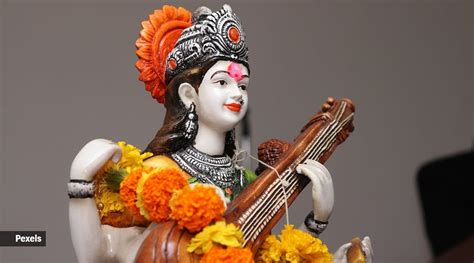
But why Saraswati Puja is celebrated with such fervour across India? What is the deeper mythological significance behind the rituals and traditions associated with this festival?
The Essence of Saraswati
One of the most worshipped goddesses of India, Maa Saraswati, is said to be the ‘Devi of knowledge and intelligence.’ According to Hindu Mythology, Goddess Saraswati is believed to be the daughter of Lord Brahma. She is one of the most revered deities in Hinduism and is known as the Goddess of knowledge, music, arts, and wisdom.
In Hinduism, Saraswati is the goddess of learning, music, the arts, and creativity. She is the patron goddess of education. She is linked to Brahma, the god of creation, either as his consort or creation. As his consort, she represents his Shakti or creative power.
Goddess Saraswati has an important place in Hinduism. She bestows gifts that are more valuable than wealth. Wisdom, knowledge, learning, and creativity are much prized by discerning Hindus. A man may lose his wealth, but knowledge is never lost, and can bring not only fame and riches, but spiritual wealth. Hence, Saraswati Pooja is an important festival in the country.
Read also: The Significance of Spiritual Birthdays
Historical and Mythological Significance
The history of Saraswati Puja is associated with Brahma Vaivarta Purana. The worship of Goddess Saraswati can be traced back to the Vedic era when she was considered a river goddess associated with fertility and nourishment. It was believed that the river Saraswati, which was supposed to be the cradle of civilization in ancient India, provided the people with nutrition, knowledge, and wisdom.
Later, in the Puranas (ancient Hindu texts), Saraswati was elevated to the status of a goddess and was associated with learning, knowledge, and wisdom - enhancing the importance of Basant Panchmi. In another version of the story, it is the same day Lord Brahma created the Goddess, Saraswati. Hence, it is celebrated as her birthday - telling us the significance of Saraswati Puja for kids on Basant Panchmi.
The Connection between Saraswati Puja and Basant Panchami
Saraswati Puja and Basant Panchami are intricately linked. Basant Panchami, which literally means the "fifth day of spring," signals the arrival of the new season. It's believed that on this day, Saraswati descends to earth to bless her devotees with knowledge and creativity.
Basant Panchami is a Hindu festival that welcomes spring. It honors Saraswati, the goddess of knowledge and arts. Vasant Panchami is celebrated on the fifth day of Magha month. People celebrate by worshiping Goddess Saraswati in Saraswati Puja. They clean and decorate their homes.
In Bengal, Saraswati Puja is synonymous with Basant Panchami. The festival's date is determined by the Hindu lunar calendar and usually falls in late January or early February.
Read also: Birthday Insights: Aquarius
Saraswati Puja Importance in Different Regions
Across India, Saraswati Puja is celebrated with great enthusiasm, albeit with regional variations that add to its cultural richness.
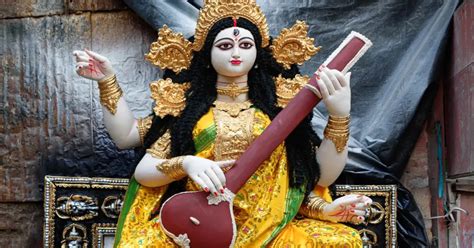
- West Bengal: In the eastern state of West Bengal, for instance, the festival is a grand affair. Schools and colleges remain closed as students earnestly participate in the rituals. The goddess's idol is adorned in a pristine white saree, with books and musical instruments placed at her feet, emphasising the Saraswati Puja importance in the educational landscape.
- Odisha and Bihar: The states of Odisha and Bihar also celebrate with fervour. Here, 'Aksharabhyasam', the ceremony initiating children into learning, holds special significance. Temples and homes are decked up, and special prayers are offered to invoke Saraswati's blessings, underscoring the Saraswati Puja importance as a time for academic and spiritual growth.
- Southern India: In southern India, Saraswati Puja is often a part of the larger Navratri celebrations. 'Ayudha Puja', the practice of worshiping one's tools and instruments, is common in Tamil Nadu and Karnataka.
- Assam: In Assam, the 'Shree Panchami' festivities are marked by traditional music and dance performances, community gatherings, and intricate decorations in homes and temples.
These celebrations highlight the Saraswati Puja importance as a celebration of wisdom and creativity across the nation.
Significance of Saraswati Puja in Education and Arts
At its core, Saraswati Puja is a celebration of education and the arts. It recognises the transformative power of knowledge and creativity in shaping individuals and society at large. By honouring Goddess Saraswati, the festival reaffirms the value of intellectual curiosity, lifelong learning, and artistic expression.
For students, the festival is an opportunity to recommit to their academic pursuits. Many seek the goddess's blessings by placing their books and stationery at her feet. This symbolic gesture serves as a reminder that learning is not just a means to an end, but a sacred journey of self-discovery and growth.
In the realm of arts, Saraswati Puja holds immense significance. Artists, musicians, dancers, and writers invoke the goddess's blessings to nurture their creative spark. The festival recognises art as a medium of spiritual expression and a pathway to enlightenment. By celebrating the arts, it encourages society to value and support creative endeavours.
Read also: The Meticulous Maiden
The importance of Basant Panchami includes the arrival of the spring season in India. The importance of Basant Panchami is directly related to the belief that worshipping the Goddess on this day can help one better understand various subjects and enhance one’s intellectual abilities. Saraswati Puja importance promotes cultural values. It also signifies the importance of education, music, and the arts. Hence, Basant Panjami is celebrated in schools, colleges, and other educational institutions to encourage students towards education and arts.
Traditional Rituals of Saraswati Puja in Bengal
Saraswati Puja in Bengal is marked by a series of traditional rituals that have been passed down through generations. These rituals, steeped in cultural and spiritual significance, offer a glimpse into the deep reverence that the people of Bengal have for the goddess of knowledge and wisdom.
The Main Rituals
The saraswati puja rituals begin with the ritual bathing of the goddess's idol. The idol, usually made of clay, is then dressed in a saree and adorned with flowers, sandalwood paste, and jewellery. Devotees offer prayers to the goddess, seeking her blessings for knowledge and wisdom. These rituals are performed with utmost devotion, as they are believed to invite the goddess’s divine presence into the hearts of the worshippers.
One of the key Saraswati Puja rituals is the offering of anjali-a handful of flowers, usually yellow in colour. The sacred Palash flower, also known as the "flame of the forest," is an essential part of this offering. Its vibrant red and orange hues symbolise the arrival of spring and add a burst of colour to the day’s ceremonies. As families gather to perform these Saraswati Puja rituals, the air is filled with a sense of joy and anticipation, reflecting both the spiritual and cultural significance of the festival.
Preparation for the Puja
Preparations for Saraswati Puja begin days in advance. Homes and puja pandals are cleaned and decorated with colourful alpana designs. These intricate patterns, drawn with rice paste on the floor, are believed to welcome the goddess.
On the day of the puja, devotees wake up early and take a holy bath. They wear new clothes, usually in shades of yellow, and prepare traditional delicacies like khichuri, a comforting blend of rice and lentils.
The Role of Music and Art in Saraswati Puja
As the goddess of music and art, Saraswati is revered by artists and musicians across Bengal. On the day of the puja, classical music performances and dance recitals are organised in her honour.
Many artists create special paintings and sculptures depicting the goddess in her various forms. These artworks are displayed in puja pandals and exhibitions, drawing art enthusiasts from far and wide.
Post-Puja Traditions
Once the puja concludes, the idol of Saraswati is taken for immersion in a river or a water body. This ritual symbolises the goddess's return to her celestial abode. Devotees bid her farewell with heavy hearts, hoping for her blessings to continue throughout the year.
The immersion ceremony is a community affair, with people gathering on the banks of rivers to witness the spectacle. The air is filled with the chants of "Bolo Saraswati Mata Ki Jai!" (Hail Mother Saraswati!), as the idols are gently lowered into the water.
After the immersion, people exchange sweets and savories as a mark of goodwill.
Sacred Rituals and Offerings
As you get ready for Vasant Panchami, it’s key to know the Sacred rituals of Saraswati Puja. These rituals are a big part of the festival. Doing them with love and care can bring many good things. The day starts with morning rituals, which include cleaning ceremonies and prayers to call on the goddess. By taking part in these Sacred rituals and Saraswati Puja rituals, you can really feel Vasant Panchami’s true spirit.
During Saraswati Puja, people make special offerings to the goddess. These offerings are key parts of the puja. The offerings are a way to connect with the goddess. They help us reflect on knowledge, art, and culture.
Flowers are very important in Saraswati Puja. Each flower has its own meaning. Roses stand for love and devotion. You can give these flowers to the goddess.
Food offerings, or bhog, are key in Saraswati Puja. People give sweet and savory dishes to the goddess. These offerings nourish the goddess and seek her blessings.
Devotees also give special items to the goddess. This includes books, musical instruments, and art supplies. By making these offerings, we connect with the goddess. We seek her blessings.
Spiritual and Psychological Significance
The moon, symbolizing emotions, intuition, and the subconscious mind, plays a vital role in spiritual traditions. In yogic and Vedic traditions, the Chandra Nadi (lunar energy channel) governs the intuitive and subconscious mind. Vasant Panchami symbolizes the activation of dormant mental faculties. The waxing moon and the reverence for Saraswati help activate the Back-Wisdom Chakras, bringing subconscious insights into awareness.
Vasant Panchami offers a unique opportunity to harmonize the mind, body, and soul through practices that awaken wisdom and creativity. The moon’s waxing phase provides an ideal energetic window for letting go of mental clutter and reprogramming the subconscious mind. Saraswati represents divine creativity. Spend time gazing at the waxing moon to synchronize the Chandra Nadi with intuitive wisdom.
Vasant Panchami brings deep spiritual benefits and blessings. These go beyond the festival itself. Honoring Goddess Saraswati connects you to divine energy. The festival is believed to bless you with better grades, more artistic skills, and personal growth. By embracing Vasant Panchami’s spiritual side, you connect with your inner self and the world. This leads to a life full of purpose and fulfillment.
How to Perform Saraswati Puja at Home
Usually, in Hinduism, you are free to worship god in any form or way you wish to. But knowing a generalised process helps better understand the vidhi or ritual. You can create a puja or worship area for your kids. They can sit there and meditate on the mantra. You can light an incense stick while praying. ‘Beej Mantra’ can be challenging to recite for younger kids. So you can use a more straightforward mantra to worship Goddess Saraswati.
Being disciplined and consistent in anything you do is essential. As said, children are reflections of their parents. Thus, the best way to teach your kids to pray is to do it yourself. Set an example for them. Make them sit with you while you pray.
Here are some general steps for performing Saraswati Puja at home:
- Place a clean white or yellow cloth on a wooden plank.
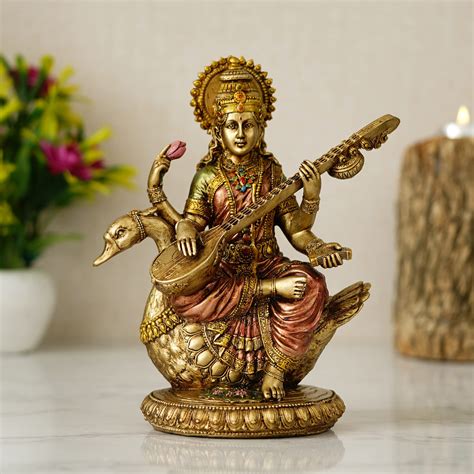
- Install a brass Saraswati Maa idol or picture of the goddess.
- Light a brass diya, incense, and offer fresh flowers (yellow marigolds and white lotus are favorites).
- Fruits, sweets like kesar halwa, and soaked gram are offered as prasad.
- On this day, students refrain from reading or writing until after the puja.
- Make an arti using camphor, ringing bells, while singing hymns.
The Veena: A Symbol of Balance
The veena in her hands is not just a musical instrument-it is a symbol of balance.
Take a moment to close your eyes and think for just a second. The beauty of Puja lies not just in the rituals but in the timeless values it imparts-purity of thought, harmony in action, and respect for learning.
This puja is a great opportunity to celebrate, whether you’re creating the brass Saraswati Maa idol at home, presiding over prayers in the school, or attending a celebration in your community.
Embracing Knowledge, Tradition, and Style this Saraswati Puja
Saraswati Puja is more than just a festival; it is a celebration of the very essence of human progress. In honouring the goddess of knowledge, we recognise the power of education, wisdom, and the arts in transforming lives and shaping our collective future.
As you immerse yourself in the festivities this year, take a moment to reflect on the profound significance of this occasion. Let Saraswati's blessings inspire you to embrace lifelong learning, harness your creative potential, and contribute to the world's collective wisdom.
So, here's to a joyous Saraswati Puja filled with learning, growth, and the blessings of the divine.
Future Date
In 2026, Vasant Panchami falls on Friday, January 23, 2026.
Table: Key Elements of Saraswati Puja
| Element | Significance |
|---|---|
| Goddess Saraswati | Deity of knowledge, music, arts, and wisdom |
| Basant Panchami | Festival marking the arrival of spring and Saraswati Puja |
| White or Yellow Colors | Represent purity, knowledge, and happiness |
| Offerings | Flowers, food, books, musical instruments, art supplies |
| Rituals | Prayers, mantra chanting, immersion of the idol |