Kundalini yoga is a dynamic blend of postures, conscious breathing, mantra, music, and meditation, which can bring you relaxation, self-healing, and elevation. It will balance body and mind, which will enable you to experience the clarity and beauty of your soul.
The Origins and Philosophy
“Kundalini” literally means “the curl of the lock of hair of the beloved.” This poetic metaphor alludes to the flow of energy and consciousness that exists within each of us and enables us to merge with - or “yoke” - the universal Self. Fusing individual and universal consciousness creates a divine union, called “yoga.” The Upanishads, dating back to the fifth century B.C., describe the kundalini, although the oral tradition reaches back even further into history.
Kundalini Yoga as taught by Yogi Bhajan is also known as the Yoga of Awareness; its focus is on self-awareness and delivering an experience of your highest consciousness. The technology of Kundalini Yoga as taught by Yogi Bhajan is a science of the mind and body, to elevate the spirit, which has no boundaries, no discrimination.
The primary objective is to awaken the full potential of human awareness in each individual; that is, recognize our awareness, refine that awareness, and expand that awareness to our unlimited Self. The focus of Kundalini Yoga as taught by Yogi Bhajan is on one’s personal experience and awareness through the practice of kriya and naad.
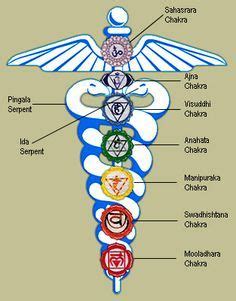
The goal is to awaken the kundalini in order to be able to call upon the full potential of the nervous and glandular systems and to balance the subtle system of chakras and meridians within the body. When energy moves freely through the chakras, it stimulates the mental, physical, and spiritual health of the being.
Read also: Best Books on Kundalini
Kundalini Yoga as taught by Yogi Bhajan is considered the most comprehensive of yoga traditions, combining meditation, mantra, physical exercises and breathing techniques; it is a Raj Yog, encompassing the eight limbs of yoga into a singular practice of excellence and ecstasy.
In this tradition, meditation is not considered separate from asana or yoga; it is integral to the practice.
Yogi Bhajan and the Spread of Kundalini Yoga
Yogi Bhajan (aka Siri Singh Sahib Bhai Sahib Harbhajan Singh Khalsa Yogiji) came to the United States in 1969 and founded a non-profit organization called 3HO that same year. Yogi Bhajan was the first to openly teach Kundalini Yoga in the East or the West.
Sant Hazare Singh declared Yogi Bhajan a Master of Kundalini Yoga at the age of 16 1/2. Kundalini Yoga was taught from Master to student for hundreds, perhaps thousands, of years and intersects with the lineage of the Sikh Masters such as Guru Nanak, Guru Ram Das and Guru Gobind Singh for the past 500 years.
Its sources include many other yoga Masters of the Northern Punjab region of India, as well as the unique contributions of the Gurus in the use of naad and Shabad Guru.
Read also: User Feedback: Spirio & SpirioStretch
Guru Nanak started the Udassi line through his son Baba Siri Chand, a Master who served and taught for more than 100 years. He taught to all existing lineages of that time and educated several of the Sikh Gurus in their youth.
The Kundalini Research Institute has certified more than 40,000 Kundalini Yoga Teachers around the world.
Yogi Bhajan believed that these techniques of physical wisdom belong to us all and that access to this wisdom is our birthright as human beings.
The Practice of Kundalini Yoga
Known for its transformative benefits, the practice of Kundalini Yoga builds physical strength and stamina and enhances cognitive function, emotional fitness, and spiritual connection. Kundalini Yoga offers a holistic technology that can be used by people of any belief and from all walks of life.
“The beauty of Kundalini Yoga is that if you can just physically sit there, fix the automatic rhythm of your pranayam (breath control), and add a creative naad (inner sound), your mind becomes focused and balanced. In one kriya you can immediately achieve a complete physical, mental, and spiritual balance.
In Kundalini Yoga the focus is on mantra, movement and the transformation of energy in your nervous and glandular systems. We practice kriyas - specific sequences of yoga postures, breath techniques, and meditations - to produce specific results. This could be something concrete, like vitality or better digestion, or something etheric like intuition or an open heart. Each Kundalini Yoga kriya is designed to be practiced as a complete yoga set for relaxation and rejuvenation of body, mind, and spirit.
Kundalini Yoga as taught by Yogi Bhajan does not rely on any one of these techniques per se, although we use many. Instead, it is the unique and tested syntax, within the structure of each kriya as shared by Yogi Bhajan, which provides steady, predictable progress and which leverages these basic functions of the body and the mind to create rapid, sustainable, personal growth and healing.
Kriyas are complete sets of exercises that are performed in the sequences given by the Master, Yogi Bhajan.
Kundalini Yoga as taught by Yogi Bhajan typically includes pranayam and meditation. Pranayam practices range from One Minute Breath, Breath of Fire, alternate nostril breathing, Dog Breath, Sitali Pranayam, and suspended breath techniques, to name a few. Meditations often involve movement or mantra, and generally have an eye focus (drishti) in addition to mudra (hand position) and asana (body posture).
Many Kundalini Yoga as taught by Yogi Bhajan® kriyas and meditations include mantra and chanting. One of the first signs of the awakening of the kundalini is a new awareness of the power of our words. You begin to meditate on and develop inner sounds using mantra and naad.
Kundalini Yoga was often mistaken for Mantra Yoga because of its frequent integration of sound in its kriyas and meditations. The use of mantra throughout the practice of Kundalini Yoga as taught by Yogi Bhajan® is very effective in attaining two particular goals of the practice-expansion of the Self and elevation of the spirit. Mantra also supports those new to meditation, who find silence and absolutely stillness very challenging. In this way it is a ‘beginner’s practice’ and can be used by anyone to attain clarity, balance and equanimity.
It’s efficiency and effectiveness-its power. Kundalini Yoga is quick. Because it’s a system built for the householder, the changes you want to affect in your life happen much more quickly with Kundalini Yoga as taught by Yogi Bhajan® than many other styles of yoga. It’s variety of techniques and meditations is enormous, allowing the instructor to tailor programs that support the individual and her goals. It’s a safe way to stimulate the body’s natural resources and become healthy, happy, and holy-in body, mind and spirit.
Beyond kriya and the traditional structure of a Kundalini Yoga as taught by Yogi Bhajan yoga class, the Teachings of Yogi Bhajan comprise a vast array of topics, which he called humanology: philosophy and Sikh Dharma, lifestyle teachings, communication, relationships and marriage, nutrition, hygiene, child-rearing, women’s and men’s teachings, meditation and mudra, Naad Yoga and mantra, numerology and much more.
I felt that people in the West needed the type of [yoga] system which could give them a positive realization and awareness in a short time. That system had to be strong enough and practical enough that any householder could practice it.
As one teacher described it, the practice works like a telephone. You dial in the type of healing you need and you receive it. Feeling depressed? There’s a kriya for that. Can’t sleep? Do this meditation. Want to call in prosperity or even straight-up cash? Try this mantra. For the first time in my life, there was an actual solution to every mental, emotional, relational, even financial struggle in my life. Kundalini seemed prescriptive. I wanted to share this magic with others.
Key Manuals for Practice
Several manuals offer guidance and sets of kriyas for those looking to deepen their practice:
- Infinity and Me: Includes kriyas for adjusting the navel, connecting physical and heavenly reality, expanding your inner self, and understanding the relationship between the pranic body and physical body.
- Owner's Manual for the Human Body: Offers yoga sets and meditations for healing and experiencing physical wisdom. Includes meditations for healing through the Chakras; Wake Up, Warm Up and Get Up; Self Renewal; and Self Healing.
- Reaching ME in Me: Contains 21 kriyas suitable for both beginners and experienced practitioners, focusing on self-reliance and connection to the Infinite.
- Self Experience: Shares 20 yoga sets and 15 Meditations to help you experience your highest Self.
- Self-Knowledge: Offers tools for self-directed growth, including 29 yoga sets, 8 Nine Minutes Max Meditations, and 3 Meditations to Unshackle the Infinite Mind.
Table: Key Elements of Kundalini Yoga as Taught by Yogi Bhajan
| Element | Description |
|---|---|
| Kriyas | Specific sequences of postures, breath techniques, and meditations for specific results. |
| Mantra | Use of sound to focus the mind, expand the Self, and elevate the spirit. |
| Pranayam | Breath control techniques to manage energy and balance the mind. |
| Meditation | Integral part of the practice, often involving movement, mantra, and specific eye focus. |
| Humanology | The Teachings of Yogi Bhajan comprise a vast array of topics: philosophy and Sikh Dharma, lifestyle teachings, communication, relationships and marriage, nutrition, hygiene, child-rearing, women’s and men’s teachings, meditation and mudra, Naad Yoga and mantra, numerology and much more. |
Kundalini yoga for beginners - expansion and elevation
Navigating Controversy and Maintaining Discernment
This year (2020) has been a disruptive year for so many, including the Kundalini Yoga as Taught By Yogi Bhajan (“KYatbYB”) community. It’s important to note the distinction because there are others who teach or write about “Kundalini Yoga” which is very different from what Yogi Bhajan taught.
In February, Pamela Dyson’s book, Premka: White Bird in a Golden Cage: My Life with Yogi Bhajan revealed some closely held secrets of her time as Secretary General to Yogi Bhajan. Her truth gave permission to many who’ve been silenced over the years and unleashed a massive unveiling of stories from hundreds revealing various types of abuse and other illegal activities that had taken place in the KYatbYB community since its inception, culminating in an investigation and report by The Olive Branch.
In addition, a 2013 paper written by Philippe Deslippe, “From Maharaj to Mahan Tantric: The Construction of Yogi Bhajan’s Kundalini Yoga,” resurfaced to this larger audience. It told a vastly different version of the origin story of Yogi Bhajan’s yoga, calling into question much of what he taught and preached.
The information sent shockwaves through the community, causing many people to struggle with how to move forward in light of the truth. For many, Yogi Bhajan WAS Kundalini Yoga so without him as the strong, reliable and trustworthy leader they’d believed him to be, they had nothing. Others chose not to believe the countless stories of the survivors and fervently committed their devotion to Bhajan and his teachings. Then there are others who believe the stories but continue teaching just as they’ve been taught, or by modifying it in their own way.
It’s important to point something out for those who haven’t gone through a KYatbYB teacher training. There is a belief held by many, my teachers included, that you must do everything exactly as Yogi Bhajan taught, to the word. The classes taught today are all exact replications of classes he taught at some point in his life that were recorded and preserved.
There’s a way you start class, end class, the Kriya is prescribed, as is what you wear and what music you are allowed to play. Even his lifestyle teachings beyond yoga, the ones that relate to what to eat, when to meditate, who to marry, how to parent and so on, are dogmatized to the level of any fundamentalist religion.
Bhajan died in 2004 and was revered like a saint at the yoga studio I attended. We practiced White Tantra Yoga, which was designed by Yogi Bhajan and required us to spend 8- or 10-hour days meditating or chanting while dressed in white, heads wrapped in turbans. He was said to lead us in our practice from beyond the grave.

There was even a specific and supposedly very powerful meditation we were told to practice while staring at an image of Yogi Bhajan for 15 minutes a day for 40 days. As a journalist and an agnostic woman raised without religion or spiritual dogma, I’m skeptical of any sort of promised outcome.
I wasn’t comfortable with the deification of Yogi Bhajan. When a group of people unquestioningly commit to a leader or ideology or both, it can be troublesome. Classic signs of a false guru include a charismatic leader who holds all of the power with little or zero accountability.
As I dove deeper into Kundalini yoga as a lifestyle during YTT, there were aspects of the practice that started to seem pretty odd and potentially controlling. I’m not saying that Yogi Bhajan had no wisdom to impart or that Kundalini is a cult. However, he has been accused of sexual, physical, spiritual, and financial abuse by several former followers.
In many ways, I felt vindicated after hearing this news. My teacher trainers would explain this away by saying that Yogi Bhajan was a “Saturn teacher,” alluding to his astrological sign as an explanation for his tough, moody, almost misanthropic style.
Our yoga practice can help us pause, reflect, and recognize manipulation and spiritual abuse as it occurs. The Sanskrit term viveka means “discernment” or “clear sight.” In Patanjali’s Yoga Sutras (2.26 - 2.27), viveka is described as a means to help us separate reality from illusion. The practice of yoga asks us to remain awake, thoughtful, and true to ourselves.
Ultimately, Patanjali taught continuous discriminative awareness as a means of liberation from suffering. Viveka can help us find and uproot avidya (ignorance) and is essential as we move through life. When practiced, it can help us discriminate between truth and untruth, skillful or unskillful action.
Today, I take a more balanced and measured approach to Kundalini yoga. I also no longer practice White Tantra Yoga. However, I haven’t thrown away my practice in its entirety. I still lean on the pranayama that I learned in YTT to help me shift my energy in times of stress or frustration.
Whereas Kundalini yoga as taught by Yogi Bhajan was incredibly rigid, the Kundalini yoga I now teach is more fluid and intuitive-I call it Kundalini-inspired yoga. I’ve learned to take what I love from the practice and the teacher.