Native American spirituality is interwoven through every aspect of life, and despite diversity between ritual, ceremony, and details of beliefs between the different groups (e.g. Pueblo Indians, Plains Indians, Northeast Woodland Tribes, etc), all share a core belief in The Great Spirit, animism, and the natural force in everything. For the North American Indians, spirituality is based on nature, ethics, morals, and the intrinsic interrelation between all things.
Shamanism is a spiritual practice and primal belief system which is common to many ancient peoples, including the Celts, the Sami, ancient Tibetans, and Native Americans. The word shaman is a Persian word meaning “pagan” and relates also to the Siberian Tungus word for “medicine man” - which also referred to exorcists in this language and culture.
A shaman is a spiritual practitioner who mediates between the spirit realm and the physical world. He or she interacts directly with the spirit world through altered states of consciousness. The shaman enters a trance to communicate with and direct spiritual energies for healing, information, or other influence in the physical world. During shamanic trance, shamans communicate with spirit guides (including spirits of the dead) to learn what they need to know so they can help heal the mind, body, or soul of their subject. They may also enter a trance to predict the future or even locate game for hunting.
Many tribal shamans were referred to by European settlers as “Medicine Man/Woman”- this suggested a dual capacity as a shaman and a priest/priestess, who used herbal remedies. In the tribes of the Pacific Northwest, including the Tlingit and the Haida, shamans inherited their position and performed the role of a physician, religious leader, and sometimes chief. These shamans entered their trance and were possessed by the spiritual being - they bore its name and dressed accordingly. Shamans never cut their hair.
Iroquois shamans, rather than becoming possessed by the spirit guide, controlled the spirit objectively. Kutenai shamans lived in separate lodges from the rest of their tribe, where they prayed and invoked spirits. Mojave shamans received their powers directly from chief deity Mastamho through dreaming. The Pueblo Indians of New Mexico and Arizona had the most highly developed priesthoods. Rain shamans prayed and fasted secretly to bring rain. Bow priests held ceremonies after a scalp had been taken to bring about rain. The Zuni had complex esoteric societies. Navajo shamans were the spiritual leaders and healers of their nation, providing medical assistance and spiritual guidance. They used ceremonial sand painting, on which the patient would sit for the healing power to be absorbed.
Read also: Deep Dive into UFO Tattoos
In many societies, healers or shamans function as intermediaries between the physical and spiritual world. Illness is thought to be caused by a loss of the soul from the body and the shaman’s role is enter that world and retrieve it so body and soul are whole again. The use of “spirit guides”, powerful plants or totemic animals assists the shaman in the spirit world.
The drum is the exclusive property and source of individual power for a shaman. Without it, he cannot perform his duties nor contact the spirit world. The drum is used by shamans of several peoples in Siberia. The beating of the drum allows the shaman to achieve an altered state of consciousness or to travel on a journey between the physical and spiritual worlds. Much fascination surrounds the role that the acoustics of the drum play to the shaman.
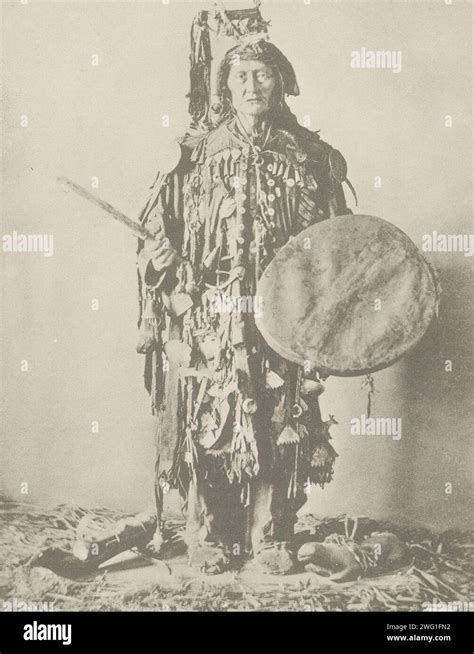
Tungus shaman of Russia
Shamans often say that they have been called through dreams or signs. However, some say their powers are inherited. Turner and colleagues mention a phenomenon called "shamanistic initiatory crisis", a rite of passage for shamans-to-be, commonly involving physical illness or psychological crisis. The wounded healer is an archetype for a shamanic trial and journey. This process is important to young shamans. They undergo a type of sickness that pushes them to the brink of death. The shaman crosses over to the underworld. The shaman must become sick to understand sickness.
Shamans have been conceptualized as those who are able to gain knowledge and power to heal in the spiritual world or dimension. Most shamans have dreams or visions that convey certain messages. Shamans may say that they have or have acquired many spirit guides, who they believe guide and direct them in their travels in the spirit world. These spirit guides are always thought to be present within the shaman, although others are said to encounter them only when the shaman is in a trance. The spirit guide energizes the shamans, enabling them to enter the spiritual dimension.
Read also: The meaning behind the Black American Flag
Shamans say that they heal within the communities and the spiritual dimension by returning lost parts of the human soul from wherever they have gone. Shamans also say that they cleanse excess negative energies, which are said to confuse or pollute the soul. Shamans act as mediators in their cultures. Shamans say that they communicate with the spirits on behalf of the community, including the spirits of the deceased.
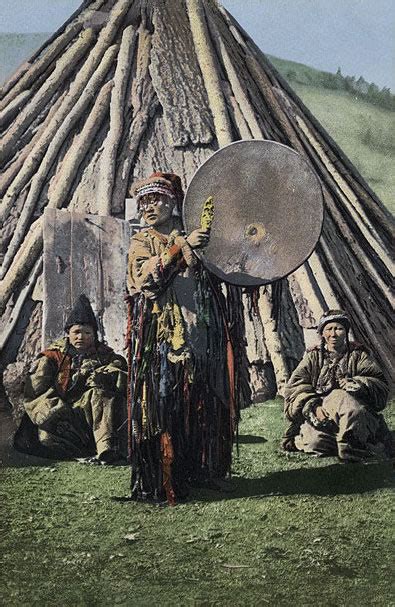
Female shaman with drum from Altai region of Siberia
There are distinct types of shamans who perform more specialized functions. For example, among the Nanai people, a distinct kind of shaman acts as a psychopomp. Other specialized shamans may be distinguished according to the type of spirits, or realms of the spirit world, with which the shaman most commonly interacts. The assistant of an Oroqen shaman (called jardalanin, or "second spirit") knows many things about the associated beliefs. He or she accompanies the rituals and interprets the behaviors of the shaman. Despite these functions, the jardalanin is not a shaman.
As the primary teacher of tribal symbolism, the shaman may have a leading role in this ecological management, actively restricting hunting and fishing. Among the Tucano people, a sophisticated system exists for environmental resources management and for avoiding resource depletion through overhunting.
The way shamans get sustenance and take part in everyday life varies across cultures. In many Inuit groups, they provide services for the community and get a "due payment", and believe the payment is given to the helping spirits. An account states that the gifts and payments that a shaman receives are given by his partner spirit. Since it obliges the shaman to use his gift and to work regularly in this capacity, the spirit rewards him with the goods that it receives.
These goods, however, are only "welcome addenda". They are not enough to enable a full-time shaman. Shamans live like any other member of the group, as a hunter or housewife. Since the early 2000s, the growth of ayahuasca tourism in South America has created an economic niche for practitioners, particularly in Iquitos, Peru, where retreat centers cater to foreign visitors.
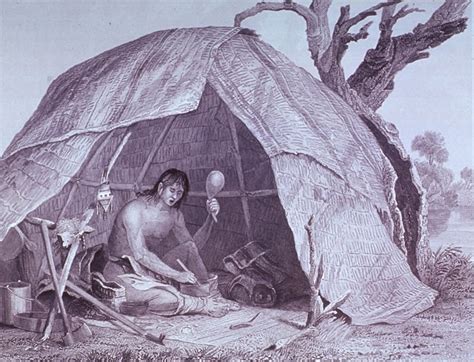
Indian Medicine Man from an 1875 Eastman engraving
Furthermore, due to the predominant number of female shamans over males, shamanism was and continues to be an integral part of women's economic liberation. Shamanism often serves as an economic resource due to the requirement of payment for service. This economic revenue was vital for female shamans, especially those living during the Chosun Dynasty in Korea (A.D. 1392-1910).
Prayers were offered to the spirits to whom these holy plants belonged. Using psychoactive plants, shamans had the power to enter trances, combat evil spirits and disease, communicate with ancestors, prevent famine, and control weather (rain dances). Within the plant-induced visions and trances, the shaman was able to comprehend the spirit world and the real world and maintain balance between the two. In many places shamans learn directly from the plants, harnessing their effects and healing properties, after obtaining permission from the indwelling or patron spirits. In the Peruvian Amazon Basin, shamans and curanderos use medicine songs called icaros to evoke spirits.
She Is A Shaman | Full Ayahuasca Documentary (2025)
Native American (NA) traditional healing is identified by the National Institutes of Health/National Center for Complementary and Alternative Medicine (NCCAM) as a whole medical system that encompasses a range of holistic treatments used by indigenous healers for a multitude of acute and chronic conditions or to promote health and wellbeing.2 While there are individual tribal differences (i.e., the use of specific healing practices), there are also shared health beliefs and interventional strategies, including a health promotion foundation that embraces bio-psycho-socio-spiritual approaches and traditions.
Native Americans in Arizona run each day to greet the dawn, a practice that not only conditions their bodies but also nourishes their spiritual wellbeing. Stories and legends are used to teach positive behaviors as well as the consequences of failing to observe the laws of nature. For thousands of years, traditional indigenous medicine have been used to promote health and wellbeing for millions of Native people who once inhabited this continent. Native diets, ceremonies that greet the seasons and the harvests, and the use of native plants for healing purposes have been used to live to promote health by living in harmony with the earth.
Less than 100 years ago, diabetes was almost unheard of among NA. Today diabetes runs rampant through many tribes as they integrate into the mainstream culture and adopt the typical American lifestyle. Ceremonies play an important role in the overall wellbeing of traditional Native American people but the healing potential of this practice is typically unappreciated by allopathic health providers. NA ceremonies involve the patient, the family, and the community in the healing process. Ceremonial gatherings may last for days or weeks; the more people that are present, the greater the healing energy.
People of all cultures utilize symbolism found in their various religions and spiritual practices to cope with health problems. NA healing ceremonies rely heavily on a combination of traditional and Christian religious symbols, icons, and ritualistic objects. These symbols cue bio-psycho-social-spiritual healing responses by restoring the harmony necessary for health.
Today Native Americans frequently combine traditional healing practices with allopathic medicine to promote health and wellbeing. Ceremony, native herbal remedies, and allopathic medications are used side by side. Yet, the role of spirituality in health promotion and wellness is uncomfortable for many allopathic providers. Advanced practice nurses with their tradition of holism that embraces the bio-psycho-social-spiritual nature of health have an opportunity to suggest new ways to care modeled on traditional NA practices.
The inclusion of family and community in treatment plans, decreases the isolation often found in allopathic care. Traditional indigenous systems of care provide a blueprint to model new healing strategies that have the potential to extend health promotion beyond the individual to the collective. In Native American culture there is a saying that “we are all related”; all things live in relationship to one another. Living in harmony with the earth and our environs has meaning and purpose, not only for us but the whole --- the earth, its peoples, and all that is.
Sweat Lodge is a purification ceremony. The smell of smoke from the fire and the sound of drumming and songs draw people to the Sweat Lodge as they prepare for the ceremony that provides purification and healing of the mind, body, and soul. As with our ancestors, the Sweat Lodge is a purification ceremony. Preparations are conducted in a sacred manner by cleaning and caring for the grounds, building and tending the fire, and covering the lodge.
During the ceremony, hot stones are placed in the center while the leader guides participants in prayer or song. The leader teaches about the ceremony, Native American traditions, and the uses of the hot rocks, heat, sacred herbs, and water. As in ancient circles of elders, people sit in a circle, listen deeply, and speak from the heart. The Talking Circle begins with prayer provided by the Traditional Practitioner conducting the ceremony. Participants may smudge or purify with the smoke from sacred herbs.
A feather or talking stick is passed around the circle, in a sunwise direction, to each person. Holding the feather serves as an invitation and as encouragement to speak from a place of sincerity and truthfulness. NAC integrates medical & behavioral health with Native American healing approaches to provide an environment to heal the mind, body, and spirit. This involves navigating the delicate balance between respecting cultural diversity and incorporating evidence-based methodologies.