If your home was built before the 1990s, you may have been told that your electrical panel poses a hidden danger if it was made by Federal Pacific Electric Company (FPE). The electrical panels made by the company were extremely popular from the 1950s through until the 1990s, resulting in their installation in millions of homes throughout the country. Some of these circuit breakers were also sold under the name of Stab-Lok.
Much of the controversy surrounding Federal Pacific panels stems from a class action suit filed in New Jersey in 2002. On the other hand, the Consumer Product Safety Commission launched a two-year investigation in 1983 in order to review the breaker panels and determine if they cause an actual risk. Ultimately, the case was closed by the Commission without making a determination.
So, are you and your home really at risk, or is this simply a situation that has been blown out of proportion in an effort to scare consumers into unnecessarily replacing their electric panels? Let's delve into the details surrounding Federal Pacific breakers and explore replacement options to ensure your home's electrical safety.
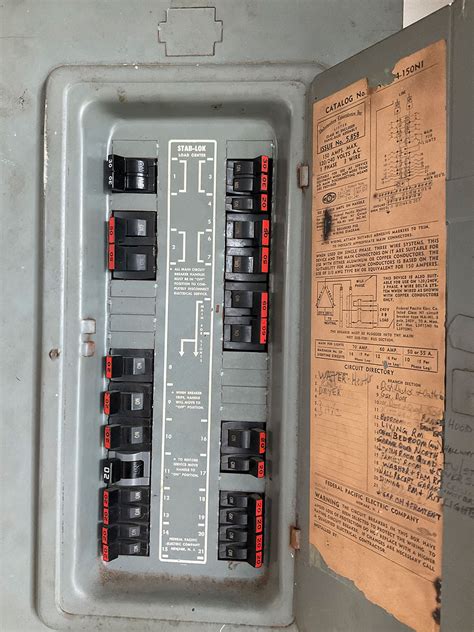
Understanding Federal Pacific Electric (FPE)
Federal Pacific Electric Company, also referred to as simply “FPE,” was a company that specialized in making circuit breakers. It should be noted that the Federal Pacific Electric Company that was responsible for making the controversial panels is different from the Federal Pacific company, which is currently still in business. A division of Electro-Mechanical, the still-existent Federal Pacific is an American-owned company that manufactures a variety of products used to generate and transmit electricity. The company eventually went bankrupt in 1979 for reasons that are unrelated to the panel controversy.
The Class-Action Lawsuit
A class-action lawsuit against Federal Pacific Electric/Reliance Electric Company was filed with the Superior Court of New Jersey in 2002. Filed in Middlesex County under Docket# L-2904-97, the lawsuit accused Federal Pacific Electric of engaging in fraudulent testing practices when testing its circuit breaker panels between the years of 1965 and 1980. According to National Electric Code, all products such as electrical panels must be tested and labeled by an independent testing agency.
Read also: Interpreting Blood Dreams
In order to pass these required tests, the lawsuit alleged that Federal Pacific Electric used a mechanical switch to turn off the breaker during the testing process. Several independent companies later went on to test the Federal Pacific Stab-Lok circuit breaker between the 1970s and early 1980s and confirmed that the breakers actually failed the tests.
Three years after the New Jersey class action suit was filed, the New Jersey courts did find in favor of the plaintiffs. As a part of this ruling, the court determined that New Jersey homeowners who were the original owners of FPE Stab-Lok electrical panels could receive a $500 settlement. Institutional class members were awarded varying amounts depending on their installations. To be eligible to pursue the claim, the circuit breaker had to have been manufactured and sold between June 29, 1971 and July 1, 1980. Therefore, only a very limited number of people received any sort of financial relief from Federal Pacific’s fraudulent activities.
Potential Risks of Retaining an FPE Panel
According to some independent studies, keeping a Federal Pacific panel installed in your home may pose a number of serious threats. For instance, some researchers found that 51 percent of the breakers fail to trip when tested. By staying “stuck” on or jamming, the breakers may pose a fire risk that can lead to property loss or even death.
Due to the controversy surrounding these electrical panels, some insurance companies may also refuse to insure homes where they are installed. In addition, if you plan to put your home on the market and it still has one of these breaker boxes installed, it may be noted by the home inspector in the findings report.
Bottom Line: Why you should replace your Federal Pacific Panel
Making the Decision: Replace or Retain?
Whether or not you need to replace your Federal Pacific breaker is a decision that you need to make after consulting with your insurance company, a trusted electrician and, if you plan to put your home on the market, your real estate agent. After all, Federal Pacific panel boxes still exist in millions of homes and have managed to properly function in those homes for decades. Similarly, in the area where you live, having a Federal Pacific panel in your home may not create any issues in terms of obtaining insurance or passing a home inspection.
Read also: Decoding Common Dreams
Identifying an Affected Panel
If you do decide to change your electrical panel, it is also important to note that only specific boxes are affected by the controversy. If you know your breaker box was installed before the 1990s, there is a good chance that it is one of the controversial Federal Pacific breakers. To confirm if your electrical panel is one that is affected, you need to simply look on the breaker box to see if there is a label that reads “FPE,” “Stab-Lok” or “Federal Pacific Electric Company”. A licensed contractor will then be able to help you determine which replacement box to use and how much it should cost. Ultimately, the decision whether or not to replace your breaker box is one that only you can make.
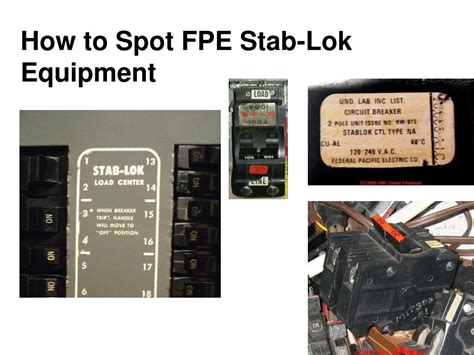
Federal Pacific Breakers Available
Federal Pacific Electric, the original manufacturer of the FPE breaker group, makes circuit breakers and other electrical parts. At Breaker Outlet, we carry a large number of Federal Pacific circuit breakers that work in a variety of breaker panels and boxes. When you choose Breaker Outlet as your supplier of FPE breakers and residential, commercial, and industrial electrical components, you will be dealing with a company who has the knowledge and the inventory to help you realize whatever project you’re working on. If you can’t find exactly what you need, get in touch with us.
Specific Breaker Types
- 1 Pole 40 amp 1/2 inch thick, stab lok: Federal Pacific Electric or Federal Pioneer circuit breaker 120V plug in single pole unit. Not interchangeable with any other. Breakers were made in various colors: brown, marble, black & white. Originally made by Federal Pacific Electric, then Challenger, then Federal Pioneer. A bolt-on version is also made called an NB type. Typically used in schools or commercial applications, but rarely for homes.
- 1 Pole 50 amp 1/2 inch thick, stab lok: Federal Pacific Electric or Federal Pioneer circuit breaker 120V plug in single pole unit. Not interchangeable with any other. Breakers were made in various colors: brown, marble, black & white. Originally made by Federal Pacific Electric, then Challenger, then Federal Pioneer. A bolt-on version is also made called an NB type. Typically used in schools or commercial applications, but rarely for homes.
- Thin 1 Pole 20 amp 1/2 inch thick, stab lok: Federal Pacific Electric or Federal Pioneer circuit breaker 120V plug in single pole unit. Not interchangeable with any other. Breakers were made in various colors: brown, marble, black & white. Originally made by Federal Pacific Electric, then Challenger, then Federal Pioneer. These are referred to as half size, wafer thick, thins or skinny.
Summary of Key Considerations
To help you make an informed decision, here's a summary of the key considerations regarding Federal Pacific breaker replacement options:
| Consideration | Description |
|---|---|
| Potential Fire Risk | FPE breakers have a higher failure rate, increasing the risk of fire due to breakers not tripping. |
| Insurance Issues | Some insurance companies may deny coverage for homes with FPE panels. |
| Home Inspection Concerns | FPE panels may be flagged during home inspections, affecting property value and sale. |
| Lawsuit History | A class-action lawsuit highlighted fraudulent testing practices by FPE. |
| Identification | Check for "FPE," "Stab-Lok," or "Federal Pacific Electric Company" labels on the breaker box. |
Read also: Understanding Mercy as a Gift