The connection between spirituality and nature is profound for many reasons. Nature Spirituality is any spiritual belief that involves working with the divine as immanent in nature. Many nature religions are polytheistic, animistic, and/or pantheistic.
Nature spirituality is different from revealed spirituality in the same way that philosophy and theology are different.
When you are on a spiritual journey, one thing you will notice is that you feel more drawn to natural things or things that help support life rather than break it down. You might stop wanting to eat meat, be drawn to spending more time outside, or start using things from the Earth like crystals, herbs, and flowers. Whatever the case may be, connecting with nature while on a spiritual journey can be a really powerful thing and help you feel closer to the universe.
Not only is nature good for developing your spiritual side but becoming more spiritual helps draw you closer to nature. It’s a beautiful circle and feeds on itself. I believe this is why over time I am being more drawn to spiritual and natural things the deeper I go into my awakening journey.
Nature and spirituality go hand in hand and are a perfect example of mutually beneficial symbiosis. You can’t have one without the other, and both paths lead to the other. If you are trying to become more spiritual, nature can give you that boost you need.
Read also: Discover Your Inner Chakra
While we often have an innate sense of the meaning of a word, sometimes it is hard to articulate a precise definition. In fact, the term is so broad and so dependent on who is using how, why, when, and in what context, that some have given up on trying to give it a comprehensive definition and just say that it means something different to all who use it.
Perhaps a less necessarily contextual definition is found in the words of K. I. Stone, Jerome A. Spiritual naturalism is a variety of philosophical and religious worldviews that are naturalistic in their basic viewpoint but have a spiritual and religious perspective also. Chief among modern forms of spiritual naturalism are religious naturalism, religious humanism, dualist pantheism, and humanistic religious naturalism.
The term may also apply to the beliefs of some naturalistic Pagans, process thinkers, many Taoists, a number of Hindus, and a variety of non-affiliated independent thinkers who base their spiritual experience directly on Nature itself rather than traditional deities and the supernatural (i.e. Epicureans).
Although the overall movement toward these attitudes remains relatively small and loosely organized, various forms of spiritual naturalism have existed since time immemorial, with the pantheistic philosophies of Taoism and similar Eastern nature-mysticisms being perhaps the most notable example. At present, there is a growing interest in adopting a spiritual naturalism rational alternative for the modern world because many are losing their belief in more traditional spiritual avenues.
Crucial challenges for the spiritual naturalism movement in its various forms currently involve developing and promulgating a conciliate understanding of the somewhat ambiguous terms spirituality and naturalism. The difference in interpreting the difference between religious and spiritual, humanist and naturalist and free will and determinism also needs a consensus. In addition the individualistic nature and thinking of many of the adherents preclude organizing cohesive communities.
Read also: The Most Disturbing UFO Movies
However recent authors (Ursula Goodenough, Chet Raymo, Karl E. In addition a few modern theologians with liberal orientations have rejected some of the historical claims of some biblical doctrines and supernaturalism and moved to progressive forms of Christianity and Judaism akin to theistic naturalism. Examples are: Mordecai Kaplan, John Shelby Spong, Paul Tillich, John A. T. Robinson, William Murry and Gordon Kaufman.
Advocates of spiritual naturalism can vary in their position across the religious spectrum including deism, theism (or process theism), non-theism, and atheism, though it is by no means limited to these orientations. The majority of adherents are believed to be agnostic or atheistic while many prefer not to be categorized.
There is a vast difference in opinions on how to address the question of a deity of some kind, if at all. Spiritual naturalism is chiefly concerned with finding ways to access traditional spiritual feelings without the inclusion of supernatural elements incompatible with science and a broad naturalism.
Adherents of spiritual naturalism are generally scientifically-oriented in most aspects, with their primary difference from other naturalists being their belief that the abandonment of superstition does not necessarily entail the abandonment of spirituality.
Spiritual naturalist ideas are prevalent in Reconstructionist Judaism: a modern Jewish movement based on the ideas of Mordecai Kaplan. Reconstructionist Jews assert that Judaism, as a culture and as a religion, is constantly evolving and adapting to modernity.
Read also: The Connection Between Buddhism and Spirituality
God is not perceived as a supernatural being, but as being "manifest in the practice of kindness, justice and righteousness on the earth". The reconstructionist conception of God is compatible with the spiritual naturalist's assertion that there is no supernatural; spirituality is manifest in the physical world. Kaplan also states that "the reality of God henceforth will have to be experienced through the functioning of conscience in the conduct of men and nations".
To Kaplan and Reconstructionist Jews, God is the collective consciousness of the Jewish community, not a supernatural other. Naturalism in Christianity first appeared in Renaissance humanists, they emphasize the individual and social potential and agency of human beings, she sees human beings as the starting point for serious moral and philosophical investigations. Renaissance humanism was a during the Renaissance, most humanists were Christians, so their concern was to "purify and renew Christianity," not to remove it.
Christian philosopher John Hick believed that the language of the Bible should be demythologised to be compatible with naturalism. He offered a demythologised Christology, arguing that Jesus was not God incarnate, but a man with incredible experience of divine reality.
With the development of scientific thought and the discoveries in evolution, physics, etc. have come challenges to the Christian worldview. Over time, various ideas on how to reconcile these scientific truths with theological truths of the doctrines of Christianity. There is the once-popular clockwork universe theory, which states that God made the universe to run its course mechanically predetermined; however, this has lost popularity after more discoveries about the probabilistic nature of the universe. There is also the idea that God interferes supernaturally in ways that mask the presence of the supernatural-perhaps at the quantum level where scientists cannot precisely determine anything.
Another interpretation, one where both truths may be simultaneous and coterminous comes from the New Testament quote "In the beginning was the Word, and the Word was with God, and the Word was God... Through him all things were made; without him nothing was made that has been made." This can be interpreted as saying that the Word of God is not God, but the perfect expression of God that is God and is not God but brings forth creation. In the words of Rudolf Brun "The Christian revelation about creation does not proclaim that creation is an extension or a function embedded in God. Rather, the Word of God that is and remains God is given away to creation. It is a gift that empowers creation to become itself." This allows God to be all things (pantheism) and in all things (panentheism) without either of those cases being true.
Among the Hellenistic philosophies, the Epicurean tradition stands out as an internally coherent naturalist philosophy complete with its physics, ethics, and cosmology. Due to the meticulous adherence to "epilogismos" (empirical or pragmatic thinking) applied by the founder, Epicurus of Samos, this philosophy is particularly compatible with contemporary scientific insights.
Epicurean philosophy employs "the Canon" in its epistemology, which is a tool consisting of the five senses, the pleasure and pain faculties, and a faculty tied to language and memory known as "prolepsis". The Epicureans teach that these faculties are our nature-given connection with reality, and insist on clear expression, so as to make sure that language reflects the nature of things. They also incorporate ritual (Eikas is a feast of reason, food, and friendship celebrated the Twentieth of every month and established by Epicurus in his Final Will), community, and other cultural traits traditionally associated with religion.
The epic poem De rerum natura by Lucretius--an ancient epitome of natural philosophy--is the most complete Epicurean writing, together with three of the founder's Epistles, his Principal Doctrines, and the Vatican Sayings. There are also dozens of scrolls that survived the eruption of Mount Vesuvius in the year 79 from Herculaneum, which were curated by Philodemus of Gadara.
Some Unitarian ministers, a denomination of Secular Humanist Jews, and others have incorporated Epicureanism into their liturgies and traditions in various ways. "The term Tao means 'way', 'path', or 'principle', and can also be found in Chinese philosophies and religions other than Taoism. In Taoism, however, Tao denotes something that is both the source of, and the force behind, everything that exists. Taoist propriety and ethics may vary depending on the particular school, but in general they tend to emphasize Wu-wei (action through non-action), 'naturalness', simplicity, spontaneity, and the Three Treasures: compassion, moderation, and humility."
"Though Tao is ultimately transcendent, it is also immanent. Tao can be talked about, but not the Eternal Tao. "In a way, Spiritual Naturalism could be looked at as a form of philosophical Buddhism. There are many schools and ways of conceiving of Buddhism and practicing it. Many of Buddhism's concepts can be interpreted in naturalistic terms. Buddhism has certainly inspired the Spiritual Naturalist practices of meditation, mindfulness, compassion, and more.
Whilst robotic design is generally inspired by biological forms it is possible to use the engineering model in reverse to redefine obscure terminology. For example infinity is an imaginary dumping ground for mathematicians, so perhaps God may be a holding token for anything as yet unknown, which may be closer to the Great Commandment than the complex and somewhat anthropomorphized deities of Yahweh or Trinity?
The soul of a person is entirely ephemeral, but enduring tangible consequence for humanity. e.g. The ghost of a person is the emotional consequence of ideas divined and communicated to others such as beliefs or processes.
Benefits of Spending Time in Nature
You will notice that many people who start working on their spiritual growth spend a lot of time in nature or use items from nature. Because Mother Earth helps you feel more connected to your own spirit and soul, and the universe itself.
Here are some benefits of connecting and spending more time in nature while on a spiritual journey:
- It quiets the mind - Nature really helps to clear and quiet the mind. Whether you have been feeling anxious lately or you simply want to meditate more on your spiritual journey, the peaceful calm you get when you are outside among the vegetation and wildlife is so healing.
- It provides grounding - If you need a little grounding while on your spiritual journey, you need to go outside and put your feet on the earth. With your bare feet on dirt, grass, or sand, you feel connected with the universe. This can ease stress, anxiety, and fears that might be blocking your spiritual channels.
- Nature allows you to tap into your intuition - You might also find that the more time you spend in nature, the more intuitive you become. This is because there is less noise of the city or distractions at home. While you are in nature, things are calm and quiet. You can actually look within and find your natural intuitive instincts and learn how to listen to them.
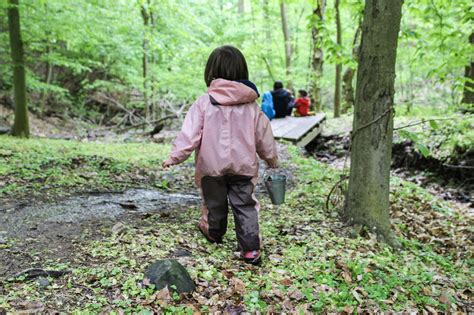
Easy Ways to Connect with Nature
The good news is that it is really easy to connect with nature. You just need to find a spot near you where it is calm and safe, whether that is a local park, a forest or wooded area in your town, or even the garden right in your back yard. Others prefer areas like the mountains or the ocean when it comes to connecting with nature.
Here are some things to do when you want to connect with nature while on a spiritual journey:
- Go on a mindful walk or hike
- Meditate while sitting outside in a quiet and calm place
- Spend time tending to your garden
- Do full or new moon rituals outside
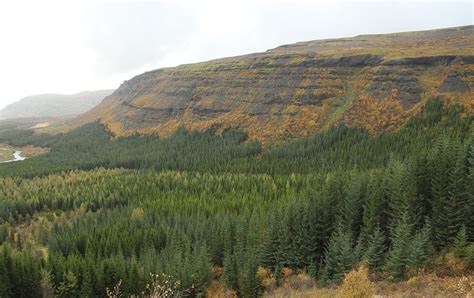
Bring Nature Inside Your Home
If you live in the city and it isn’t easy to get outside, or you simply don’t have time to go to a nearby wooded area or park, then you can bring nature inside your home. In fact, this is a great tip for everyone, even if you do spend a lot of time outside. Consider starting a collection of indoor plants that you can tend to and soak up their natural beauty. This will also help to cleanse and detox the air and energy inside your home. You may also want to pick wildflowers to bring inside or get a new flower bouquet every few weeks to bring home.

Nature-Based Religions
It almost sounds contradictory to describe a religion as being nature-based, since there is a huge difference between religion and spirituality. But there are some “religions” (some who prefer not to be called that) that center around nature.
These include:
- Paganism
- Wicca
- Pantheism
- Animism
- Shamanism
- Druidry
I believe that these are not religions per se, but they are simply methods of how humans can live harmoniously with nature.
Spiritual Retreat Centers
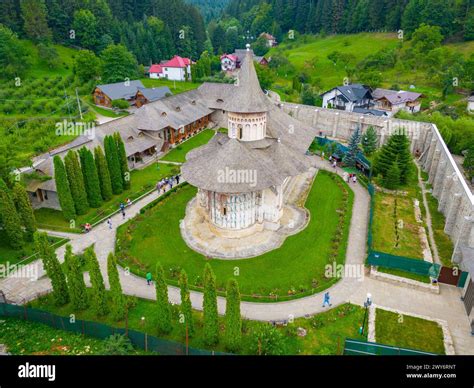
I have yet to find a spiritual retreat center that isn’t set in the middle of nature. They are always overlooking a beautiful mountainside, forest, ocean, lake, or rolling hills of lush green vegetation of all kinds.
There is no doubt that when you want to become more spiritual, nature is the best catalyst. It provides the perfect setting for removing toxic distractions, surrounding you with all the elements of life that you yourself are made of, and allowing the right conditions for you to go within.
Foundational to naturalist philosophy and spirituality is the conviction that nature is a closed system, that there is only one reality - the natural universe composed of matter and energy. This conviction exists because the sciences have no evidence for anything supernatural - no reliable, repeatable, verifiable evidence for miracles, deities, spirits, and so on.
Humans, as part of nature, have long recognized the patterns of order within the world. Cosmos implies an interconnected system of cycles and rhythms, a dynamic harmony of changes, not all perfect or good, but more or less ordered and balanced.
Further, the cosmos also implies the possibility of a world of meaning, whereas chaos implies a nihilistic reality. We are not talking to the rivers, we are not listening to the wind and stars.
How to have a spiritual connection with Nature
Much like the Celts who thought the world sings, Berry goes on to write that the voice of the earth tells a story. Evolution is a factual reality, a dynamism of nature and reality. Evolution only becomes mythic when we retell it in dramatic, poetic terms.
The meaning of the world is contained in stories. Of course, the world is made of things, but the meaning of those things, their connections, and their purposes are revealed in stories. Myth provides a culture with central narrative(s), thus establishing the framework for wisdom - a collective sense of purpose, place, identity, and set of shared values.
Evolution approached as a story is a running narrative of primal creativity, emergence, and dynamic existence. The story of the cosmos flowing out of chaos, and of life taking shape from inanimate matter.
Religion often supplies a culture with a core, unifying narrative. For us living in the secular, even post-secular age, this is no longer the case. Evolution is everyone’s story, a narrative we all share and take part in. We all emerge from the same stuff, we all share the origins of the singularity, our lives are sustained by the same things, and we are, above all, the same species, before we are any particular differences. This is a story that nourishes our deeper selves with a sense of connection to our actual place in the world and our right relationship with other humans and all living things.
Myth is not primitive proto-science. Science might be considered a description of the world about those aspects that are consensually apprehensible or a specification of the most effective mode of reaching an end (given a defined end). Myth can be more accurately regarded as a “description of the world as it signifies (for action). The mythic universe is a place to act.
While we may accept and understand evolution, we do not directly encounter it in our daily lives, it remains abstract. Humans do not consciously experience evolution as a process or power. Evolutionary change is slow, imperceptible, happening all the time, but also over eons. Therefore, nature is a mediating conduit to evolutionary processes that can be rendered as a narrative, or even a song.
tags: #nature #based #spirituality