Tales of poltergeists have existed for centuries, with several reported cases across the world shocking even the most hardened skeptic. Poltergeists make themselves known by knocking on walls, moving objects, and causing general mayhem. Stories of people being attacked and even possessed have been documented across the 20th century. In many cases, they reveal the darkest side of the supernatural.
Although some write off these stories as hoaxes and urban legends, those who witnessed them are convinced they were in the unmistakable presence of a poltergeist. By the time the movie Poltergeist was released in 1982, there had been six internationally reported cases of poltergeist hauntings.
Let's delve into some of the most spine-chilling poltergeist cases throughout history.
The Enfield Poltergeist

The Enfield poltergeist was a claim of supernatural activity at 284 Green Street, a council house in Brimsdown, Enfield, London, England, between 1977 and 1979.
In August 1977, single mother Penelope Hodgson called the Metropolitan Police to her rented home at 284 Green Street in Enfield, London, saying she had witnessed furniture moving and that two of her four children had heard knocking sounds on the walls. The children included Janet, aged 11, and Margaret, aged 13. When police investigated the home, they witnessed a chair move across the room on its own. Unable to offer an explanation, police left, but the haunting only intensified. The family began hearing disembodied whistling, watching furniture be thrown across the room, and 11-year-old Janet would speak in the growling voice of an elderly man.
Read also: Poltergeist Activity: Caroline Warner
Over a period of 18 months, more than 30 people, including the Hodgsons' neighbours, paranormal investigators, and journalists, said they variously saw heavy furniture moving of its own accord, objects being thrown across a room and the sisters seeming to levitate several feet off the ground. This chilling phenomenon was recorded multiple times. Peggy contacted the media for support, and the story took on a life of its own.
Society for Psychical Research (SPR) members Maurice Grosse and Guy Lyon Playfair reported: "curious whistling and barking noises coming from Janet's general direction." Although Playfair maintained the paranormal activity was genuine and wrote in his later book This House Is Haunted: The True Story of a Poltergeist (1980) that an "entity" was to blame for the Enfield disturbances, he often doubted the children's veracity and wondered if they were playing tricks and exaggerating. Still, Grosse and Playfair believed that, even though some of the alleged poltergeist activity was faked by the girls, other incidents were genuine.
Other paranormal investigators who visited the Enfield house included American demonologists Ed and Lorraine Warren, who were convinced that the events had a supernatural explanation. Their case would eventually be investigated by the Society for Psychical Research, who were convinced of the poltergeist activity. Demonologists Ed and Lorraine Warren also investigated the home, which would inspire The Conjuring 2.
Some members of the Society for Psychical Research (SPR) such as paranormal investigator Maurice Grosse and writer Guy Lyon Playfair, believed the haunting to be genuine, while others like Anita Gregory and John Beloff were "unconvinced" and found evidence the girls had faked incidents for the benefit of journalists. Psychical researcher Renée Haynes noted that doubts were raised about the alleged poltergeist voice at the SPR conference at Cambridge in 1978, where videocassettes from Enfield were examined.
SPR investigator Anita Gregory stated the Enfield case had been "overrated", characterising several episodes of the girls' behaviour as "suspicious" and speculated that the girls had "staged" some incidents for the benefit of journalists seeking a sensational story. John Beloff, a former president of the SPR, investigated and suggested Janet was practising ventriloquism.
Read also: Unveiling Poltergeist's Production
Milbourne Christopher, an American stage magician, briefly investigated the Enfield occurrences and failed to observe anything that could be called paranormal. Sceptic Joe Nickell of the US-based Committee for Skeptical Inquiry Committee for the Scientific Investigation of Claims of the Paranormal (CSICOP) examined the findings of paranormal investigators and criticized them for being overly credulous; when a supposedly disembodied demonic voice was heard, Playfair noted that "as always Janet's lips hardly seemed to be moving." He states that a remote-controlled still camera-the photographer was not present in the room with the girls-timed to take a picture every fifteen seconds was shown by investigator Melvin Harris to reveal pranking by the girls.
In a television interview for BBC Scotland, Janet was observed to gain attention by waving her hand and then putting her hand in front of her mouth while a claimed "disembodied" voice was heard. During the interview both girls were asked the question, "How does it feel to be haunted by a poltergeist?" Janet replied, "It's not haunted" and Margaret, in a hushed tone, interrupted, "Shut up". As a "magician experienced in the dynamics of trickery" Nickell examined Playfair's account and contemporary press clippings.
In the first edition of the BBC series Hauntings, broadcast on 13 October 2024, it was revealed that the unexplained voice of "Bill Wilkins" was later played on an LBC radio talk show, featuring Maurice Grosse. On 26 December 1978 BBC Radio 4 broadcast The Enfield Poltergeist by BBC reporter Rosalind Morris.
Although the poltergeist activity eventually stopped, Janet and Margaret remain adamant that the haunting occurred.
The case remains very controversial. Grosse, Playfair, Hasted and others believe it was genuine, Anita Gregory and other members of the SPR were unconvinced.
Read also: Analyzing Poltergeist's Psychic Characters
Here's a summary of the key figures and their stances on the Enfield Poltergeist case:
| Name | Position |
|---|---|
| Maurice Grosse | Believed the haunting was genuine |
| Guy Lyon Playfair | Believed the haunting was genuine |
| Anita Gregory | Unconvinced, suspected faking |
| John Beloff | Suggested ventriloquism |
| Ed and Lorraine Warren | Convinced of supernatural explanation |
The True Story Of The Enfield Poltergeist
The Bridgeport Poltergeist
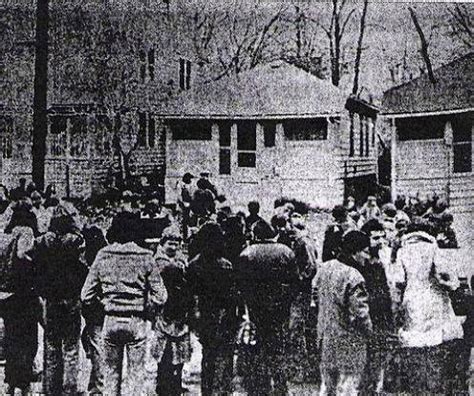
A media firestorm erupted in Bridgeport, CT, in November 1974 with reports of poltergeist activity. In a bungalow house on Lindley Street, Gerard and Laura Goodin claimed that a poltergeist was attacking them. This poltergeist caused furniture to move and levitate, windows to shatter, and frantic banging could be heard in the walls of the house. Perhaps most upsetting, the family cat, Sam, was heard saying the phrases “Jingle bells” and “bye-bye.”
The activity had been going on for years, with much of the activity witnessed by police and firefighters, which added to the Goodins’ credibility. According to the Goodins, the activity began in 1968, after adopting their daughter, Marcia. By 1974, Marcia was 10, and the activity had gotten out of control. With reporters constantly in the street outside the Goodin home, a few neighbors tried to set the house on fire.
During one investigation, Marcia was caught trying to knock over a TV set. She admitted to making up all of the poltergeist activity. However, not everyone was convinced. There were times when the activity occurred when Marcia was in a different room or out of the house altogether. Whatever the truth was, the poltergeist phenomena continued for a few weeks after Marcia’s confession, until it completely stopped.
Unlike many alleged ghostly events that had occurred in isolated, rural houses with only the report of their residents, these incidents had more than seventy-seven credible witnesses, among them a police lieutenant, a police captain, two fire chiefs, police officers, firefighters, two priests, neighbors, extended family, a seminary student, reporters, and others. In addition, approximately four hundred onlookers reported seeing the phenomena from outside the home. Well-known paranormal investigator Ed Warren said at the time that it was the most well-documented haunting in 100 years.
After three days, the Bridgeport Police Superintendent Joseph Walsh announced that the incidents were a hoax created by the resident Goodin family’s ten year-old daughter Marcia and the case was closed. But behind the scenes, the inquiry into the events at Lindley Street was far from over. The study for which they were interviewed concluded that the events were the doings of a poltergeist - literally, meaning “noisy ghost.” Poltergeist activity typically consists of strange noises, footsteps, moving objects, and the destruction of property with no visible physical cause, most often occurring in the environs of a prepubescent child. Ed Warren and a priest on the scene also attributed this particular series of events to a demonic presence in addition to the typical poltergeist manifestations.
The Black Monk of Pontefract
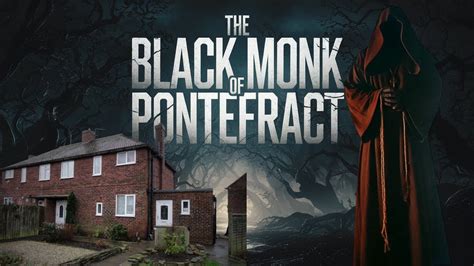
In the 1960s and 1970s, the Pritchard family was plagued by poltergeist activity that grew from mischievous to violent. Jean and Joe Pritchard moved into their home on 30 East Drive in Pontefract, UK, in August 1966. Along with them were their children, Phillip (15) and Diane (12). Initial poltergeist activity included a chalky mist appearing in midair, puddles appearing out of nowhere, and objects moving.
As the poltergeist activity increased, the Pritchards contacted the press, who nicknamed the poltergeist “Mr. Nobody.” The family settled on calling the entity “Fred.” Fred was not a malevolent spirit at first. He was mostly a trickster, once pouring a jug of milk on a family member’s head. However, things took a dark turn when Fred began slapping people and reaching out to choke them.
As Diane entered her teen years, she was repeatedly attacked by Fred. One of the worst attacks involved being dragged up the stairs by her hair. Around this time, Jean and Joe saw the apparition of a monk above their bed.
The Pritchards eventually left the home, but it is open for overnight stays and investigations. The current owner claims that Fred is still quite active.
The Indianapolis Poltergeist

In March 1962, 32-year-old Renate Beck and her family fled their home in terror after objects began to shatter on their own. Renate had recently moved into the house on Delaware Street in Indianapolis with her 13-year-old daughter, Linda, and 61-year-old mother, Lina Gemmecke. The haunting began on a Sunday when a beer stein inexplicably lifted off a shelf and crashed to the floor. The same thing happened to some of Lina’s prized crystal collection.
The family spent the night in a hotel and called the police the following evening when the activity resumed. Police claimed that the activity was someone pulling a prank on the family.
However, the activity only escalated. A cup of hot coffee nearly hit Lina in the head. All three women were covered in bruises and bites, objects would mysteriously disappear and reappear, and knives were found on the floor arranged in the shape of a cross.
On the 16th day of the police investigating the home they caught Lina smashing her own crystal. To avoid facing criminal charges, she returned to her homeland of Germany. The poltergeist activity stopped. Although all signs pointed to Lina making up the haunting, witnesses insisted that she could not have done it all. Others theorized that tension in the home had manifested the haunting, which stopped when Lina left.
The Thornton Heath Poltergeist
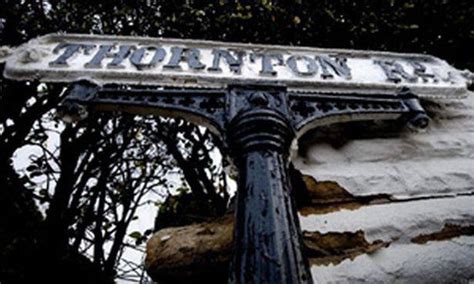
In February 1938, a front-page article appeared in a British newspaper documenting an apparent poltergeist haunting at a house in Thornton Heath. The Fielding family was being harassed by an unseen spirit, who threw objects, turned off the electricity, and smashed eggs. In an especially eerie incident, 34-year-old Alma Fielding noticed a six-fingered handprint in the mirror above her bedroom fireplace.
The case was investigated by the police, as well as ghost hunter Nandor Fodor of the International Institute for Psychical Research, and other spiritualists. It was generally believed that Alma, the matriarch of the family, was a conduit for the poltergeist.
One investigator claimed that Alma carried ectoplasm inside her, while Nandor Fodor thought that the electrical issues in the house were the result of kinetic energy controlled by Alma.
Not much is known of the outcome of the Thornton Heath Poltergeist. Some skeptics claim it never happened, or that it was the result of mass hysteria as World War II loomed over the UK.
The Jaboticabal Poltergeist
In the city of Jaboticabal, Brazil, a young girl was terrorized by a poltergeist haunting. The first reports of this phenomenon were made in December 1965, when bricks began falling out of thin air inside the Ferreira household. Because there was a pile of similar bricks in the family’s backyard, they assumed someone was pranking them. However, as the activity increased, they began to fear that something supernatural was at play.
A neighbor friend, João Volpe, believed that the haunting centered around 11-year-old Maria Jose Ferreira. He took Maria to a spiritualist, who said she had been a witch in a past life and was being tormented by those she had hurt. Maria lived with Volpe’s family for a year as he tried to end the poltergeist activity. During this time, needles were found in Maria’s foot, and her clothing spontaneously began to smolder. The poltergeist activity eventually lessened, but never went away. Maria returned to her family in 1968 and took her own life in 1970.
tags: #poltergeist #house #airbnb