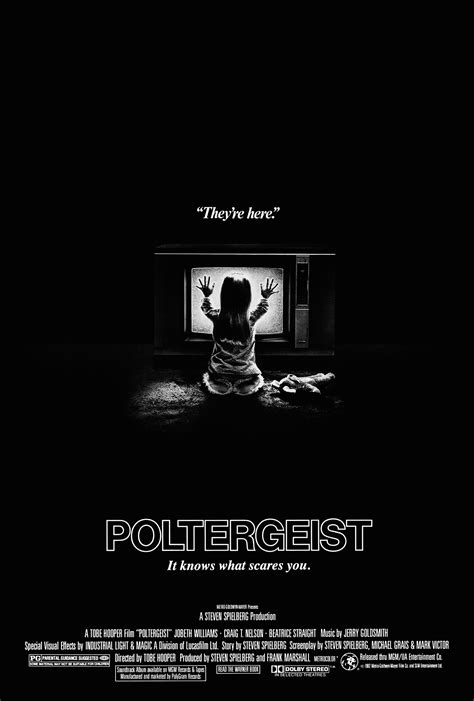
Few popular ’80s horror movies have escaped the remake treatment, and in 2015 the time finally came for Tobe Hooper’s spooky classic Poltergeist (1982). The original Poltergeist is a relatively family-friendly affair for younger horror viewers, aside from a particularly gnarly face-melting scene, but does the remake deserve the same amount of love? Will it introduce a new generation of horror fans to how terrifying their bedroom closets can be?
Poltergeist (1982), directed by Tobe Hooper and written by Steven Spielberg, created a haunted house that ditched cobwebs in favor of wall-to-wall carpeting, central air conditioning, and a family television set turned scrying mirror. A panoply of characters fill Poltergeist, but no one outshines spirit guide Tangina Barrons. Let's delve into the analysis of key characters in the Poltergeist franchise, focusing on their roles and significance in the narrative.
The Freeling Family: A Foundation of Love and Fear
Unlike a lot of haunted house stories, Poltergeist doesn’t start with the Freeling family moving into a new house that is full of ghosts. Instead, they’ve been living in the family home for years, with youngest daughter Carol Anne having been born there. The family are incredibly happy and settled as horror movie families go. Steven and his wife Diane are very much in love, have a great relationship with all three of their children, teenager Dana, younger son Robbie, and youngest Carol Anne.
One thing I adore about the original Poltergeist is how amazing the Freeling parents are. So many horror movie families are plagued with unloving parents or parents whose relationship is falling apart, but Steven and Diane seem to have the perfect marriage. Steven never doubts Diane or Carol Anne when the hauntings start happening, and it’s Steven who reaches out for the help of the paranormal investigators when Carol Anne goes missing, which is refreshing behaviour for a horror movie husband. Diane has a pivotal role in the original movie, as it’s her that has the most interaction with the spirits in the house aside from Carol Anne before things take a nasty turn. It’s also Diane that risks her life to bring her daughter back because she knows she’s the only one that Carol Anne will come to when she’s scared.
The scenes where Carol Anne get taken into the other realm hit incredibly differently in both versions. While the ghosts have been appearing merely friendly and mischievous up until this point in the original movie, they chose to take the family by surprise so they can steal Carol Anne. By exploiting Robbie’s fear of the tree, the Beast makes the tree come to life, snatching Robbie out of his bed. With the rest of the family outside, trying to save Robbie, Carol Anne suffers the terrifying encounter of being sucked into her closet, along with everything else in her room.
Read also: Weaknesses of Fairy Pokémon
The Freelings' daughter, Carol Anne, talks to the TV, which is transmitting static during a sign-off. The next night, Carol Anne looks at the TV screen, when suddenly an evil being comes out of the screen, causing a violent earthquake. Bizarre events occur the following day: a drinking glass of milk spontaneously breaks by its own, silverware bends by itself and furniture moves on its own accord. The phenomena seem benign at first, but quickly begin to intensify. That night, a gnarled backyard tree comes alive and grabs Robbie through the bedroom window. While Steven rescues Robbie before the demon tree swallows him, Carol Anne is sucked through a portal in her closet.
Not long after this event, a supernatural force punches a hole into the Freeling house and abducts Carol Anne, leaving her shell-shocked parents Diane (JoBeth Williams) and Steve (Craig T. Nelson) to seek help from a local parapsychologist, Dr. Lesh (Beatrice Straight).
Carol Anne lives in a quiet life with her brother Robbie, her sister Dana and her parents in Cuesta Verde, California. Four years after the event of the first film, Carol Anne and her family have relocated in Phoenix, Arizona where they are now living in a house with Diane's mother, Jessica "Grandma Jess" Wilson.
Tangina determines the spirits are lingering in a different "sphere of consciousness" and are not at rest. They are attracted to Carol Anne's life force. The entrance to the other dimension is in the children's bedroom closet and exits through the living room ceiling. Diane, secured by a rope, passes through the portal, guided by another rope previously threaded through both portals. Diane retrieves Carol Anne, and they drop through the ceiling to the living room floor, covered in ectoplasm.
Carol Anne talks to her teacher/psychologist Dr. One night when she is alone in her room, Kane uses the mirrors to attempt to capture Carol Anne, but she escapes by breaking the mirror with help from Tangina.
Read also: About Gordon Smith
Ultimately, Diane must travel into another plane of existence (described as a "membrane" around our world) to get back Carol Anne from a terrifying spirit Tangina terms"The Beast."
Carol Anne nearly crosses over into the afterlife as well, but Grandma Jess' spirit appears and returns her to the family.
Tangina Barrons: The Medium as a Star
Poltergeist: Tangina's Monologue
An investigation of the house reveals "poltergeist" activity, and Dr. Lesh recruits a medium, Tangina (Zelda Rubinstein) to "clean" the house and recover Carol Anne.
Rubenstein portrays Tangina as a colorful self-promoter with charisma, empathy, and clairvoyant power. The actress’s ability to shift from flamboyant to intense appropriately matches the plot’s tone. She can be tender and thoughtful to an emotionally wrecked Diane but equally ferocious while confronting The Beast. Through Tangina’s powers as a medium, we understand the youngest daughter is not dead; instead, a force holds her in a hellish limbo.
Read also: The Animated World of Psychic Princess
In Poltergeist, as the psychic glides assuredly through the haunted residence, Tangina’s earliest lines are confident and sassy, “Do y’all mind hanging back? You’re jamming my frequencies.” Tangina dismisses the hovering living with a genteel Southern drawl as she seeks the concealed dead. Wearing pearls, a floral dress, and a gold-accented woven shoulder bag, Tangina subverts social expectations by sporting amber shooting glasses, suggesting fierce independence while also adhering to period cultural expressions of “true womanhood.”
With the claims of supernatural abilities and personal embellishments came doubters. Swept up by a heart-clutching sensation, Tangina rushes to the home’s second floor, demanding to know what lies behind a locked door. A sleep-deprived, anguished, but incredulous Steven remains silent in the living room, squinting while the medium waits for a reply. Challenged by Tangina with an “I am addressing the living,” Steven explains that it is the room of their youngest children, Robbie, and the abducted Carol Anne. Mockingly, Steven whispers to Diane and parapsychologist Dr. Lesh (Beatrice Straight); he’s using his mind to answer Tangina. To Steven, her silence to his “psychic” reply exposes her fraud. However, Tangina puts the skeptic in his place, revealing that she could hear Steven’s thoughts but refused to acknowledge his response because “I just don’t like trick answers.” Tangina immediately establishes her legitimacy, yet Steven consistently doubts and bristles at the medium’s commands.
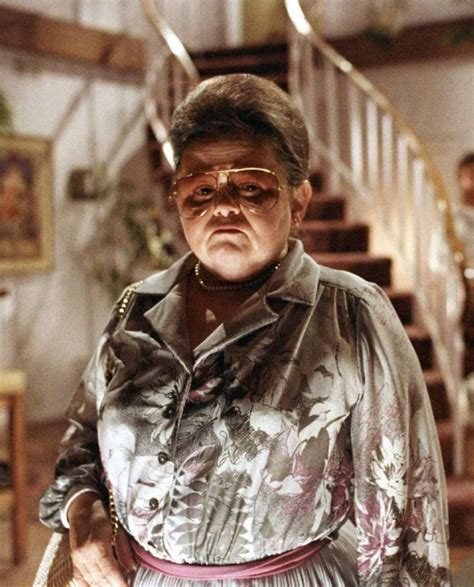
In Poltergeist III, Tangina senses that Carol Anne Freeling is once again in danger, even though she's staying with her aunt and uncle. She and Kane battle, resulting in her death; however, even after dying, Tangina is powerful and is able to convince to step into the light with her.
The Remake: A Missed Opportunity?
The remake of Poltergeist decides to go with the more typical horror movie opening that shows the Bowen family deciding on a new home to move into temporarily while they deal with their current money troubles and father, Eric’s, lack of job. However, things start going wrong pretty quickly. This time around, the ghosts are a fan of any kind of technology, frying teenage daughter Kendra’s phone, causing the TV to act strangely, and other electronics to run by themselves during the night.
Eric and Amy aren’t the worst couple ever, but they just don’t display the same bond and love that the Freeling parents do. However, Eric and Amy aren’t given as much to do in the remake compared to Steven and Diane. However, a lot of the action that was rightfully Amy’s in the remake is given to Griffin instead.
Despite hitting a lot of the same plot beats, the haunting in both versions of Poltergeist feels very different. However, in the remake, the scene feels very watered down. With Amy and Eric out to dinner, it’s only the children who experience the haunting. Madison is simply lured into the closet by her soft toy pig, realising too late that she cannot escape by herself. While Kendra and Griffin are also being attacked, it doesn’t have the same level of sneakiness or distraction that the 1982 movie did.
The other bit that feels the most distant is the second attack by the Beast when the family thinks the house is clean. In the 2015 version, the second attack comes right after the first has been resolved, as the family pack themselves into the car. With the car being dragged through the wall of their house, Madison is pulled upstairs in a scene that most haunting movies have featured since Paranormal Activity (2007) came out. The family manages to escape through a window as Carrigan gives the ghosts a happy ending.
Overall, the original version of Poltergeist is a complete classic. It wrote the standard which most haunted house movies, especially those involving young children, now follow, and it was a perfect piece of gateway horror. Even in 2021, the effects are still amazing, the face-melting scene still makes me feel sick, and the tree almost swallowing Robbie whole is completely terrifying. The remake, however, lacks the heart of the 1982 movie. The addition of more technology, including a drone, just felt very unneeded, and will no doubt date the movie in years to come. The scares are lacking and rushed, with more focus on CGI-fuelled scenes that make the movie more forgettable than anything else.
| Aspect | Poltergeist (1982) | Poltergeist (2015) |
|---|---|---|
| Family Dynamic | Loving, strong parental bond | Less developed parental bond |
| Special Effects | Practical, iconic | CGI-heavy, less memorable |
| Tangina Barrons | Charismatic, empathetic, central role | Carrigan Burke, less impactful |
| Overall Impact | Classic, genre-defining | Forgettable, lacks heart |
tags: #psychic #from #poltergeist