Have you ever felt drained by the energy of people around you? Negative energy can disrupt your balance, but Reiki offers a way to shield yourself while restoring inner peace. Reiki, the Japanese healing technique said to channel universal life energy through the palms, is a widespread wellness practice with broad applications. The peaceful, grounding energy of Reiki blends beautifully with the calm introspection of meditation.
This article explores the benefits of Reiki meditation, how to integrate it into your practice, and what to expect during a session. Whether you're a seasoned meditator or new to energy healing, discover how Reiki can enhance your well-being.
Understanding Reiki
Reiki is a form of energy healing that originated in Japan in the early 20th century. The word “Reiki” comes from two Japanese words: “rei,” meaning “universal,” and “ki,” meaning “life energy.” Reiki practitioners believe that this life energy flows through all living things and plays a vital role in our overall health and well-being.
Different cultures have different words for this concept. For example, the Hindi/Sanskrit term “Prana,” often referenced in yoga. “Qi” or “Chi” is a Chinese term frequently mentioned in various martial arts and acupuncture. My first introduction to this type of energy, long before I was introduced to Reiki, was through the Hawaiian term and belief of “Mana.”
There are many different terms, but at the end of the day, it all boils down to universal life energy. This energy is believed to be a key component for maintaining physical, emotional, mental and spiritual wellbeing.
Read also: Enhancing Well-being with Reiki
Origins and History of Reiki
Mikao Usui developed Reiki in the early 20th century after a profound spiritual experience. Usui’s teachings were based on his personal experiences and a combination of traditional Buddhist teachings, martial arts, and his own unique insights into healing and spirituality. After Usui’s death, his students continued his legacy, spreading Reiki worldwide.
Reiki is grounded in five core principles, which practitioners recite and abide by:
- Just for today, I will not be angry.
- Just for today, I will not worry.
- Just for today, I will be grateful.
- Just for today, I will do my work honestly.
- Just for today, I will be kind to every living thing.
These principles emphasize living in the present and approaching life with peace, gratitude and compassion.
How Reiki Works
Reiki practitioners use a technique called “laying on hands” or “palm healing” to channel this life force energy to the recipient. The practitioner acts as a conduit for the energy, directing it to areas where it is needed most. During a Reiki session, the practitioner places their hands lightly on or just above the fully clothed recipient’s body, allowing the Reiki energy to flow through them.
Similar to the principles of acupuncture or acupressure, Reiki works with the chakras and often the meridians of the body. Reiki is an even less invasive process. In acupuncture, needles are used to help remove blocked or stagnant energy, and in acupressure, pressure is applied instead of needles.
Read also: Reiki Levels Seattle
During a session, the practitioner will typically start at the head and place their hands on or above your eyes, ears, top of the head and back of the neck. They will then continue to move down the body to the feet. As the recipient, you may notice your body getting warm in certain areas, see different colors or shapes, or simply feel calm and relaxed.
Reiki is often used for relaxation, stress reduction, pain relief and promoting overall wellbeing. It is considered a holistic healing modality that addresses the physical, emotional, mental and spiritual aspects of an individual. Because Reiki is simply the movement of energy, properly trained practitioners may also be able to conduct sessions remotely, as long as the recipient is open and willing to receive the energy work.
It is important to note that a rule of Reiki is that practitioners must have permission from the recipient to give any kind of Reiki treatment. While the efficacy of Reiki is still debated within the scientific community, many individuals report positive experiences and benefits from Reiki treatments, including feelings of relaxation, peace and improved quality of sleep.
Reiki is often used alongside conventional medical treatments as a complementary therapy rather than a replacement for professional medical care.
Integrating Reiki with Meditation
Reiki meditation combines energy healing and meditation to create a wholesome healing experience. If you are attuned to Reiki energy, you can guide these for yourself. If you are not yet tuned, you can seek a Reiki practitioner or healer to guide you.
Read also: Practicing Reiki Prayer
To begin a Reiki meditation, face the palms of your hands up toward the sky. Call in the Reiki energy and ask it to assist you now in this meditation. Feel it arriving in your body. Then, allow your hands to be guided intuitively to the place in the body that needs to receive the Reiki energy. Place the palms of your hands over this area of your body.
Take your time during this meditation to move the energy wherever it needs to go. You may feel sensations of this energy in the form of tingling, warmth, coolness or just a deep sense of relaxation.
If you do not set a timer, you will know intuitively when to stop. Notice what has shifted within your body throughout the session. It is a good idea to journal or draw your impressions after a Reiki meditation, as the energy can continue to flow and show you messages in the form of images or words.
Guided Reiki Meditation
Guided Reiki meditation uses specific visualizations and affirmations to facilitate relaxation and the flow of Reiki energy. While many free or premium options are available online for guided meditations, all that is needed to benefit is a quiet room and some imagination.
Here’s a simple 7-minute Reiki meditation to create a protective field around you:
- Begin by finding a comfortable position, whether you’re seated, lying down, or even standing.
- Close your eyes, let your arms and legs rest naturally, and start to focus on your breath.
- Visualize a warm, radiant light entering through the crown of your head.
- Picture this light as a liquid, mist, or glow.
- Sense it filling every part of your physical body as the light continues to flow.
- Visualize the Reiki energy expanding outward from your body, forming a protective field around you-above, below, and on all sides.
- Feel the strength and reassurance of this protective field.
- Take a few more deep breaths, feeling grounded and calm.
- Wiggle your fingers and toes gently to reawaken your body.
After completing this Reiki meditation, take a few moments to reflect on your experience to help integrate its benefits into your daily life.
Full Reiki Session for You 🙌 Guided Meditation Experience
Additional Tips for Enhancing Your Reiki Meditation
- Breathwork: Use deep abdominal breathing to promote relaxation and facilitate the movement of energy. Try the 4-7-8 method: take a 4-second breath, hold for 7 seconds, and exhale for 8 seconds.
- Visualization: Visualize a healing white light surrounding you, or focus on purifying energy in a specific organ.
- Mindfulness: Practice mindfulness exercises, such as focusing on your breath or observing your thoughts, to enhance your connection with the energy around you.
- Create a Sanctuary: Select a quiet space in your home with calming colors, crystals, plants, and soft lighting to create an atmosphere of peace and tranquility.
Benefits of Reiki Meditation
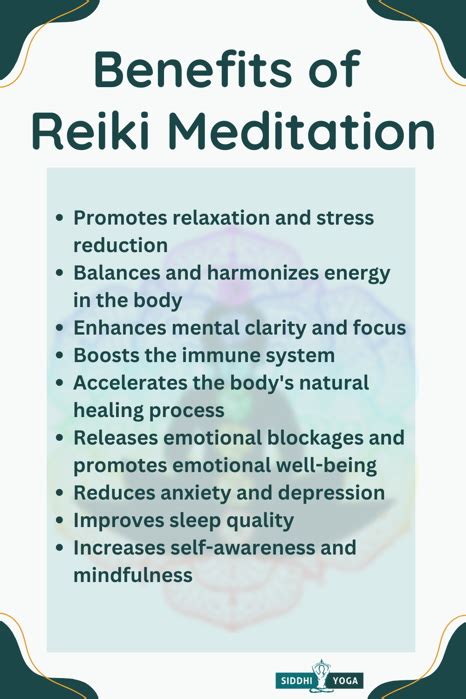
Meditation offers profound benefits for your mind, body, and energy. Reiki, in particular, connects you to universal energy, fostering healing and protection. The more time and energy you pour into this practice, the more quickly you’ll see the benefits.
Here are some of the reported benefits of Reiki:
- Stress Reduction: Reiki induces deep relaxation, calming the nervous system and promoting a sense of peace and wellbeing.
- Physical Healing: Reiki can accelerate the body’s natural healing processes and support recovery from illness, injury, or surgery.
- Emotional Wellbeing: Reiki can help release emotional blockages, alleviate anxiety and depression, and foster a sense of emotional wellbeing and inner peace.
- Energy Balance: Reiki harmonizes the flow of life energy within the body, clearing energy blockages and restoring balance.
- Spiritual Growth: Reiki can deepen one’s spiritual connection and awareness, facilitating personal growth and a greater sense of purpose.
- Improved Quality of Sleep: Reiki often allows the recipient the opportunity to sleep soundly after sessions due to stress reduction and overall wellbeing.
The following table summarizes the key benefits of Reiki meditation:
| Benefit | Description |
|---|---|
| Stress Reduction | Induces deep relaxation and calms the nervous system. |
| Physical Healing | Accelerates natural healing processes and supports recovery. |
| Emotional Wellbeing | Releases emotional blockages and alleviates anxiety and depression. |
| Energy Balance | Harmonizes the flow of life energy and clears blockages. |
| Spiritual Growth | Deepens spiritual connection and fosters personal growth. |
| Improved Sleep | Promotes restful sleep through stress reduction and overall wellbeing. |
Overcoming Skepticism
It’s understandable why Reiki might be met with skepticism. Its principles are not easily measured by traditional scientific methods, and many practitioners and clients report benefits that sound subjective or placebo-driven. However, Reiki requires an open mind about what health and healing mean beyond the physical manifestations we’re accustomed to.
If you’re intrigued but unsure, start small. Consider a trial session or talk to practitioners and those who have experienced Reiki firsthand. Ask questions, express your doubts and see if the answers resonate with you on any level. Again, it is very important to find a practitioner that you feel comfortable with.
Think of Reiki as a supplement to your health regimen, not a substitute for traditional medical treatment. It’s a low-risk practice - since it’s non-invasive and considered safe alongside other medical therapies - that has the potential to offer profound benefits.
tags: #reiki #meditation #script