Retrograde extrapolation is a scientific theory that helps estimate what a driver's breath or blood alcohol concentration (BAC) might have been at the time of driving. Because the evidentiary breath or blood test is rarely taken at the scene immediately after the arrest, a delay always occurs between the time of testing and the time of driving.
Facing DUI charges can feel overwhelming. Suddenly, everything seems on the line: your reputation, freedom, insurance, and future. In a DUI breath test case or a DUI blood test case, understanding retrograde extrapolation and using it to your advantage can make all the difference in how your case is resolved.
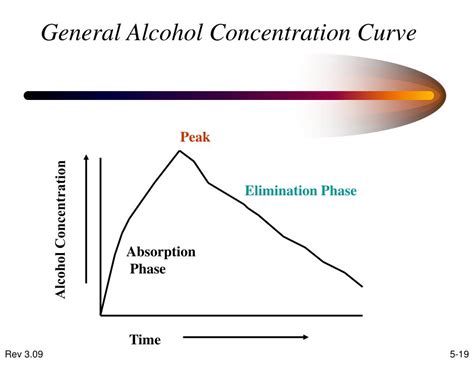
Alcohol Elimination Curve
What is Retrograde Extrapolation?
Retrograde extrapolation is a mathematical calculation used to estimate a person's blood alcohol level at a particular point in time by working backward from the time the breath or blood sample was taken by law enforcement after the arrest. Either the state or the defense can present expert testimony on retrograde extrapolation.
The calculation requires information regarding the rates at which alcohol is absorbed and excreted. In any case, the court must determine the relevancy of testimony about retrograde extrapolation. The admissibility of retrograde extrapolation evidence often depends on whether enough factors affecting the calculation are known.
Read also: Orient Star Retrograde: Is it Worth It?
Retrograde extrapolation is a type of scientific guesswork used to estimate your blood-alcohol content at the time you were pulled over. It’s based on body weight, whether you had any food, the amount of alcohol consumed, the timeframe for consumption, and how much time has passed between arrest and testing, among other factors.
The state needs to answer these questions:
- What type of alcohol was he drinking?
- How much did he drink?
- How quickly did he drink it?
- When did he stop drinking?
In cases where the police take blood for testing hours after driving, these questions become crucial for performing retrograde extrapolation.
Retrograde Extrapolation
The Science Behind Retrograde Extrapolation
Retrograde extrapolation, or just extrapolation, is a process by which an individual’s blood alcohol content (BAC) can be estimated at a given time by analyzing their BAC at a different time. At its core, retrograde extrapolation involves applying a mathematical formula derived from a series of assumed average values.
When a person consumes alcohol, the concentration of alcohol in the person’s blood rises as more alcohol is absorbed. Once the person stops drinking, the alcohol concentration eventually peaks, and then declines at a constant rate as the person’s body begins to metabolize and eliminate the alcohol.
Read also: Dates and Effects of Mercury Retrograde
The alcohol metabolization process consists of three phases: absorption, peak blood alcohol level, and elimination. The absorption phase begins immediately upon consumption. Once consumed, some alcohol is absorbed through the lining of the stomach into the bloodstream. The rest passes to the small intestine where it is absorbed into the blood and carried throughout the body. During the absorption phase, a person’s blood alcohol level increases until all the alcohol is absorbed into the blood. Once absorption is complete, the person’s blood alcohol level peaks and begins to decline.
How long it takes to reach peak alcohol level can vary depending on factors, including the subject’s drinking pattern, time of last drink, and when the subject last ate.
While a person's blood alcohol level will rise even after he or she stops drinking, once the absorption phase ends, the blood alcohol levels decline. In most cases, the absorption process generally requires one to three hours.
Factors Affecting BAC Estimation
Numerous factors can influence the accuracy of retrograde extrapolation. These include:
- Body Weight: Affects the concentration of alcohol in the bloodstream.
- Food Consumption: Eating before or while drinking can slow down alcohol absorption.
- Metabolism: Individual metabolic rates vary, affecting how quickly alcohol is processed.
- Drinking Speed: How quickly alcohol is consumed impacts the rate of absorption.
These unknowns can massively skew the estimate. In Williams, the court recognized this, and said you can’t guess your BAC without real scientific grounding.
Read also: Weddings and Mercury Retrograde
Small changes can massively impact the rates of absorption and peak BAC as a result. According to the University of Notre Dame, if an individual does not eat before drinking alcohol, they will typically reach maximum BAC levels in 30 - 120 minutes. If, however, that individual has eaten beforehand, that window expands to 1 - 6 hours. These alternatives are not considered by retrograde extrapolation because it is a simple mathematical formula designed to present what could be possible.
Challenges and Criticisms
The myriad of assumptions and variables associated with retrograde extrapolation is what makes this theory of questionable value. In fact, some of the most well-known and respected experts in the field of blood alcohol research have expressed their own reservations on the usefulness of retrograde extrapolation.
Dr. Kurt Dubowski, the virtual godfather of blood alcohol testing, once stated “no forensically valid forward or backward extrapolation of blood or breath alcohol concentrations is ordinarily possible in a given subject and occasion solely on the basis of time and individual analysis results”.
A.W. Jones, a noted research scientist in the field of blood alcohol testing once termed retrograde extrapolation as “dubious practice”. Further, Jones also outlined problems in determining the post-absorptive state of the drinking driver by concluding “the status of ethanol absorption in drunk drivers at the time of the offense is a more difficult question to tackle”.
Jones then recommended that, in order to avoid speculation over the absorptive state of the driver, states define the offense of drunk driving as having a certain BAC at the time of the breath test rather than the time of the driving.
Legal Implications and Defenses
Even if the test was over the legal limit, your criminal justice attorney might be able to use these arguments to convince the jury that at the time of driving the person accused was not over the legal limit of .08.
Important questions to consider:
- When was the test taken compared to the stop?
- Does the report record your weight, last drink, any food eaten?
- Does the officer have credentials in toxicology or science?
If records are missing or the officer is unqualified, it strengthens your motion to exclude. Breath test alone doesn’t prove BAC at the time of driving.
Without expert testimony, the prosecution may lack proof of intoxication at driving time. This can lead to charges being reduced or dropped-or at minimum, give leverage to negotiate better plea terms.
Illustrative Case: State of Florida v. Nykea Williams
In April 2025, Nykea Williams was pulled over at 3:52 AM. Ninety minutes later, she submitted a breath test with a BAC of .065. The judge concluded that this was insufficient under Daubert standards (Fla. Stat. § 90.702).
The court has carefully considered the Motion, the State’s response, the scientific literature, the testimony of the proffered expert, the very capable oral argument of the parties, and the law. For the reasons set forth herein, the Court concludes that Deputy Closius is not qualified to testify as an expert regarding retrograde extrapolation.
Blood Alcohol Content (BAC) Table
| Country/Region | BAC Limit (g/dL) |
|---|---|
| United States | 0.08 |
| Canada | 0.08 |
| United Kingdom | 0.08 |
| Australia | 0.05 |
| Most of Europe | 0.05 |
tags: #retrograde #extrapolation #calculator