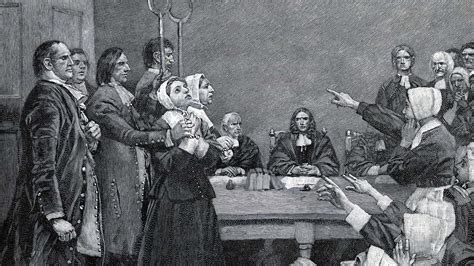
The Salem Witch Trials Memorial stands as a poignant reminder of the tragic events that unfolded in colonial Massachusetts between February 1692 and May 1693. During this period, more than 200 people were accused of witchcraft, resulting in 30 convictions and 19 executions by hanging. The trials, a dark chapter in American history, have become a cautionary tale about the dangers of religious extremism, false accusations, and lapses in due process.
The Need for a Memorial
Initially, very few residents of the Salem area wanted to talk about what happened, let alone memorialize it in any way. The trials were quickly thought of as a stain on their history. However, the Salem Witch Trials Tercentenary Committee was established on April 22, 1986, by the Mayor of the City of Salem, with a principle intention of creating a permanent memorial to the victims of the witch trials.
Design and Symbolism
A public design competition, juried by five noted professionals, resulted in 246 entrants. The winning entry, designed by Maggie Smith and James Cutler of Bainbridge Island, Washington, was presented to the press and public by renowned playwright Arthur Miller on November 14, 1991. Striking in its simplicity, the Memorial is surrounded on three sides by a handcrafted granite wall.
Inscribed in the rough stone threshold entering the Memorial are the victims’ protests of innocence. At the memorial’s entrance, the clipped quotations represent the silenced voices of the accused during the Salem witch trials. These protests are interrupted mid-sentence by the wall, symbolizing society’s indifference to oppression. Their statements of innocence are cut off mid-sentence, symbolizing how their pleas were ignored and dismissed.
In the center is a simple patch of grass and locust trees, which are thought to be the type of tree that may have been used for the hangings. A dirt path runs beside the benches for visitors to walk and reflect. Silently watching from just over the wall are the gravestones in the adjacent Old Burying Point Cemetery, the oldest cemetery in Salem and one of the oldest in the United States. Among the interred are witch trials magistrates John Hathorne and Bartholomew Gedney.
Read also: A Journey Through Witchcraft
Key Features of the Memorial
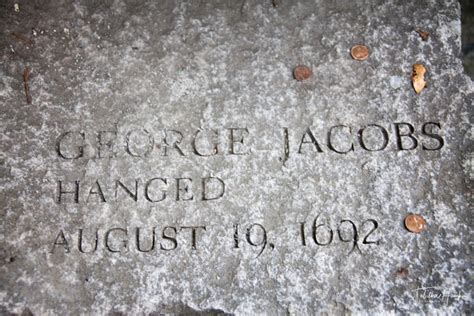
- Granite benches inscribed with the name, means of execution, and execution date of each of the 20 victims who were executed.
- A granite Bible box and book with metal shackles. Behind the box are granite panels inscribed with the names of the executed, the date and manner of their execution, and the town where they were from.
Visiting the Memorial
The Witch Trials Memorial is located on Liberty Street between Charter Street and Derby Street and is open from dawn till dusk. When visiting the Salem Witch Trials Memorial it’s important to treat it with honor and respect.
The memorial is typically accessible to visit during daylight hours.
Proctor’s Ledge Memorial
A simple memorial, designed by landscape architect Martha Lyon, was dedicated on July 19, 2017, the 325th anniversary of the hangings of Sarah Good, Elizabeth Howe, Susannah Martin, Rebecca Nurse, and Sarah Wildes. Embedded in the semi-circular wall are stones engraved with the names of the nineteen victims.
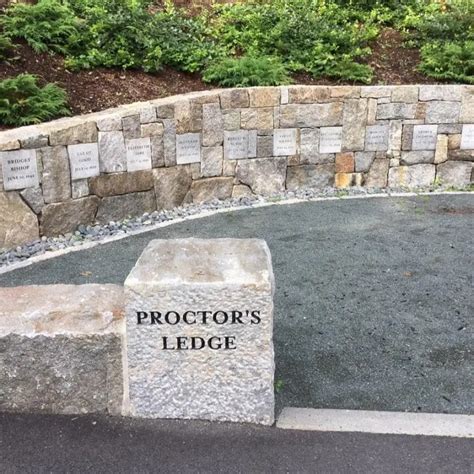
It is unclear when the name Proctor’s Ledge came into existence. The area was apparently owned by Proctors at one time, though is not directly connected to John Proctor who was executed here on August 19. The memorial is located in a residential neighborhood.
Additional note: The intersection of Boston and Proctor Streets, just a short distance from Proctor’s Ledge, was the location of the Korn Leather Company in 1914. On June 25, a chemical fire began here which burned for 13 hours, sweeping through Salem and destroying nearly 1400 buildings, rendering 18,000 homeless or jobless.
Read also: Understanding Witchcraft in Scripture
What really happened during the Salem Witch Trials - Brian A. Pavlac
Read also: Urdu Article: Understanding Witchcraft
tags: #salem #witchcraft #memorial