Have you ever marvelled at the beauty of a snowflake or the intricate patterns within a seashell? Nature is perhaps the most splendid teacher of sacred geometry. From the spirals of galaxies to the curve of a snail's shell, nature flourishes with geometric patterns. This ancient practice has intrigued philosophers, architects, artists, and scientists for centuries and is often seen as a visual expression of the harmony and order of the universe.
Sacred geometry is a term that describes the geometric laws which create everything in existence. It delves into the spiritual and philosophical meanings behind shapes and patterns, offering a deeper understanding of our world and its hidden order. Sacred geometry connects the mind and the heart, spirit and matter, science and spirituality. It's a universal language, demonstrating a shared understanding of the interconnectedness and harmonious balance throughout the universe.
Sacred Geometry represents the fundamental blueprint of creation-a visual language that reveals how energy patterns organize themselves into everything from microscopic cells to vast galactic spirals. When we observe sacred geometry symbols, we're witnessing the invisible architecture of reality itself. These patterns serve as a powerful bridge between rational science and intuitive spirituality, offering insights that satisfy both our analytical minds and our sense of wonder.
Geometric shapes such as triangles, circles, squares, stars and rectangles have been part of human religious symbolism for thousands of years. Sacred geometry subtly makes its presence known in the world around us. The patterns and designs in everyday objects, from the furniture in our homes to the clothes we wear, often reflect its principles.
Key Sacred Geometry Symbols
Have you ever gazed at a flower's spiral pattern or a seashell's perfect curve and felt an inexplicable sense of recognition? In this comprehensive guide, we'll journey through the most significant sacred geometry symbols-from the fundamental Seed of Life to the multidimensional Merkaba-revealing their profound sacred geometry meaning and how these patterns encode the very structure of consciousness and reality.
Read also: Understanding anemia spiritually
Understanding the shapes is only the first step. To truly benefit from sacred geometry, you must engage with these patterns actively. Select a symbol that aligns with your current intent (e.g., the Seed of Life for new beginnings). Sit comfortably and gaze softly at the center point of the image for 3-5 minutes. Close your eyes and attempt to reconstruct the geometry in your mind's eye, visualizing it spinning clockwise. Use sacred geometry art (like wood cutouts or printed mats) as a base for crystal grids. Place your "Master Crystal" in the center and arrange supporting stones at the intersection points of the lines (nodes). Using a compass and straightedge to draw these patterns is a powerful meditative act. The process of connecting centers to circumferences synchronizes the left (logical) and right (creative) hemispheres of the brain. Place large-scale sacred geometry wall art in areas where energy tends to stagnate.
1. The Seed of Life
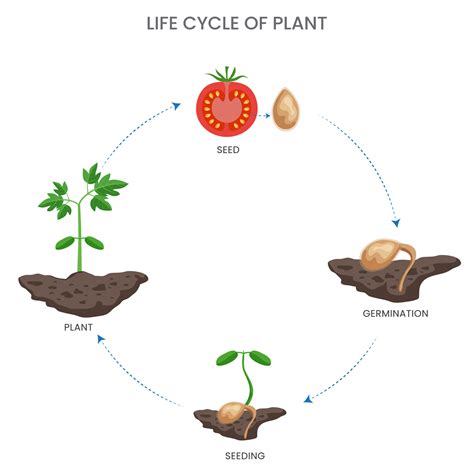
The Seed of Life, a symbol of seven overlapping circles, is a fundamental design from which the Flower of Life develops. It is often viewed as a symbol of creation, representing the origin of all things, and is a visual expression of the connections that run through all beings and the cosmos itself. The Seed of Life represents one of the most fundamental sacred geometry shapes-a perfect arrangement of seven interlocking circles radiating from a central point. Medieval cathedrals incorporated the Seed of Life in stained glass windows and floor designs, while traditional Islamic art features this pattern in intricate geometric compositions.
2. The Flower of Life
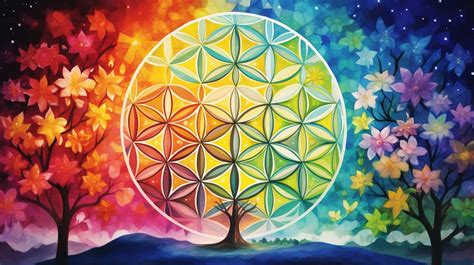
The Flower of Life stands as perhaps the most revered of all sacred geometry symbols-a magnificent pattern consisting of 19 complete circles arranged in a hexagonal pattern, often enclosed within a larger circle. The symbol's structure lays the foundation for the design of everything from the molecular to the galactic scale. The Flower of Life’s harmonious form is considered a visual expression of connection through all living beings. This pattern has been showcased throughout history in manuscripts, temples, and art across cultures and continents.
3. Metatron’s Cube
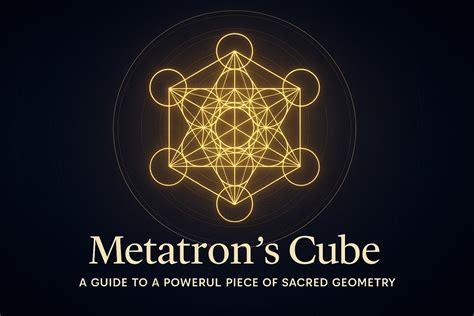
Metatron’s Cube stands as perhaps the most profound and mathematically significant of all sacred geometric patterns-a crystalline framework that encodes the fundamental structure of space-time itself. Metatron’s Cube is a symbol of sacred geometry containing every shape in the universe, including 13 circles derived from the Flower of Life. Named after the Archangel Metatron, this symbol represents the journey of energy throughout the universe and the balance of energy within. The construction of Metatron's Cube begins with the Fruit of Life-thirteen circles arranged in perfect hexagonal symmetry. Many practitioners use Metatron's Cube as a cleansing grid.
4. The Tree of Life
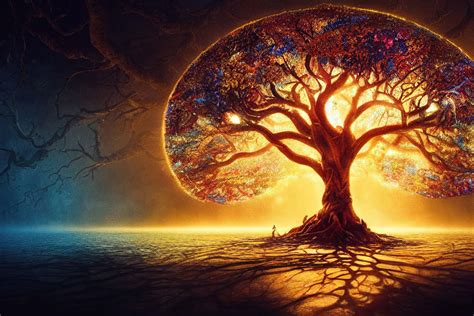
The Tree of Life stands as one of humanity's most profound and universal sacred symbols-a dynamic map of consciousness that appears with remarkable similarity across diverse spiritual traditions worldwide. In sacred geometry, the Tree of Life is used to represent the idea that all life is related and interconnected.
Read also: Hamsa Hand: Symbolism and history
5. The Sri Yantra
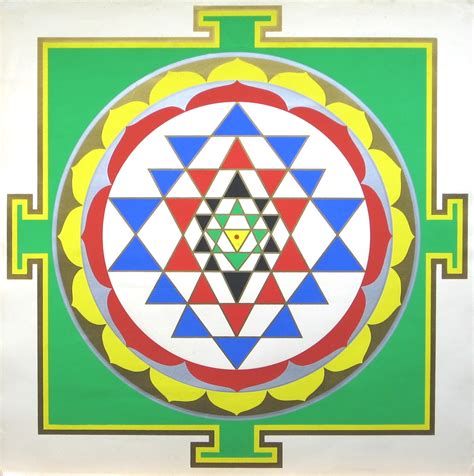
The Sri Yantra is an ancient symbol of great significance in Hindu philosophy and spirituality. Composed of nine interlocking triangles that radiate from a central point, it forms 43 smaller triangles, creating a web symbolic of the entire cosmos. The Sri Yantra is often used in meditation and worship in Hindu Tantra, serving as a tool for contemplating the divine and the universe.
6. The Golden Ratio
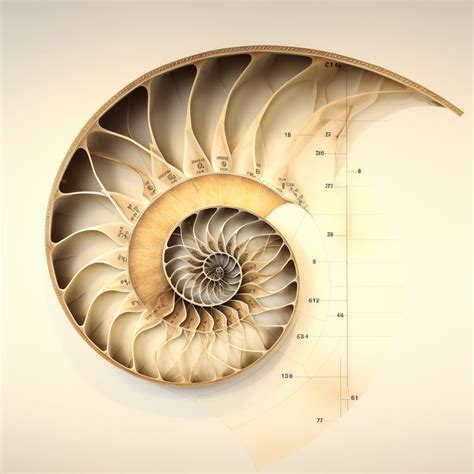
The Golden Ratio, denoted by the Greek letter Phi (Φ), represents a mathematical ratio of 1.6180339887... that appears frequently in the natural world. It is often considered the most aesthetically pleasing proportion, symbolising the essence of beauty and harmony in the universe.
7. The Merkaba
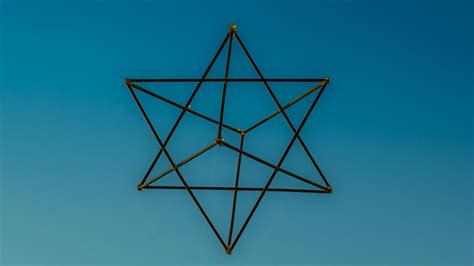
The Merkaba (also spelled Merkabah) represents one of the most powerful energetic structures in sacred geometry-two interlocking tetrahedrons rotating in opposite directions to create a perfectly balanced, multidimensional energy field. The Merkaba is a complex symbol comprising two tetrahedrons intersecting to form a three-dimensional star. Often depicted as rotating in opposite directions, this symbol represents the light, spirit, and body; the Merkaba is said to be a divine light vehicle.
8. The Vesica Piscis
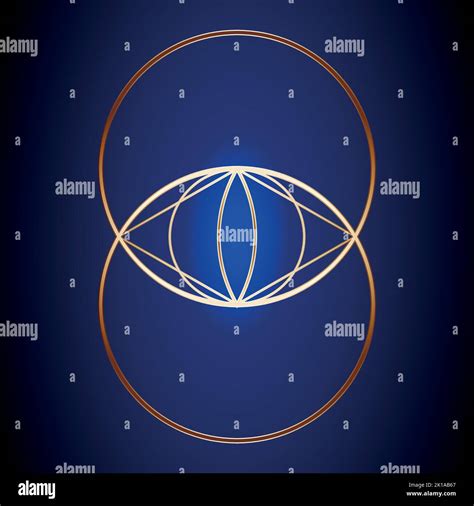
The Vesica Piscis is a shape formed by the intersection of two circles of the same radius, with the centre of each circle lying on the circumference of the other. It symbolises creation, depicting the fundamental forms of space and time. The Vesica Piscis stands as perhaps the most fundamental of all sacred geometry symbols-an elegant intersection of two identical circles where each center rests perfectly on the other's circumference. From this singular point emerges the first and most fundamental sacred geometric pattern: the Vesica Piscis.
9. The Fibonacci Sequence
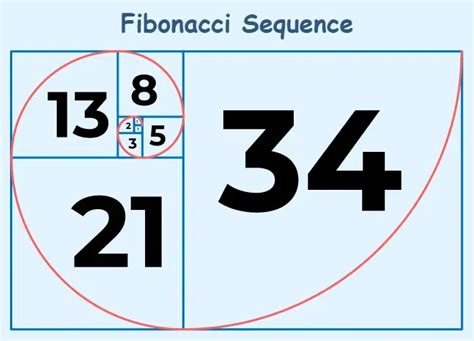
Intimately intertwined with the golden ratio is the Fibonacci Sequence, a series of numbers that has long captivated both mathematicians and nature enthusiasts alike. The Fibonacci Sequence, a series of numbers where each number is the sum of the two preceding ones, is a fundamental pattern that emerges repeatedly in the natural world. Its origins trace back to Indian mathematicians around 700 CE, but it was later popularized in the West by Leonardo of Pisa, more commonly known as Fibonacci. In nature, it appears in the arrangement of leaves, the branching of trees, the spirals of shells, and the flowering of artichokes.
Read also: Light Blue: Calmness and Healing
10. Platonic Solids
Plato talked about five special 3D shapes, known as the Platonic solids. These are the only known three-dimensional shapes with the unique property of having equal sides, equal angles, and identical faces. All five shapes have identical faces, identical angles, and identical vertices. They're also the only shapes that can perfectly fit inside a sphere with every vertex touching the sphere's surface-a property that makes them fundamental to both mathematics and nature. The solids consist of the Tetrahedron (fire), Cube or Hexahedron (earth), Octahedron (air), Dodecahedron (spirit or aether), and Icosahedron (water). Each solid is believed to represent the foundation of nature’s elements.
Sacred Geometry: Unlocking the Universe's Hidden Patterns
The Philosophical and Scientific Significance
Sacred geometry begins with a profound concept: everything in our universe emerges from a single point of infinite potential. Contemporary science has unveiled striking correlations between sacred geometric patterns and fundamental physical laws. String Theory, one of the leading candidates for a "theory of everything," proposes that the universe consists of vibrating strings whose patterns create all particles and forces. The E8 Lattice, discovered by mathematician Garrett Lisi, represents one of the most complex geometric structures known to mathematics-a 248-dimensional pattern that may encode all known particles and forces in physics.
Sacred geometry represents a profound philosophical framework that bridges ancient wisdom and contemporary understanding. At its core lies the belief that geometric patterns are not merely human constructs, but rather fundamental principles embedded in the fabric of reality itself. Philosophers from Pythagoras to Plato viewed geometry as the language through which the divine architect communicates the underlying order of existence. Pythagoras famously declared "All is number," suggesting that numerical relationships form the essence of all things.
Geometric Shapes in Art and Art Therapy
Throughout history, sacred geometry has influenced art and architecture. The use of geometric shapes in art is as old as human creativity itself. From the circles carved into ancient stones to the precise grids of modern abstract paintings, geometry has always given structure to visual expression. These shapes-circles, squares, triangles, and more-are precise and mathematically consistent, standing apart from the irregular, flowing qualities of organic shapes. Artists have used them to create balance, rhythm, symbolism, and even illusions.
Geometric shapes in art define balance, symbolism, and structure across history. From ancient pyramids to Mondrian’s grids and fractal art, geometry connects culture, math, and creativity.
The definition of geometric shapes in art is simple: they are mathematically defined forms like squares, circles, rectangles, and triangles. They are exact and predictable, unlike organic shapes that occur in nature, such as the outline of a leaf or the curves of a river. Geometric shapes often convey human order and structure. A square, for example, suggests stability, while a circle implies wholeness and continuity. In architecture, these forms build temples, cathedrals, and skyscrapers. In painting and sculpture, they provide the foundation for abstract designs or symbolic meaning. Understanding geometric and organic shapes in art allows us to see how artists balance order with natural flow.
Symbolic Meanings of Geometric Shapes in Art
Throughout history, artists have assigned symbolic value to geometric forms. These meanings vary across cultures but share common threads:
- Squares and rectangles: Associated with stability, peace, and grounded order. They often appear in architectural designs and minimalist paintings.
- Circles: Represent unity, eternity, and cosmic cycles. In religious art, circles often symbolize divine perfection.
- Triangles: Pointing upward, they suggest strength and power; pointing downward, they can indicate instability or tension.
- Stars, hexagons, and polygons: Common in Islamic art, where intricate geometric patterns symbolize the unity of science, spirituality, and design.
These symbolic layers explain what geometric shapes mean in art beyond their appearance. They are not only forms but also conveyors of abstract thought and cultural values.
Geometric Shapes in Art Movements
The story of modern art cannot be told without geometry. Entire movements have centered on geometric principles, each using them to express new ideas.
- Cubism (1907-1914): Led by Pablo Picasso and Georges Braque, Cubism broke objects into cylinders, cones, and spheres, showing multiple perspectives at once. This shift marked the beginning of pure geometric abstraction.
- Suprematism (1915): Founded by Kazimir Malevich, it reduced painting to basic forms like squares and circles. His iconic Black Square stripped art to its essentials.
- De Stijl (1917): Dutch artists Piet Mondrian and Theo van Doesburg created balanced grids of primary colors and lines. Mondrian’s Composition with Red, Blue, and Yellow remains a classic example.
- Bauhaus (1919-1933): This German school merged fine art with design, making geometry central to modern architecture and objects. Josef Albers explored how colors interact within geometric structures.
- Minimalism (1960s-1970s): Artists like Sol LeWitt and Frank Stella used geometric grids and boxes to focus on ideas rather than decoration.
- Op Art (1960s): Bridget Riley and Victor Vasarely used precise patterns to create optical illusions, proving that simple shapes could create dynamic movement.
- Fractal Art (1980s-today): Digital tools generate endlessly repeating patterns, showing how math and art merge in contemporary creativity.
These examples show art geometric shapes in art at the core of some of the most influential movements of the past century.
How Artists Use Geometric Shapes
Artists use geometry in many ways to shape composition and meaning:
- To organize space: Squares and circles structure a painting, sculpture, or design, giving it order.
- To create rhythm: Repeated shapes form patterns that suggest movement, much like beats in music.
- To build balance and stability: Symmetrical arrangements of triangles or rectangles create visual harmony.
- To define positive and negative space: The shapes themselves and the empty areas between them work together to form complete designs.
- To construct forms: Artists often start with basic geometric outlines-like spheres for heads or cubes for buildings-before adding details.
These methods explain what geometric shapes in art do: they help transform a blank space into a thoughtful, balanced composition.
Geometric Shapes in Art Examples
Examples of geometric shapes in art are found across cultures and centuries. Ancient Egyptians used pyramids and grids to represent both physical and spiritual order. Islamic tile work created endless tessellations of stars and polygons. Renaissance artists used geometry to map perspective, giving depth to their paintings. In the 20th century, Mondrian’s grids, Malevich’s abstract squares, and Vasarely’s optical illusions showed geometry’s modern potential. Even contemporary digital art relies on mathematical formulas to produce fractals and repeating forms. Each example shows how geometry connects art to both human invention and universal order.
The role of geometric shapes in art is far more than decorative. They define balance, structure, and meaning across cultures and centuries. From the symbolic stability of squares to the cosmic unity of circles, geometry shapes the way we see and interpret visual works. Major art movements, from Cubism to Op Art, have relied on these forms to push creativity forward. By studying geometric shapes in art examples, we learn not only about artistic technique but also about cultural ideas and values.
Geometric Shapes in Art Therapy
Guided drawing in art therapy often incorporates the use of primary shapes as a foundational element in the artistic process. Primary shapes, such as circles, squares, and triangles, serve as fundamental building blocks that can be combined and manipulated to create more complex forms. This approach is particularly beneficial in art therapy because it provides a structured and accessible way for individuals to express themselves visually. By breaking down images into basic shapes, participants can focus on the creative process without feeling overwhelmed by the complexity of detailed representation. The importance of using primary shapes in art therapy lies in their ability to facilitate self-expression and communication. For individuals who may find it challenging to articulate their thoughts and emotions verbally, engaging with simple geometric forms can serve as a non-verbal language. Shapes become a means of conveying feelings, experiences, and perceptions that might be difficult to put into words. This non-threatening and symbolic form of expression can be especially valuable for those dealing with trauma, anxiety, or other emotional challenges.
Shapes hold psychological meanings that can evoke various emotions and associations. While interpretations can be subjective, there are common psychological associations with certain familiar shapes. Here, we'll explore some of these meanings:
| Shape | Symbolism | Psychological Association |
|---|---|---|
| Circles | Unity, wholeness, continuity | Completeness, harmony, cycles, eternity, interconnectedness, balance, inner peace, supportive community, self, personal growth |
| Squares and Rectangles | Stability, order, structure | Security, predictability, desire for organization, need for control, feelings of confinement, boundaries |
| Triangles | Tension, direction, energy | Conflict, ambition, pursuit of goals, desire for growth, upward movement, internal and external challenges, aspiration, introspection, vulnerability |
| Spirals | Journey, transformation | Personal evolution, continuous growth, cyclical nature of life, developmental paths, ups and downs of life, self-discovery |
| Hearts | Love, emotion | Affection, connection, compassion, romantic love, self-love, desire for emotional intimacy |
| Organic Shapes | Freedom, spontaneity, authenticity | Inner creativity, emotions without constraints, primal and instinctual aspect |
Understanding the psychological meanings behind familiar shapes is a valuable aspect of art therapy.