For over a decade, one of the biggest stories in American religion has been the rise of the “Nones”, a broad term for people who do not identify with a specific faith. While the Nones include agnostics and atheists, most people in this category retain a belief in God or some higher power. Many describe themselves as “spiritual but not religious,” or “SBNR,” as researchers refer to them.
The phrase "Spiritual but not religious" (SBNR), also known as "spiritual but not affiliated" (SBNA), or sometimes "more spiritual than religious", is a popular phrase used to self-identify a life stance of spirituality that does not regard organized religion as the sole or most valuable means of furthering spiritual growth.
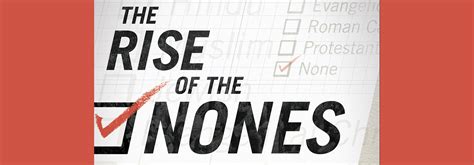
Rise of religiously unaffiliated individuals in the U.S. (Source: Pew Research Center, 2012)
Defining "Spiritual But Not Religious"
Scholars fret over the slippery definitions of “spiritual” and “religious.” What the average person tends to mean by “spiritual” is seeking or experiencing a connection with a greater reality, however they understand it. The theologian Linda Mercadante spent several years interviewing SBNRs. In her book “Belief without Borders”, she identifies some common values.
SBNRs tend to be individualistic, trusting their own experience and intuition as a guide. Repudiating “organized religion” as a bastion of dogmatism and moral hypocrisy is common among SBNRs. They often explicitly reject what they understand to be central Christian beliefs. They don’t welcome a message that God loves them but will send them to hell for not accepting Jesus.
Read also: Understanding "Religious But Not Spiritual"
Historical Context: Protestant Spiritualists
In 1528, Lutheran pastor Sebastian Franck decided he’d had enough of organized religion. Deeply disturbed by the moral failures of professing Christians, he resigned his pulpit. The Protestant Reformation had recently split the Christians of Western Europe into various factions, pitting Roman Catholics against Lutherans, Zwinglians - whose influence lives on in Reformed churches today - and Anabaptists, who practiced adult baptism.
Franck declared that the true church was the invisible fellowship of people who were instructed, not by the pope or the Bible, but by the divine spark within. He became a leading figure in a form of radical Protestantism that scholars would later call the “Spiritualists” or “spiritual reformers”. This diverse cast of characters downplayed or rejected the outward trappings of religion, such as rituals and sacraments.
Hans Denck, who is sometimes credited as the first Spiritualist, described this experience as the “inner Word” speaking from within a person’s soul. “The Word of God is already with you before you seek it,” he wrote. Unlike typical Protestants, Denck and the other Spiritualists saw the Bible as redundant. Because the inner Word resided within all human beings, certain Spiritualists held that salvation was not limited to Christians. “Consider as thy brothers,” wrote Franck, “all … who fear God and work righteousness,” even those who never heard of Christ.
There was no need to send missionaries to other nations. Partly because of persecution and partly because of their emphasis on the individual, the Spiritualists rarely formed structured communities. Today, they are mostly forgotten outside of church history courses.
The parallels between the Protestant Spiritualists and many contemporary SBNRs can be striking. Both are repulsed by the ethical failings and exclusivism of religious communities. Both emphasize the responsibility of the individual to follow their own spiritual quest. Both believe that authentic experience of God or ultimate reality is available to all people, regardless of their specific beliefs.
Read also: Understanding anemia spiritually
But it is important to emphasize that the Spiritualists were still decidedly Christian. Contrary to most SBNRs, they considered Jesus Christ the authoritative revealer of truth. Some believed he would soon return to Earth for his Second Coming and waited as expectantly as any end times-focused fundamentalist does today. Even so, the Spiritualists demonstrate that the values and attitudes of SBNRs are far from a new development. They wrestled with similar difficulties in religion and came up with similar answers.
The Rise of SBNR: Statistics and Trends
Throughout the 2010s, a new phenomenon gained momentum across the American religious landscape. It grew to such an extent that, by 2017, the Public Religion Research Institute estimated that one out of every five Americans were identifying as spiritual but not religious (SBNR). These people viewed themselves as spiritual-valuing spiritual ideas or practices-but didn’t identify with any particular organized religion.
A few days after that report came out, Vox published an article offering commentary on its findings, along with firsthand testimonies from SBNRs. That same year, a PEW study reckoned that SBNR Americans constituted up to 27 percent of the population. For the last eight years, it has become more and more common for people to present themselves as spiritual but not religious.
According to a study conducted by Pew Research Center in 2012, the number of Americans who do not identify with any religion has increased from 15% in 2007 to 20% in 2012, and this number continues to grow. 18% of the US public and a third of adults under the age of 30 are reportedly unaffiliated with any religion but identify as being spiritual in some way. Generational replacement has been understood as a significant factor of the growth of religiously unaffiliated individuals. Demographically, research has found that the religiously unaffiliated population is younger, predominately male, and 35% are between the ages of 18 and 29. Conversely, only 8% of religiously unaffiliated individuals are 65 and older.
Another possible explanation for the emergence of SBNR is linguistic. Owen Thomas highlights the fact that spirituality movements tend to be localized to English and North American cultures.
Read also: Light Blue: Calmness and Healing
Characteristics of SBNRs
Folks who identify as spiritual but not religious engage in a wide array of beliefs and practices. Some of their sentiments are vague or innocuous, like the notion that we ought to believe in ourselves, while other ideas may seem more esoteric, like expecting multiple rebirths or living in harmony with the chi. Some who identify as spiritual but not religious see their yoga class as a deeply spiritual practice, and many consult astrological charts for guidance on day-to-day life.
As mission-minded Christians, we must remember that SBNRs aren’t our parents’ atheist neighbors. On the contrary, they are highly spiritual. They are hungry for transcendence and connection with something beyond themselves.
SBNR people hold convictions that have long found expression in the creeds of the world’s faiths. They engage in practices forged over centuries of religious zeal. Some hold resolutely to the absolute oneness of God, as Muslims have done since the seventh century. Others sit lotus-legged in meditation, as Hindu seers would do in the Himalayas. In a sense, SBNRs are super-religious, since they engage in beliefs and practices that have long been at home in the world’s faiths.
The SBNR phenomenon has been described as a move toward do-it-yourself spirituality, or DIY religion. But SBNRs don’t craft their identities ex nihilo. Rather, they borrow voraciously from a variety of religious traditions. An SBNR woman might attend a yoga class laced with Hindu lingo, practice mindfulness techniques tracing back to the Buddha, and waft sage around her dining room as prescribed in the Lakota’s Seven Sacred Rites.
As we engage SBNR people with the gospel, let’s emphasize the faith-the singular faith-once and for all delivered to the saints.
Key Aspects of SBNR Identity
- Private Spirituality: In a way, the SBNR phenomenon has seen a deinstitutionalization of religion, and with this deinstitutionalization has come a privatization of spiritual beliefs. Today’s SBNRs express their spirituality the same way that John F. Kennedy explained his Catholicism to concerned evangelical voters in 1960-as something private.
- Definition of "Religion": People who identify as SBNR tend to have a particular understanding of what “religion” means. They see religion as a set of stodgy rigamarole, as a sociological category to be stuffed into. Many of us remember well the cliché, “Christianity isn’t a religion, it’s a relationship with Jesus.” By “not religious,” many SBNRs simply mean they are not a part of any religious institution and are not beholden to a legalistic list of laws.
- Strong View of Ultimate Truth: SBNR people see truth this way, but they so strongly emphasize general revelation that they discard God’s special and exclusive speaking in the Bible. So, what’s crucial to emphasize with them is that, by knowing Christ and his inerrant Word, we have everything we need for life and godliness.
- Wary of the Church: Many SBNR people testify to having suffered “church hurt.” This phrase is vague and volatile, likely wielded cavalierly in many instances today, but it shines a light on the real mistreatment that some have surely felt in the life of our congregations.
- Need for Belonging: It may seem paradoxical, but those who are most loathe to lump themselves into a traditional religious category may be the ones most hungry for genuine spiritual community. Your SBNR friend might not like labels, but being human, he or she has an innate need for belonging.
Traditionally, Christians have used the term “general revelation” to describe these truths that can be seen in creation. God has the prerogative to reveal truths about himself wherever and however he wishes. The mountains give us a glimpse of God’s grandeur and creativity. And one of the Buddha’s sayings-though spoken by an uninspired, sadly mistaken man and preserved in a faulty, misleading text-may echo a biblical truth about how God wants us to deal with our neighbors. Wherever we find true things, it is God who put the truth there.
One hallmark of evangelical Christianity (and more particularly that of biblical soteriology) is our conviction that anyone whom God wills may repent of his or her sin, commit to following Jesus, and be saved-regardless of where they have come from or who their parents are. This offer of salvation to all, has historically driven the practice of tent revivals and evangelistic services in which all present are directed to Christ. SBNRs believe they can choose their own religious identities as individuals. So we can praise God that the call on every sinner to make a decision for Jesus extends to them too! Let’s implore SBNR people to identify with the death, burial, and resurrection of Christ.
As missional Christians, we need to help SBNR people think through their allegations of church hurt. If theirs was a legitimate harm, then that is an abhorrent misrepresentation of Christ’s church and must be dealt with. Some cases of supposed church hurt, though, may have simply been exercises in biblical accountability or discipline that the person did not like. In a spirit of genuine care for your SBNR friend, you may need to help him or her think through these perceived experiences of church hurt.
In a 2004 publication on reaching people wrapped up in “new spiritualities,” an issue group for the Lausanne Movement encouraged churches to become welcoming places of community for these spiritual seekers. Let’s invite the spiritual but not religious to come to Jesus and join his family of faith.
Understanding the Language
“I’m spiritual but not religious.” Have you heard that expression before? I recently had a conversation with someone about faith. Honesty is attractive. When talking with someone else about faith who doesn’t hold my views, I would much rather hear someone say, “Look, man. But an honest statement is not always an accurate one. What does someone mean when they use this oft-familiar phrase? Usually, what they mean is that they have a personal one-on-one relationship with God, but they don’t want anything to do with organized religion. They hold to a form of spirituality, but their spirituality is subjective, based on their feelings and needs, and requires no external commitment to others. They decide the rules of what spirituality looks like and can break and bend them however they see fit.
The confusion starts with the first word. Specifically speaking, what do you mean when you say you are “spiritual?” Historically, the word means of or relating to your spirit or the Holy Spirit, or someone who cares about spiritual matters. It means, at least to some degree, someone who takes interest in God and the afterlife and religious things. The confusion continues with the second word. Specifically speaking, what do you mean when say you are “not religious?” Historically, the word “religious” means someone who does religious things, including: praying, reading a religious book, going to a place of worship, and so on.
If being spiritual means being concerned with your spirit, the Holy Spirit, or general sacred matters, then you cannot be a spiritual person if you are not doing religious activities. In order to be spiritual, you must be religious. To equate “not religious” only with a religious institution is to misunderstand what being religious means.
This expression is confusing. Though often used with good intentions, deep down the hurt and confusion and ignorance is deeper than is usually admitted. As we have seen, the logic falls flat, and it starts with misunderstanding what the terms in the phrase mean in the first place. On the flip side, we must be patient with those who doubt (Jude 22-23).
Barna Research: Two Types of Irreligious Spirituality
To get at a sense of spirituality outside the context of institutional religion, Barna created two key groups that fit the “spiritual but not religious” (SBNR) description. The first group (SBNR #1) are those who consider themselves “spiritual,” but say their religious faith is not very important in their life. Though some may self-identify as members of a religious faith (22% Christian, 15% Catholic, 2% Jewish, 2% Buddhist, 1% other faith), they are in many ways irreligious-particularly when we take a closer look at their religious practices. For instance, 93 percent haven’t been to a religious service in the past six months. This definition accounts for the unreliability of affiliation as a measure of religiosity.
A sizable majority of the SBNR #1 group do not identify with a religious faith at all (6% are atheist, 20% agnostic and 33% unaffiliated). In order to get a better sense of whether or not a faith affiliation (even if one is irreligious) might affect people’s views and practices, we created a second group of “spiritual but not religious,” which focuses only on those who do not claim any faith at all (SBNR #2). This group still says they are “spiritual,” but they identify as either atheist (12%), agnostic (30%) or unaffiliated (58%). For perspective, of all those who claim “no faith,” around one-third say they are “spiritual” (34%).
This is a stricter definition of the “spiritual but not religious,” but as we’ll see, both groups share key qualities and reflect similar trends despite representing two different kinds of American adults-one more religiously literate than the other. In other words, it does not seem as if identifying with a religion affects the practices and beliefs of these groups. Even if you still affiliate with a religion, if you have discarded it as a central tenet of your life, it seems to hold little sway over your spiritual practices.
These two groups differ from the “love Jesus but not the church” crowd in significant ways. Those who Barna defined as loving Jesus but not the church still strongly identify with their faith (they say their religious faith is “very important in my life today”), they just don’t attend church. This group still holds very orthodox Christian views of God and maintains many of the Christian practices (albeit individual ones over corporate ones). As we’ll see below, though, the “spiritual but not religious” hold much looser ideas about God, spiritual practices and religion.
"I'm Spiritual, but Not Religious" - From a Catholic Priest Perspective
Demographic and Political Trends
These two groups equally make up around 8 percent of the population (combined, they make up 11 percent of the population-as there is some overlap between the two). In terms of demographics, there aren’t a lot of surprises here. The groups include more women than men-who generally identify more with religion and spirituality than men-and are concentrated in the West Coast and the South. The former a likely result of the influence of Eastern religions and the latter a result of general religious inclinations.
They are mostly Boomers and Gen-Xers, though the first group is slightly older and because fewer young people tend to affiliate with a religion, the second group is slightly younger.
But their political leanings are where it gets interesting: Both groups identify as liberal (50% and 54%) or moderate (33% or 35%), with only a fraction identifying as conservative (17% and 11%). Yes, conservatism and religiosity tend to go hand-in-hand, but this divide is unusually stark. It may be that left-leaning spiritual seekers feel they are without a spiritual home in the church, a place they likely view as hostile to their political attitudes, particularly around hot button-and often divisive-issues like abortion and same-sex marriage.
Redefining "God"
As one might expect-and in stark contrast to the “love Jesus but not the church” crowd-both groups of “spiritual but not religious” hold unorthodox views about God or diverge from traditional viewpoints. For instance, they are just as likely to believe that God represents a state of higher consciousness that a person may reach (32% and 22%) than an all-powerful, all-knowing, perfect creator of the universe who rules the world today (20% and 30%). For context, only one in 10 (12%) American adults believe the former, and almost six out of 10 (57%) believe the latter. So these views are certainly out of the norm.
The trend continues: They are just as likely to be polytheistic (51% and 52%) as monotheistic (both groups: 48% each), and significantly fewer agree that God is everywhere (41% and 42%) compared to either practicing Christians (92%) or evangelicals (98%). But straying from orthodoxy is not the story here. This feels expected. Sure, their God is more abstract than embodied, more likely to occupy minds than the heavens and the earth. But what’s noteworthy is that what counts as “God” for the spiritual but not religious is contested among them, and that’s probably just the way they like it. Valuing the freedom to define their own spirituality is what characterizes this segment.
Table: Comparison of Beliefs About God
| Belief | SBNR #1 (%) | SBNR #2 (%) | American Adults (%) |
|---|---|---|---|
| God is a state of higher consciousness | 32 | 22 | 12 |
| God is an all-powerful creator | 20 | 30 | 57 |
| Polytheistic | 51 | 52 | N/A |
| Monotheistic | 48 | 48 | N/A |
| God is everywhere | 41 | 42 | N/A |
Ambivalent Views of Religion
By definition, the “spiritual but not religious” are religiously disinclined, and the data bears this out in a number of ways. Firstly, both groups are somewhat torn about the value of religion in general, holding ambivalent views (54% and 46% disagree, and 45% and 53% agree), especially compared to religious groups (i.e. practicing Christians: 85% disagree and evangelicals: 98% disagree). So why the ambivalence? It’s one thing to be disinclined, but it’s another to claim harm. The broader cultural resistance to institutions is a response to the view that they are oppressive, particularly in their attempts to define reality. Seeking autonomy from this kind of religious authority seems to be the central task of the “spiritual but not religious” and very likely the reason for their religious suspicion.
Secondly, as functional outsiders, their view of religious distinctiveness is much looser than their religious counterparts. A majority of both groups (65% and 73%) are convinced that all religions basically teach the same thing, particularly striking numbers compared to evangelicals (1%) and practicing Christians (32%). Again, the “spiritual but not religious” shirk definition. The boundary markers are non-existent, and that’s the point. For them, there is truth in all religions, and they refuse to believe any single religion has a monopoly on ultimate reality.
Spirituality That Looks Within
As we’ve seen, to be religious is to be institutional-it is to practice one’s spirituality in accordance with an external authority. But to be spiritual but not religious is to possess a deeply personal and private spirituality. Religions point outside oneself to a higher power for wisdom and guidance, while a spirituality divorced from religion looks within. Only a fraction of the two spiritual but not religious groups (9% and 7%) talk often with their friends about spiritual matters. Almost half (48% each) say they rarely do it, and they are 12 (24%) to eight (17%) times more likely to never talk with their friends about spiritual matters than both practicing Christians and evangelicals (2% each).
Spiritually Nourished on Their Own-and Outdoors
Like the “I love Jesus but not the church” group, the “spiritual but not religious” live out their spirituality in the absence of the institutional church. But they still take part in a set of spiritual practices, albeit a mish-mash of them. Somewhat unsurprisingly, they are very unlikely to take part in the most religious practices like scripture reading (4% and 10%), prayer (21% and 22%) and even groups or retreats (3% and 2%), particularly compared to the other religious groups.
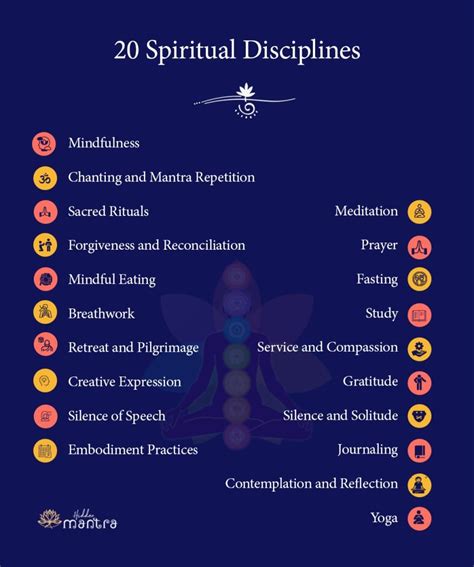
Their spiritual nourishment is found in more informal practices like yoga (15% and 22%), meditation (26% and 34%) and silence and / or solitude (26% and 32%). But their most common spiritual practice is spending time in nature for reflection (40% and 51%). And why not, considering the real sense of personal autonomy gained from time outside. Overall, it’s easy to see why this group, who make sense of their lives and the world outside religious categories, are inclined toward more informal and more individual modes of spiritual practice.
Criticisms of SBNR
Some representatives of organized religion have criticized the practice of spirituality without religiosity. Other critics contend that within the "Spiritual but not Religious" worldview, self-knowledge and self-growth have been problematically equated with knowledge of God, directing a person's focus inward.
As a result, the political, economic, and social forces that shape the world are neglected and left untended. Further, some scholars have noted the relative spiritual superficiality of particular SBNR practices. Classical mysticism within the world's major religions requires sustained dedication, often in the form of prolonged asceticism, extended devotion to prayer, and the cultivation of humility.
In contrast, SBNRs in the Western world are encouraged to dabble in spiritual practices in a way that is often casual and lacking in rigor or any reorganization of priorities. Sociologist Robert Wuthnow suggests that these forms of mysticism are "shallow and inauthentic". Other critics take issue with the intellectual legitimacy of SBNR scholarship.
Wong and Vinsky challenge SBNR discourse that posits religion as "institutional and structured" in contrast to spirituality as "inclusive and universal" (1346). They argue that this understanding makes invisible the historical construction of "spirituality", which currently relies on a rejection of EuroChristianity for its own self-definition.