I still remember the first time I talked with a Christian about fasting. It was the mid-2000s and Easter was coming up. My friend decided to fast for a couple of days ahead of Good Friday. No food at all. No soup. No juice. The first day, from what he said, wasn’t too bad. The second was more challenging. But by the end, visions of sandwiches, donuts, and even salads danced through his head. Still, he pressed on. He was committed. But I don’t know that he got what he was hoping to out of the experience. Watching, I didn’t know what to think about it, especially as a new Christian at the time. But it did make me want to learn more about what fasting is, and how it benefits us as believers.
Out of all the spiritual disciplines, fasting may be the one we practice the least. So the question is: Why should we fast?
Fasting was considered one of the key practices among God’s people up to the time of Jesus and beyond. Fasts were part of the ceremonial life of God’s people (Leviticus 16:29; 23:29). They were a natural response to different situations as well. Jesus’s own instruction on fasting treated fasting as a given. “When you fast” he said (Matthew 6:16). It was, and is, something that we all should and must practice.
Biblical fasting is also specifically about going without food and possibly drink for a set amount of time. Fasting always has to do with abstaining from food. I realize that people can fast for weight loss or health benefits, but the fasting we find in Scripture is for the purpose of seeking God in a deeper way. We may say we're going to "fast" from television or social media or some form of entertainment we really enjoy, and while highly beneficial, this is abstaining, not fasting.
Christian fasting is a spiritual discipline, which means it is a habit or practice that helps us to grow in our faith and turn to God for help in accomplishing our calling in the world.
Read also: Understanding anemia spiritually
I learned about and practiced fasting at an early age. My earliest memory of this discipline is fasting with my youth group in junior high. I'm grateful for those earlier experiences because they exposed me to this lesser-practiced discipline at a young age. For me, fasting was part of the Christian landscape, even if the people who traveled to its territory were few and far between.This still seems to be the case.
I confess, I don’t fast as often as I probably should. It is a habit I am continuing to develop. But it is a habit I want to develop. It is an opportunity to worship the Lord through fasting, to remind myself that He is more important-that He provides for everything I could and do need.
Here are some of the spiritual benefits I've received and lessons I've learned from fasting over the years.
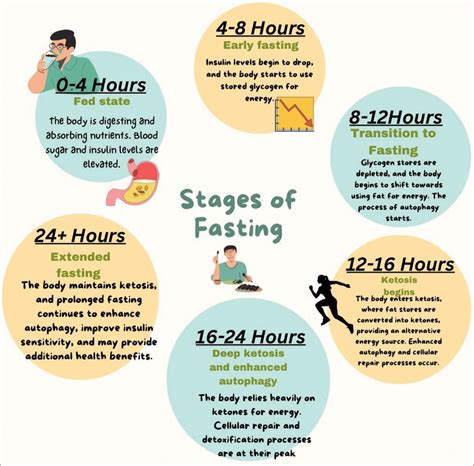
Key Aspects of Fasting
In the same way that there isn’t one reason alone for us to pray, there isn’t one method of fasting. Traditionally and most commonly, fasting is practiced by abstaining from food for a set period. But that’s not the only way you can fast. Perhaps your fasting will mean abstaining from specific types of food, technology, television, or anything else that would be a genuine sacrifice to you. (And, if you have a medical condition that requires you to eat at regular intervals, abstaining from food is unwise.)
The Bible repeatedly shows fasting in two different contexts. It is a personal act, one that seems to be done principally in private outside of view from others (Matthew 6:16-18). But fasting is also done in community, with many praying and fasting as one body. The fasts prescribed in the ceremonial law show this. Also, Esther commands that all the Jews pray and fast, seeking God’s favor in the face of potential death (Esther 4:16). Church leaders devoted themselves to prayer and fasting before sending Paul and Barnabas on their missionary journey (Acts 13:2). The apostles and the whole church likewise devoted themselves to prayer, which undoubtedly included fasting (Acts 2:42-47).
Read also: Light Blue: Calmness and Healing
But whether in private or communal, fasting is not to be done for show-it is not meant to be used as a means of putting false humility on display.
There are different types of fasts in the Bible that were carried out for a variety of different purposes - and for differing lengths of time. But fasting, in the simplest definition of the word, is the discipline of abstaining from food for a given period of time in order to devote one’s self more to prayer and the Word of God.
Benefits of Spiritual Fasting
For most believers, fasting is likely the most neglected of all spiritual practices, but this powerful discipline has the ability to increase the effectiveness of your prayer life.
For every natural act of faith, there is a divine reaction. Whatever it is that occurs in the realm of the spirit when we fast and pray, it’s safe to say that there is something to be said of acting in faith out of obedience to God’s Word. Even if we don’t understand exactly how or why fasting intensifies the potency of our prayers, we know that it does. Like a sledge hammer chips away at a brick wall, so our prayers chip away at stubborn spiritual barriers. And fasting adds more strength to the strike.
Furthermore, fasting helps us to weaken our greatest enemy - the flesh.
Read also: Explained: Spiritual Blessings
Whatever strengthens my Spirit weakens my flesh. So if my spirit is strengthened through fasting and praying, then my carnal nature is weakened by the same. Therefore, every benefit that you can receive from a weakened flesh or from empowered prayer, you can receive from fasting.
Here are 10 benefits of fasting:
- Fasting can bring clarity to the voice of God. (Acts 13:2)
- Fasting can help to properly establish a new ministry. (Acts 14:23)
- Fasting can bring favor. (Esther 4:16)
- Fasting can bring healing. (Psalm 35:13-14)
- Fasting can prepare you for the call of God. (Matthew 4:1-4)
- Fasting can prepare you for temptation. (Matthew 4:1-4)
- Fasting can bring about freedom. (Isaiah 58:6)
- Fasting can bring protection. (Ezra 8:21)
- Fasting can increase Spiritual Authority. (Matthew 17:19-21, NAS)
- Fasting can teach you dependance on God. (Matthew 4:3-4, NLT)
Dependence on God
Fasting is not a way to manipulate God to do what you want Him to do (Isa. 58). When we fast, we're voluntarily putting ourselves in a place of weakness and dependence upon God, trusting Him with the results of our fast.
Pursuit of the Supernatural
When we fast, we're forgoing something natural in pursuit of the supernatural. Jesus feasted on bread that was not of this world. Fasting has helped me become more aware of the spiritual realm that is often obscured by my earthly yearnings.
Saying No to Ourselves and Yes to God
When we fast, we're practicing the needed discipline of saying no to ourselves and yes to God. In a culture that prizes the ideas of on-demand, you deserve it, and don't go without, we desperately need to tell ourselves no on occasion. While this may seem inhibiting at first, it's paradoxically liberating. When I have control over my body, when I'm not "hangry" several times a week, when my temperament isn't ruled by my next meal, there is freedom.
"In a culture that prizes the ideas of on-demand, you deserve it, and don't go without, we desperately need to tell ourselves no on occasion. While this may seem inhibiting at first, it's paradoxically liberating." - Kelly Minter
Focus on God and Others
Fasting is a great way of taking the focus off myself and placing it on God and others. Our Justice & Mercy International staff fasts sunset to sunset once a month. When all I want is a piece of pizza, there's something good and powerful about interceding for those in the Amazon who may not have eaten for days or for our vulnerable children in Moldova who often live in abusive homes. Fasting puts life in perspective and aligns our hearts with the Lord's.
Learning Contentment
Fasting teaches me contentment. When my body isn't immediately satisfied or life deals me a series of disappointments, fasting helps me practice the habit of going to the Lord and seeking satisfaction from Him instead of what is readily available to me (like my prized stash of dark chocolate peanut butter cups that solve a multitude of ailments).
How Fasting Empowers You To Live Victorious & Open The Heavens Over Your Life.
Fasting is a concrete way to offer God a sacrifice. This is a way to praise Him. Fasting is a way to intensify your ability to pray. Fasting helps you focus and hear from God more clearly. Fasting is a spiritual discipline: it helps us grow in our faith. Fasting is a tangible way to deny ourselves-to declare before God that we know it’s all about Him, not about us. Jesus said, “Whoever wants to follow me must deny themselves and take up their cross daily and follow me.”
Interestingly, Jesus promoted fasting to His disciples when He said in Matthew 6:16 “when you fast . . . the Lord will reward you in secret.” He assumes we will fast. In one sense, fasting is a very personal way to offer praise to God and be in extended communion with Him. In another sense, fasting is a very communal activity. When we fast together for a common purpose with our friends, family, or church, it’s especially powerful.
Fasting is for everybody: children, adults; busy working people, retired people; stay-at-home moms, students . . . even those with health issues can fast. Everyone can fast from something for some length of time.
Different Ways to Fast
The simplest kind of fast is to give up food and drink only water for a certain period of time. Here are some other ways to fast:
- Abstain from food, but drink only water and fruit juice.
- Do a “Daniel fast,” where you abstain from meat and “pleasant foods”-dairy, desserts, soda, etc. (See Daniel 10: 2-3, where he describes this kind of fast.)
- Do a “John Wesley fast,” where you drink only water and abstain from food from sundown one day to sundown the next (we do this one often together during Lent).
- Fast from desserts, junk food, or some other type of food you really enjoy.
- If you have health issues and cannot fast from any kind of food, you could choose to fast from TV or social media. The point of this kind of fast is to take all the time you’d spend doing these things and spend it instead with God.
If you’ve never fasted before, you might start by giving up one meal for one day. Or you could give up one type of food or drink (Diet Coke or desserts, for example) for the entire fast. As you grow in the discipline of fasting over time, you will be able to work up to fasting for days at a time, or maybe fasting from lunch or dinner each day. If you have fasted before, make it your goal for this church-wide fast to somehow intensify your fast, either in duration or substance. Ask God how long He wants you to fast, and what He wants you to fast from.
Here’s what Jesus said: “When you fast, don’t make a production out of it like the hypocrites do. Shampoo and comb your hair; brush your teeth, wash your face. God doesn’t require attention-getting devices. He won’t overlook what you are doing; he’ll reward you well.” - (Matthew 6: 16-18, The Message and TNIV).
Have a plan prior to starting your fast. When will you fast? From what will you fast? Why are you fasting? Write down your plan. You will find yourself getting tired more quickly during a fast. Get extra sleep and rest. Drink plenty of water. Avoid caffeine. Don’t stop getting exercise, but listen to your body and adjust accordingly. Carry around gum or mints-many people have bad breath when they’re fasting.
When you fast from meals, you will find that you have extra time! Use that time for extended prayer, listening to God, reading the Bible, and resting in God’s presence. The Holy Spirit guides us when we fast. The disciples found direction through fasting. Acts 13:2 says “while they were worshiping and fasting, the Holy Spirit directed them . . .”
God rewards those who seek Him. God gives us an invitation with a promise in Hebrews 11:6b - “the Lord is a rewarder of those who diligently seek Him.” Fasting with prayer brings us the greatest reward: His presence in our lives. Fasting will make your “spiritual ears” more acute-you’ll be able to better hear from God. Fasting enables your spirit to be yielded to God’s will. It’s a concrete way to say, “Not my will, but yours, God!” Fasting renews your spiritual vision and strengthens your faith.
Bill Bright said, “Fasting and prayer is a powerful means for causing the fire of God to fall again in a person’s life. This fire produces the fruit of the Spirit-love, joy, peace, patience, kindness, goodness, faithfulness, gentleness, and self-control-but especially the fruit of righteousness and spiritual power over the lusts of the flesh and the lies of the enemy of our souls.”
When you fast, you will experience a heightened awareness of His presence. You will be spiritually, physically, and mentally refreshed!
Fasting Kills Off Evil Desires
Romans 8:13 says “if you live according to the flesh, you will die, but if by the Spirit you put to death the deeds of the body, you will live.” The Holy Spirit and our flesh are in an epic conflict with one another (see Galatians 5). The Holy Spirit that dwells inside believers wants to live for God, but for most of our lives we have trained ourselves to obey our natural “flesh,” which is against God and even hostile to God (Romans 8:7). The flesh wants to live for and please ourselves. The Spirit wants to live for and please God. There’s a war going on inside us.
The good news is that our flesh can be re-trained to more naturally obey the Holy Spirit. How do we re-train our flesh? By “putting to death the deeds of the body.” The verb for “put to death” in Romans 8:13 is thanatoo, which literally means “to kill, to mortify, to make dead.” So what are we supposed to do with our fleshly desires? Kill them off. Cut off their supply of nourishment until they wither. MAKE THEM DEAD so that the Spirit can reign and have total control. Paul even puts it like this is 1 Corinthians 9:27: “I discipline my body and bring it into subjection.” The Greek literally means “I pummel my body and make it my slave.” Hey, it’s WAR! Why show the opponent any mercy, especially when that opponent is the evil inside of us?
When we fast, we learn to say “no” to the body’s most basic and powerful desire: for food. Simply put, if you can gain control over your body’s basic desire for food, you can learn to control your body’s desire for anything. I often put it this way: once you learn to say “no” to food, lust is no problem. Mastering the highest level of spiritual discipline gains you instant mastery over the lower ones. Nothing teaches our flesh to submit to the Spirit more powerfully than fasting.
Fasting breaks spiritual bondages! It is a bitter death-blow to the flesh, and once the flesh is mastered by fasting, it no longer has control over us. It stops being our “default” reaction. We are free to live unto God.
Fasting Brings Spiritual Clarity
Fasting humiliates our tendency to rely on the natural world and forces us to live from the spiritual. As a result, God’s voice becomes clearer. Fasting is a great way to gain clarity for an important decision. When I read Scripture on a fast, the Word speaks to me with so much more power, urgency and, again, clarity. It’s like a veil is lifted and I can see the mysteries of Scripture more clearly than before.
It’s easier to see where and how God is working when fasting. It becomes more natural to live, move, and perceive in the spiritual realm when we are actually living a spiritual lifestyle. Our fleshly nature is bridled and no longer “clouds” our spiritual perception.
Fasting Reveals The Things That Control Us
When we fast, some of our nastiest character traits are brought to the surface during the difficult portions. Fleshly lusts, anger, irritability, jealousy, and fear are just some of the things that come to the forefront. These revelations are good and healthy, however, because we are forced to deal with them directly. People will often say to me something like, “Fasting makes me irritable.” No, fasting doesn’t make you irritable. YOU are irritable. If you can learn to not be irritable while on a fast, imagine how much easier it will be on a full stomach! If you can avoid feeling jealous on a fast, imagine how much easier will it be on a full stomach!
Fasting Unlocks Spiritual Power
When we stop relying on inferior sources of power, the power of God is able to more fully envelop and fill us. I find I speak with more authority and power on a fast, like in the story I shared at the beginning of this article. I find I do EVERYTHING with more spiritual power and authority.
Building Trust, Falling in Love
Fasting teaches us to trust God at the deepest level. It forces us to depend on Him. That trust builds relationship, and relationship fosters love.