Belief in fairies has captivated people across cultures and throughout history. These ethereal beings, often depicted as delicate, enchanting creatures, have captured the imaginations of people around the world. Belief in fairies spans continents and generations, with various cultural interpretations shaping the perception of fairies’ characteristics, roles, and significance.
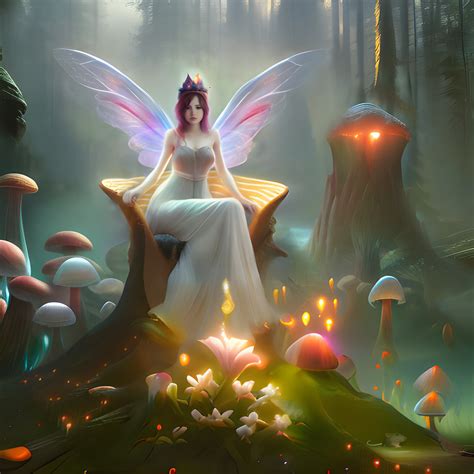
Titania Awakens, illustration by Arthur Rackham
Fairies in History and Folklore
History and folklore offer different perspectives on what fairies are. In the past, belief in fairy tales was normal, and due to the fear of the unknown, they were referred to as Little People or Hidden people.
Myths and stories about fairies do not have a single origin but are rather a collection of folk beliefs from disparate sources. A recurring motif of legends about fairies is the need to ward off fairies using protective charms. Common examples of such charms include church bells, wearing clothing inside out, four-leaf clover, and food. Fairies were also sometimes thought to haunt specific locations and to lead travelers astray using will-o'-the-wisps.
Across cultures and throughout history, people have been captivated by the mystical realm of fairies. Despite all our advancements of science and technology, fairy lore continues to enchant and captivate people of all ages.
Read also: Understanding anemia spiritually
During the witch-hunts of Europe, many accused witches tried to save their own lives by claiming they were taught their arts by Fairies and not the devil. Dealing with fairies was considered a form of witchcraft and punished as such.
Cultural Interpretations of Fairies
- Celtic Traditions: In Celtic traditions, fairies were known as the “Sidhe” or “Aos Sí,” who dwelt in mystical mounds or “fairy hills.”
- Scandinavian Folklore: Similar to the Celtic traditions, Scandinavian folklore spoke of the “Huldufólk,” a hidden people who inhabited the natural landscape.
- European Folklore: In European folklore, fairies are prominent figures, inhabiting forests, meadows, and bodies of water.
- Asian Cultures: Asian cultures also embrace beliefs in fairy-like mystical beings. In Japan, the Yōkai encompass a wide range of supernatural creatures, including the mischievous Kappa and the ethereal Yuki-onna.
- African Mythology: In African mythology, fairies take diverse forms and play distinct roles. For instance, in West Africa, the Abiku are child spirits believed to be trapped between the spirit and human worlds.
- Indigenous Cultures: Indigenous cultures around the world share rich and varied beliefs in fairies and similar figures. For example, Native American folklore speaks of nature spirits, such as the mischievous Pukwudgie of the Wampanoag tribe or the benevolent “Little People” of the Lakota Sioux.
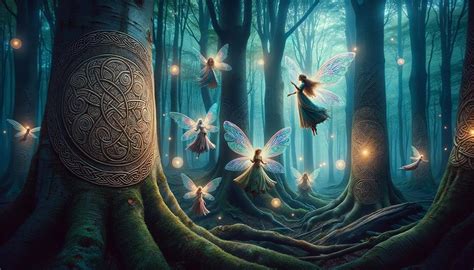
Celtic Fairies
The Nature of Fairies
Fairies are generally described as human in appearance and having magical powers. They can be extremely good or extremely evil depending on the circumstance and kind of Fairy.
Fairies are Nature Angels, the lowest manifestation within the Angelic Hierarchy. They, along with Nereids, Gnomes, Salamanders, Undines and Elves make up the Elementals. Fairies are tiny energy beings that are transported from place to place by their dragonfly or butterfly-like wings. They are the Guardian Angels of animals and nature, therefore their purpose is to ensure the health and safety of all plants, trees, animals and Mother Earth.
Fairies, unlike other angels, have a very light etheric physical body. This is because they live on a denser astral plane, closer to our physical plane than other angels, who exist higher up in the spiritual realm. Human Beings live on the densest astral plane of all, then the plants and animals and just above them, the fairies and other elementals. Because they live on this dense level, they are half incarnated, half in the spirit world.
Read also: Light Blue: Calmness and Healing
Fairies exist around trees and plants, preferring wildflowers and natural bush settings. They feel the pain inflicted upon plants, trees and animals and their physical bodies are harmed by our pesticides and cleaning agents. By refusing to use these harmful products, we are not only helping the environment but we are being kind to the fairies and helping them to fulfil their purpose.
Fairies are emotionally and physically sensitive to the thoughts and emotions of humans. They have great healing abilities which we feel the benefits of when we are out in nature or close to animals.
Fairies have been misperceived over the years as naughty and even nasty, this is because they have been compared to angels. It is unfair to make this comparison as the fairies live in the densest energy and have to contend with an ego. The truth is, fairies are very loving beings who have a very important job to do.
Types of Fairies
Various folklorists have proposed classification systems for fairies. Using terms popularized by W. B. Yeats, trooping fairies are those who appear in groups and might form settlements, as opposed to solitary fairies, who do not live or associate with others of their kind. In Scottish folklore, fairies are divided into the Seelie Court (more beneficently inclined, but still dangerous), and the Unseelie Court (more malicious).
- Hobgoblins: like brownies were regarded in olden days as guardian fairies. They were utilized in doing odd jobs around the house.
- Bug-a-Boos or Goblins: If you meet Bug-a-Boos or Goblins, try to avoid them at all cost as they are always malignant.
- Banshees: Banshees are a type of fairies which are very sinister and they are only seen when they are out to announce an upcoming tragedy.
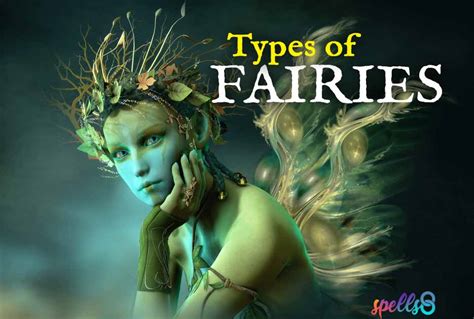
Different types of fairies
Read also: Explained: Spiritual Blessings
The Fae in Modern Nature-Based Spirituality
In recent years, there has been a resurgence of interest in ancient and nature-based spiritual practices. Many people are turning away from organized religion and seeking a deeper connection with the earth, the elements, and the mysteries of the natural world. One of the most fascinating aspects of this shift is the renewed interest in the Fae-mythical beings often associated with nature, magic, and the unseen realms.
In modern nature-based spirituality, the Fae are seen as more than just characters from folklore. They are revered as powerful spiritual entities that embody the spirit of the natural world. For many practitioners, working with the Fae is a way to connect more deeply with nature, honor the earth, and engage with the energies that flow through all living things.
One of the most common beliefs about the Fae in modern spirituality is that they are the guardians of nature. They are thought to watch over forests, rivers, and other natural places, ensuring that these environments remain healthy and vibrant. In this sense, the Fae are seen as allies in environmental stewardship.
How to Connect with the Fae
If you feel drawn to the Fae and want to incorporate them into your spiritual practice, there are several ways to begin:
- Create a Sacred Space: One of the first steps in connecting with the Fae is to create a sacred space in nature.
- Offerings and Rituals: Offering is a traditional way to show respect and build a relationship with the Fae.
- Meditate and Listen: Meditation is another powerful way to connect with the Fae.
- Respect and Reciprocity: Finally, it's important to approach your relationship with the Fae with respect and reciprocity.
Fairies as Symbols
Fairies symbolize magic, transformation, and the mysteries of the natural world. In various cultures, they are depicted as mischievous yet benevolent beings, often blurring the lines between reality and imagination. Fairies challenge us to embrace the complexity of our emotions and relationships, reminding us that life is a dance of contradictions.
One of the most compelling traits of Fairies is their playful spirit. They enjoy games and often test boundaries, reminding us not to take life too seriously. This playful attitude can be a powerful tool for personal growth. Fairies also embody the concept of responsibility, particularly emotional responsibility.
Moreover, Fairies are known for their connection to nature and the cycles of life. They embody the rhythms of the seasons and the importance of living in harmony with our surroundings. By observing these natural cycles, we can learn to honor our own needs for rest, reflection, and rejuvenation.