Names and titles in Biblical Hebrew are far more than identifiers; they carry theological significance, narrative function, and linguistic nuance. Whether divine names, royal titles, personal names, or prophetic epithets, each plays a strategic role in communicating status, character, function, or even destiny. In Biblical Hebrew, names and titles are never arbitrary. They encapsulate identity, mission, theology, and narrative tension.
They mark turning points, affirm divine involvement, and often function as prophecies in miniature. To read them merely as labels is to miss the profound semantic, grammatical, and spiritual weight they carry.
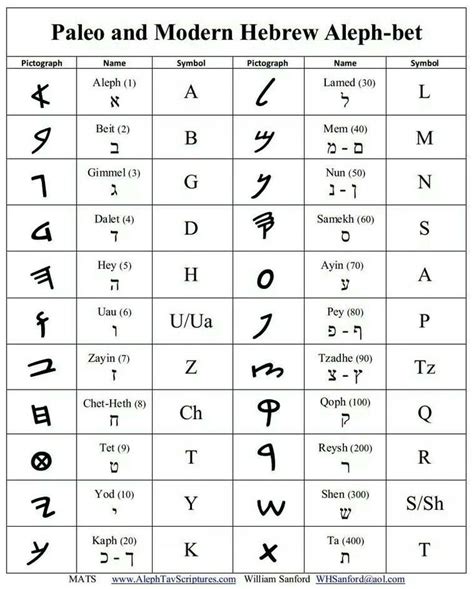
Paleo-Hebrew alphabet
Divine Names in Hebrew
Divine names like יְהוָה (YHWH), אֱלֹהִים (Elohim), and compound forms such as יְהוָה צְבָאוֹת (YHWH Tzevaot) encode presence, sovereignty, and covenantal fidelity. The personal covenant name of God, revealed in Exodus 3:14, is tied to the root היה (“to be”), often linked to being, existence, or presence. אֱלֹהִים (Elohim) is a grammatically plural form often used with singular verbs when referring to the true God.
Examples of Divine Names and Their Meanings
Here are some examples of divine names and their meanings:
Read also: Understanding anemia spiritually
- Elohim: God The Creator (Genesis 1:1). This ancient name of God contains the idea of God's creative power as well as His authority and sovereignty.
- Yahweh: I Am, The Self-Existent One. He was. He is. He always has been and always will be. He is the Self-Existent One with no beginning and no end.
- El Roi: The God who sees me (Genesis 16:14-15).
- El Shaddai: The All-Sufficient One, God Almighty. This is the name that God revealed to Abram when He established an everlasting covenant with him and his descendants.
- El Olam: He has no beginning and no end. He is the Everlasting God or the Eternal God.
- Yahweh Yireh: The Lord will provide (Genesis 22:13-14).
- Adonai: Lord and Master. It is the generic term for lord in Hebrew.
- Yahweh Rapha: The Lord who heals. God is our Healer, in both body and soul!
- Yahweh Nissi: The Lord is my banner.
- El Kanna: Consuming fire, jealous God. This name contains a holy version of jealousy that God has for His people.
- Yahweh Shalom: The Lord is peace.
- Qedosh Yisrael: Holy One Of Israel.
- Yahweh Tsuri: The Lord is my rock. The word "rock" represents God's permanence, His protection, and His enduring faithfulness.
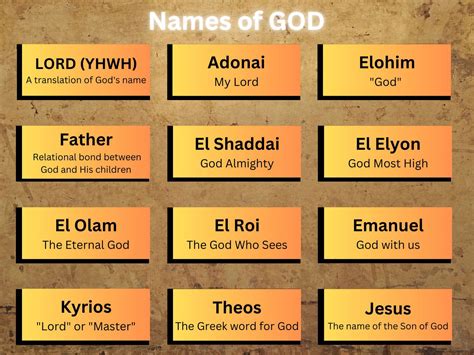
Names of God
Personal Names in Hebrew
Personal names (e.g., Avraham, Yisraʾel, Immanuel) often reflect destiny or divine interaction. Throughout the Hebrew Scriptures, names have always carried the weight of the story of our people. They’ve borne the heaviness of suffering and blazed as beacons of triumph. They’ve communicated spiritual truth and promised a legacy and future hope. They’ve played a role in shaping our collective identity. They have even helped us grapple with our life’s purpose.
Examples of Personal Names and Their Meanings
Here are some examples of personal names and their meanings:
- Adam: The LORD God formed the man אדם (adam, Strong's #120) from the dust of the ground. English translations completely erase the Hebraic connection between the “man” and his origin.
- Qayin/Cain: And she bore קין (Qayin/Cain, Strong's #7014) and she said I have קנה (Qanah, Strong's #7069 - acquired) a man.
- Sheyt/Seth: And she bore a son and called his name שת (Sheyt/Seth, Strong's #8352) because God שית (Shiyt, Strong's #7896 - placed) a seed to replace Abel.
- No’ahh/Noah: And he called his name נוח (No’ahh/Noah, Strong's #5146) saying he will נחם (Nahham, Strong's #5162 - comfort) us.
- Peleg: And to Eber were born two sons, the name of one is פלג (Peleg, Strong's #6389) because in his days the land was פלג (Palag, Strong's #6385- divided).
Here are some Hebrew girl names and their meanings:
- Abigail: "father of exaltation."
- Adah: "adornment" in Hebrew.
- Adara: "noble" or "majestic" in Hebrew.
- Alona: "oak tree."
- Aliza: "joyful."
- Atarah: "crown."
- Bethany: "house of figs."
- Beulah: "married" in Hebrew.
- Chana: "God has favored me," also translated as "grace" or "graceful."
- Chaya: "life," often given as a prayer for a long life.
- Deborah: "bee."
- Dinah: "judged."
- Elizabeth: "God is my oath."
- Galia: "wave."
- Hadassah: "myrtle."
Here are some Hebrew boy names and their meanings:
Read also: Light Blue: Calmness and Healing
- Abel: "breath" in Hebrew.
- Abraham: "exalted father" or "father of multitudes."
- Absalom: "father of peace" in Hebrew.
- Amiaz: "my people are strong."
- Aram: "height" in Hebrew.
- Azriel: "God is my help."
- Baruch: "blessed" in Hebrew.
- Benzion: "son of Zion" in Hebrew, referring to the Jewish homeland.
- Boaz: "strength" or "swiftness" in Hebrew.
- Chaim: "life" or "living" in Hebrew.
- David: David was the fearless shepherd boy who slew the giant Goliath and later became the second king of Israel.
Titles in Biblical Hebrew
Titles operate morphologically through definiteness, construct chains, and apposition, and semantically as evolving roles-prophet, king, servant-that structure relational and thematic dynamics.
Examples of Titles
- הַמֶּלֶךְ “the king”
- אֲדֹנָי יְהוִה “Lord GOD” (lit.
Theophoric Names
A "theophoric" name is one that "bears" or embeds God's Name into a person's name. They are very common in the Scriptures, and here I will list a few that are well known. With the Tetragrammaton "YHVH" (יהוה), some theophoric names are formed by prefixing the first two consonants (יה-) while others apend the first two consonants as a suffix to the name (-יה).
- Dror
- Dudu
- Osnat
- Sagi
- Yaki
- Moran
- Yam
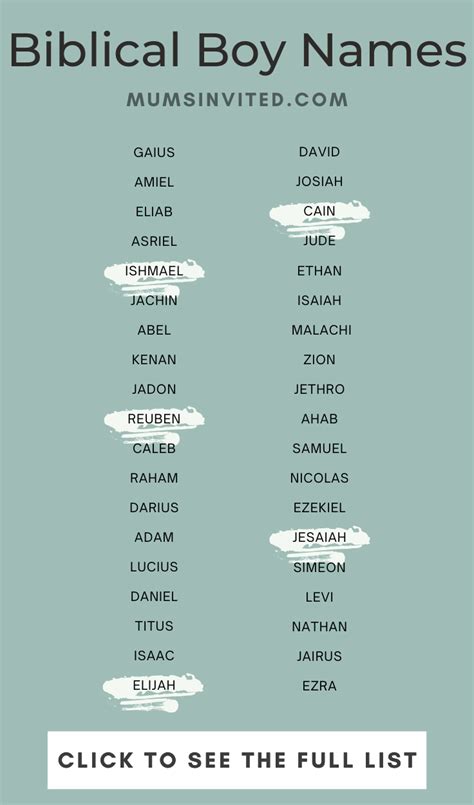
Biblical name
The Significance of Names in Jewish Scripture
Jacob: “Wrestled with God”
The patriarch Jacob experienced what is possibly the most memorable divine name change in the Hebrew Scriptures. His journey had not been in vain, and God Himself had seen Jacob as worthy to contend with. The name “Israel” can be interpreted as “He who strives with God,” and it encapsulates Jacob’s willingness to hold on to God and not let go, even amidst pain and struggle. In a single word, the new name of “Israel” affirmed that Jacob was seen, known, and blessed by God.
Moses: “Drawn Out of the Water”
Moses’ name provides a clue that water would continue to be a significant theme throughout his life. One day, Moses would perform a miracle that would turn the Nile River, that very body of water that was meant to end his life, into a river of blood. In doing so, he called for justice for all those who had not been drawn out of the water.
Read also: Explained: Spiritual Blessings
Deborah: “The Mighty Bee”
The name Deborah is derived from the Hebrew word dvora which means “bee.” While it may be a tiny creature, bees are often seen as a symbol of female power. She embodied a breadth of character that points us to the multifaceted character of her Creator. God leads His people with both mercy and justice, tenderness and strength.
Gideon: “Man of Valor”
God knew who Gideon could become even before Gideon did. He knew the man in hiding could be the man in victory. This text implies to every reader, even hundreds or thousands of years later, that God sees us through the lens of His ultimate purpose for our lives, regardless of where we are in our journeys.
Immanuel: “God with Us”
The name Immanuel is most often attributed to Jesus during the Christmas season, because of how perfectly it speaks to his birth, a divine entrance into a physical world. The name spoken by the prophet nearly a thousand years prior to Jesus’ birth was meant to signify exactly what Jesus embodied: that God loved us so deeply, He wanted to enter our world, experience our joys and sorrows, our triumphs and tribulations. Even now, this name is a reminder that we are never alone in our journey through life. God is with us.
Our name is one of the most central parts of who we are, and yet it’s something we don’t choose. There are pieces of our identity chosen for us, but there are also pieces that we have the power to choose. We can choose to walk with God, who ultimately is the one who reveals the purpose for which we were created. God knows each of us by name, and He has called us to know His.
Again and again, the names given to individuals in scripture seem to do more than describe the character’s name-they declare the potential, calling, or covenant of the person. This linguistic pattern stretches from the earliest chapters of Genesis to the final visions of Revelation. Names are given, changed, or restored to reflect sacred purpose. And frequently, they are not the individual’s original names. They are new names that have been bestowed by God or by His servants at moments of covenant, calling, or transformation.
If you were reading the story of Abraham and Sarah for the first time, you might not think much of the name “Abram.” It means “exalted father,” which seems noble enough. But the problem is that Abram didn’t have any children. In Genesis 17, God renews His covenant with Abram, but He also does something unusual. He changes his name.