The name Ann is a beautiful and feminine given name, rooted deeply in history and rich with meaning.
It finds its origins in the ancient Hebrew name Hannah (חַנָּה), which translates to 'grace' or 'favor.' This name not only embodies elegance but also carries with it a profound narrative of mercy and compassion, stemming from the biblical account of Hannah in the Old Testament. She fervently prayed for a child, showcasing her devotion and faith, and was eventually rewarded with the birth of her son, Samuel.
The journey of the name Ann across cultures and generations is a fascinating tale of transformation and adaptation. As Christianity spread throughout Europe, so too did the name, evolving through Greek and Latin iterations, both rendered as Anna. This adaptation signified its embrace by diverse European cultures, particularly during the medieval era. In England, the name saw a simplification to 'Ann' during the Protestant Reformation, marking a shift towards a more straightforward and accessible form. Its prominence soared during the Tudor period, a time steeped in historical drama and intrigue, highlighted by the notable figure of Anne Boleyn, who was the second wife of King Henry VIII. Over the centuries, Ann has held its ground as a timeless name, celebrated for its straightforwardness and the beauty of its meaning.

Anne Boleyn, a significant figure in history with the name Ann.
Historical Usage and Popularity
While Ann is predominantly recognized as a female name, its historical usage does reveal some intriguing exceptions. Originating from the Hebrew name Hannah, denoting 'grace,' this name has been primarily embraced by women in both the United States and the United Kingdom. However, records show that there have been occasional instances of the name being adapted for male use.
Read also: Finn: A Name with Deep Roots
The popularity of the name Ann has seen significant fluctuations over the years, mirroring broader trends in naming practices. It enjoyed a peak in popularity from the 1930s through the 1950s, a period during which it was particularly fashionable among new parents. However, as societal tastes evolved, the name has experienced a gradual decline in the following decades. Today, while still maintaining a sense of classic appeal, many parents are gravitating towards variations of the name, such as Anna or Anne, which have enjoyed a more stable rise in popularity.
Variants and Nicknames
The evolution of the name Ann is also notable for its diverse array of variants that have emerged across different cultures and languages, each maintaining the essence of its original meaning. Stemming from the Hebrew Hannah, which signifies 'grace,' the name has blossomed into various formal variants such as Anne, Anna, Annika, Annette, and Annabel. Additionally, in various European traditions, one can find names like Anya in Russian, Anita in Spanish, Aine in Irish, Anja in German, and Annette in French. Each of these variants mirrors the unique linguistic and cultural traits of their respective backgrounds while preserving the melodic quality of the original name.
The name Ann is more than just a traditional name; it is a canvas for creativity and affection, spawning a variety of endearing nicknames that reflect the deep connections shared among friends and family. While classic diminutives like Annie, Nan, and Nancy have stood the test of time, new variations have emerged that resonate with contemporary sensibilities. Playful adaptations like Anny, Anni, and Annabeth add a modern twist while maintaining the essence of the original name. Additionally, the charming nickname Nanette merges the familiar 'Nan' with a French touch, showcasing the cultural influence on name adaptations. In family circles, you'll often hear nicknames such as Nana and Nanny, which naturally arise from the sweet babble of young children discovering language.
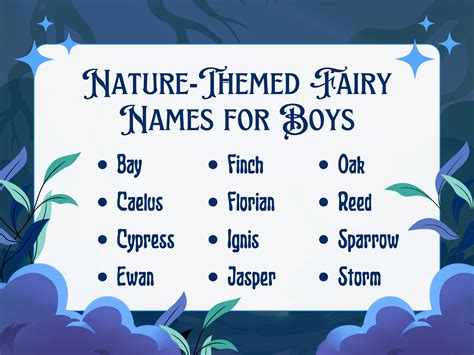
Variations of the name Ann across different cultures.
Numerological Significance
Delving into the fascinating world of Pythagorean numerology, the name 'Ann' reveals a unique vibrational energy that resonates with various aspects of life. This ancient practice, rooted in the teachings of the Greek philosopher Pythagoras, assigns numerical values to letters, allowing us to explore the deeper meanings and influences of names. Each letter in 'Ann' corresponds to specific numbers that contribute to its overall vibrational pattern. Understanding this numerological framework can provide insights into personality traits and life paths, offering a more profound understanding of how a name can shape an individual’s destiny.
Read also: Understanding Alicia's Name
To break down the components of 'Ann' in Pythagorean numerology, we assign numerical values based on the letters: A equals 1, while both n's equal 5. When we sum these values, we arrive at a total of 11, which further simplifies to 2 (1 + 1). This process not only highlights the significance of each letter but also illustrates how even a simple name can carry profound implications based on its numerical interpretation. The transition from the individual letters to the final total speaks to the interconnectedness of our identities and the complex layers that names can embody.
As a number 2 in Pythagorean numerology, individuals named Ann are often seen as natural peacemakers, with a destiny path that emphasizes cooperation, diplomacy, and sensitivity. This unique vibration suggests that those named Ann are particularly adept at forming strong partnerships and mediating conflicts, making them invaluable in collaborative environments. Their inherent intuition allows them to maintain harmony in relationships, whether personal or professional. Career paths for a '2' often include roles in counseling, teaching, or administrative support, where their nurturing nature and patience shine. In relationships, those with this number seek deep emotional connections, often prioritizing the needs of others over their own, reflecting their compassionate and empathetic disposition.
With a Soul Urge number of 1, individuals named Ann possess a strong inner motivation rooted in independence, leadership, and originality. This powerful drive compels them to carve out their own unique paths and make significant contributions to the world around them. Their ambition and creativity fuel a desire for autonomy, as they seek to push boundaries and explore new possibilities. In romantic relationships, they look for partners who not only appreciate their independence but also provide support for their aspirations and vision.
When we examine the consonant count for the name in question, we find a total of 10, derived from two sets of five. This number is intriguing because, when we reduce 10 to a single digit through addition-1 plus 0-it simplifies down to 1. The Personality Number 1 embodies traits that profoundly influence how you are perceived by others. Those who resonate with this number often come across as self-assured, innovative, and independent. You exude an aura of capability and determination, which naturally positions you as a leader in various social scenarios. Your proactive approach not only draws others toward you but also attracts individuals who admire your strength and decisiveness. In the workplace, this translates into being recognized as a reliable figure who can spearhead projects and tackle challenges head-on.
Note: This numerology analysis is just for fun and entertainment purposes. It is not meant to be taken seriously or as a reflection of one’s true personality or destiny. No offense is intended.
Read also: The Meaning Behind Miranda
Knowing the First Vowel in a Name is Your Secret Weapon!
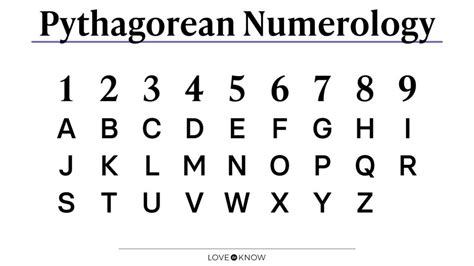
Pythagorean Numerology Chart
Notable Individuals and Cultural Context
Ann is a classic feminine name of Hebrew origin, derived from Hannah (חַנָּה), meaning "grace" or "favor." It gained widespread popularity through its Latin form, Anna, especially due to Saint Anne, the traditional mother of the Virgin Mary. The name has been a staple in English-speaking countries since the Middle Ages, often used as a standalone name or as a diminutive.
Several notable individuals bear the name Ann. Ann Miller (born 1923, died 2004) was an iconic American actress and dancer, celebrated for her rapid-fire tap dancing in Hollywood musicals like Easter Parade. Ann Landers (born 1918, died 2002), whose real name was Esther Pauline Lederer, was a highly influential American advice columnist whose syndicated column offered counsel to millions for decades.
Name in Real Life
Ever wondered how the name Ann sounds like in real life or social situations?
- Little Ann gurgled happily, clutching her mother Sarah's finger in the morning light.
- Please, Ann, remember to pack the sunblock for our trip to the Algarve coast.
- David whispered, "Ann, my love, this sunset over Santorini truly takes my breath away."
- Every Christmas, Ann insists on baking her famous gingerbread cookies for the entire family.
- Did you see baby Ann sleeping peacefully in her crib, finally, after all that fuss?
- After a long day, Ann found solace cuddling with Michael on their cozy couch in Oslo.
- "Ann, darling, let's explore the hidden alleys of Kyoto tomorrow," Mark suggested excitedly.
- Grandma Ann recounted tales of her youth, growing up near the sleepy town of Montpelier.
- The proud parents, Tom and Lucy, brought baby Ann home to their quiet house in Devon.
- You must try Ann's amazing pasta dish; it’s a family recipe passed down for generations.
Spiritual Contexts
The name Ann also appears in various spiritual contexts:
Buddhism
- Ann sought inner peace through Vipassana meditation at a quiet retreat near Doi Suthep.
- During her pilgrimage, Ann felt the profound serenity of the ancient temples in Bhutan.
- Ann carefully studied the Four Noble Truths, seeking enlightenment through diligent practice.
- Ann and her friend, Chloe, discussed the concept of impermanence during their retreat.
- The Venerable Thich Nhat Hanh's teachings deeply influenced Ann's daily mindfulness practice.
Buddhism is a religion and philosophy based on the teachings of the Buddha, who lived in the northeastern Indian subcontinent between the 6th and 4th centuries BCE. His teachings aim to help individuals end suffering, achieve enlightenment (nirvana), and break free from the cycle of rebirth. Buddhism encompasses diverse traditions and practices, with two major branches: Theravada (“The School of the Elders”) and Mahayana (“The Great Vehicle”), each offering unique interpretations and paths toward spiritual liberation.
Hinduism
- Ann performed a reverent puja, offering flowers to Lord Ganesha at the local temple.
- In Rishikesh, Ann found tranquility practicing hatha yoga by the sacred Ganges River.
- Rahul explained to Ann the significance of the sacred Om symbol in Hindu philosophy.
- Ann learned about the intricate stories of Vishnu and Shiva from her guru, Prema.
- Seeking moksha, Ann dedicated her life to dharma, performing selfless service in her community.
Hinduism is often called the world’s oldest living religion-it has no single founder and is formed from diverse traditions originated from the Indian subcontinent. An important foundation of Hinduism is the ancient Vedic tradition. Its rich body of texts covers theology, philosophy, mythology, and provides guidance on dharma-righteous living. These and various other texts and traditions collectively shape Hinduism’s unique spiritual and cultural heritage.
Jainism
- Ann deeply embraced Ahimsa, striving for non-violence in all aspects of her daily life.
- The principles of Aparigraha guided Ann to minimize her possessions, finding freedom in simplicity.
- Ann meditated on the teachings of Mahavira, seeking liberation from the cycle of rebirth.
- During her visit to Palitana, Ann marveled at the devotion evident in the Jain temples.
- Ann and her friend, Priya, discussed the nuances of Anekantavada over herbal tea in Bengaluru.
Jainism is an ancient Indian religion centered on dharma and nonviolence (ahimsa) towards all living beings. Its two main branches, Digambara and Svetambara, emphasize self-control and self-reliance (shramana), guiding followers on a peaceful path of spiritual development. Through ethical living, meditation, and compassion, Jainism aims to help the soul progress toward liberation and ultimate bliss.
Christianity
- Ann found solace in prayer, her faith a steadfast anchor during challenging times.
- At St. Patrick's Cathedral, Ann felt a profound sense of awe during the Sunday service.
- The parable of the Good Samaritan deeply moved Ann, inspiring her acts of charity.
- Ann and Robert joined the community choir, their voices blending in joyful hymns of praise.
- Pastor Michael's sermon on forgiveness deeply resonated with Ann and her family.
Christianity is a monotheistic religion founded on the life and teachings of Jesus Christ, believed to be the Son of God and the Messiah. Emerging in the 1st century AD, it rapidly spread throughout the Roman Empire and the world, becoming the largest global religion. Christianity is rooted in both the Old and New Testaments and includes major branches such as Catholicism, Eastern Orthodoxy, and Protestantism.
| Religion | Spiritual Connotation |
|---|---|
| Christianity | Grace; God has favored me |
| Hebrew | Grace; Favor |
| Buddhism | Seeking inner peace and enlightenment |
| Hinduism | Devotion, service, and spiritual learning |
| Jainism | Non-violence, simplicity, and liberation |