Sci-fi aliens like Baby Yoda are fun to imagine, but scientists are serious about extraterrestrial life. Is it possible that humans will ever experience "first contact" with an alien species? What is the science behind extraterrestrial life?
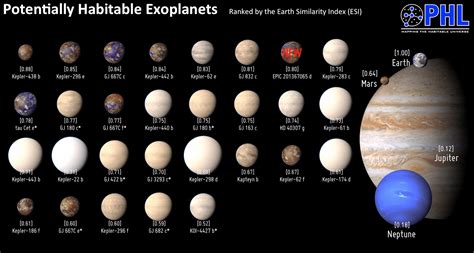
Comparison of potentially habitable exoplanets with Earth. (Image credit: NASA/Ames/JPL-Caltech)
Are Aliens Real?
There are some 100 billion stars in the Milky Way galaxy and at least 2 trillion galaxies in the universe we can study. If most of those stars have at least one planet around them, there could be up to 20 billion trillion extraterrestrial worlds out there. Given those numbers, it would be shocking if only a single planet - Earth - had life. But our closest neighbors in the solar system, Mars and Venus, don't seem to have any life.
Some moons of Saturn and Jupiter have water, so they could have life - most likely tiny creatures the size of germs. If Earthlings ever meet aliens face-to-face, they'll probably need a microscope to say hi. Until scientists find some firm proof, such as a communication signal from an alien world or fossilized microbes from Mars, Earth remains the only planet where life is known to exist.
There's no evidence yet for life on other planets, but as scientists discover more and more planets outside our solar system, they're hopeful that some of these worlds will be "just right" for life to exist or evolve there.
Read also: Details on the UFO crash retrieval whistleblower's claims.
How close are we to finding alien life? | David Kipping
What Might Aliens Look Like?
What aliens would look like would depend on where they came from. For example, on the icy moons in our solar system (Jupiter's Ganymede and Europa, and Saturn's Enceladus), life could thrive around hydrothermal vents in the oceans under the ice. This life might look like the weird creatures of the deep ocean seen on Earth. There could be primitive microbes, like Earth's single-celled Archaea. There might be relatively simple creatures with many cells in their body, sort of like Earth's tube worms, which live off chemicals from the vent fluid.
Earth formed about 4.5 billion years ago, and we think the first life existed by about 4.2 billion years ago. But life on Earth started simple and stayed that way for a long time. The first microbes that produced carbon evolved at least 3.7 billion years ago. (Carbon is an element that is a part of all known life.) But the kind of cells that gave rise to animals, plants and other complex life-forms didn't evolve until between 2.7 billion and 1.8 billion years ago. Life-forms made of many cells didn't show up until 600 million years ago. And modern humans came on the scene only around 300,000 years ago.
That means that, if other planets with life are like Earth, the time period in which they might host intelligent life (or even something as cuddly as a koala) is pretty brief. But there's a good chance that human life might overlap with microbial life on another planet.
Scientists do think that life on other planets would be driven by the same processes as it is on Earth, namely evolution. Changes to the environment drive living things to change, leading to new and more complex species. So a planet out in space that is like Earth and has been through many changes in its surface, rocks and climate would probably have complex life, too. In that case, aliens might face similar challenges and needs as here on Earth, and thus might evolve similar features. Eyes, for example, have evolved independently dozens of times on Earth, and they might evolve in life on other planets, too.
Where Might Aliens Live?
Some scientists still hold out hope that life exists elsewhere in our solar system. If it does, it's probably on one of the these moons:
Read also: Government Secrets and UFOs
- Ganymede: Jupiter's largest moon is bigger than Mercury and hides a giant ocean under its icy surface.
- Europa: Another moon of Jupiter with an ice-bound ocean, Europa has liquid water, heat generated by the pull of Jupiter's gravity, and chemicals that are the building blocks of life.
- Enceladus: This Saturn moon spews water vapor that contains carbon compounds from its surface. One of these compounds, hydrogen cyanide, is important for the origin of life.
- Titan: This moon of Saturn is very cold, but it does have carbon-rich liquid on its surface. Any life found on Titan would have to thrive in conditions not seen on Earth.
- Triton: Neptune's moon Triton is very, very cold, but it might have an ocean under its surface layer of ice. It also has geological activity in the form of geysers that erupt when the sun heats the nitrogen ice on the planet's surface.
And our next-door neighbor, Mars, may have hosted life in the past, because it used to have liquid water and an atmosphere. Today, any life would have to persist in deep pools of water below the Red Planet's surface.
Outside the solar system, scientists are continually discovering new exoplanets. They can learn things about these planets' atmospheres by studying the types of light waves they see using superpowerful telescopes. One promising exoplanet for life is called K2-18b. This world is too far for humans to visit, but the light from the planet has reached Earth. This light tells us the planet has an ocean. Scientists think they've detected some chemicals in K2-18b's atmosphere that could be made by marine life, but they don't know for sure.
How are Scientists Looking for Aliens?
Scientists look for aliens in a few different ways. First, they listen for alien signals. This is called "passive SETI," for "search for extraterrestrial intelligence." If aliens are smart like we are, their technology might send signals into the cosmos. On Earth, for example, all of the radio waves from our phones, satellites and TV station communications "leak" into space, and these leaking radio waves could be picked up if anyone were listening. So Earthlings use telescopes designed to pick up radio waves from space, hoping to find extraterrestrial signals. That only works for tech-savvy aliens, though.
Scientists also use light to look at the kinds of molecules that are present on far-off planets and moons. On Earth, some molecules are usually or always made by living things, so if those molecules are found elsewhere, they could be a sign of life. This kind of research lets scientists look for hints of life on exoplanets that are too far away to reach with a spacecraft.
Scientists also send spacecraft to the nearby places where life might exist. The Mars rovers, for example, collect rock samples that could contain evidence of fossilized ancient Martian microbes. (They haven't found any yet, but you never know!) NASA is planning to send a drone with propellers, called Dragonfly, to Saturn's moon Titan in 2028. Dragonfly would reach Titan by 2034 and search for chemicals tied to life. The European Space Agency would like to send a mission to Enceladus, also to search for signs of past or present life.
Read also: The Unknown Phenomena Article
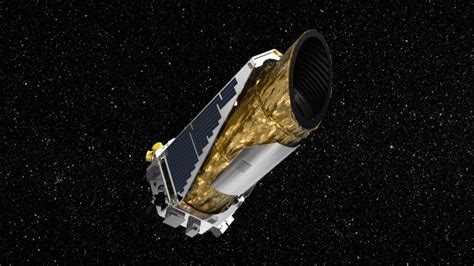
NASA's Kepler space telescope before it launched into orbit, trailing Earth around the sun. The telescope is one of the key tools astronomers use to discover exoplanets, or planets outside our solar system. (Image credit: NASA/KSC)
Are UFOs Aliens?
Unidentified flying objects (UFOs) are things in the sky that aren't explained. Not every UFO sighting can be explained, but many turn out to be events with an Earthly origin. For example, the famous "UFO crash" from Roswell, New Mexico, in 1947 was actually debris from an experimental military balloon that was supposed to pick up sound waves from atomic bomb tests in the Soviet Union.
More recently, strange videos have shown seemingly quick-moving, hovering objects. These "unidentified aerial phenomena" (UAPs) don't have an official explanation. However, they could be normal objects that seem to be moving quickly due to optical illusions, or things that aren't what they appear to be. The pilot who took the videos might have been seeing drones, weather balloons or even birds.
Any alien civilization with the kind of technology to build spacecraft has to be an enormous distance away, given that the closest exoplanet that has the right conditions for life is Proxima Centauri B, which is 24 trillion miles away. Proxima Centauri B isn't very close, and it might not have an atmosphere. So it might not have life at all, much less life that could travel to us. And we would need some seriously advanced way to get there: With current Earth technology, it would take 6,300 years for a spacecraft to travel from Earth to Proxima Centauri B.
In other words, no, UFOs probably aren't aliens. An alien civilization could send a spacecraft to our planet, but it would mean the aliens who sent it in the first place - and their kids, grandkids, great-grandkids, great-great-grandkids and so on - would probably be long dead before the craft reached us. So it's a lot more likely that UFO sightings are cases of mistaken identity.

(Image credit: NASA/JPL-Caltech)
The Golden Record
When NASA launched the Voyager spacecraft in 1977, they included these Golden Records, which contain images and sounds from Earth. These include greetings in 55 languages, music and pictures of life on Earth.
Unidentified Flying Object (UFO)
An unidentified flying object (UFO) is an object or phenomenon seen in the sky but not yet identified or explained. While unusual sightings in the sky have been reported since at least the 3rd century BC, UFOs became culturally prominent after World War II, escalating during the Space Age.
Studies and investigations into UFO reports conducted by governments (such as Project Blue Book in the United States and Project Condign in the United Kingdom), as well as by organisations and individuals have occurred over the years without confirmation of the fantastical claims of small but vocal groups of ufologists who favour unconventional or pseudoscientific hypotheses, often claiming that UFOs are evidence of extraterrestrial intelligence, technologically advanced cryptids, interdimensional contact or future time travelers. After decades of promotion of such ideas by believers and in popular media, the kind of evidence required to solidly support such claims has not been forthcoming.
Scientists and skeptic organizations such as the Committee for Skeptical Inquiry have provided prosaic explanations for UFOs, namely that they are caused by natural phenomena, human technology, delusions, and hoaxes.
During the late 1940s and through the 1950s, UFOs were often called "flying saucers" or "flying discs" based on reporting of the Kenneth Arnold incident.
"Unidentified flying object" (UFO) has been in-use since 1947. The acronym "UFO" was coined by Captain Edward J. Ruppelt for the USAF. He wrote, "Obviously the term 'flying saucer' is misleading when applied to objects of every conceivable shape and performance. For this reason the military prefers the more general, if less colorful, name: unidentified flying objects. UFO". The term UFO became widespread during the 1950s, at first in technical literature, but later in popular use.
"Unidentified aerial phenomena" (UAP) first appeared in the late 1960s.
Studies show that after careful investigation, the majority of UFOs can be identified as ordinary objects or phenomena. An individual 1979 study by CUFOS researcher Allan Hendry found, as did other investigations, that fewer than one percent of cases he investigated were hoaxes and most sightings were actually honest misidentifications of prosaic phenomena. Hendry attributed most of these to inexperience or misperception.
Historical UFO Sightings
Julius Obsequens was a Roman writer who is believed to have lived in the middle of the fourth century AD. The only work associated with his name is the Liber de prodigiis (Book of Prodigies), completely extracted from an epitome, or abridgment, written by Livy; De prodigiis was constructed as an account of the wonders and portents that occurred in Rome between 249 and 12 BCE. An aspect of Obsequens' work that has inspired excitement in some UFO enthusiasts is that he makes reference to things moving through the sky. The descriptions provided bear resemblance to observations of meteor showers. Obsequens was also writing some 400 years after the events he described, thus the text is not an eyewitness account.
Shen Kuo (1031-1095), a Song Chinese government scholar-official and prolific polymath inventor, wrote a vivid passage in his Dream Pool Essays (1088) about an unidentified flying object.
On January 25, 1878, the Denison Daily News printed an article in which John Martin, a local farmer, had reported seeing a large, dark, circular object resembling a balloon flying "at wonderful speed". Martin, according to the newspaper account, said it appeared to be about the size of a saucer from his perspective, one of the first uses of the word "saucer" in association with a UFO.
From November 1896 to April 1897, United States newspapers carried numerous reports of "mystery airships" that are reminiscent of modern UFO waves. Scores of people even reported talking to the pilots. Some people feared that Thomas Edison had created an artificial star that could fly around the country.
In the Pacific and European theatres during World War II, round, glowing fireballs known as "foo fighters" were reported by Allied and Axis pilots. Some explanations for these sightings included St. Elmo's fire, the planet Venus, hallucinations from oxygen deprivation, and German secret weapons (specifically rockets).
In 1946, more than 2,000 reports were collected, primarily by the Swedish military, of unidentified aerial objects over the Scandinavian nations, along with isolated reports from France, Portugal, Spain, Italy, and Greece.
The Modern UFO Craze
By most accounts, the popular UFO craze in the US began with a media frenzy surrounding the reports on June 24, 1947, of a civilian pilot named Kenneth Arnold who described seeing "a group of bat-like aircraft flying in formation at high speeds" near Mount Rainier that he said were "moving like a saucer would if skipped across water" which led to headlines about "flying saucers" and "flying discs".
Only weeks after Arnold's story was reported in 1947, Gallup published a poll asking people in the United States what the "flying saucers" might be. Already, 90% had heard of the new term. Within weeks, reports of flying saucer sightings became a daily occurrence with one particularly famous example being the Roswell incident in 1947 where remnants of a downed observation balloon were recovered by a farmer and confiscated by military personnel.
UFO enthusiasts in the early 1950s started to organize local "saucer clubs" modeled after science fiction fan clubs of the 1930s and 1940s, with some growing to national and international prominence within a decade.
| Year | Event |
|---|---|
| 1947 | Kenneth Arnold's sighting near Mount Rainier sparks the "flying saucer" craze. Roswell incident occurs. |
| 1950s | "Saucer clubs" emerge, modeled after science fiction fan clubs. |
| 1969 | Air Force interest in UFO reports wanes after a study by the University of Colorado. |
| 2017 | The New York Times reports on the secret Advanced Aviation Threat Identification Program. |
| 2022 | United States House Intelligence Subcommittee holds public congressional hearings on UAPs. |
Project Blue Book
Air Force began to record and investigated UFO reports with Project Sign looking into "more than 250 cases" from 1947 to 1949. Air Force cataloged 12,618 sightings of UFOs as part of what is now known as Project Blue Book".
In the late 1950s, public pressure mounted for a full declassification of all UFO records, but the CIA played a role in refusing to allow this.
Air Force interest in UFO reports went on hiatus in 1969 after a study by the University of Colorado led by Edward U.
UFOs in Popular Culture
From the 1960s to 1990s, UFOs were part of American popular culture's obsession with the supernatural and paranormal. In 1961, the first alien abduction account was sensationalized when Barney and Betty Hill underwent hypnosis after seeing a UFO and reported recovered memories of their experience that became ever more elaborate as the years went by.
In 1966, 5% of Americans reported to Gallup that "they had at some time seen something they thought was a 'flying saucer'", 96% said "they had heard or read about flying saucers", and 46% of these "thought they were 'something real' rather than just people's imagination".
Responding to UFO enthusiasm, there have always been consistent yet less popular efforts made at debunking many of the claims, and at times the media was enlisted including a 1966 TV special, "UFO: Friend, Foe or Fantasy?", in which Walter Cronkite "patiently" explained to viewers that UFOs were fantasy.
Cronkite enlisted Carl Sagan and J. Allen Hynek to provide scientific perspectives. Such attempts to disenchant the zeitgeist were not very successful at tamping down the mania. Keith Kloor notes that the "allure of flying saucers" remained popular with the public into the 1970s, spurring production of such sci-fi films, as Close Encounters of the Third Kind and Alien, which "continued to stoke public fascination". Meanwhile, Leonard Nimoy narrated a popular occult and mystery TV series In Search of...
Eghigian notes that, by this point, the UFO problem had become "far more interesting to ponder than to actually solve." Interest was particularly fevered in the 1990s with the publicity surrounding the television broadcast of an Alien autopsy video marketed as "real footage" but later admitted to be a staged "re-enactment".
Recent Developments
In December 2017, a new round of media attention started when The New York Times broke the story of the secret Advanced Aviation Threat Identification Program that was funded from 2007 to 2012 with $22 million spent on the program.
Following this story, along with a series of sensationalized Pentagon UFO videos leaked by members of the program who became convinced that UFOs were genuine mysteries worth investigating, there was an increase in mainstream attention to UFO stories.
In July 2021, Harvard astronomer Avi Loeb announced the creation of his Galileo Project which intended to use high-tech astronomical equipment to seek evidence of extraterrestrial artifacts in space and possibly within Earth's atmosphere.
Two government sponsored programs, NASA's UAP independent study team and the All-domain Anomaly Resolution Office were charged in part by Congressional fiat to investigate UFO claims more fully, adopting the new moniker "unexplained aerial phenomenon" (UAP) to avoid associations with past sensationalism.
On 17 May 2022, members of the United States House Intelligence Subcommittee on Counterterrorism, Counterintelligence and Counterproliferation held congressional hearings with top military officials to discuss military reports of UAPs. It was the first public congressional hearing into UFO sightings in the US in over 50 years.
tags: #ufos #and #extraterrestrials