The Varginha UFO incident, often referred to as "Brazil's Roswell," remains one of the most intriguing and debated cases in ufology. In January 1996, the small city of Varginha in Minas Gerais, Brazil, became the epicenter of a series of bizarre events, including reports of a crashed UFO and sightings of strange creatures. These events garnered extensive media coverage and sparked intense speculation about extraterrestrial encounters and military cover-ups.
The incident has embedded itself in the city's cultural fabric, fostering a local narrative centered on extraterrestrial encounters that persists in collective memory and public commemoration. In 2023, the municipal government designated the "Caso ET de Varginha" as intangible cultural heritage, recognizing its role in shaping community identity and storytelling traditions.
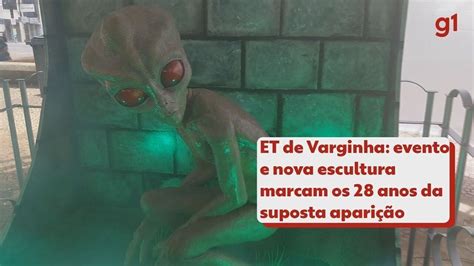
Statue of alleged alien in Varginha, Brazil. Source: Wikimedia Commons.
The Initial Sightings
The strangeness didn't descend all at once; it started, as these things often do, with unsettling observations from the sky. On January 13, 1996, several days before the incident exploded into public consciousness, an ultralight pilot named Carlos de Souza reported seeing something highly unusual. De Souza, engaged in a simple flight, spotted an object he described as cigar-shaped, roughly the size of a school bus, flying erratically. Thinking it was an aircraft needing assistance, de Souza followed its path.
He claimed to have arrived at a crash site near Varginha, finding the area littered with debris and permeated by an overpowering stench, like rotten eggs or sulfur - a smell so noxious he had to cover his face. Perhaps the most startling part of his account concerns the debris itself. He described picking up a piece of metal, light as aluminum foil, crumpling it in his hand, only to watch it spring back to its original shape upon release. De Souza’s discovery was short-lived, however, as he reported being confronted by military personnel who arrived swiftly and ordered him away at gunpoint.
Read also: Pentyrch UFO Incident: A Detailed Look
The plot thickened in the pre-dawn hours of January 20th. Farmers Eureko and Orina de Freitas, living just outside Varginha, were disturbed not by a crash, but by the panicked sounds of their cattle. Stepping outside, they observed a similar, large cigar-shaped object hovering low over their pasture. It moved slowly, silently, shrouded in a clear white smoke, eventually heading towards Varginha. The significance of their account lies in its independence; they reported what they saw seemingly without knowledge of de Souza's earlier sighting or the events about to unfold later that day.
On the morning of January 20, 1996, an unnamed couple in Varginha, Brazil, reported observing a damaged unidentified flying object maneuvering erratically toward the city center. Earlier that same day, in the pre-dawn hours, farmers Eureko and Orina de Freitas claimed to have sighted a large cigar-shaped object hovering silently low over a pasture just outside the city.
The Creature Encounter
The encounter that cemented Varginha in UFO lore occurred not under the cloak of darkness, but in the full light of day. Around 3:00 PM on January 20th, three young women - sisters Liliane Silva (16) and Valquíria Silva (14), and their friend Katia Xavier (21) - were taking a shortcut through a vacant, grassy lot between houses. It was a familiar path turned utterly alien when they stumbled upon something crouched amidst the weeds.
They depicted a being about four feet tall, entirely hairless, with skin that was brown and appeared strangely oily or greasy. Its head was disproportionately large, perhaps three times the size of a human head according to their accounts, crowned with three distinct bumps or protrusions. But it was the eyes that seemed to sear into their memory: enormous, glowing red, and apparently lacking pupils. Compounding the visual shock was a foul odor, similar to the sulfur or ammonia reported by Carlos de Souza at the alleged crash site.
Yet, their description went beyond mere monstrousness. They consistently reported that the creature seemed weak, perhaps injured or sick, quivering as it crouched. Crucially, they perceived its fear mirroring their own. Katia Xavier later spoke of a moment of intense eye contact, a silent communication where she felt the being was pleading for help, radiating distress and fear. It wasn't an aggressive monster, but something seemingly vulnerable and suffering.
Read also: Brazil UFO Incident List
Terrified, the trio fled, running home to tell their families. Luiza Silva, the sisters' mother, exhibiting considerable courage, decided to return to the lot with Katia about half an hour later. The creature was gone, but Luiza claimed the horrible smell lingered. More significantly, she asserted she found a strange footprint in the soft dirt - a print with only three long toes or "fingertips." While no photo or cast exists, her specific description added another layer of high strangeness.
Conflicting Descriptions
Eyewitness accounts of the Varginha incident are undermined by well-documented psychological vulnerabilities in human perception and recall, particularly for rare and frightening stimuli. Descriptions of the purported creature varied significantly, with reports differing on key attributes such as height (ranging from 1.2 to 1.6 meters), skin (oily brown versus reddish), and eyes (glowing red versus large and dark), even among witnesses claiming near-identical sightings.
Military Involvement and Alleged Capture
As the story of the creature encounter spread like wildfire through Varginha, another narrative thread began to emerge: an unusually heavy and conspicuous military presence. Residents reported seeing army trucks and personnel - some in uniform, others in civilian attire but sporting tell-tale military haircuts - actively patrolling and searching parts of the town throughout January 20th. These sightings reportedly occurred both before and after the girls' famous encounter, suggesting a level of official activity that predated the public alarm.
Accounts surfaced of military cordons blocking access to certain areas, and while less consistently reported, some even mentioned hearing gunshots. Whispers soon turned into claims of actual capture. Two distinct stories circulate regarding the apprehension of these alleged entities. One involves the local fire department, which, reportedly being under military police command, was called out to investigate sightings of a "strange animal" near the park where the girls had their encounter. According to some witnesses cited in reports and documentaries like "Moment of Contact," the firefighters managed to capture a creature using a net, claiming it cried "like a child" as it was subdued.
The second, and perhaps more pivotal, capture narrative centers on military police officer Marco Eli Chereze. Around 5:30 PM on January 20th, Chereze and his partner, Eric Lopes, were allegedly patrolling when a creature darted across the road in front of their vehicle. The story goes that Chereze, acting instantly, jumped out and managed to grab the creature with his bare hands, wrestling it into their vehicle and transporting it, like the first, to a hospital.
The Death of Officer Marco Eli Chereze
Officer Chereze's story took a dark turn shortly after the reported capture. He complained of a strange, greasy residue on his skin that wouldn't wash off and a persistent smell of ammonia. He soon fell ill, developing a severe, unidentified infection. Less than a month later, on February 15th, 1996, after undergoing surgery for what was officially described as a pre-existing cyst in his armpit, 23-year-old Marco Chereze died.
The official cause was listed as pneumonia or a resulting hospital infection. However, Chereze's family, particularly his sister Marta Tavares, vehemently disputes this. They, along with many believers in the Varginha incident, maintain that he died as a direct result of exposure to the creature - possibly an alien pathogen.
Physicians like Dr. Leila Puga Freitas, who treated him, noted unusual symptoms such as rapid tissue necrosis but attributed death to sepsis from benign bacteria like Staphylococcus or Pseudomonas, without endorsing anomalous causes.
The movement of these captured entities became another focus of the burgeoning legend. Witnesses reported seeing military convoys transporting items in black body bags or metal boxes between hospitals (like the Regional and Humanitas hospitals) and military facilities (like the ESA Army Base near Três Corações and later, allegedly, the EsPCEx base in Campinas).
The anonymous "Military X" featured in "Moment of Contact" provided chilling testimony, claiming he was part of a team that transported a lifeless body from Humanitas Hospital. He described the tense, fearful atmosphere among the doctors and military personnel present and recalled seeing the creature's foot, noting its oily skin and peculiar structure - having only two or three toes.
The alleged cover-up escalated to an international level with claims, notably from a Brazilian air traffic controller, that the United States military became directly involved. This controller asserted that two USAF planes landed unannounced at the airport in Campinas. From there, US helicopters reportedly flew to Varginha, collected "something" - presumed by believers to be the captured creatures and crash debris - returned to Campinas, loaded the cargo onto the planes, and departed for the United States.
Ancient Aliens: Aliens in Disguise Warn Researcher - "We've Taken Many Humans" (Season 18) | History
The Official Explanation
Faced with escalating media frenzy and public demand for answers, the Brazilian military and government eventually offered their official explanation for the strange happenings in Varginha. Predictably, it involved no crashed spaceships or captured aliens.
Regarding the creature seen by Liliane, Valquíria, and Katia, the official report pointed to a case of mistaken identity. They proposed the girls had encountered a well-known local homeless man, Luis Antonio de Paula, nicknamed "Mudinho" ("little mute"). Mudinho suffered from mental and physical disabilities and was often seen crouching low to the ground. The theory suggested that on that rainy January day, Mudinho might have been covered in mud, and his unusual posture and appearance, combined with the girls' fear, led them to perceive him as a monstrous or alien being.
The heavy military presence reported by numerous citizens? That was explained away as simply routine. Trucks were supposedly in the area for scheduled maintenance at a nearby workshop, and personnel were engaged in regular training exercises based out of the local military school (ESA). Officials flatly denied any unusual deployment, secret searches, or attempts to capture anything out of the ordinary.
Officer Marco Chereze's tragic death was officially attributed to complications from a pre-existing condition. The government stated he died from a strong hospital infection contracted after undergoing surgery for a cyst, an operation they claimed was scheduled *before* the January 20th events. They asserted he had no involvement whatsoever with any captured creature or alien encounter.

Poster for the documentary "Moment of Contact."
Skepticism and Counterarguments
Naturally, a healthy dose of skepticism surrounds the entire Varginha narrative. Beyond the official denials, critics point to the lack of concrete, verifiable physical evidence. There are no widely accepted photographs or videos of the craft or creatures, no scientifically analyzed debris samples that confirm an extraterrestrial origin, and the intriguing three-toed footprint described by Luiza Silva was never preserved.
Skeptics suggest that misidentification remains the most likely explanation - perhaps not Mudinho, but an unusual animal, or even cleverly constructed hoaxes. The intense media spotlight and the pre-existing cultural fascination with UFOs could have easily fueled a form of mass psychogenic illness, or mass hysteria, where fear and suggestion lead people to interpret mundane events as extraordinary.
Lack of Physical Evidence
Methodological shortcomings in evaluation compounded reliability problems. No verifiable physical remnants, such as UFO wreckage, biological tissues, or artifacts from alleged extraterrestrial entities, have been documented or publicly disclosed from the Varginha incident.
Claims of a crashed craft on January 20, 1996, described by witnesses as a cylindrical or cigar-shaped object emitting smoke, prompted searches by local residents and military personnel, yet no debris, propulsion components, or metallic fragments were recovered or analyzed by independent experts.
Allegations of captured creatures, including transports to hospitals like Humanitas in Varginha for examination or autopsy on January 20, 1996, similarly lack supporting physical proof. Hospital staff and medical logs from the period show no records of unusual biological specimens, non-human cadavers, or anomalous procedures, with claims of alien autopsies denied by involved physicians such as Dr. Fortunato Badan Palhares.
The Enduring Mystery
Despite the official story and plausible skeptical arguments, certain peculiar details about the Varginha incident simply refuse to fade away, keeping the embers of mystery glowing. The consistency of the reported foul smell - ammonia or sulfur - at both the alleged crash site and near the creatures is one such persistent detail. While mundane sources exist, its specific linkage across different parts of the narrative is hard to ignore.
The creature itself remains a focal point. The detailed descriptions provided by multiple, initially independent witnesses - the oily brown skin, the oversized head with three bumps, the huge red eyes - paint a vivid, consistent, and utterly strange picture. Luiza Silva’s specific claim of a three-toed footprint adds another layer, even without physical preservation.
Perhaps most unusual is the reported demeanor of the creature: not imposing or threatening, but seemingly sick, weak, and frightened. Beyond the core sightings, other associated events remain puzzling for believers. The tragic death of Officer Chereze continues to be debated, with the official explanation failing to satisfy those convinced of his direct involvement and exposure.
Fueling the belief in a cover-up are numerous supporting accounts. The alleged missing medical files for Chereze, the sightings of military personnel operating in civilian clothes, the reports of sudden roadblocks, and claims that authorities confiscated evidence like photos and X-rays all contribute to a narrative of deliberate suppression.
Adding potent fuel are the "Men in Black" style encounters reported by key witnesses. Luiza Silva described men in dark suits offering her a briefcase of money to retract her daughters' story and leave the country. Carlos de Souza recounted being approached by similarly dressed men who knew unsettling details about his life and warned him to forget what he saw. These tales of intimidation, whether real or embellished, fit perfectly within the classic UFO cover-up framework.
This enduring belief isn't just held by fringe figures. The reported conviction of Varginha's current mayor, who believes the interconnectedness of events points to something real having happened, provides a degree of local validation.
Ultimately, the sincerity projected by the primary witnesses, particularly the three young women who have stuck to their story for decades despite ridicule, resonates deeply.
Varginha's Cultural and Economic Impact
Economically, the incident catalyzed niche tourism, positioning Varginha as a destination for UFO enthusiasts despite limited overall investment in promotion. Attractions like the UFO-shaped Nave Espacial water tower, erected to evoke the 1996 crash reports, and various ET statues have become fixtures that draw visitors seeking themed experiences, contributing to ancillary spending on lodging, guides, and souvenirs.
Municipal initiatives, including the 2023 acquisition of the alleged sighting terrain for development into a tourist site and spaceship-themed bus stops, aim to capitalize on this interest, though local assessments in 2016 noted that tourism development remained tentative, with incomplete projects like an expanded memorial hindering fuller economic leverage. The Memorial do ET recorded approximately 12,000 visitors by 2023, providing measurable revenue streams amid broader efforts to integrate ufological tourism with the city's primary industrial and agricultural base.
Map of Varginha and the surrounding areas, marking key locations related to the incident.