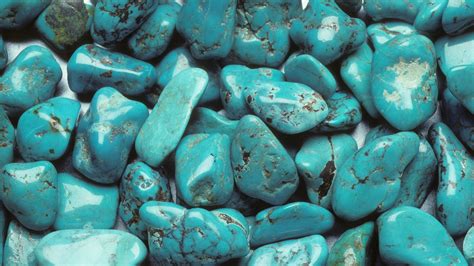
Turquoise, a captivating stone with a unique shade of blue, often blue-green, is perhaps the oldest stone in man’s history, the talisman of kings, shamans, and warriors. Its name, derived from the French "pierre turquoise" meaning “Turkish stone,” has been lent to all things of this tranquil hue. It is a stone of protection, strong and opaque, yet soothing to the touch, healing to the eye, as if carved from an azure heaven and slipped to earth. For thousands of years, Turquoise has spanned all cultures, prized as a symbol of wisdom, nobility and the power of immortality.
A Glimpse into History
The name Turquoise is derived from the French, pierre turquoise, meaning “Turkish stone,” because the trade routes that brought Turquoise to Europe from the mines in central Asia went through Turkey, and Venetian merchants often purchased the stone in Turkish bazaars. Turquoise beads dating back to 5000 B.C. have been found in Iraq, and the Egyptians were mining the stones in the Sinai in 3200 B.C. The death mask of Tutankhamun was studded with Turquoise, as were the mosaic masks dedicated to the gods, the fabulous inlaid skulls, shields and power statues of Moctezuma, the last ruler of the Aztecs. For nearly a thousand years, Native Americans have mined and fashioned Turquoise, using it to guard their burial sites. Their gems have been found from Argentina to New Mexico.
Indian priests wore it in ceremonies when calling upon the great spirit of the sky. Many honored Turquoise as the universal stone, believing their minds would become one with the universe when wearing it. Because of its ability to change colors, it was used in prophesy or divining. To the prehistoric Indian, Turquoise, worn on the body or used in ceremonies always signified the god of the sky alive in the earth.
Turquoise as a Talisman
For centuries Turquoise has been recognized as possessing the power to protect riders from injury due to falls. First used as amulets by Turkish soldiers, on their persons and attached to their bridles and trappings, it later came to be used for protection against falls of any kind. Turquoise is also reputed to be influenced by the physical condition of the person who wears it.
It is thought to grow pale when its owner is sick or sad, lose all color when the person dies, and gradually recover its color when transferred to a new healthy owner, its color deepening each day. Historically, Turquoise is credited with the property of securing friendly regard, verifying the traditional saying that “he, or she, who owns a Turquoise will never want for a friend.” In the Orient, a Turquoise ring was worn as a protector against all things evil. The proverb states: “Given by a loving hand it brings with it happiness and good fortune.” However, the ring emitted protective energy only if the stone was given by a friend. It was believed to restore clear vision to the mind when the thinking became muddled and thus ensured good fortune.
Read also: Interpreting Blood Dreams
Turquoise has always been valued as an ornamental gem, often considered a symbol of male power. Anselmus de Boot, court physician of Emperor Rudolph II, wrote in 1609 that Turquoise was so highly regarded by men that no man considered his hand to be well adorned unless he wore a fine Turquoise. Today, we know Turquoise empowers men and women equally, and worn or carried, it is a talisman of luck, success, ambition and creativity.
Turquoise in Modern Life
In the workplace, Turquoise promotes leadership, assists relocation or regular travel associated with career, and helps avoid unwise investments. It helps overcome writer’s block, and is a stone of clear communication when giving information; an especially good amulet for those who work in the law, or for local or central government. Turquoise is especially recommended for accountants and computer operators for mental relaxation, for those who work in radio or television to release anxiety, and for laborers to protect from bodily harm. As a crystal for travel, Turquoise protects you and your possessions against theft, loss or attack, helps prevent accidents, especially falls, and even guards your pet.
Attached to a collar, bridle, or cage, Turquoise prevents animals from straying or being stolen, and makes horses sure-footed and obedient to their riders. Tibetan Turquoise, or Chinese Turquoise, is green and carries a slightly different vibration than the more vivid blue. It is especially useful for clearing the Throat Chakra, and blockages of suppressed self-expression. As jewelry it is worn by men and women alike, and considered a promise of fidelity and protectiveness to a lover or partner. It is used in sacred prayer beads, adorns musical instruments, prayer wheels and bells, and a Turquoise rosary is said to relate prayer to whatever deity is being invoked. Tibetan Turquoise is traditionally received as a gift to pass on its natural fortune-bringing powers, so if you buy your own, make it a gift to yourself.
Healing Properties of Turquoise
Turquoise is a stone for self-forgiveness, self-acceptance and the release of useless regrets. It encourages us to honor ourselves as a creation and a tool of the Divine. Turquoise is a strengthening stone, good for exhaustion, depression, or panic attacks. It enhances physical and psychic immune systems, supporting the assimilation of nutrients, alleviating pollution and viral infections. It is anti-inflammatory and detoxifying, reducing excess acidity and benefiting gout, rheumatism, and the stomach.
Turquoise assists in problems of the brain, eyes, ears, neck and throat, especially cataracts, migraines and headaches, and problems with balance. Turquoise is helpful to the respiratory system and aids in healing lung disorders and allergies. Wearing a Turquoise necklace helps prevent tracheitis and other bronchial attacks. By healing the breath, this stone may cure speech disorders such as stammering. Turquoise is a most efficient healer, providing solace for the spirit and well-being for the body.
Read also: Decoding Common Dreams
It benefits the overall mood and emotion by balancing and inducing a sense of serenity and peace. Holding or wearing Turquoise helps restore depleted vitality and lifts sagging spirits. It relieves stress and brings focus back to the center heart. It is empathetic and balancing, helping one to recognize the causes of happiness and unhappiness, and to master them.
As a stone of purification, Turquoise dispels negative energy and clears electromagnetic smog from the environment. It promotes self-realization and aids in creative problem-solving, thus calming the nerves when speaking in public. It helps stabilize mood swings, and dissolves a martyred attitude of self-sabotage. It is also empowering if you feel bullied or suffer prejudice. Because it soothes the mind, Turquoise is good for jet lag and fears of flying. Tibetan Turquoise is an excellent anti-hysteria stone, worn to calm those with a tendency to over-react to situations. It is also beneficial for narcissism, to help one look outside their own needs and to be open to other’s point of view.
Turquoise strengthens the meridians of the body and the subtle energy fields, enhancing communication between the physical and spiritual worlds. Placed on the Third Eye, it supports intuition and meditation. On the Throat Chakra, it releases old vows, inhibitions, and allows the soul to express itself once more. It explores past lives and regards fate as ongoing and dependant on one’s action at any moment.
Turquoise is a stone for finding wholeness and truth, and communicating and manifesting those qualities. It stimulates and harmonizes the Throat Chakra, making it easier to articulate and bring forth one’s deepest wisdom. Turquoise empowers those who are shy about sharing their understanding and aids in the knowledge that in speaking from the wholeness of our being, we each have something important to contribute to the collective. In traditional thought, Turquoise unites the earth and sky, bringing together male and female energies. Turquoise stimulates the initiation of romantic love, and promotes spontaneity in romantic issues. It is believed to change color to warn of impending danger or to indicate infidelity in thought or action.
Spiritually, Turquoise heals and cleanses both the energy centers and the physical body. It acts to induce wisdom and understanding, and to enhance trust, kindness, and the recognition of beauty. What we wish for ourselves - happiness, love, freedom of limitation and fear - when extended to others by letting go of our insistence of “justice” and viewing others through compassion and forgiveness, we receive those gifts back through our own heart.
Read also: Understanding Mercy as a Gift
Turquoise enhances the ability to see all aspects of ourselves, good and bad, and to integrate these aspects into a cohesive whole. While it is tempting to try and rid ourselves of the traits of self that are not entirely enlightened, Turquoise, like an ancient Grandfather ally, reminds us that all experiences are valid and that mistakes are simply another experience. Wholeness can only come when we are willing to embrace all of who we are and what we have learned. Turquoise reflects the color of the world at the vernal equinox, as the blues of winter melt into the greens of spring. It is a fresh, welcome energy that moves us to serenity as new growth and life emerges. It brings hope, discovery and balance. Turquoise tempers excesses, restores calm after a storm, relieves stress, and neutralizes extremes. It helps us moderate aggressiveness and deal with rage. It brings us back to center.
In lighter shades, Turquoise energy promotes inner harmony and peace through spiritual understanding. Darker, richer tones bring considerable power - and flexibility. Turquoise is a stone of “earth-grounding” and is valuable in preventing one from losing touch with the conscious mind during deep meditations. It provides strength and protection during vision quests and astral travel, and due to its high spirituality, acts to improve meditation and to further peace of mind. Dreams of turquoise signify the solution of a mystery.
If your birthday falls in any of the following periods, a Turquoise of the color listed can be a valuable conduit to your Guardian Angel. There are other Angels that are partial to Turquoise. Master of the 7th Tarot Card “The Chariot”. Master of the 14th Tarot Card “Temperance”. Sandalphon is the Kingdom Angel; Tree of Life, the Master of the 20th Tarot Card “Judgment”.
Turquoise honors Estsanatlehi, the Native American Goddess of Change. Turquoise honors Hathor, the Egyptian Goddess of Joy and Fertility. Turquoise honors Maat, the Egyptian Goddess of Justice. She is not only the goddess of harmony, but also of meditation and friendship. Turquoise honors Yemoja, the African Goddess of the Oceans and Protector of Pregnant Women. Turquoise colored crystals also honor Sophia, the Goddess of Wisdom.
Birthstones and Zodiac Signs
There are several ways to find an appropriate birthstone. The traditional one is listed first. These are from the popular lists that most people are familiar with. The second way is to find your natural birthstone by the color wheel of life. Turquoise is one of the natural birthstones of those born as spring begins (20 March to 19 April). Turquoise crystals bring you discovery and balance.
Turquoise is one of the zodiac stones for those born under the sign, Sagattarius, between November 22 and December 21, the end of harvest season and the beginning of winter.
Turquoise in Native American Culture
Turquoise was highly prized by the Apaches for its talismanic virtues. For the medicine man, the possession of it was indispensable for receiving proper recognition. Turkish horsemen, as well as those from Samarkand and Persia, often attached Turquoise to the bridles and frontlets of their horses as amulets to protect them from ill-effects of drinking cold water when overheated by exertion, keeping them more sure-footed and enduring. These “horse amulets” gave rise to Turquoise as having the power not only to protect riders from falls on horseback, but later to prevent falls of any sort.
Turquoise was reputed to be a stone of controlled aggression. In battling the Christian Crusaders, Turkish warriors wore Turquoise as a talisman and ornamented their swords to protect themselves and to enhance their bravery. Turquoise was said to master fear, and engaging in combat with a sense of inner calm insured victory.
As an amulet of protection, Turquoise is a powerful Barrier Buffer. Barrier crystals have incredible abilities to help us focus and amplify our efforts to keep undesirable elements out of our lives. Its crystalline structure gives it strength in all directions, allowing it to provide barriers to attack from all directions simultaneously. Buffers are weathering stones that help us get through hard times. They soften a blow and put things right. They protect us from outside influences, temper shocks, and add some emotional padding to our efforts to deal with the bumps and bruises of life. Turquoise is the most commonly used Buffer.
Turquoise utilizes Water energy, the energy of stillness, quiet strength, and purification. It embodies potentialities unrealized. It is yielding, formless, yet powerful. The Water element brings power of regeneration and rebirth. It is the energy of the circle of life. Use turquoise crystals to enhance any space that you use for repose, calm reflection, or prayer. Water energy is traditionally associated with the North area of a home or room.
The Apaches ascribed some of the powers of the thunder-stone to turquoise, believing a man who could go to the end of a rainbow after a storm and search in the damp earth would find a Turquoise. One of its supposed powers was to aid the warrior or hunter in the accuracy of his aim. If the turquoise was attached to a gun or bow, the shot sped from the weapon would go straight to its mark.
The Navajos and other Native American shamans used Turquoise for cloud-busting (initiating much needed rain) by throwing it into a river while praying to the rain god. The Zuni believed Turquoise could protect them from demons. At one time, Turquoise was believed to have the ability to tell the hour correctly if suspended from a string within a glass by the exact number of strokes against the sides.
According to Hindu and Persian mystics, it was very lucky to have a Turquoise on hand at the time of a new moon. Whoever, after gazing at the moon on the pratipada (the first day after new-moon), then looked at a Turquoise was destined to enjoy an increase in wealth and protection from evil.
The color turquoise is nature’s perfect harmony - a divine mixture of blue’s tranquility, green’s growth, and yellow’s uplifting energy. The symbolism of turquoise holds profound significance in our energy centers. It beautifully bridges the heart chakra (green) and throat chakra (blue), creating a powerful channel for heart-centered communication.
Ancient wisdom and modern understanding agree: the color turquoise represents protection and healing. In Feng Shui, it brings fluidity to spaces and encourages new ideas. When you embrace the energy of turquoise, you’re declaring to the universe your readiness to speak your truth and live authentically.
With its myriad hues, the color turquoise perpetually inspires. Comprised of green, blue, and yellow tones, turquoise is a striking combination of these color wheel beauties. Never one to boast, turquoise is radiant without knowing it. By pairing these two powerhouses together, the color turquoise gives rise to healthy emotions. Color psychology suggests that turquoise both heals and controls our feelings. As a result, we gain emotional stability.
As tranquil as it is inviting, turquoise restores, warms, and soothes the soul. We can ascribe its peaceful presence to its blue undertones, its energizing spirit to its yellow elements, and its encouraging aspects to its green components. Together, these three hues make turquoise the uplifting and relaxing color that it is. To combat stress and fatigue, turn to the color turquoise. Turquoise helps us think clearly, making it the ideal color to have around when an emergency arises. Not only does it foster sound decision-making, but it also promotes structure. When we see the color turquoise, it makes us want to be more organized.
The color turquoise facilitates this process by calming the nervous system. When our nerves are at ease, it bodes well for stress-free living. What’s more, it boosts self-assurance, making us more confident in our daily choices. When giving a speech, the color turquoise reminds us to get out of our heads. The color turquoise has the incredible ability to connect with our souls. It’s unassuming, so we don’t take offense when it offers guidance. Turquoise makes us feel more in harmony with our intuition. As we develop a stronger bond with our sixth sense, spiritual growth follows.
Aqua is a mix of green and blue. Aquamarine strengthens creativity and inspiration. Blue-green (or teal) is an advanced turquoise shade that symbolizes credibility and reliability. A far cry from ordinary, the color turquoise is one of the more interesting shades on the color spectrum. Exuding both favorable and questionable attributes, turquoise embodies stability, open-mindedness, and relaxation. It also exemplifies uncertainty, emotional impulsivity, and immaturity.
Geology of Turquoise
High quality Turquoise is most famously found in Mexico, Iran and the United States. It is also found in several other countries including Australia, Belgium, Chile, China, Egypt, Ethiopia, France, Poland, Portugal and the United Kingdom. Experts can sometimes pinpoint the deposit simply by looking at the color. For example, Sleeping Beauty is mined in Arizona and is famous for its bright robin’s egg blue coloring which is very pure and has almost no matrix.
Turquoise is a rare and highly desirable gemstone. Most mining operations are small scale, worked by hand with little to no mechanization. It is often mined as a byproduct of small-scale and industrial Copper mines. The politics and financial relationship between the primary mineral and secondary minerals is subject to change over time.
There is a great deal of fake and cheap Turquoise on the market. Most of it is dyed Magnesite, plastic, or glass. The most convincing form is the the dyed Magnesite with its dark veins of matrix. Sometimes low-quality Turquoise is dyed or even ground up and then reconstituted to bring out a more uniform color. Natural Turquoise stone is rarely uniform in color and is typically fairly expensive. Most of the time, the stone is lightly waxed/oiled to bring out the color and luster of the stone. The majority of gems are stabilized, since this mineral is so soft in its natural form, but occasionally nuggets are found that don’t require stabilization.
Turquoise is a phosphate family. Phosphate minerals all contain Phosphorus and Oxygen in a 1:4 ratio (written as PO4), which are then combined with various other elements to create unique minerals. It can be blue or green. The blue variety gets its color because of inclusions of copper and aluminum. The green variety has more zinc and iron. Turquoise’s energy works well with its family - other Phosphate minerals. Try it in combination with Apatite, Lazulite, Trolleite, Variscite, and Vanadinite.
Turquoise forms in arid desert regions, during the weathering and oxidation process of pre-existing minerals. For Turquoise to form, the right combination of minerals has to be in an area, exposed to the elements. Turquoise requires a combination of Copper-sulfide materials (which typically is found in minerals like: Azurite, Chalcopyrite, or Malachite), Aluminum minerals (typically Feldspar minerals like Fuchsite), and Phosphorus (typically from Apatite). Turquoise usually fills or encrusts cavities and veins in igneous rocks. Generally, it appears at a relatively shallow depth of less than 20 meters (66 feet). Turquoise’s energy works well with its “friends” - crystal associates formed in the same geological environment. Try it in combination with Chrysocolla and Pyrite.
Here's some data about mineralogy of Blue Turquoise:
| Property | Value |
|---|---|
| Chemical Formula | CuAl6(PO4)4(OH)8 4H2 |
| Cleavage | Good |
| Color | Blue |
| Crystal System | Triclinic |
| Form/Habit | Massive |
| Fracture | Conchoidal |
| Hardness - Mohs Scale | 5-6 |
| Luminescence | Blueish-white (long wave) |
| Luster | Waxy to dull |
| Mineral Family | Phosphates |
| Specific Gravity | 2.6-2.8 |
| Streak | White to green |
| Transparency | Opaque |