Mimics represent one of the most unusual paranormal phenomena. These supernatural beings utilize voice mimicry to deceive victims, perfectly replicating the calls of family members, friends, or loved ones to lure people into dangerous situations. Researchers classify mimics as shapeshifting creatures that demonstrate sophisticated audio replication abilities, making them among the most deceptive entities in supernatural traditions.
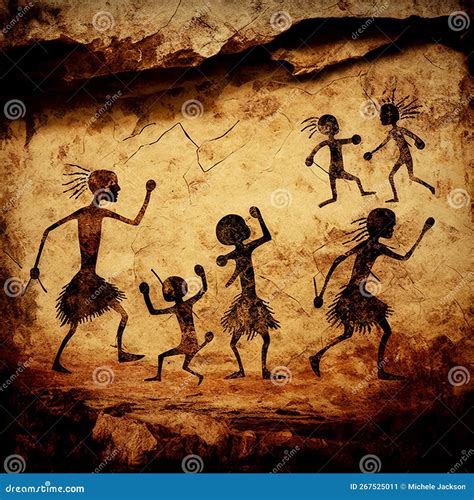
Cave painting with traces of sympathetic magic
Defining Mimics
Mimics are paranormal beings that imitate or copy traits, behaviors, or even appearances of living beings or other supernatural entities. These voice-copying creatures, audio impersonators, and supernatural mimics represent a broad category of phenomena that spans multiple entity types. The core characteristic of mimic behavior involves deliberate impersonation for specific purposes. These entities don’t randomly produce sounds or appearances. The most chilling aspect? Paranormal researchers document consistent mimicry behavior patterns across different cultures.
Manifestations of Mimics
The entities typically target isolated individuals and exploit emotional vulnerabilities through their voice mimicry abilities. The phenomenon extends beyond simple voice copying. Some forms of mimics demonstrate shapeshifting abilities, physical manifestation, and environmental manipulation to enhance their deceptive capabilities. The psychological impact of mimic encounters taps into what researchers call the “Uncanny Valley” response.
The classification of mimics remains one of the most debated topics in paranormal research. Here are some common types:
Read also: Interpreting Blood Dreams
Doppelgangers
Doppelgangers replicate living people’s appearance and behavior. Doppelganger manifestations typically fall into three distinct categories.
- Death Omen Doppelgangers: Appear most frequently during wartime periods, with family members seeing relatives who should be miles away, often at the exact moment the person being copied has died.
- Personal Doppelgangers: Involve individuals encountering copies of themselves, which traditionally represents the most ominous type of sighting.
These entities demonstrate specific behavioral patterns that distinguish them from other mimic types. Doppelgangers typically appear slightly insubstantial, faded, or lacking physical weight compared to their living counterparts. Celtic folklore describes similar entities called “Fetch” or “Fetch-life” that appear as death omens, with the disturbing belief that seeing a Fetch at night means the person being copied will only survive as long as the turf burning in the fireplace.

"How They Met Themselves" by Dante Gabriel Rossetti depicting a doppelganger encounter.
Ghost Mimics
Ghost mimics typically manifest as spirits attempting to communicate or seek attention, though they can also appear as death omens. These spectral voices, phantom communications, and ethereal calls often originate from deceased individuals with strong emotional connections to specific locations or living people. Paranormal investigators report ghost mimics in haunted locations where tragic deaths occurred. These spirits replicate familiar voices, recreate final conversations, and repeat emotional pleas from their living memories.
Demonic Impersonation
Demonic impersonation represents the most dangerous category of mimic activity. These malevolent entities, spiritual deceivers, and infernal creatures use voice mimicry as a hunting tool specifically designed to lead victims astray. Mimic demons possess the unique ability to copy not only voices and appearances but also the supernatural abilities of other entities they encounter. These entities exploit trust, manipulate emotions, and corrupt relationships through their supernatural voice replication abilities. They often target individuals during vulnerable moments, using familiar voices to provide false comfort or dangerous guidance that serves their malevolent purposes.
Read also: Decoding Common Dreams
Cryptid Mimics
Cryptid mimics operate as unknown creatures using voice replication. The Crocotta, Wendigo, and similar voice-copying creatures represent physical beings that evolved or developed supernatural vocal abilities. The Cherokee Raven Mocker stands out as one of the most documented cryptid mimics in Native American folklore. These shapeshifting witches can appear as elderly people, ravens for rapid travel, or even invisible forms to feed unnoticed. Navajo Skinwalkers represent another category of cryptid mimic, though their abilities extend far beyond voice copying.
Cryptozoologists document mimic creatures across multiple ecosystems worldwide. These forest dwellers, wilderness predators, and unknown species demonstrate remarkable intelligence in their voice mimicry, often studying potential victims for days before attempting to lure them using perfectly replicated family member voices.
The Science of Animal Mimicry: How Creatures Disguise to Survive
Behavioral Patterns
Mimics demonstrate consistent behaviors that help researchers identify these supernatural phenomena.
- Wilderness Areas: Forest and remote locations provide ideal hunting grounds where human voices shouldn’t naturally occur.
- Abandoned Buildings: Structures with tragic histories or strong emotional imprints attract mimic activity.
- Historical Sites: Locations with documented paranormal activity frequently report mimic encounters alongside other supernatural phenomena.
- Historical Documentation: Mimic encounters span centuries of folklore and cultural records.
Identifying and Protecting Yourself
Here are some steps you can take if you suspect a mimic encounter:
- Stay calm.
- Verify the person’s location.
- Avoid responding directly until you confirm the call’s source.
- If possible, leave the area and document the experience for investigation.
Sympathetic Magic and Mimicry
James George Frazer coined the term "sympathetic magic" in The Golden Bough (1889); Richard Andree, however, anticipated Frazer, writing of sympathy-enchantment (German: Sympathie-Zauber) in his 1878 Ethnographische Parallelen und Vergleiche. If we analyze the principles of thought on which magic is based, they will probably be found to resolve themselves into two: first, that like produces like, or that an effect resembles its cause; and, second, that things which have once been in contact with each other continue to act on each other at a distance after the physical contact has been severed. The former principle may be called the Law of Similarity, the latter the Law of Contact or Contagion.
Read also: Understanding Mercy as a Gift
Imitation involves using effigies, fetishes, or poppets to affect the environment of people, or people themselves. Voodoo dolls are an example of fetishes used in this way: the practitioner uses a lock of hair on the doll to create a link (also known as a "taglock") between the doll and the donor of this lock of hair.
Correspondence is based on the idea that one can influence something based on its relationship or resemblance to another thing. Many popular beliefs regarding properties of plants, fruits, and vegetables have evolved in the folk-medicine of different societies owing to sympathetic magic.
Many traditional societies believed that an effect on one object can cause an analogous effect on another object, without an apparent causal link between the two objects. For instance, many folktales feature a villain whose "life" exists in another object, and who can only be killed if that other object is destroyed, as in the Russian folktale of Koschei the Deathless. For literary versions, see horcruxes in the Harry Potter books; the Dungeons & Dragons term lich has become common in recent fantasy literature.
Many societies have been documented as believing that, instead of requiring an image of an individual, influence can be exerted using something that they have touched or used. Consequently, the inhabitants of Tanna, Vanuatu, in the 1970s were cautious when throwing away food or losing a fingernail, as they believed these small scraps of personal items could be used to cast a spell causing fevers.
Sympathetic magic has been considered in relation to Paleolithic cave paintings such as those in North Africa and at Lascaux in France. The theory, which is partially based on studies of more modern hunter-gatherer societies, is that the paintings were made by magic practitioners who could potentially be described as shamans. The shamans would retreat into the darkness of the caves, enter into a trance state and then paint images of their visions, perhaps with some notion of drawing power out of the cave walls themselves. This goes some way towards explaining the remoteness of some of the paintings (which often occur in deep or small caves) and the variety of subject matter (from prey animals to predators and human hand-prints).
In his book Primitive Mythology, Joseph Campbell stated that the paintings "were associated with the magic of the hunt". In 1933, Leo Frobenius, discussing cave paintings in North Africa, pointed out that many of the paintings did not seem to be mere depictions of animals and people. To him, it seemed as if they were acting out a hunt before it began, perhaps as a consecration of the animal to be killed. In this way, the pictures served to secure a successful hunt.
In 2005, Francis Thackeray published a paper in the journal Antiquity, in which he recognised that there was a strong case for the principle of sympathetic magic in southern Africa in prehistory. For example, a rock engraving from Wonderwerk Cave in South Africa (dated at 4000 years before the present, BP) showed a zebra which had probably been "symbolically wounded", with incisions on the rump being associated with wounds. Ochre on the engraved slab could represent blood.
A prehistoric rock painting at Melikane in Lesotho shows what appear to be men (shamans) bending forward like animals, with two sticks to represent the front legs of an antelope. Thackeray suggests that these men, perhaps shamans or "medicine-men" dressed under animal skins, were associated with hunting rituals of the kind recorded by H. Lichtenstein in 1812 in South Africa, in which a hunter simulated an antelope which was symbolically killed by other hunters, in the belief that this was essential for a successful hunt. Such rituals could be represented in prehistoric art such as paintings at Melikane in Lesotho.
Thackeray suggests that the Melikane therianthropes are associated with both trance and the principle of sympathetic hunting magic. In 2005, in the journal Antiquity, Francis Thackeray suggests that there is even a photograph of such rituals, recorded in 1934 at Logageng in the southern Kalahari, South Africa.
At the Apollo 11 cave in Namibia, Erich Wendt discovered mobile art about 30,000 years old, including a stone broken in two pieces, with a gemsbok-like therianthrope that closely resembles the Brandberg therianthrope which Thackeray catalogues as T1.
| Mimic Type | Description | Example |
|---|---|---|
| Doppelganger | Replicates a living person's appearance and behavior | Death Omen during wartime |
| Ghost Mimic | Spirit attempting to communicate or appearing as a death omen | Spectral voices in haunted locations |
| Demonic Impersonation | Malevolent entity using voice mimicry to deceive | Exploiting trust through familiar voices |
| Cryptid Mimic | Unknown creature using voice replication | Cherokee Raven Mocker |
Mimics represent documented paranormal phenomena with consistent witness reports across cultures and centuries. Historical accounts, modern encounters, and cross-cultural similarities provide compelling evidence that these voice-copying creatures exist beyond simple psychological explanations.
Supernatural impersonation, voice replication, and audio deception can be detected through careful observation of timing, context, and communication patterns.
Mimic activity occurs most frequently in remote wilderness areas, abandoned buildings, and locations with tragic historical events. Forest encounters, isolated locations, and supernatural hotspots provide ideal hunting grounds for these voice-copying creatures.
Mimics remain among the most disturbing paranormal phenomena documented by researchers worldwide. These voice-copying creatures, supernatural impersonators, and predatory entities demonstrate sophisticated abilities that challenge our understanding of both paranormal activity and the boundaries between different entity types.
Understanding mimic characteristics, recognizing danger signs, and implementing protective measures can help individuals navigate potential encounters with these deceptive entities. Whether manifesting as ghosts seeking communication, demons pursuing corruption, or cryptids hunting for prey, mimics share the common trait of exploiting human emotional bonds through copying a loved one’s voice.
If you’ve experienced a possible mimic encounter, trust your instincts and prioritize your safety.