A Succubus is a demon or supernatural entity in folklore and mythology, often depicted as a beautiful woman who seduces men in their dreams, feeds off their life energy, and sometimes even causes death. The male equivalence of this is known as an incubus.
The term derives from Late Latin succuba "paramour" from succubare "to lie beneath" (sub- "under" and cubare "to lie"), used to describe this being's implied sexual position relative to the sleeper's position. The English word "succubus" dates from the late 14th century.
The idea of a demon that preys on humans during sleep dates back to ancient civilizations, though the term “Succubus” (from the Latin succubare, meaning “to lie beneath”) became popularized during the medieval period.
Many anthropologists and psychologists believe the explanation of succubus and incubus to be supernatural explanations for sleep paralysis and hypnagogic and hypnopompic hallucinations.[2]
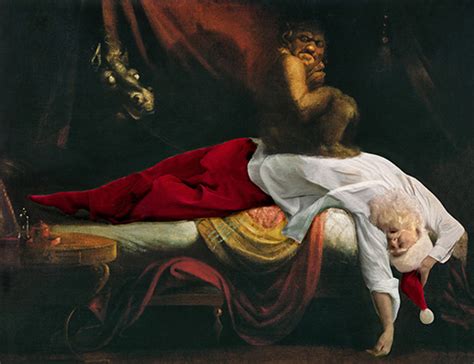
Henry Fuseli - The Nightmare
Read also: Exploring Virgo
Origins and Historical Context
The descriptions of the same can be traced back to the folklore of medieval times. The idea of succubus and incubus date back as far as medevial and biblical times. The earliest writings date back to Mesopotamia circa 2400 BC. It was believed that a demonic creature called Lilu or Lilitu (female form) would erotically seduce men and women in their dreams. However, the actual title of Succubus (to lie beneath, Latin) and Incubus (to lie on top, Latin) were not applied to these mythical demons until medevial times. Throughout the 15th century theologians are documented as having discussed this demons in hopes of determining the origins of these disturbing night prowling deviants.
In ancient Mesopotamian mythology, a precursor to the Succubus was Lilith, a figure who, according to some Jewish traditions, was the first wife of Adam and later became a demoness associated with seduction and the death of infants. As depicted in the Jewish mystical treatise Zohar and the medieval Jewish satirical text Alphabet of Ben Sira, Lilith was Adam's first wife, who later became a succubus. She left Adam and refused to return to the Garden of Eden after she mated with the archangel Samael.
According to Walter Map in the satire De nugis curialium (Trifles of Courtiers), Pope Sylvester II (999-1003) was allegedly involved with a succubus named Meridiana, who helped him achieve his high rank in the Catholic Church.
In the Middle Ages, the Succubus became a part of Christian demonology. Church teachings warned against the dangers of lust, and the Succubus was seen as a manifestation of sexual temptation. The Succubus’ male counterpart, the Incubus, would visit women, similarly draining them of energy or impregnating them with demonic offspring. In medieval belief, both demons were associated with impurity, sin, and the dangers of unchecked desire.
Succubus and Incubus are one in the same. Throughout history it's been believed that the succubus would come at night and would sexually attack men in their sleep retrieving their semen. They would then transform to their incubus form. They would then transfer this sperm to women in their sleep and impregnate them in the hopes of the woman bearing a gifted child called a cambion. Thereby, deceptively spreading there species into humankind. These creatures can allegedly drain energy, blood and life from humans to strengthen itself to continue it's purpose.
Read also: Unveiling Skinwalker Ranch: How to Watch
Characteristics and Traits
The Succubus is traditionally depicted as an enchantress who embodies both beauty and danger.
- The Succubus typically appears as a beautiful and alluring woman, using her physical attractiveness to manipulate and seduce her victims. She can often change her form to suit the desires of her target, appearing as their idealized partner.
- One of the Succubus’ defining traits is her ability to enter the dreams of her victims. In these dreams, she engages in acts of seduction and feeds off the energy of her target.
- A Succubus sustains herself by feeding on the life energy of her victims, usually through sexual contact or dreams. In many myths, this act leaves the victim weak, exhausted, or even dead.
- Succubi are often portrayed as immortal demons who can take on any appearance they desire, making them highly skilled in deception. Their ability to transform allows them to infiltrate societies and manipulate individuals with ease.
The basic description of a succubus or incubus had remained very much the same early on. Described as gargoylike with wings and tails, horns and scaly skin. As time evovled so did its description. In the 18th and 19th centuries it's description evolved into more humanlike imagery. However, some people that have experienced a visit from the creature still describe it in its original animalistic form.
Cultural Variations and Similar Entities
Many other cultures have sex demons as part of their mythology, analogous, or similar to the incubus and succubus.
- In Arabian mythology, the qarînah (قرينة) is a spirit similar to the succubus, with origins possibly in ancient Egyptian religion or in the animistic beliefs of pre-Islamic Arabia. A qarînah "sleeps with the person and has relations during sleep as is known by the dreams". They are said to be invisible, but a person with "second sight" can see them, often in the form of a cat, dog, or other household pet.
- In Arabic culture, there are descriptions of jinns, who are thought to be responsible for similar sexual acts.
- According to African beliefs, men who experience having sex with such principality (succubus) in dreams (usually in the form of a beautiful woman) find themselves exhausted as soon as they awaken.
- The alp of Teutonic or German folklore is one of the better known.
- In Zanzibar, Popobawa primarily attacks men and generally behind closed doors.
- In Hungary, a lidérc can be a Satanic lover that flies at night and appears as a fiery light (an ignis fatuus or will o’ the wisp) or in its more benign form as a featherless chicken.
- In Swedish folklore, there is the mara or mare, a spirit or goblin that rides on the chests of humans while they sleep, giving them bad dreams (or “nightmares”). Belief in the mare goes back to the Norse Ynglinga saga from the 13th century.
- In Turkish culture, incubus is known as Karabasan.
- In India, the succubus is referred to as Yakshini, who are attendees of Hindu God of Wealth, Kubera and are considered to be guardians of hidden treasure in the earth. They are shown as beautiful, voluptuous females with wide hips and narrow waists, broad shoulders, and exaggerated spherical breasts. Yakshini's are believed to provide gratification to senses as they have extreme beauty and have power to delight the body.
Succubus: The Female Demons of the Night (Mysterious Legends & Creatures Explained #9)

Yakshini
Modern Interpretations and Portrayals
In modern fantasy, the Succubus has evolved from a purely malevolent figure into a more complex and varied character, sometimes portrayed as tragic, sympathetic, or even heroic.
Read also: Unveiling Skinwalker Invasion
Here are some examples of Succubi in modern popular culture:
- Diablo: In Blizzard’s Diablo series, Succubi are portrayed as alluring demons who attack the player with magic and melee attacks. World of Warcraft: In World of Warcraft, the Succubus is a demon minion that warlocks can summon.
- Succubus Blues by Richelle Mead is a series that portrays a Succubus named Georgina Kincaid as the protagonist.
- Lost Girl: The TV series Lost Girl follows the story of Bo, a Succubus who struggles to control her powers and live a normal life. Charmed: In the Charmed series, Succubi are portrayed as demons who seduce men and drain their life force.
The powers and vulnerabilities of a Succubus often vary depending on the specific lore, but some common traits include:
- Seductive Charm: The Succubus’ primary power is her ability to seduce and manipulate.
- Dream Manipulation: Succubi are able to enter the dreams of their targets, often feeding on their energy without them even realizing.
- Shape-Shifting: Many depictions of the Succubus grant her the ability to change her form, allowing her to adopt different appearances based on her target’s desires.
- Life Force Drain: The Succubus can drain the life energy from her victims, making her a dangerous foe who can weaken or kill through prolonged contact.
- Dependent on Seduction: While the Succubus is powerful in her ability to manipulate and seduce, she often relies on these methods to sustain herself.
- Vulnerability to Exorcism or Magic: As a demonic entity, the Succubus is vulnerable to magic, particularly spells or rituals designed to exorcise or banish demons.
- Bound by Lust: The Succubus is often depicted as driven by lust, which can make her predictable in her methods.
Psychiatric Perspectives
Succubus is also known as demon female lover who approaches males in their dreams to have sex. This is the phenomenon which is rarely described in psychiatric literature. It is more identified as a cultural belief in different religions.
Although there are few case reports of incubus syndrome in patients with psychotic disorders in literature, the description of succubus is lacking in psychiatric literature.
Reports by people sufferring from nightly visits have described the interaction as very physical, painful and extremely real. They can describe the demonic visitor in extreme detail and recall being immobilized as the creature has its way. Upon its release, many victims show physical signs of an encounter and feel victimized and scared.
Succubus are believed to purely mythological and folklore by psychiatrists and occurrences have been treating patients sufferring from these night visits by way of prescribing antipsychotic medications even though many sufferers have shown no signs of mental illness or any physical disabilities. It's believed in the medical community that these attacks are actually vivid and lurid dreams that occur during sleep paralysis. Sleep paralysis is dreaming while your eyes are open but the brain hasn't fully awakened.
In medical literature, researchers have tried to understand the phenomenon of incubus as a feature of sleep paralysis and hypnagogic hallucination, which can easily cause someone to believe that a “demon was holding them down.”
However, both our patients were fully convinced about the experiences occurring against their will, had delusional beliefs associated with the same, fulfilled the diagnosis of schizophrenia irrespective of this phenomenon, and these symptoms responded to antipsychotic medications along with improvement in other symptoms.
The Succubus as a Symbol
In addition to her role as a supernatural seductress, the Succubus has become a symbol for themes of temptation, desire, and power. In modern storytelling, she is often used to explore the complexities of sexual attraction and the dangers of unchecked lust, as well as the ways in which women’s power over their sexuality is viewed by society.
The Succubus remains a powerful figure in both folklore and modern media, representing the seductive danger of unchecked desire and the complex relationship between power and temptation.